

Industrial revitalization is the top priority of rural revitalization, and it is necessary to implement industrial assistance policies and do a good job in promoting local specialties. General Secretary Xi Jinping once vividly and profoundly pointed out that in promoting industrial revitalization in various regions, the three words "local specialties" should be thoroughly understood. During his visits to various places, he repeatedly ventured into the fields and showed concern for local characteristic industries, seeking ways for farmers to become prosperous and exploring new paths for rural revitalization. Yunnan coffee, oak water fungus, Datong yellow flower, Xinjiang cotton, Maoming lychee… These "local specialties" from rural fields not only contain strong local sentiments, but also embody General Secretary Xi Jinping's earnest expectations for rural revitalization. To vividly demonstrate the practice of empowering rural revitalization with characteristic industries, the online column "General Secretary's Concerns about 'Local Specialties'" on Nongshi is published. The column will focus on the growth stories of "local specialties" in various regions, record the development trajectory of characteristic industries towards excellence, and showcase vivid examples of the transformation of local resources into advantages for enriching the people.
Coffee, as a refreshing drink, has long been integrated into people's daily lives. By 2025, the total consumption of coffee beans in China will be nearly 400000 tons, making it one of the top ten coffee consuming countries in the world, demonstrating strong market vitality and consumption potential.
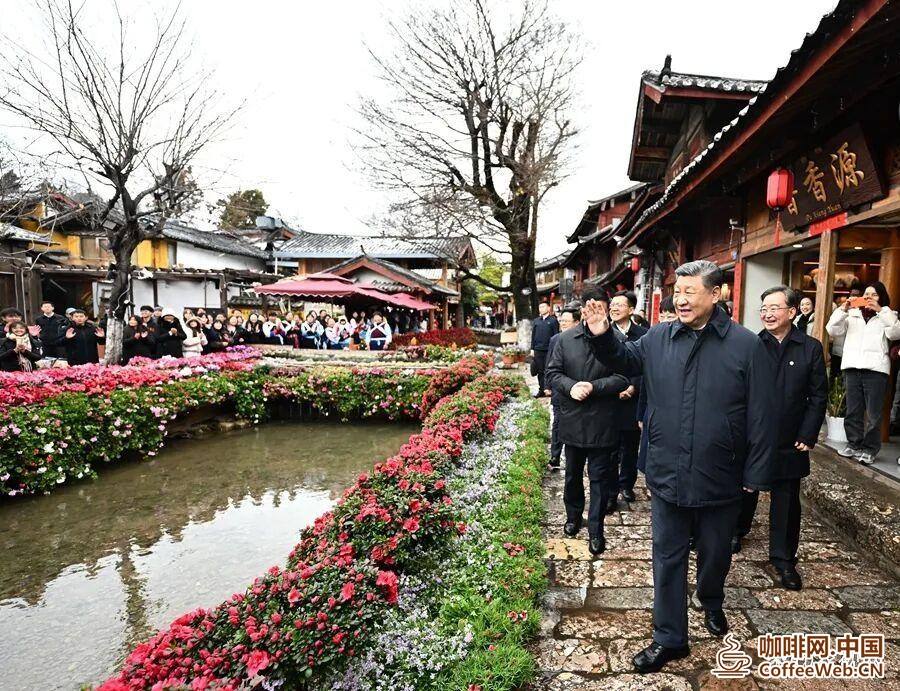
In March 2025, General Secretary Xi Jinping emphasized during his inspection in Lijiang, Yunnan that Yunnan coffee still represents China and is now popular abroad. This high praise is not only an authoritative certification of the quality of Yunnan coffee, but also a praise for the hard work of practitioners on this land.
Image source: Xinhua News Agency
What kind of soil and water has nurtured the unique flavor of Yunnan coffee? How did it progress from "raw material supply" to "boutique brand"? Today, let's turn our attention to Colorful Yunnan and explore the unique charm and industry legend of Yunnan coffee together.
From 'foreign seeds' to' local specialties'
Although coffee is considered one of the world's three major beverages along with tea and cocoa, for Yunnan, coffee was initially just a "foreign seed". In 1892, a Frenchman brought coffee seeds to Binchuan County, Dali, Yunnan and planted them. From then on, coffee took root and sprouted on this red soil, and after more than a century of development, it became a common "local specialty" in Yunnan.
Yunnan has become a paradise for coffee growth due to its unique natural conditions. It is located in the golden region of global coffee cultivation, along with Colombia and Ethiopia, and is widely recognized as the most suitable area for coffee cultivation in China. Here, with low latitude and high altitude, there is a significant temperature difference between day and night. In addition, the fertile and weakly acidic soil provides an excellent environment for coffee growth.
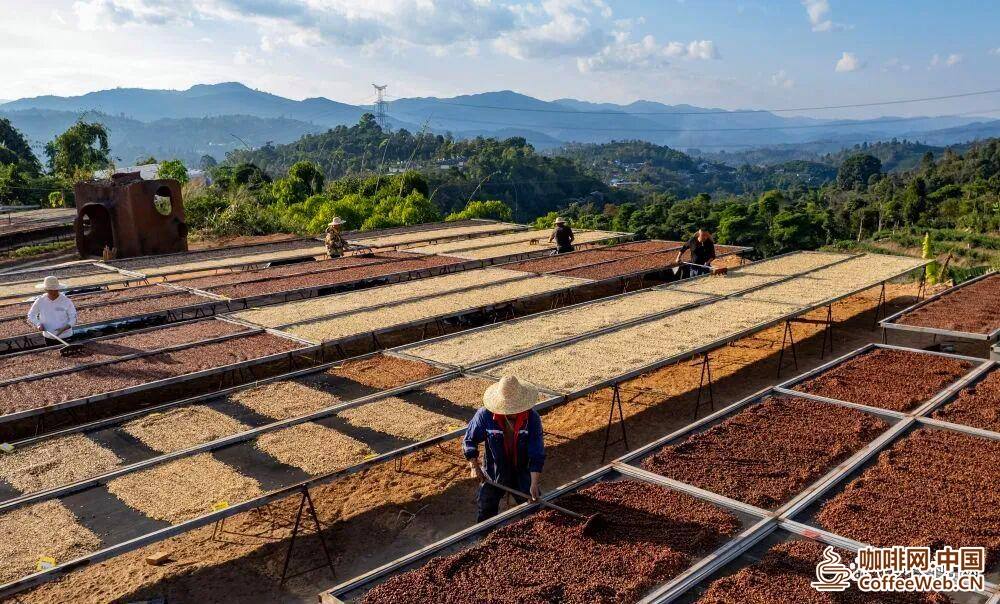
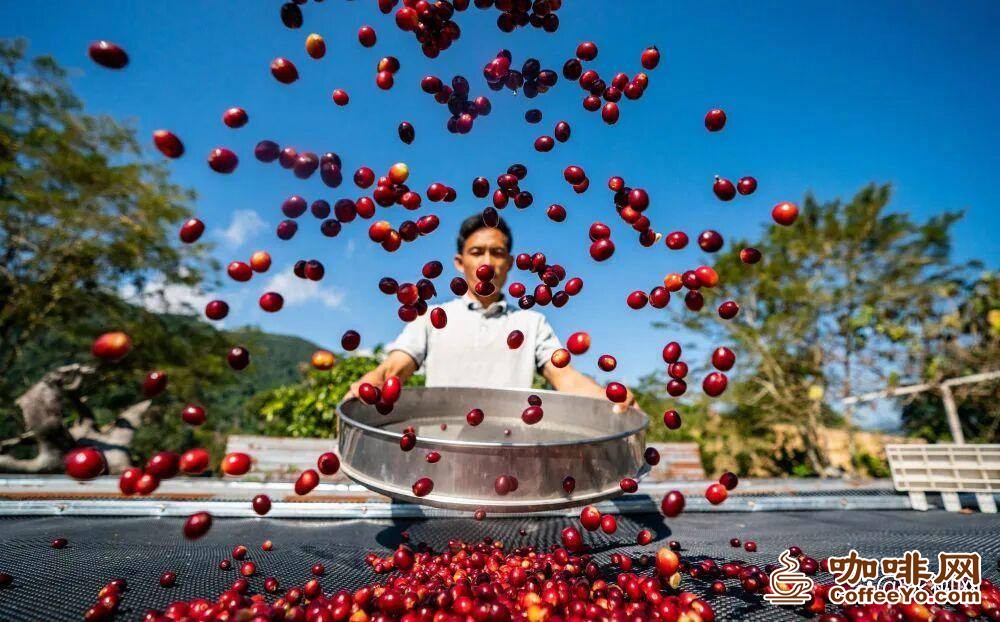
On January 7, 2025, workers were flipping through coffee at a coffee plantation in Simao District, Pu'er City (drone photo). Image source: Xinhua News Agency
For over a hundred years, through continuous domestication, cultivation, and promotion of planting, Yunnan has become an important coffee producing area in China. The planting areas have expanded from Dali to Pu'er, Baoshan, Dehong, Lincang, Xishuangbanna, Nujiang, and other places. According to statistics, by 2025, the coffee planting area in Yunnan Province will reach 1.463 million mu, with a green bean production of 138900 tons, ranking first in both area and output in the country. It can be said that more than 98% of Chinese coffee comes from Yunnan. The coffee grown here is "strong but not bitter, fragrant but not strong, with a slight acidity", which is why it is popular among domestic and foreign consumers. Multiple chain coffee brands have also launched products made from Yunnan coffee beans, officially bringing Yunnan coffee into the public eye and spreading its fragrance around the world.
From supplying raw materials to building premium brands
The development of Yunnan's coffee industry has not been smooth sailing. In the past, Yunnan coffee was mainly exported as bulk commodity beans to foreign countries. However, due to low planting level and processing capacity, the quality and yield of Yunnan coffee did not have an advantage in the international market, naturally losing its pricing power. At one point, it faced the dilemma of "selling one pound of coffee beans for money, unable to afford a cup of coffee", and many farmers chose to abandon management, planting, or even switch to other economic crops.
Faced with difficulties, Yunnan has launched a "breakthrough" towards boutique coffee. In 2022, the Department of Agriculture and Rural Affairs of Yunnan Province and other departments jointly issued the "Several Policy Measures to Promote the Increase of Coffee Premium Rate and Deep Processing Rate", proposing six support policies, starting from variety updates, fresh fruit processing, deep processing, brand building, etc., to help Yunnan coffee move towards premium, improve influence, and expand market share. Nowadays, Yunnan coffee has made breakthrough progress in the popularization, processing upgrading, and brand building of high-quality varieties and methods.
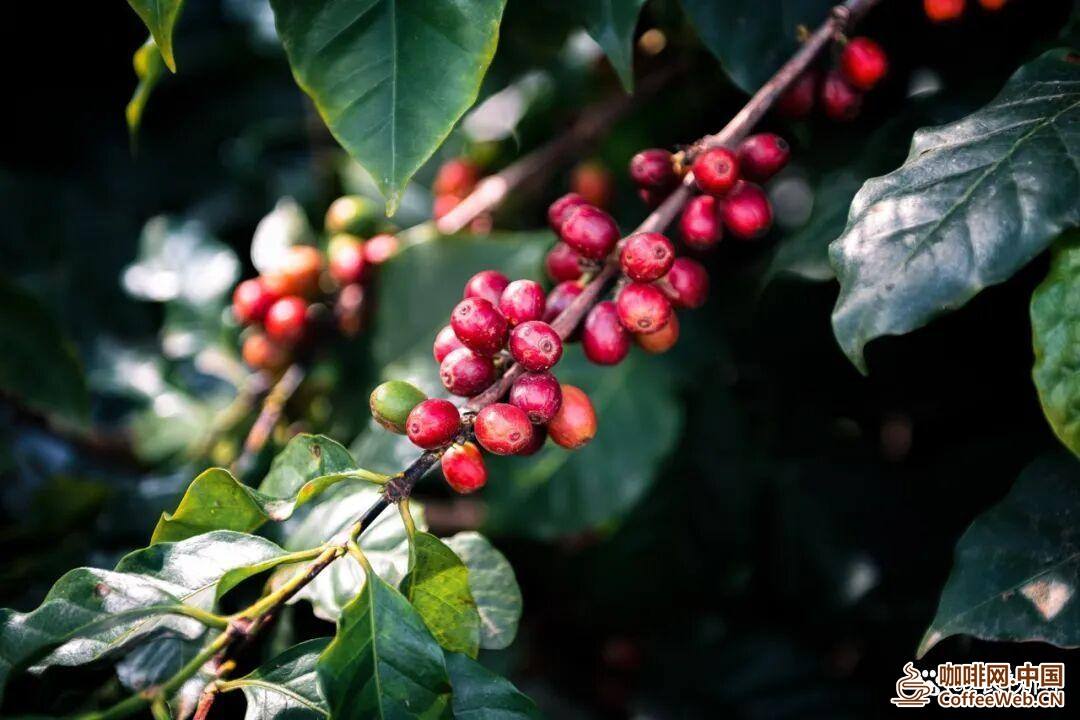
Image source: Tu Chong Creative
In terms of good varieties and methods, Yunnan has built the largest and most comprehensive coffee germplasm resource nursery in China, laying a solid foundation for variety improvement. By continuously optimizing breeding techniques and overcoming key technical challenges in the industry, the planting area of high-quality varieties in the province has reached 162000 mu. The Department of Agriculture and Rural Affairs of Yunnan Province has successively compiled and printed the "Yunnan Province Fine Coffee Planting Zoning" and "Yunnan Province High Quality Coffee Variety Recommendation Map". According to the basic principle of "suitable place, suitable product, suitable variety", it recommends farmers to plant excellent varieties such as Guixia, Tiepika, Kaduai, and Dere, in order to improve quality from the source.
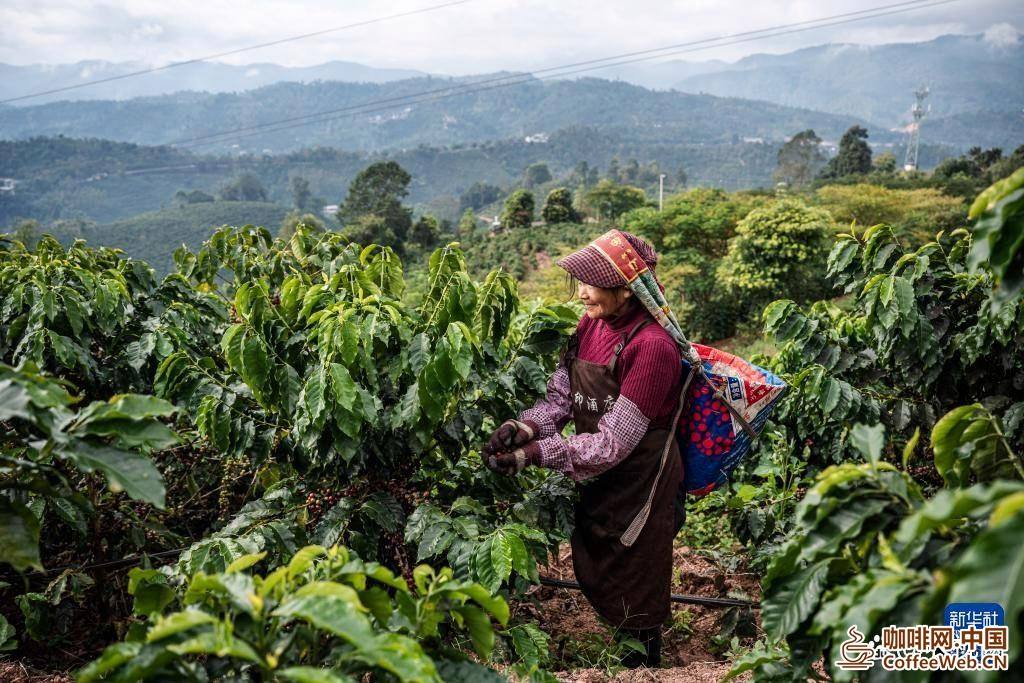
On December 6, 2025, farmers picked fresh coffee fruits from a coffee field in Pu'er City, Yunnan Province. Image source: Xinhua News Agency
In terms of processing upgrading, Yunnan's coffee industry has achieved comprehensive advancement from initial processing to deep processing. In the initial processing stage, breakthroughs have been made in the centralized processing technology and equipment for green and environmentally friendly fresh fruits, significantly improving the stability of green bean quality. In the field of deep processing, various products such as roasted beans, concentrated liquids, instant powders, freeze-dried powders, etc. have been developed locally, and even coffee peels have been processed into fruit tea. At present, Yunnan Province has a deep processing capacity of nearly 100000 tons, accounting for one-third of the country's total.
In terms of brand building, Yunnan Coffee is accelerating its transformation from "selling raw materials" to "selling quality and brand". Building regional public brands, we have collaborated with well-known beverage companies both domestically and internationally, as well as cultivated local brands such as Four Cats and Xinlu. Deepen the integrated development of "coffee+cultural tourism", "coffee+intangible cultural heritage", and "coffee+rural revitalization", create a number of national level coffee themed tourist attractions and key rural tourism villages, and make coffee a new business card for Yunnan's cultural tourism. Yunnan Province has built nearly 60 boutique coffee plantations, which are not only coffee production bases, but also popular tourist destinations that integrate coffee experience, study tours, cultural and creative industries.
On November 16, 2022, a farmer in Pu'er City, Yunnan Province was drying coffee fruits. Image source: Xinhua News Agency
The 'golden beans' that turn from bitterness to sweetness
The 2026 Yunnan Provincial Government Work Report clearly states that it is necessary to "consolidate the industrial position of Yunnan coffee as a representative of China". This not only points out the direction for the future development of the industry, but also contains a firm original intention to increase people's income by strengthening the coffee industry.
With the continuous improvement of coffee production and quality in Yunnan, the price of coffee beans has skyrocketed, and the wallets of the people have become increasingly prosperous. In 2018, the price of coffee beans in Yunnan was only 14.78 yuan/kg; By 2025, this number will surpass 60 yuan/kg for the first time. During the National People's Congress and Chinese People's Political Consultative Conference in 2026, Wang Ning, Secretary of the Yunnan Provincial Party Committee, announced a series of data at an open day event held by the Yunnan Provincial Delegation: "Five years ago, the average household income of coffee farmers in the province was only over 10000 yuan; now it has multiplied several times, and the average annual household income exceeds 30000 yuan, with some even reaching hundreds of thousands of yuan." Currently, Yunnan's coffee industry has benefited more than 200000 households and nearly 1 million employees. The situation of "living a difficult life with coffee" has completely changed, and a satisfactory answer to people's livelihood has been handed over.
Behind the impressive achievements, on the one hand, there is continuous innovation in the mechanism of linking agriculture and supporting agriculture. Various regions have helped coffee farmers improve their planting technology and management level, guided the coffee industry to extend towards deep processing, and kept more added value in the local area; On the other hand, diversified formats such as "coffee+rural tourism" and "coffee+study tours" have been stationed in rural areas, driving the development of related industries such as catering, accommodation, and transportation. Many villagers have transformed from traditional coffee farmers to new professions such as homestay butlers, baristas, and experience guides through training, achieving employment at their doorstep and injecting lasting momentum into rural revitalization.
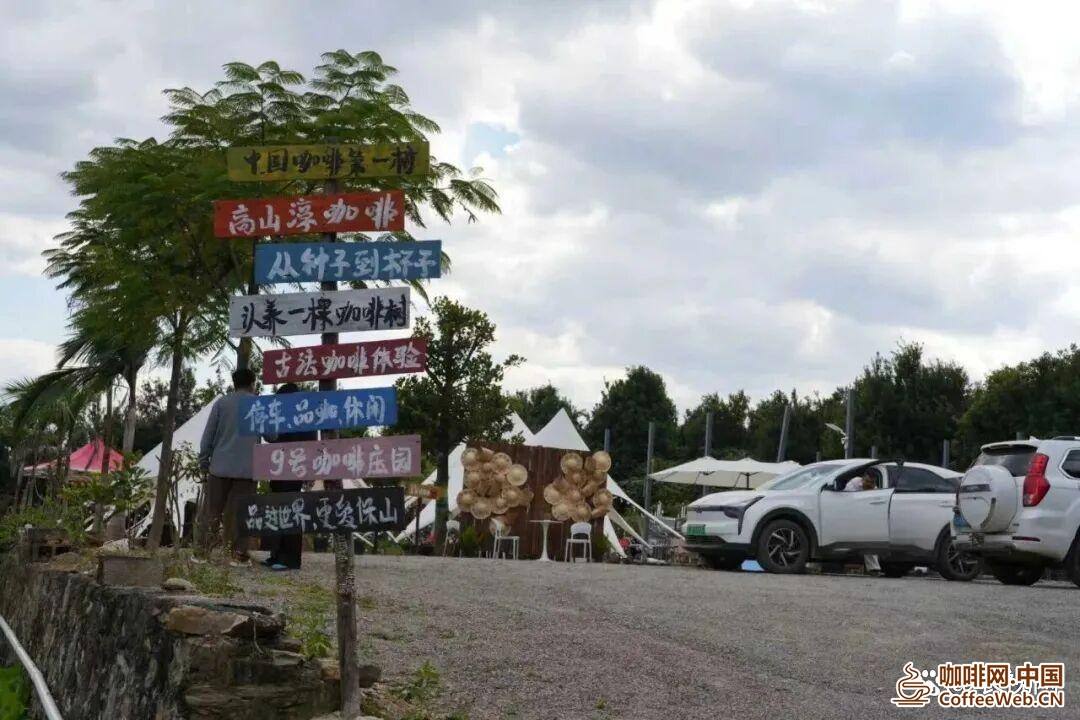
This change is particularly vivid in Xinzhai Village, Baoshan, Yunnan, known as the "Number One Coffee Village in China". Located by the Nu River and at the foot of Gaoligong Mountain, Xinzhai has become an emotional value, cultural symbol, and way of life for coffee. Tourists can witness the entire process of transforming green coffee beans into a cup of coffee here, experiencing firsthand activities such as roasting coffee beans, tasting hand brewed coffee, and adopting coffee trees.
Source: Culture and Tourism Longyang
Yunnan's coffee not only tastes fragrant, but also makes people's lives sweeter and happier. "The simple remarks of coffee farmers are a praise for a happy life. A small coffee bean is no longer just an ordinary agricultural product, but also a "golden bean" that drives rural development. Yunnan coffee not only represents China's entry into the world, but also benefits the local people, becoming a vivid practice to help achieve common prosperity and write a new chapter in rural revitalization.
Editor | Xue Jiayi
Editor | Zhao Ningning
Editor in Chief | Zhang Yue
Source | Agricultural Television Network Comprehensive Xinhua News Agency, Yunnan Daily, Yunnan Net, 21st Century Business Herald, China Net, etc
Some of the materials are sourced from the internet. If there is any infringement, please contact us for deletion