
Which industry can form a market size of 250 billion yuan in just a few years and soar towards trillions with a compound annual growth rate of over 20%?
Which industry can trigger global industrial changes with Chinese innovation, and contribute the largest industry increment to the world with China's huge consumer market?
The answer is – coffee.
However, Shandong, a province that does not produce coffee beans, is becoming a disruptor in the global coffee industry.
Whether an industry has strategic value depends first on its market space and growth potential.
In the past 20 years, the growth engine of global coffee consumption has shifted from traditional European and American markets to emerging markets centered around China. The consumption of coffee in China has surged more than 43 times. However, China's per capita annual coffee consumption is only 0.24 kilograms, which is more than 20 times higher than the EU's 5.3 kilograms and the United States' 4.2 kilograms. This huge 'per capita gap' is precisely the 'imaginative space' for future growth.
The huge market space will definitely drive out a huge industry. According to a report by Zhuoshi Consulting, the size of China's coffee market is expected to reach nearly 250 billion yuan by 2025, and is expected to maintain an average annual compound growth rate of nearly 20% over the next four years.
For local governments, seizing the voice of the coffee industry is as important as cutting-edge industries such as new energy vehicles and artificial intelligence.
Firstly, coffee shops are the most active fashion symbol, which can activate the commercial atmosphere of the city, attract young customers, and directly drive consumption.
The deeper logic lies in the pursuit of a complete industrial chain. Behind a cup of coffee, there is a long chain from global raw bean trade, port warehousing, roasting and processing, packaging and manufacturing to brand retail. Whoever can embed and lead more links will gain higher added value, stronger industrial control, and more stable tax employment.
Valuing the coffee industry is essentially reaping the dual dividends of consumer upgrading and industrial transformation.
On this golden track, Shandong has always been low-key and focused on doing big things. In just one month, there were two major actions announced by the government.
Firstly, the world's largest single unit instant coffee production project, Shandong Youran Coffee, has been put into operation in Binzhou. The first phase of the project can provide 5 billion cups of instant coffee to the market annually.
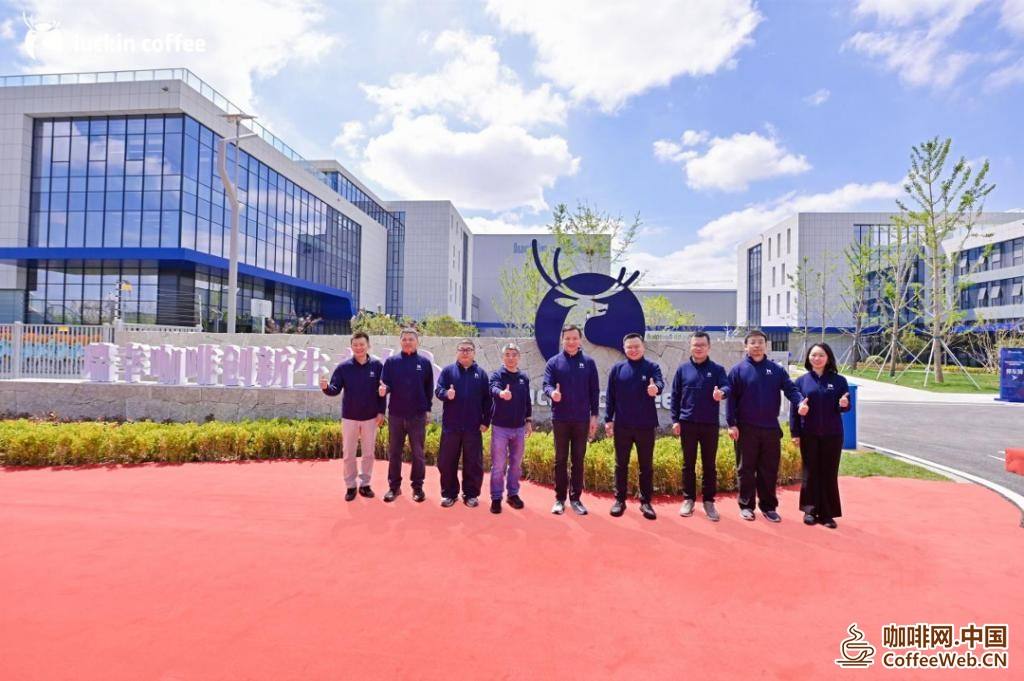
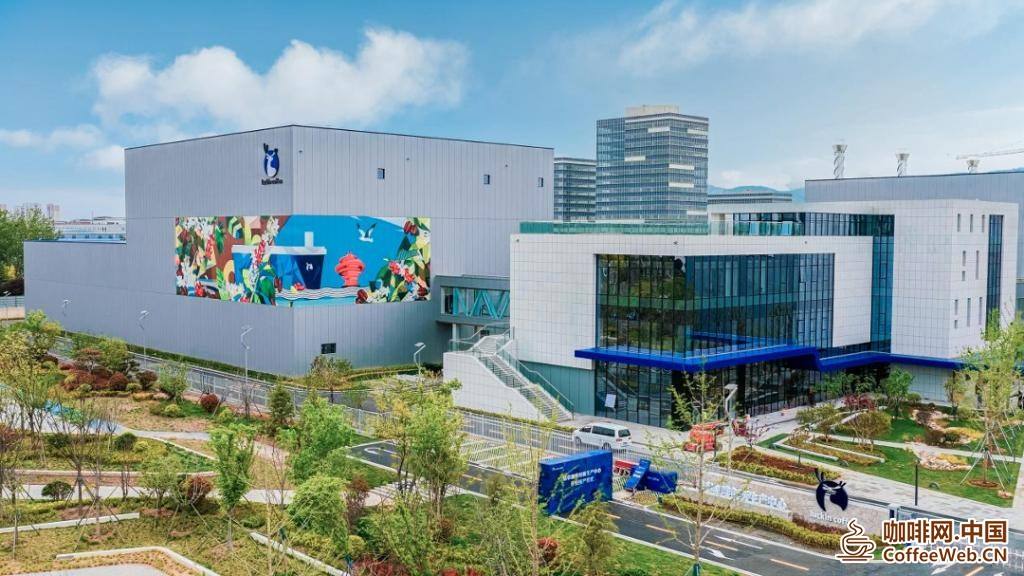
The second action is even more explosive. On April 22nd, Luckin Coffee's innovative production center started production in Chengyang District, Qingdao. The total investment of the project is about 3 billion yuan, and the annual baking capacity exceeds 55000 tons.
Luckin Coffee Executive Team
Luckin Coffee Innovation Production Center
In addition, with Nestle's only instant coffee factory in Greater China continuously increasing capital and expanding production in Qingdao, Shandong is rapidly transforming from a bystander in the coffee industry to a pivotal participant.
To understand the upgrading of Shandong's coffee industry, it is necessary to examine the key player – Luckin Coffee.
The upstream of the coffee industry is coffee cultivation, the midstream is trade processing, and the downstream is distribution channels and terminal formats. The world's top bakers are large enterprises that can connect the upstream and downstream of the industry chain, food and beverage retail, and catering services, such as Nestle, Starbucks, and Suntory, which we are familiar with. According to a research report released by the World Federation of Chinese Catering Industry and Heiyu Investment, Luckin Coffee is the only Chinese face among the top ten bakeries in the world, and its baking capacity will rank sixth in the world by 2025.
It has evolved from a former market disruptor to a new giant with substantial discourse power in the global coffee industry chain.
This discourse power is reflected in three dimensions:
Scale procurement rights: In 2024, Luckin Coffee signed a 5-year, 240000 ton, 10 billion yuan Brazil coffee bean procurement contract. Such a massive long-term agreement makes it an undeniable major buyer in the core global production areas, which can directly affect trade flow and gain bargaining advantages.
Capacity control: Luckin Coffee has built the largest coffee roasting supply network in China by establishing four baking bases in Pingnan, Kunshan, Qingdao, and Xiamen (under construction), with a total expected production capacity of over 155000 tons. This enables it to achieve absolute control over product quality, cost, and supply stability.
Standard setting authority: At the Qingdao factory, Luckin Coffee has introduced AI visual recognition to remove defective beans, built a 18000 square meter constant temperature and humidity warehouse, and strictly built against the dual standards of China's three-star green building and LEED platinum level. These measures not only redefine the industrial standard of "a good cup of coffee", but also elevate the competition of Chinese coffee from the number of stores to a new dimension of "supply chain depth" and "sustainable development".
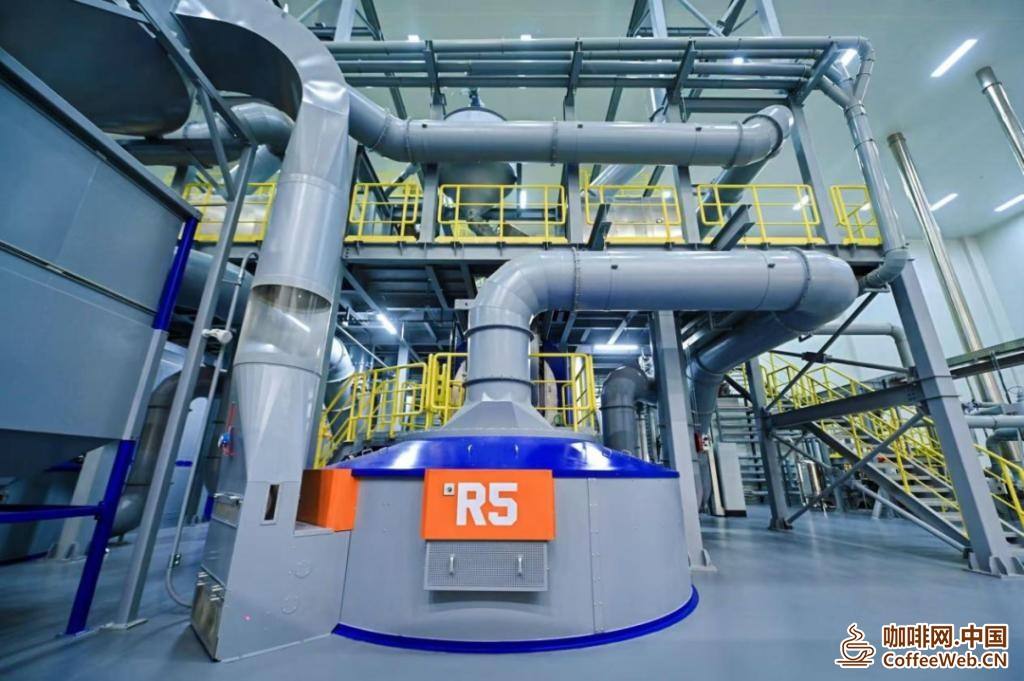
The world's top hardware equipment
Luckin Coffee must take these actions to consolidate its position as a giant:
Continuously deepening the global supply chain layout and enhancing upstream risk resistance capabilities;
Strengthening technology and data-driven approaches to build lower carbon and environmentally friendly factories, with the former consolidating the efficiency moat and the latter matching increasingly stringent ESG requirements;
Continuously unlocking various new scenarios, parasitizing coffee into other business formats, and exploring the infinite possibilities of "coffee+".
Once you understand these, you can understand why there are "coffee shops" in Shandong?
Firstly, it is the actuarial calculation of industrial endowment and policy design.
Shandong is the third largest province in China's economy, as well as a major agricultural and food industry province. For example, in Chengyang District, Qingdao City, where Luckin Coffee's innovative production center is located, there are popular snacks such as Wolong nuts, and milk caps used by major new tea beverage brands also come from here, with mature industrial workers and supporting enterprises. This mature industrial ecosystem provides coffee companies with comprehensive support from raw material collaboration to packaging materials, reducing overall operating costs.
Shandong has incorporated the coffee industry into its provincial strategic vision. The 15th Five Year Plan clearly lists light industry and textile (including food and beverage) as traditional advantageous industries, and promotes their intelligent and green transformation. Qingdao City will also introduce the "Action Plan for the Development of Modern Light Industry Industry" in 2025, with a focus on healthy food and beverages, and strive to exceed 250 billion yuan in revenue for enterprises above designated size by 2027. The Luckin Qingdao project has been listed as a key project for green, low-carbon, and high-quality development in Shandong Province in 2025, and has received full cycle guarantees from land approval to policy support.
Secondly, holding an irreplaceable trump card: world-class ports.
Qingdao Port is a hub connecting Japan and South Korea to the east, Central Asia to the west, ASEAN to the south, and North Mongolia to the north. It is the fourth largest port in the world and the second largest foreign trade port in China. It is also the largest import port for coffee beans in the north, with approximately 12% -13% of coffee beans entering China from here. In 2025, the value of imported coffee beans at Qingdao Port will reach 860 million yuan, a year-on-year increase of 14.7%. For 'major purchasers', this means that after raw beans arrive from core production areas such as Brazil and Ethiopia, they can directly enter the production line through the' front port, back factory 'mode, significantly reducing logistics and time costs.
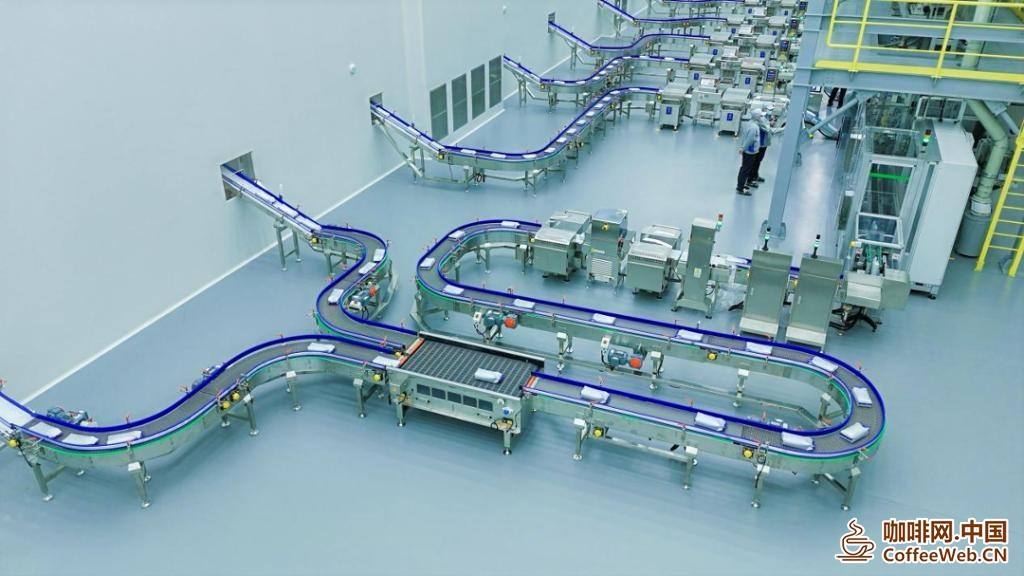
Fully automated production process
Whoever is closer to raw materials is closer to the market and initiative. This is not only an efficiency issue, but also the underlying logic of supply chain security.
Going further, Qingdao has opened up policy space for the coffee industry – the Qingdao Free Trade Zone has unveiled and operated a bonded spot delivery warehouse for coffee beans, and established a Brazilian boutique coffee China (Qingdao) promotion base and a coffee industry overseas base.
These measures have upgraded Shandong from a simple "passing station" to a strategic pivot with bonded warehousing, processing, transit trade, and international industrial cooperation functions. With Luckin Coffee's development momentum, it is bound to deeply influence the global coffee supply chain network, which is the underlying confidence.
Finally, there is the advantage of Shandong's hinterland.
Shandong is the second largest province in terms of population and is itself a huge consumer market.
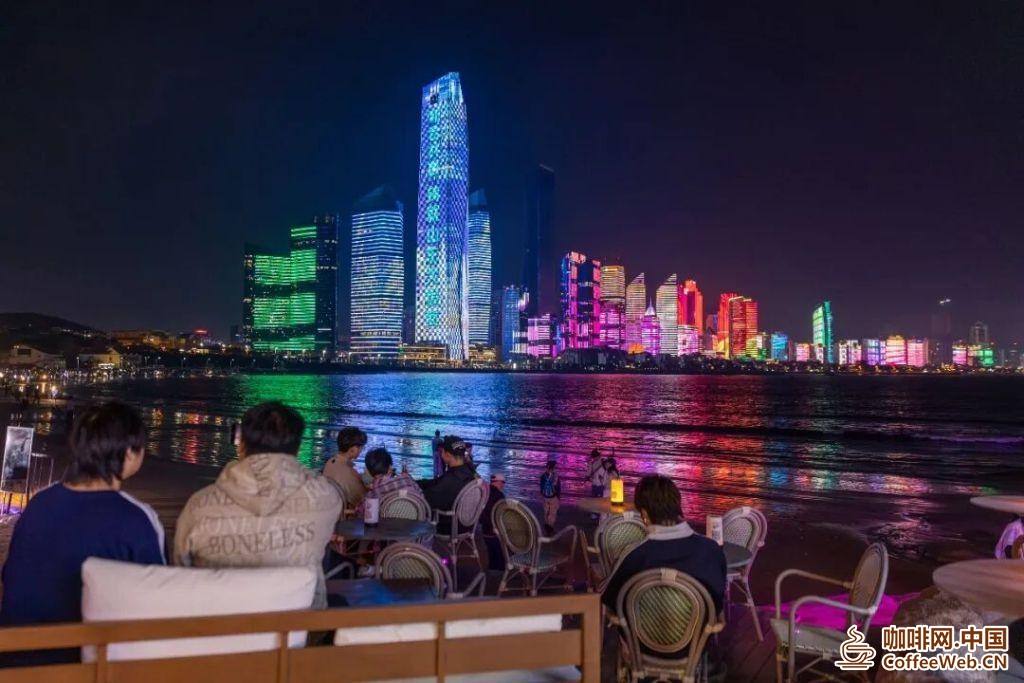
Taking Qingdao as an example, it has over 3000 coffee shops, roasting factories, and coffee shops, making it the "second coffee city in the north" after Beijing. It has nearly 300000 professionals in software information, finance, cultural tourism, and other industries, as well as 500000 college students. The consumer market is mature and full of vitality. As the location of Luckin Coffee's factory, Chengyang District has an average population age of only 36 years old. In the past few years, the growth rate of total retail sales of consumer goods has been the highest among all districts and cities in Qingdao, making it a typical highland of young consumer power. This provides a vast regional testing ground and growth foundation for coffee brands.
Photo by Meng Da
What is it to lock in the supply side through "industrial endowment+policy design", connect the circulation side through "world-class ports+bonded functions", and activate the demand side through "hinterland advantages+young consumption"? This is the deep integration capability of the supply chain.
Shandong, which is best at "hard manufacturing", has taken up the idea of developing "soft consumption" for coffee with such a systematic approach.