
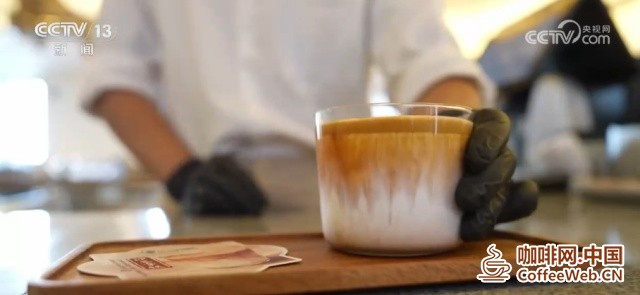
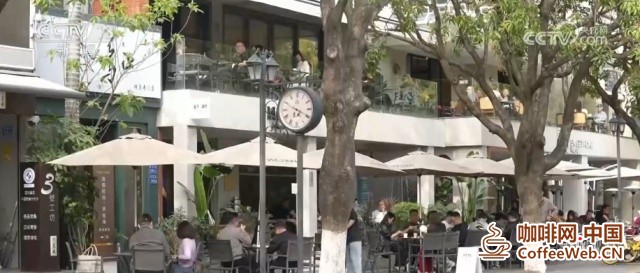
CCTV News: In Xiamen, Fujian, the density of coffee shops ranks among the top in the country, with over 2000 coffee shops of various types. Xiamen, which produces almost no coffee beans, has created a billion dollar scale industrial chain for coffee consumption. Where does the vitality of the consumer end come from?
20 years ago, this road was the earliest coffee street in Xiamen. Nowadays, there are an average of 7 coffee shops per square kilometer in the city. How many different types of coffee can be brewed in Xiamen?
Coffee shops can be seen everywhere on Xiamen Island. More than 20 years ago, the coffee shop at Xidi Villa by the banks of the Dongdang Lake opened. Back then, a cup of coffee cost 25 yuan, and the monthly salary of Xiamen people was only eight or nine hundred yuan.
Liu Lijuan, the deputy general manager of the coffee shop, introduced that there were many foreign customers in the early days, and the customer base was positioned as overseas returnees, white-collar workers, and private enterprise owners.
This is the "origin" of coffee consumption in Xiamen – starting from high-end niche. But today, coffee is no longer just a "thing for foreigners to drink", let alone a high-end consumer product. Cafes in Xiamen are using various methods to make this "imported drink" have a local flavor.
In Shapowei, a coffee shop that has transformed from a traditional supermarket into a trial run has added the familiar satay sauce of Minnan people to its latte, attracting many young people to come and check in.
The person in charge of the coffee shop, Zhu Sisi, said that they have been looking for Minnan flavors and turning childhood flavors into coffee, reflecting a taste that is suitable for all ages.
Taste localization, the scene is also changing. At Jimei Dashe, in the nearly century old overseas Chinese mansion Wenque Building, Minnan tea drinks, Nanyang style, and boutique coffee blend together.
Tourists from other places expressed that drinking coffee in a relatively iconic building is more relaxed and comfortable, and the local people's life may also be like this.
The creativity of young people is redefining the "gameplay" of coffee. This coffee shop, which often waits in line, has a bar counter placed in the center of the store like a stage by the post-2000s owner. The menu is updated quarterly. Some of the special notes have added mustard, while others have been blended with cinnamon and star anise.
The head of the coffee shop, Wu Yujie, said that there is too much homogeneity in the market, and they want to find some niche flavors that do not currently compete with them. This way, the customer base will also be relatively stable.
Industry insiders have observed that Xiamen's coffee supply is becoming more refined in response to the diversification of consumer demand.
Zeng Huashan, President of Xiamen Baking and Coffee Association, stated that coffee is now divided into three standards. One way is to use software to order a cup, which may cost more than ten yuan, and directly deliver it to the downstairs of your office building; One way is to welcome friends to a more stylish coffee shop today; The third way is to go to a famous teacher to experience the essence of coffee.
More importantly, the vitality of the consumer end is being transmitted upstream in the industrial chain. In a coffee roasting shop with a front and back factory, consumers can directly see the entire process from raw beans to cups.
The head of the coffee shop, Zhang Yunyan, said that coffee beans from various real estate areas around the world are gathered in the store and presented to consumers through good roasting and brewing. Coffee is not just a refreshing tool, it has many interesting flavors and stories.
A cup of coffee on the 'global' chain
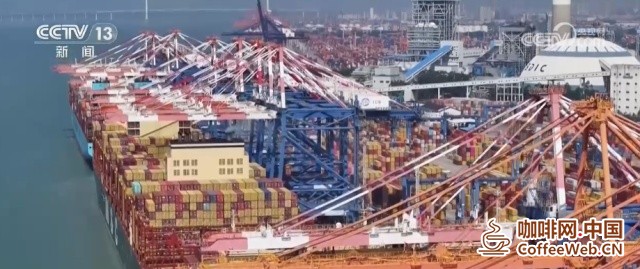
China is one of the fastest-growing coffee consumption markets in the world, and every time consumers unlock a new flavor, it drives the global supply chain. Nowadays, with coffee beans from about 25 countries and regions gathering in Xiamen, this city that does not produce coffee beans has become an important gateway for global coffee beans to enter China and a key market in the global coffee "big market".
By 2025, Xiamen will import over 8700 tons of coffee beans with a value of over 400 million yuan, a year-on-year increase of over 68%. Among them, the value of coffee beans imported from Ethiopia was 267 million yuan, a year-on-year increase of over 31 times, and the import volume of coffee beans in Xiamen accounted for a quarter of the country's total.
Chen Haojian, the head of the Inspection Department of Haicang Customs under Xiamen Customs, said that the fastest time from arrival at the port to entry into the warehouse is about 24 hours, with immediate inspection, priority inspection, and priority submission, bringing a "smooth" experience to enterprises.
According to Xiamen Customs statistics, by 2025, 5500 tons of bonded imported coffee beans will be distributed, and customs clearance, testing, and warehousing will be interconnected. Xiamen's coffee import channels are accelerating comprehensively. Coffee beans from all over the world are roasted, processed, and branded every day in Xiamen, providing a diverse consumer market in China and even globally with new formats and gameplay.
Lin Zhenya, Deputy Director of Xiamen Municipal Bureau of Commerce, stated that one out of the four imported coffee beans in China is imported by Xiamen enterprises. Through the distribution and distribution of coffee beans here, a transit trade center will be built.
This Taiwanese electronics company, which established a factory in Xiamen in 1992, transformed into the first factory in Xiamen to independently import raw beans in 2018.
Now, through cooperation with the American Specialty Coffee Association, this company's premium green bean processing capacity has reached 300 tons per year and is cultivating professional talents for the society.
At the same time, more and more domestic coffee brands are settling in Xiamen. A leading enterprise has surpassed 30000 global coffee stores and signed a 5-year, 240000 ton coffee bean purchase order worth billions with Brazil.
Lin Zhenya expressed her hope that leading enterprises can play the role of "chain owners" and attract not only domestic demand but also coffee brands to go global.
And more Xiamen coffee supply chain enterprises are extending their tentacles directly to the production areas and establishing first-hand procurement networks.
Wu Yawen, the head of the Procurement and Development Department of Xiamen Jianfa Life Materials Co., Ltd., stated that the team has overseas personnel stationed in Brazil, Vietnam, and Ethiopia to directly negotiate with local top exporters and rural cooperatives. Previously, there were few channels for purchasing, and many links in between were opaque. They personally flew there, bringing the distance closer.
The 'strong chain' is also reflected in the coffee utensil manufacturing industry. This coffee utensil company was founded in Shanghai and moved its headquarters to Xiamen four years ago. The grinder is exported to more than 100 countries and regions.
Wu Jiajia, the head of new media at a coffee utensil company, introduced that the traditional high-end market is dominated by old foreign brands, but they have their own drilling and grinding core performance, benchmarking against top foreign brands, and even surpassing them. Their products have won the Red Dot Award. Relying on China's high-precision supply chain, innovative products are implemented with high quality.
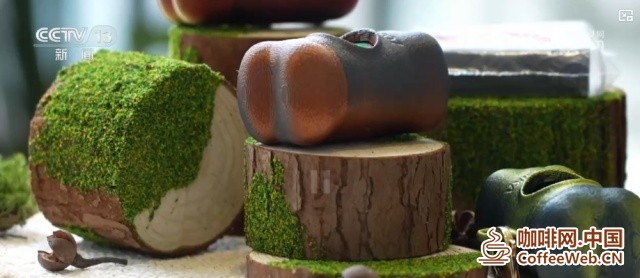
The rapidly expanding coffee market in Xiamen has also found new opportunities for domestic coffee beans. At the beginning of 2026, the first Yunnan coffee train will directly reach Xiamen, connecting high-quality production areas in China with the fast track of processing bases along the southeast coast. Beyond the consumer end, Xiamen's coffee industry chain is still extending deeper, even coffee grounds are being reused – growing succulents, making filters, and making cat litter.
Lin Zhenya stated that there are also such enterprises in the coffee industry, and the implementation of green products is a form of circular economy, while also achieving carbon reduction goals.
A cup of coffee blends the flavors together
Statistics show that the coffee industry scale in Xiamen has exceeded 60 billion yuan, and is accelerating the construction of the "four major centers" of national coffee headquarters cluster, international coffee trade, southeast coastal coffee production and processing, and national coffee circulation and consumption. Beyond the industrial framework, in a cup of coffee, human touch and cultural flavor intersect and blend together here.
The relevant person in charge of Xiamen Baking and Coffee Association said that the consulate on Gulangyu brought the lifestyle of drinking coffee and hosting dance parties over and gradually grew in the soil of Xiamen. The coffee habits brought back by overseas Chinese in Nanyang and the daily tea and Dim sum of Minnan people also left their marks in this cup. The taste of Xiamen coffee has always been the result of the intersection of diverse cultures, and later Taiwanese coffee brands landed one after another, making the taste of this cup of coffee even richer.
On Gulangyu Island, Taiwanese businessman Chen Fangyu came to Xiamen from Tainan in 2014, and her ancestral home is across the Jiulong River. In 1989, he came back with his father to search for his roots. Due to the close geographical proximity, cultural exchange, and even brotherhood, he chose this place as his first stop for entrepreneurship. In 2019, he opened a coffee shop called "Gandan" on Gulangyu Island – a homophone of "simple" in Minnan dialect. But he didn't expect that this small caf é was connected to people like him who came across the sea, pushed the door in for a cup of coffee, and found memories about "home".
From Tainan to Gulangyu, a cup of coffee connects daily life on both sides of the Taiwan Strait.
From the background of Kulangsu's century old hometown of overseas Chinese to the blending and mutual learning of coffee drinkers on both sides of the Taiwan Straits, a cup of coffee contains not only the coffee itself, but also the unique aroma in the travel bags of returned overseas Chinese from Southeast Asia, the sweet return of Minnan tea with Dim sum, and the root seeking memory of the words "I'm back" from Tainan to Kulangsu. Nowadays, this cup of coffee with warmth is no longer just a daily life for locals, but has also traveled further along Xiamen's trade routes.