
Interface News Reporter | Fan Yicheng
Interface News Editor | Zhuang Key
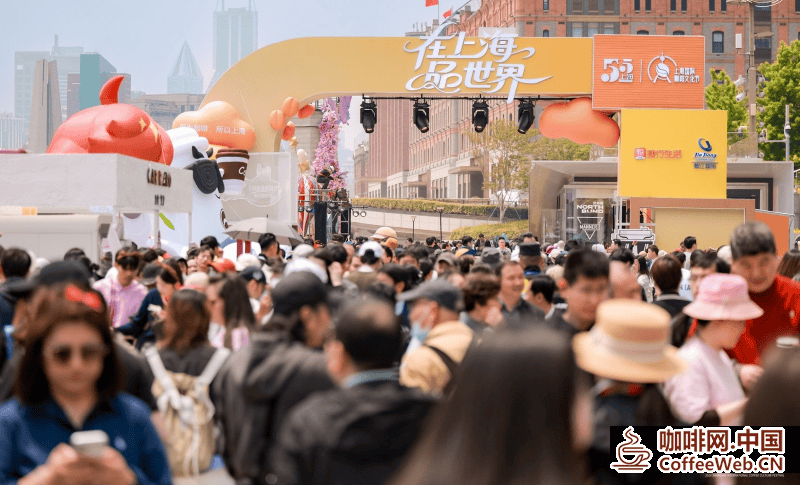
The 2.3-kilometer riverside line of Hongkou North Bund in Shanghai has transformed into a coffee "theme park" today, marking the opening of the 5-day 2026 Shanghai International Coffee Culture Festival. More than 300 coffee brands and industry chain enterprises gather here to hold over 50 benchmark events and over 40 professional coffee competitions.
In the early days, the coffee festival was more like a 'coffee shop gathering' where everyone set up stalls to sell coffee. However, in recent years, the enthusiasm of upstream enterprises in the coffee industry chain has been increasing. "The relevant person in charge of the Shanghai Cultural and Creative Industry Promotion Association, the organizer, told Interface News that about half of the participating brands and enterprises this year come from surrounding cities such as the Yangtze River Delta.
Compared to before, the participants of the coffee festival are not only coffee shops, but also various enterprises in different links of the industry chain such as coffee beans, coffee machines, and coffee utensils. In addition to selling products, the coffee festival has also become an excellent place for industry exchanges, technical exchanges, and upstream and downstream docking.
In the view of the above-mentioned person in charge, the function of the coffee festival is to "have a drink" for consumers, while for coffee practitioners, it is to "run a chain".
Behind the lively coffee festival lies a deeper regional economic proposition: as the "number one coffee city" in the world, Shanghai's coffee consumption demand, capital, and brand output are driving the rapid development of the coffee industry chain in the Yangtze River Delta region, demonstrating the strong spillover effects of the coffee economy.
2026 Shanghai International Coffee Culture Festival Photo source: Provided by the interviewee
The "2026 China Urban Coffee Development Report" released during the Coffee Festival shows that the scale of China's coffee industry will reach 354.9 billion yuan by 2025, a year-on-year increase of 13.3%. The number of coffee shops in Shanghai has increased from 6193 in 2021 to 10336 in 2025, surpassing the threshold of 10000 shops.
Such a huge consumer market will inevitably generate a huge demand for upstream supply chains. Kunshan, which is only 60 kilometers away from Shanghai, is undoubtedly an excellent observation sample.
Once upon a time, Kunshan was a manufacturing city that did not produce a single green bean. But today, walking in Kunshan Development Zone, coffee giants such as Starbucks and Luckin Coffee have densely distributed roasting bases and numerous specialty cafes. In just a few years, it has transformed into the "capital of the international coffee industry".
The above changes began in 2017, when Kunshan, which was neither a coffee bean producing area nor had an industrial foundation, took advantage of its proximity to the Shanghai coffee consumption market and manufacturing base to test the waters and introduce the first coffee enterprise – Yizheng Coffee, which positioned itself as a green bean processing company, laying the "seeds" for the development of the industry.
In 2020, Starbucks China Coffee Innovation Industrial Park, covering an area of approximately 80000 square meters with a total investment of 130 million US dollars, settled in Kunshan Development Zone. In November of the same year, Yizheng Food, with a storage capacity of 9000 tons of raw beans and a roasting capacity of 23000 tons of coffee, was put into operation.
In 2021, Kunshan established a comprehensive protection zone coffee industry investment promotion team, actively connecting with industry enterprises, relying on a group of "leading geese" in the coffee industry to attract more upstream and downstream enterprises to settle down, generating a clustering effect.
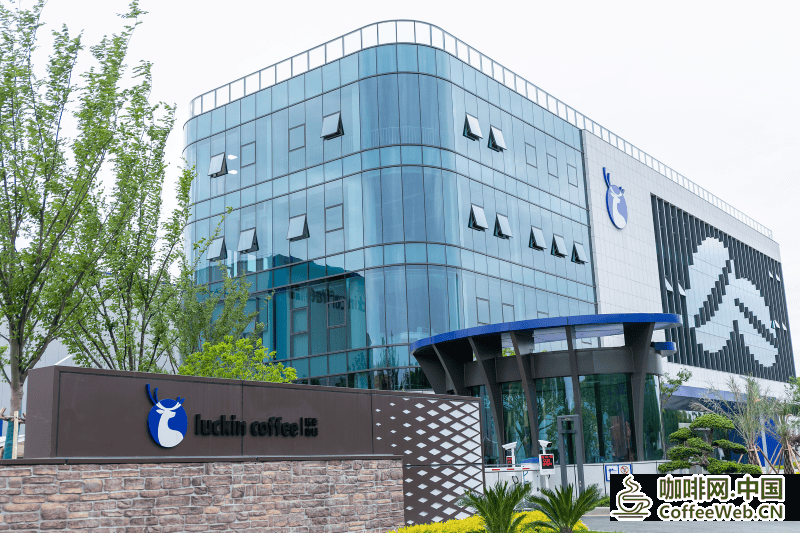
In 2022, one year later, Luckin Coffee invested $120 million to build a roasting factory in Kunshan with an annual production capacity of 30000 tons, making it Luckin Coffee's largest productive investment to date.
Luckin Coffee Kunshan Baking Base Image Source: Visual China
The implementation of these projects is closely related to the Shanghai consumer market. Taking Luckin as an example, by the end of 2025, it has over 1600 stores in Shanghai, making it the city with the most Luckin stores worldwide.
In the Yangtze River Delta region, Luckin Coffee focuses its supply chain on Kunshan, integrating and creating a vertical supply chain to control the quality of the entire production process from a green bean to a cup of coffee, in order to support its future and longer-term development goals.
According to Interface News, as of 2025, Kunshan Development Zone has cultivated and introduced a total of 43 leading coffee companies, including Starbucks, Luckin Coffee, Vietnam's Zhongyuan Legend, and Switzerland's Suquefina. In 2025, the annual revenue of the coffee industry will exceed 10 billion yuan, with a year-on-year growth of over 20%.
Kunshan has established carriers for green bean trade distribution, platform trading, research and development baking, brand sales, etc., achieving a "full chain" layout of "one green bean to one cup of coffee".
The coffee industry chain includes three links: upstream planting, midstream processing, and downstream circulation, and Kunshan focuses on the midstream trade, baking, and deep processing.
At present, Kunshan has 12 coffee roasting enterprises, with significant leading effects. Starbucks, Luckin Coffee, Yizheng, and Zhenjin, four roasting enterprises, have a total investment of nearly 8 billion yuan in Kunshan, with a factory area of over 300000 square meters. By 2025, the total coffee roasting volume will be about 93000 tons, a year-on-year increase of about 35%.
The person in charge of Kunshan Development Zone revealed to Interface News that in the next stage, coffee roasting enterprises in Kunshan will continue to expand their capacity. The billion liter coffee project with an annual output of 46000 tons will be completed by the end of the year and is expected to be put into operation by the end of the year. In addition, small and medium-sized enterprises such as Koehler and Xuanrui will gradually expand their capacity to the 1000 ton level.
In March of this year, Novacoffee officially opened a roasting factory with an annual production capacity of up to 20000 tons in Ningbo, Zhejiang. For this coffee company born in Shanghai in 2019, this step is of great significance.
The person in charge of Novacoffee told Interface News that the company already has a roasting factory with an annual production capacity of 1000 tons in Ningbo, and the new factory's production capacity will reach 20 times that of the former. Building a self built supply chain is the key to building long-term barriers, which helps to better control costs and bring more profit margins to franchisees, "said the person in charge.
The expansion process of Novartis can be seen as a representative of Shanghai coffee brands achieving scale transition by leveraging the Yangtze River Delta industrial chain. By the end of 2025, its officially announced store count will exceed 10000, becoming the fourth chain coffee brand in China to surpass 10000 stores, following Luckin Coffee, Kudi Coffee, and Lucky Coffee.
What supports its scale of ten thousand stores is the deep layout of the supply chain. In this process, cooperation with Ningbo State owned Assets can be described as a win-win situation.
Ningbo state-owned enterprise Yongshan Holdings has supported the local construction of a coffee industry chain center covering roasting and processing, research and development, logistics, and cultural display through an innovative model of "equity investment+factory construction" in its cooperation with Novacoffee, driving the development of Ningbo's coffee related supporting industries.
Besides Jiangsu and Zhejiang, spillover effects are also reflected in Anhui. Kudi Coffee's global supply chain base in Anhui will start production in the second half of 2023, with a total investment of approximately 200 million US dollars. We have a supply chain project that includes coffee roasting, food ingredients, packaging materials, and other supporting facilities.
Last July, the super factory within the global supply chain base of Kudi Coffee announced the start of construction. Its total construction area is about 340000 square meters, with a planned annual production capacity of 4 billion cups of freshly made beverages. It will become one of the largest and most comprehensive factories in the global coffee industry in terms of individual production and product categories.
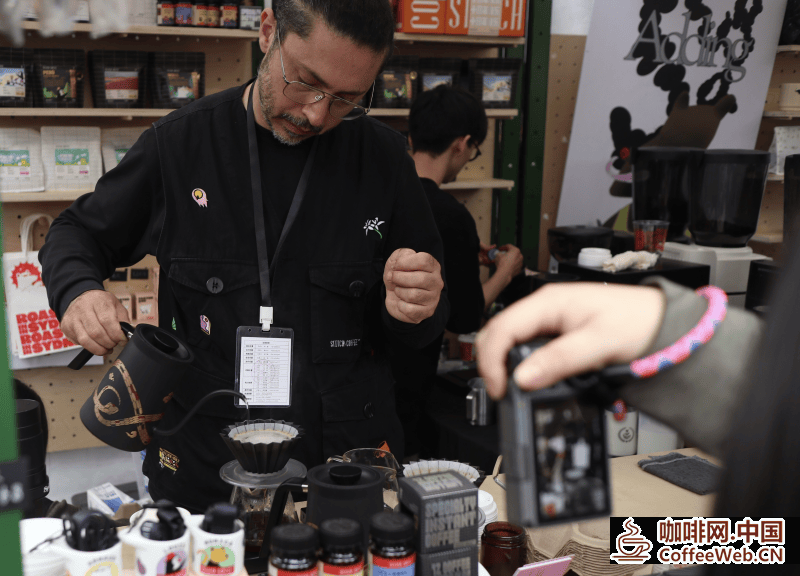
Numerous coffee festivals are held in Shanghai. Photo by journalist Fan Yicheng
Behind the coffee processing industry chain in the Yangtze River Delta, Hongqiao International Coffee Port located in Shanghai plays the role of a coffee trade hub.
For every two cups of coffee sold in Shanghai, one cup of coffee beans comes from the coffee port. "In the view of Zhu Jing, Deputy General Manager of Shanghai Hongqiao International Import Commodity Exhibition and Sales Co., Ltd., the form of Hongqiao International Coffee Port itself is a carrier of spillover effects. It not only attracts global coffee beans to gather in Shanghai, but also radiates to coffee processing enterprises and consumer markets in the Yangtze River Delta.
Zhu Jing stated in an interview with Jiemian News that nearly ten thousand coffee shops in Shanghai generate a huge and stable demand for raw materials every day. This large-scale order directly supports the operation of roasting factories in Jiangsu, Zhejiang and other places, enabling the coffee industry chain in the Yangtze River Delta to achieve a complete closed loop from raw bean storage, roasting and processing to brand distribution, and promoting the entire industry belt from fragmentation to scale.
Shanghai, where Hongqiao International Coffee Port is located, is also the largest distribution center for imported coffee beans in China. By 2025, the import amount of coffee beans in Shanghai will exceed 3 billion yuan, ranking first in the country.
We have a complete global procurement channel, and the Yangtze River Delta region has the strongest baking and processing cluster in the country. This complementary function is unique in the whole country, "said Zhu Jing. Hongqiao International Coffee Port currently gathers coffee beans from about 60 countries, with more than 200 coffee related enterprises settled in, driving an annual trade volume of about 3 billion yuan.
Hongqiao International Coffee Port has also established deep linkage with Kunshan. In the past year, it has helped multiple Kunshan roasting factories expand their raw bean procurement channels and roasting processing orders, accelerating the release of roasting capacity in Kunshan and supporting coffee supply in the Shanghai market. At present, the Kunshan branch of Hongqiao International Coffee Port has also been unveiled and put into operation.
Last year, the "Hongqiao International Coffee Industry Alliance" jointly initiated by eight coffee upstream and downstream enterprises from the Yangtze River Delta was officially established. The alliance takes Hongqiao International Coffee Port as the core platform, links the entire industry resources, and focuses on promoting the construction of coffee industry clusters, the cultivation of professional skilled talents, and the enhancement of local brand competitiveness.
After one year of construction and operation, the "Hongqiao International Coffee Industry Alliance" has gradually developed from the initial 8 enterprises into an industrial ecosystem covering green bean trade, equipment manufacturing, brand operation, digital platform, financial services, standard setting, and international cooperation.
During this year's coffee festival, with the signing and implementation of the contract with the Asian Coffee Association, the internationalization level and industry collaboration level of the alliance will reach new heights. We are confident that this will be an opportunity to promote higher-level open cooperation and higher quality development of the coffee industry chain in the Yangtze River Delta and even across the country, "said Zhu Jing.
A cup of coffee on the streets of Shanghai extends across the industrial chain of Shanghai, Jiangsu, Zhejiang, and Anhui, reflecting not only the market wave of consumer upgrading, but also the deep synergy of the Yangtze River Delta economy. From the baking cluster in Kunshan to the supply chain base in Ningbo, from the trade hub in Hongqiao to the super factory in Anhui, a "coffee economic belt" driven by market division of labor is accelerating its formation.