
Speaking of coffee, I believe many people used to think that it was synonymous with a high-end lifestyle. If you go to a coffee shop to buy a cup of coffee without posting it on your social media, you feel sorry for this cup of coffee. It is precisely under this trend that boutique coffee has begun to rise in China. However, with the recent news of the bankruptcy of the well-known boutique coffee Seesaw, why is the path of boutique coffee so difficult to take?
1、 Seesaw Coffee is bankrupt?
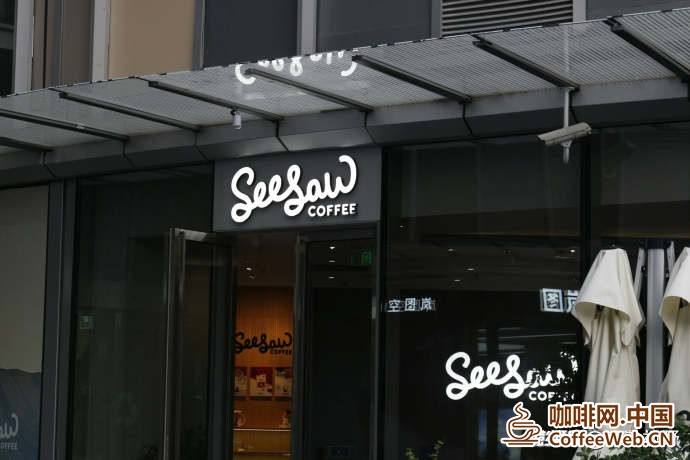
According to Interface News, the operating company of boutique coffee brand Seesaw Coffee has filed for bankruptcy.
According to the Qichacha APP, Seesaw Coffee's operating entity, Shanghai Xishe Coffee Co., Ltd. (hereinafter referred to as Xishe Coffee), currently has multiple bankruptcy review cases, with the applicants being Shanghai Liuli Workshop Glass Art Co., Ltd. and Shanghai Malu Industrial Co., Ltd. The applicant has applied to the court for bankruptcy liquidation of Xishe Coffee on the grounds that it is unable to repay its due debts and clearly lacks the ability to repay.
Xishe Coffee has recently added two new court announcements, one for disputes over transportation contracts and the other for disputes over sales contracts. In addition, since 2026, Xishe Coffee and its legal representative, Seesaw Coffee founder Wu Xiaomei, have been repeatedly restricted from high consumption.
Xishe Coffee was previously exposed for abnormal business operations. In November last year, the company was listed in the list of abnormal operations by the Shanghai Municipal Administration for Market Regulation due to the inability to contact its registered residence or business premises. As of now, the company has 8 pieces of executed person information, with a total executed amount of 14.1087 million yuan; There are 20 records of dishonest individuals who have been executed, with a total amount of 10.3799 million yuan involved in the case.
Seesaw Coffee was founded in 2012. At that time, the only well-known high-end coffee in China was Starbucks, and the development of local chain specialty coffee was almost in a blank state. After its establishment, Seesaw Coffee presented concepts such as "premium coffee beans" and "hand brewed coffee items" to domestic consumers, filling the gap in the domestic coffee market. Therefore, it was once known as the "Huangpu Military Academy of Premium Coffee".
2、 Why is the road to premium coffee so difficult?
Recently, news of Seesaw Coffee's bankruptcy has spread like a stone thrown into a calm lake, causing ripples to form. Behind this, it actually reflects the awkward situation of boutique coffee struggling to survive in the entire coffee industry landscape. How should we view this matter?
Firstly, there is a natural opposition between economies of scale and premium genes. In recent years, with the rapid development of the Chinese coffee market, chain brands represented by Luckin Coffee and Kudi have completely changed the underlying logic of the industry, forming strong economies of scale. The core of such economies of scale lies in their ability to effectively reduce fixed costs through a large number of stores and standardized industrial assembly lines, thereby maintaining overall commercial operations in the era of low profits. In contrast, the business model of specialty coffee is genetically determined by its high operating and labor costs.
Premium coffee emphasizes the spatial aesthetics of "one shop, one color" and the extraction skills of professional baristas, which means it cannot achieve ultimate standardization and de artificiality like industrial coffee. When a boutique coffee shop tries to support a single store model with high rent, exquisite decoration, and scarce professional talent, its profit model is actually very fragile. Once there is a fluctuation in customer flow or unit price, high fixed costs can crush a company's cash flow like a mountain. This is also why we see many boutique coffee brands appearing glamorous during their expansion period, but once they encounter market headwinds, their funding chains often break in an instant.
Secondly, the price war of 9.9 yuan reshapes the consumer mentality of the masses. The 9.9 yuan price war sparked by Luckin Coffee and Kudi is not a short-term marketing strategy, but a complete reshaping of Chinese consumers' perception and consumption expectations of coffee prices. For the vast majority of ordinary consumers, the core value of coffee is "refreshing" rather than "tasting". They rush to buy a cup in the morning and have a drink in the afternoon when they are tired. Their demand is simple and direct, and their price sensitivity is extremely high. They react greatly to price fluctuations and are indifferent to differences in coffee flavor. Under this demand, consumers will not be willing to pay for the "fruity aroma of Guixia" or the richness of Mantine, but will only be torn between "9.9 yuan or 12.9 yuan".
The long-term baptism of price wars has led to a fixed perception among the public that "coffee should cost more than ten yuan". Once the price exceeds 20 yuan, it will be labeled as "expensive". However, Seesaw's average customer price has remained around 30 yuan for a long time, which is considered a "premium" in the mass market and far less cost-effective than Luckin and Kudi. What's even more frustrating is that the price war not only lowers the price ceiling, but also compresses the price reduction space for premium coffee. If Seesaw reduces the price to less than 20 yuan, the cost of a single cup cannot be covered, and it will only lose even more; Maintaining the original price will result in losing the majority of consumers and falling into a dilemma of "no price reduction, no customer flow, or loss if the price is reduced". This survival space locked by price wars makes it difficult for specialty coffee to establish a foothold in the mass market, and can only be trapped in niche circles, making it difficult to break through growth bottlenecks.
Thirdly, capital catalysis makes management highly susceptible to deformation. Brands like Seesaw, after gaining attention through differentiated positioning in the early stages, inevitably introduce capital. But the nature of capital is profit driven and requires a return cycle. It doesn't have the patience to wait for you to slowly develop a perfect single store model. Under the influence of capital, in order to meet the requirements of expansion and gambling agreements, specialty coffee often chooses the most dangerous path, aggressive expansion.
From the core business district of first tier cities to the sinking market, suddenly from dozens of stores to hundreds of stores. This expansion will inevitably bring about changes in management. Your quality control cannot keep up, you cannot find enough qualified boutique baristas, and your SOP is virtually non-existent in the rapid expansion. The result is that opening a store for the sake of quantity and compromising on quality, ultimately losing the original core loyal customers and failing to capture the price sensitive users in the mass market, both ends are not pleasing. This kind of tearing between scale and quality is almost a common problem for all premium coffee that has been matured by capital.
Fourthly, the limitations of public perception of coffee have destined that specialty coffee is a niche business. We need to recognize a cruel but real consumption situation, which is that most ordinary consumers still have a very basic understanding of coffee. There's nothing to avoid about this, it's a necessary stage in the development of the industry. If you randomly pull someone on the street to buy a 9.9 yuan coffee, they are unlikely to be able to taste the essential difference between Guixia's citrus jasmine and Mantine's herbal mellow bitterness. In most people's taste buds, coffee is bitter, and adding milk and sugar is sweet. This cognitive barrier makes the road to high-end boutique coffee extremely difficult. Because of your high premium, you need to have equivalent cognitive ability to undertake it. When consumers cannot perceive your differentiated value, your "boutique" label is seen as an "intelligence tax" in their eyes.
So, we need to be aware that boutique coffee is inherently destined to be a niche vertical market belonging to a few elites. It's like high-end custom clothing, it has a living space, but this space is extremely limited. As long as you have ambition and try to turn boutique products into industrial coffee assembly lines like Luckin Coffee, or try to force niche high-end aesthetics into affordable consumption for the masses, you often face huge difficulties. Because this is a conflict at the bottom of the business model, a backlash against the laws of the industry.