
Observation of Lei Jun in Tea Caf é
Editor | Meng Jiayi
It's time to let go of Kenyue Coffee, which grew up sticking to KFC.
Next to KFC at the entrance of the community, across from KFC on the ground floor of the office building, and not far from KFC on the first floor of the shopping mall – you can always see the red and white "K COFFEE" logo.
Since its inception, Kenyue Coffee has chosen to expand by relying on the KFC store network, with a large number of stores co located or adjacent to KFC. In three years, the number of stores has been expanded to 3300. Ding Xiao, Chief Financial Officer of Yum! Brands China, stated at the performance meeting that the target of 5000 stores for Kenyue Coffee has been advanced from the original plan of 2029 to 2027.
While the number of stores is rapidly increasing, Kenyue's store network is also undergoing frequent adjustments.
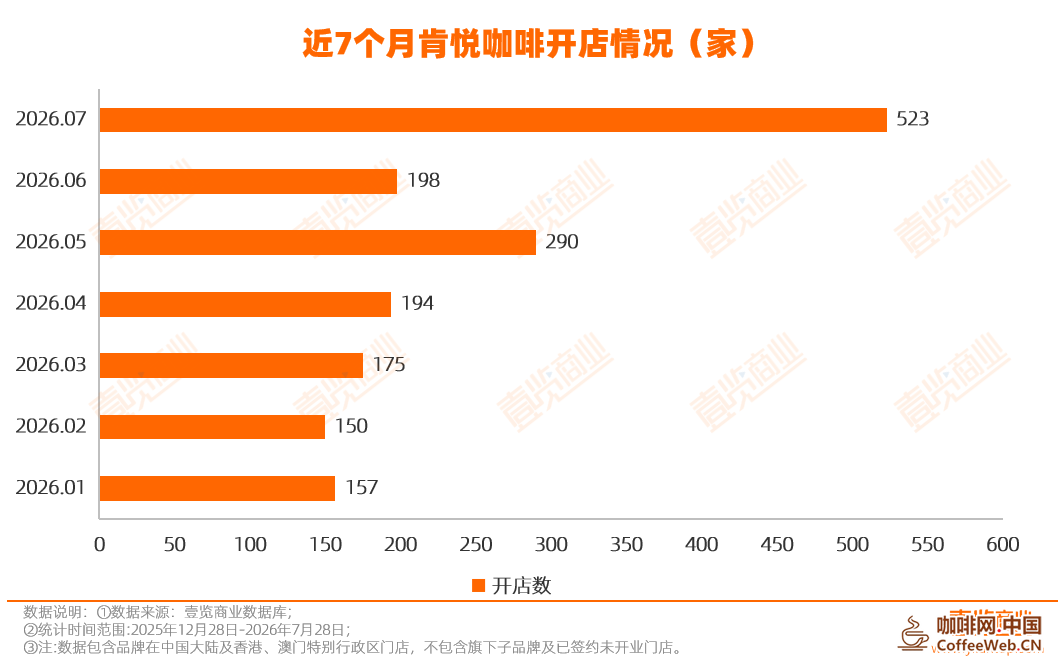
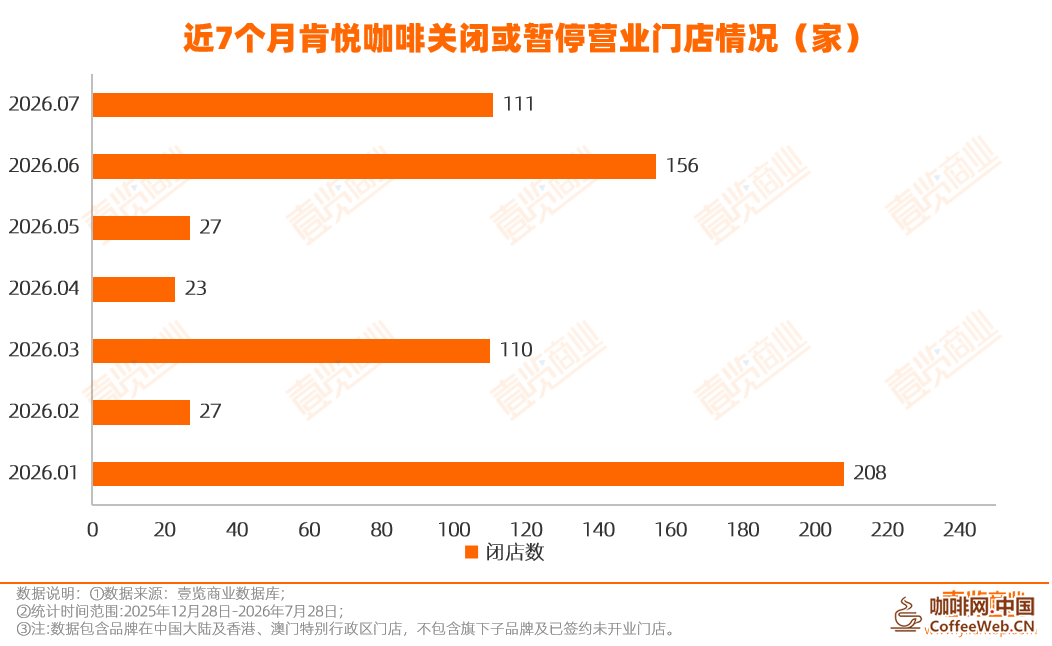
Tea coffee observation found that in the past 7 months, Kenyue Coffee has opened over 1600 new stores and closed or suspended 660+stores, almost closing one for every two stores opened.
01. Open 1600+stores in 7 months
According to business data from Yilan, in the past 7 months, Kenyue Coffee has opened a total of 1687 new stores, second only to Luckin Coffee, Kudi Coffee, and Novah Coffee, ranking among the top four in terms of coffee expansion speed. Among them, 523 stores were opened in a single month in July, setting a record for the highest number of stores in the cycle.
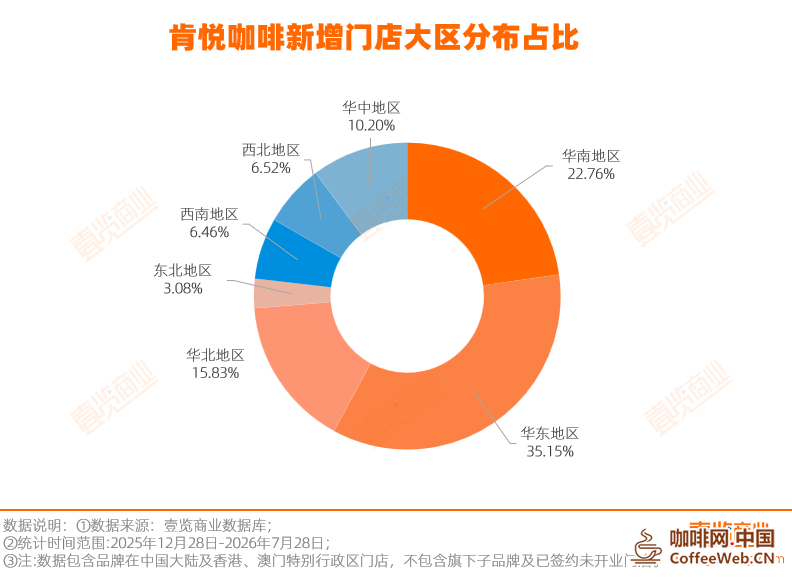
The East and South China regions are the main strongholds. 593 new stores were added in the East China region, accounting for 35.15%, and 384 new stores were added in the South China region, accounting for 22.76%. In addition, the proportion of newly added stores in North China and Central China exceeds 10%, and store expansion is relatively active, while the proportion in Northeast China is only 3.08%.
The rapid expansion of Kenyue Coffee is highly related to the mature store network of Yum China, especially KFC. As of the end of July, over 60% of KFC's 13732 stores nationwide are located in high tier cities, and Kenyue Coffee's new stores are also clearly concentrated in the high tier market. A total of 1128 stores have been opened in 49 second tier and above cities, accounting for 66.86% of the new stores.
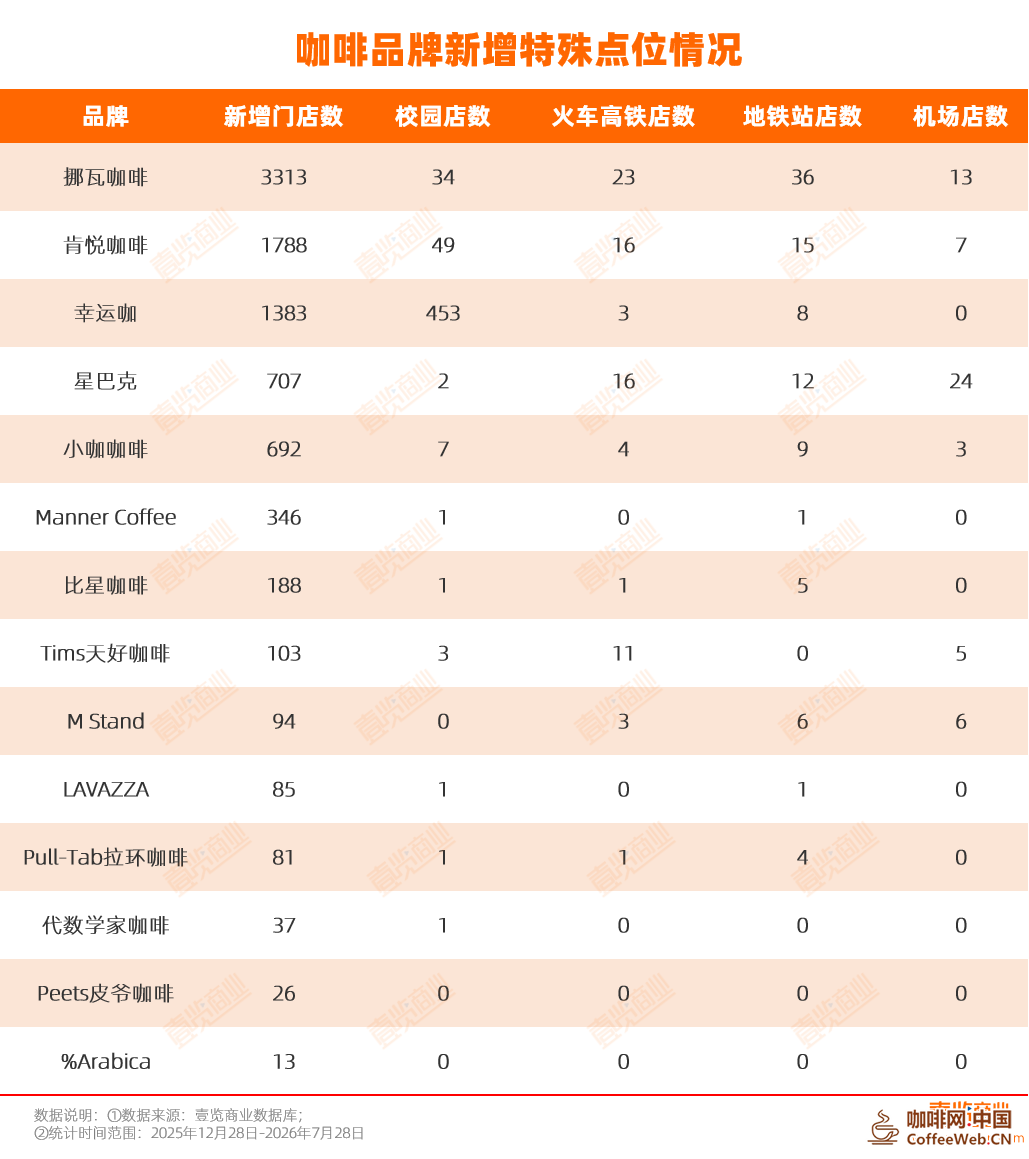
The high overlap in market distribution between the two provides a foundation for Kenyue to reuse KFC's existing locations. Tea coffee observation found that Kenyue Coffee also relies on the KFC store network to enter high traffic points such as campuses, high-speed railway stations, hospitals, and airports. According to Yilan Business Data, in the past 7 months, Kenyue Coffee has ranked second in the industry in terms of the number of new campus stores and subway station stores, and third in terms of the number of railway station and airport stores.
For example, since the beginning of this year, Kenyue Coffee has newly settled in 16 high-speed railway stations such as Hangzhou East Station and Ningbo Station, 12 subway stations such as Huaide Subway Station, and 7 airports such as Changbei Airport. 49 universities including Southwest Petroleum University and Hangzhou Normal University have also opened new stores. From the verifiable store addresses, all stores are located within or co located with KFC.
In addition, Kenyue Coffee has settled in at least 5 hospitals including Shaanxi Provincial People's Hospital and Foshan Heyou Hospital, and has also laid out at least 9 scenic spots including Mingsha Mountain Moon Tooth Spring, Yungang Grottoes, and Zhangye Colorful Danxia.
The value of these special channels lies in their typically high customer flow stability, but at the same time, they place higher demands on brand qualifications, operational capabilities, and supply chain stability.
For a coffee brand that has not been established for a long time, Kenyue is able to enter a large number of special channels in a short period of time, largely benefiting from the property cooperation and operational resources accumulated by Yum China over the years.
KFC has solved the problem of "where to quickly open" for Kenyue, but with more and more stores, another problem has also begun to emerge: are all the existing consumption scenarios of KFC suitable for the coffee business?
02. Closed 660+stores in 7 months
The other side of rapid expansion is the rapid replacement of stores.
In the early days, a large number of Kenyue Coffee stores used the existing locations and consumption scenarios of KFC. As the scale expanded, the matching degree between some scenarios and coffee demand began to be tested.
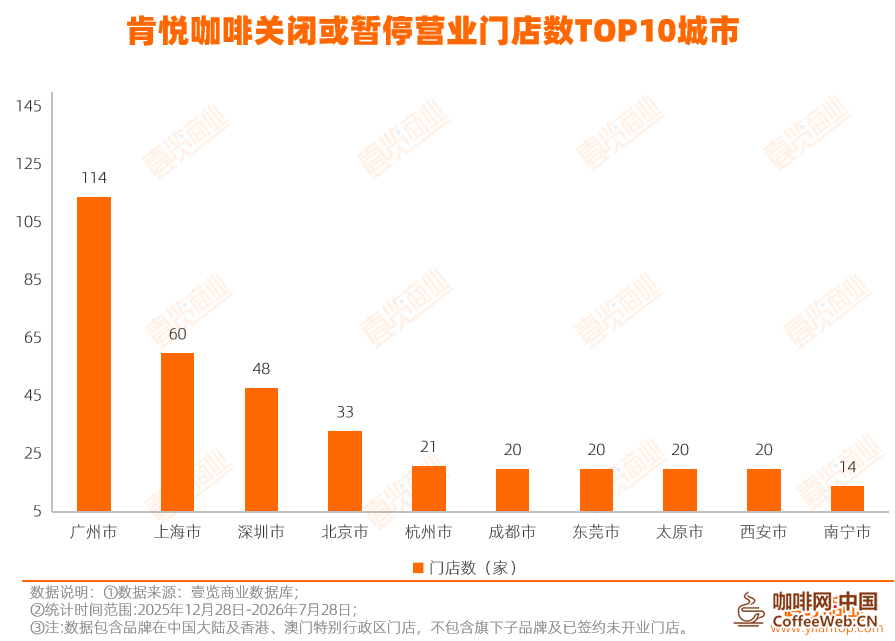
According to Yilan Business Data, in the past 7 months, Kenyue Coffee has closed or suspended 662 stores, with a peak in January at 208 stores.
From a city perspective, the top ten cities with the number of closed or suspended stores of Kenyue Coffee since the beginning of this year are all second tier and higher tier cities. Guangzhou has the largest number, accounting for 17.22% of the total number of closed or suspended stores; There are 60 in Shanghai and 48 in Shenzhen, accounting for over 30% of the total.
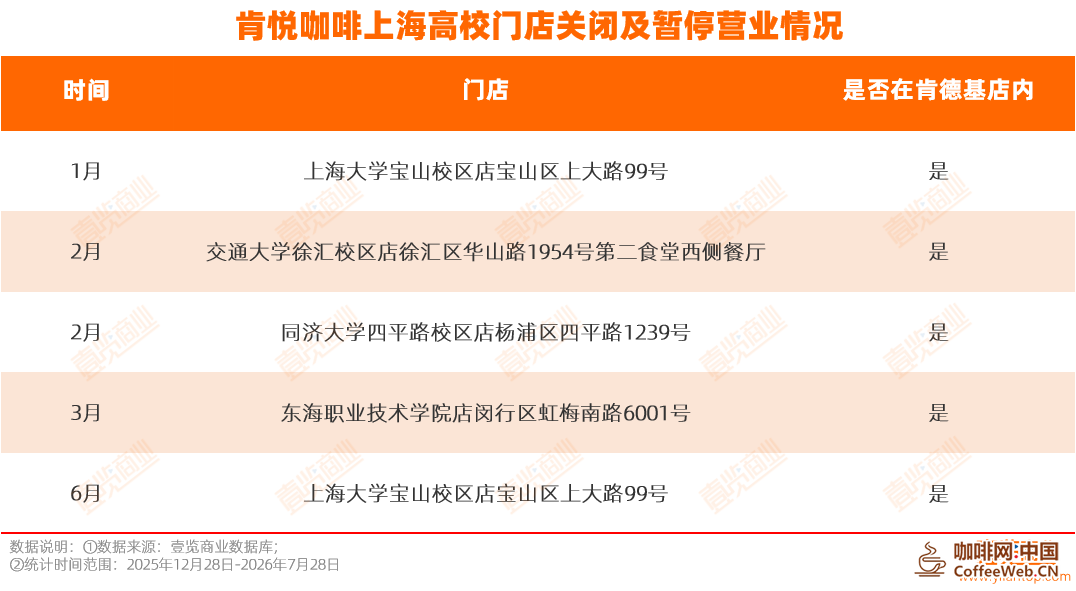
Divided by store scenarios, a total of 73 university stores closed or suspended operations in the first seven months of this year, accounting for about one tenth of the total number of store closures. Taking Shanghai as an example, there are a total of 5 campus stores that have closed or suspended operations, all of which are located within KFC stores.
Entering a new university while closing existing campus stores indicates that the campus scene is still in the continuous screening stage. Students are highly sensitive to prices, and winter and summer vacations can cause significant fluctuations in customer flow. The population size, business environment, and competition density of different schools may all affect the performance of individual stores.
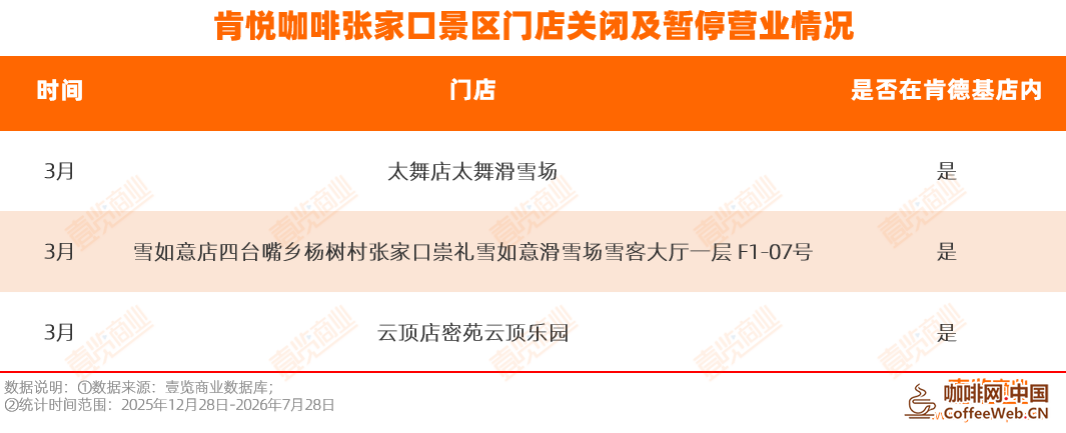
Scenic area stores located within KFC stores exhibit strong seasonal characteristics. Taking Zhangjiakou, Hebei Province as an example, all ski resort stores, including Taiwu, Xueruyi, and Yunding ski resorts, have been closed, and the time basically coincides with the end of the snow season.
Regarded as a transportation hub for expansion and new progress, it is also opening and closing at the same time, and without exception, it relies on KFC. There are 13 transportation hub stores on the store closure list, including Chengdu Tianfu Airport T2 store, Shijiazhuang Zhengding Airport security check store, Lanzhou Airport T3 store, Tianjin West Station store, etc.
From communities and universities to scenic spots and transportation hubs, Kenyue continues to enter new consumption scenarios while closing some existing stores, re screening which scenarios are more suitable for the coffee business in the high-speed expansion.
However, closing the store does not mean that the overall business performance of Kenyue Coffee will weaken synchronously. Ding Xiao, Chief Financial Officer of Yum! Brands China, stated at the earnings conference that with the competition for freshly made beverage takeout becoming more rational and consumer brand awareness increasing, the daily average number of cups sold by Kenyue Coffee is now higher than before the "takeout war".
Yum China's Q2 performance materials also show that Kenyue Coffee has brought mid single digit sales growth to KFC stores that share resources with it, and module profit margins are also improving. At least in terms of overall performance, the "shoulder to shoulder" model still has business value.
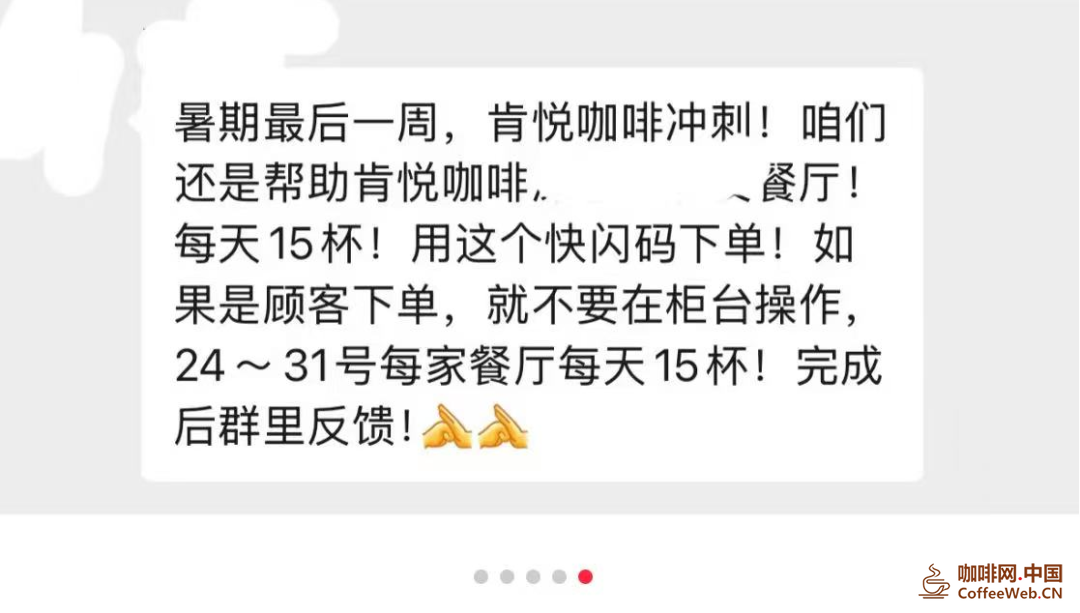
At the same time, there are still some differing opinions regarding terminal operations. A netizen on Xiaohongshu posted that some Kenyue coffee shops have employees brushing orders. Due to the fact that the current public information only involves individual users, it is not yet possible to determine whether it is universal, nor can it be inferred from this whether it has an impact on the overall sales data of the brand.
Image source/Xiaohongshu
However, from the perspective of business logic, the daily average number of cups sold is only one dimension to measure the performance of a store. Rent, personnel efficiency, customer flow quality, and consumption frequency in different scenarios all affect the operational effectiveness of a store.
Therefore, compared to simply discussing changes in store quantity and sales volume, what is more worth paying attention to at present is whether Kenyue can screen for more stable point models after rapid expansion.
When Kenyue Coffee began actively selecting scenarios that better fit the logic of coffee consumption, the boundaries of the "shoulder to shoulder" model itself began to become apparent.
For such stores, the available locations first depend on whether there is already KFC nearby and whether the existing stores have operational space available for Kenyue to use. KFC's mature network has improved the efficiency of its early expansion, but it also means that it cannot freely choose a location according to the area requirements and consumption scenarios of a coffee shop.
KFC usually requires a business space of 100 to 200 square meters, while coffee shops only need 20 to 50 square meters. The small area model not only reduces property requirements, but also allows independent Kenyue Coffee to enter more office buildings, commercial districts, communities and other areas with higher coffee consumption density.
From the current layout, there are already multiple Kenyue coffee stores in cities such as Hefei and Shenyang that do not rely on the physical space of KFC.
However, after independent operation, Kenyue Coffee needs to find consumers, establish consumption habits, and verify the profitability of individual stores on its own.
In other words, independent stores have given Kenyue Coffee more space for location selection, while also returning some of the issues previously undertaken by KFC to Kenyue itself.
In the past three years, Kenyue Coffee has proven that relying on KFC's mature network can quickly achieve large-scale production; The adjustments in the past seven months indicate that after the expansion of the scale, simply "following KFC" is no longer enough to answer all store management questions.
At present, Kenyue is still rapidly expanding with the help of KFC's network, while also starting to re screen different consumption scenarios such as communities, universities, scenic spots, and transportation hubs through store closures. Independent stores have taken this screening one step further.
So, what Kenyue really needs to get rid of is not KFC itself. Yum China's supply chain, property, and operational capabilities are still its important resources. What it really needs to reduce is its single dependence on KFC locations and natural customer flow.
The independent stores in Hefei, Shenyang and other places are the first batch of validation samples. Whether they can run through site selection, customer acquisition, and single store models without the close proximity of KFC stores is the key to when Kenyue Coffee can truly "retire".