
Shijiazhuang, September 9th (Xinhua) – The intelligent robotic arm accurately picks up cups, injects pear paste, and extracts coffee. In just one minute, a cup of pear paste coffee with a strong local flavor can be delivered to customers. In Hebei, "fancy" specialty coffees such as pear paste coffee, donkey fire coffee, and colored pepper coffee have become popular and are merging with local culture.
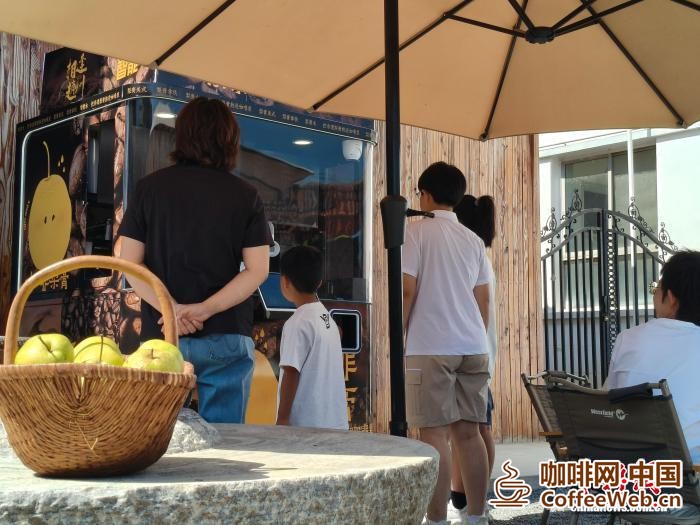
In Zhao County, Shijiazhuang City, Hebei Province, known as the "hometown of Chinese snowflake pears", pear fruits with an annual output value of 4.08 billion yuan and a planting area of about 250000 acres are colliding with coffee to create a "new flavor". Walking into the "Meeting Zhaozhou" Gongfu Workshop adjacent to Zhaozhou Bridge, visitors can experience the ancient method of making pear paste, as well as tap the screen in front of the AI unmanned coffee machine and have their meals quickly served by the intelligent robotic arm. According to Liu Chang, the person in charge of the workshop, about 20 grams of pear paste is added to each cup of coffee to replace the traditional syrup, "which can not only neutralize the bitterness of coffee, but also retain the sweetness of snow pear".
On September 5th, at the "Meeting Zhaozhou" Gongfu Workshop in Zhao County, Shijiazhuang City, Hebei Province, customers purchased pear paste coffee in front of an AI unmanned coffee machine. Photo by Wang Xiafei
Liu Chang said that the workshop has collaborated with Beijing Wujiang Intelligent Technology Co., Ltd. to develop an AI unmanned coffee machine, which can be installed in cultural venues, universities, hospitals, and other places to match people who frequently use their voices and have high work intensity. At present, AI unmanned coffee machines have been deployed in Beijing and Shijiazhuang, with some popular cultural venues in Beijing selling over 20000 cups of coffee per AI unmanned coffee machine per month.
On Baoding West Street, the aroma of coffee and roasted donkey meat intertwine. The special coffee in the yellow cover bowl is mixed with salty cheese and sesame, and a round donkey meat fire the size of a Dim sum is placed above it. "Coffee with donkey fire" has become a popular item for tourists to "punch in". According to Zhang Shuaiya, Executive Director of Baoding Feilangcui Catering Service Co., Ltd., the development of this donkey fire coffee took six months and now has an annual sales volume of over 20000 cups.
Many tourists from other places regard visiting the Governor General's Office of Zhili, admiring the ancient lotus pond, and drinking donkey fire coffee as a "three piece set" for tourism in Baoding. Zhang Shuaiya said that donkey meat fire is a specialty food in Baoding, and donkey fire coffee not only brings this traditional snack into the sight of young people in a more fashionable way, but also attracts many middle-aged and elderly people to come and try it out.
In the Winter Olympics town of Chongli, Zhangjiakou, colored pepper coffee has become a trendy drink sought after by "snow lovers" during the snow season. Crispy and sweet fresh colored peppers are scooped into cups and poured into coffee, which can be consumed directly after drinking. At present, Chongli has built the largest Yuexia colored pepper production base in China, with an annual output value of 534 million yuan.
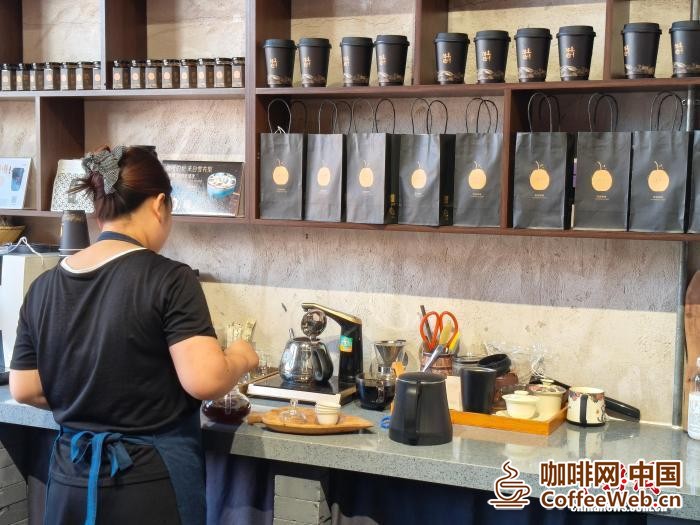
On September 5th, at the "Meeting Zhaozhou" Gongfu Workshop in Zhao County, Shijiazhuang City, Hebei Province, employees were making coffee. Photo by Wang Xiafei
Zhao County's snowflake pear, Baoding donkey meat fire, and Chongli colored pepper all have solid industrial foundations. With the popularity of weekend tours and micro vacations, young tourists are more pursuing 'local feeling' consumption, and coffee naturally meets this demand. Sun Zhenjie, Dean of the Tourism College of Hebei University of Economics and Business, believes that the cross-border integration of coffee is the result of the adaptation of Hebei County's characteristic products and leisure consumption, which can not only enhance the added value of traditional products, but also create new scenes of cultural and tourism consumption. (End)