
Interface News Editor | Ya Hanxiang
A coffee machine purchased by a franchisee for about 80000 yuan is changing the business of more than 10000 milk tea shops in Guming.
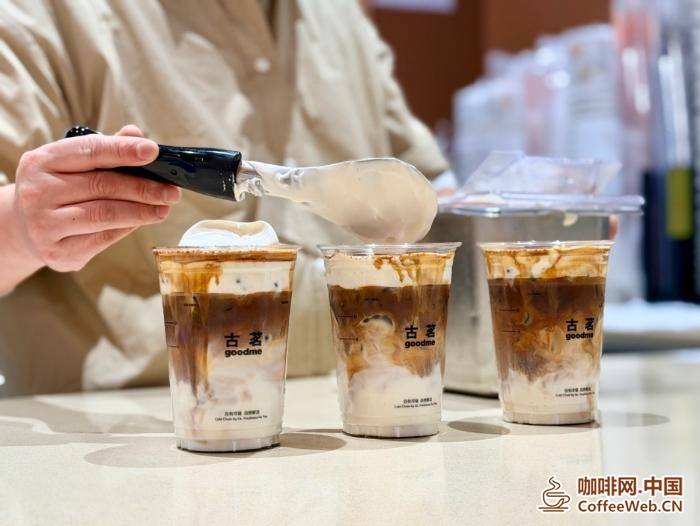
In the past, Guming's stores had almost no business in the morning. Nowadays, some stores will open early to sell coffee to consumers rushing to work and school. Interface News learned at the mid-term performance meeting of Guming held on the evening of August 27th that Guming founder Wang Yun'an disclosed that without centralized promotions, the proportion of coffee sales has stabilized at over 20%, and can exceed 25% during the event period; More than half of coffee consumers are new customers of Guming.
If there were no coffee, no early hours, etc., we might be similar to the entire industry, at least it would be difficult to maintain growth in the first half of the year, "said Meng Hailing, Chief Financial Officer of Guming, at the performance meeting.
This is no longer the concept of adding a few coffee SKUs to the menu.
According to the company's financial report, as of the end of June 2026, approximately 13500 stores of Guming have been equipped with coffee machines, covering over 90% of the stores. With the help of this existing franchise network, Guming has gained a coffee sales network of over 10000 stores almost without reopening any coffee shops.
Chinese tea brands trying to sell coffee is not new, but Guming took the lead in pushing this business to a level that could affect overall performance. In the first half of 2026, Guming's revenue was 7.47 billion yuan, a year-on-year increase of 31.9%; Adjusted profit was 1.568 billion yuan, a year-on-year increase of 44.4%; The total GMV of the stores reached 19.747 billion yuan, a year-on-year increase of 40.1%.
After the reduction of food delivery subsidies, the growth driven by low prices and platform traffic began to come under pressure, and industry competition shifted from simply competing for orders to competing for store efficiency, product structure, and franchisee operating quality.
In fact, this year's mid year reports of listed tea beverage companies have shown significant differentiation. Shanghai Auntie's income and adjusted profit increased by 42.4% and 41.6% respectively in the first half of the year; Mixue Group's revenue only increased by 2.3%, while its net profit decreased by 14.7%; Chabaidao's revenue and net profit attributable to shareholders increased by 6.2% and 3.2% respectively.
The growth of Guming also comes not only from opening stores. In the first half of the year, it opened 1318 new stores and closed 521, with a net increase of 797 stores, and the opening speed slowed down compared to the same period last year. However, the daily GMV of a single store still increased from 7600 yuan to 7800 yuan, and the daily sales of cups remained at 440 cups.
In the company's interim report, the management also partially attributed the performance of individual stores to the increase in coffee categories and the expansion of breakfast scenes.
However, even though coffee sales account for over 20%, Wang Yun'an, the founder of Guming, does not believe that the company has mastered barriers that competitors cannot replicate.
At the performance meeting, an analyst asked what aspects of Guming's flavored coffee were beyond the reach of its peers. Wang Yun'an stated that there is currently no capability that competitors cannot replicate at all. Guming has done relatively better in coffee bean and other raw material management, expiration date control, store operation, and equipment maintenance.
This answer actually points out the reason why Gu Ming was able to run coffee first. Gu Ming did not first look for differences between American and basic latte, but transferred her past experience of making fresh fruit tea and milk tea to coffee – fruits, fresh milk, and cream tops were already in its supply chain, while coffee here is more like a new tea beverage base.
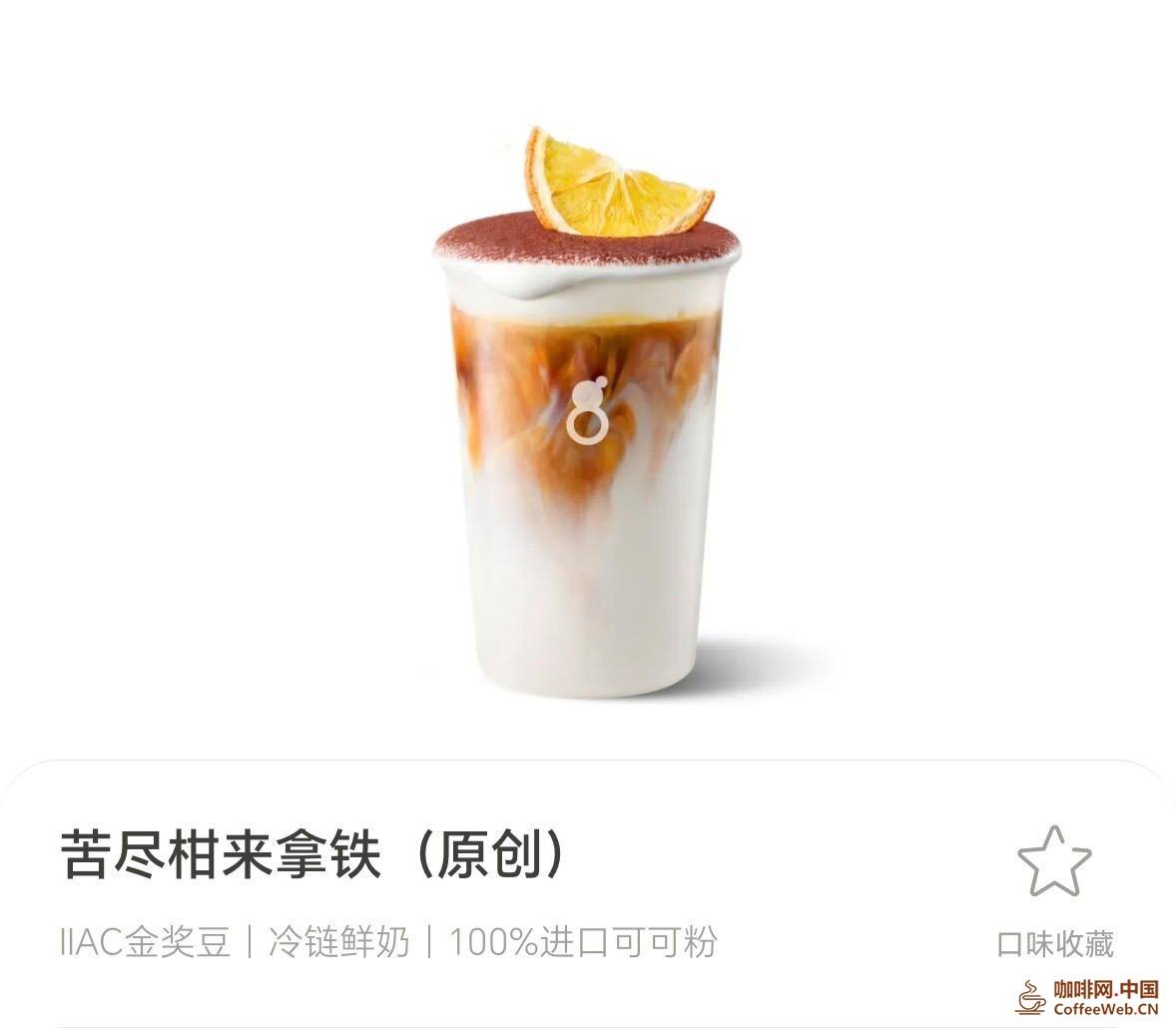
The "Bitter Orange Latte" and "Vanilla Seed Vienna" launched earlier this year are both the main products promoted by Guming Coffee. Taking the former as an example, it adds oranges, cream toppers, and cocoa to coffee, and its name sounds similar to "bitter and sweet". Guming did not disclose specific sales figures.
In the early stages of product development, attempts were made to process orange peel in stores, but the operation was complex and the flavor was difficult to stabilize. Later, Guming transferred this step to the supply chain and made standardized raw materials, with the store only responsible for completing the final few steps of production. This is similar to the way Guming used to make fresh fruit tea, and also sets it apart from other milk tea shops that only sell American style and latte.
But the supply chain of fruits and fresh milk can only solve part of the problem. If coffee is truly treated as another core business, the storage time of coffee beans, store temperature and humidity, coffee machine parameters, and grinding disc losses will all affect extraction, and the over 10000 stores of Guming also mean that any small errors will be amplified.
According to LatePost, when Guming launched an Ethiopian SOE coffee bean this year, it borrowed more than 100 operators and spent nearly a month debugging store equipment, investing over 2.3 million yuan. It also installs a data collection system for coffee machines to search for abnormal stores by extracting parameters.
Of course, these investments cannot prove that Guming has established an unbeatable barrier, but they explain why not all milk tea brands can immediately replicate their sales proportion by adding a fully automatic coffee machine.
Another prerequisite for Gu Ming to be made into coffee is to make franchisees willing to pay for these investments.
According to the interface news query of Gu Ming's public franchise policy, a coffee machine costs about 80000 yuan and can be paid in 24 interest free installments to reduce the initial financial pressure on franchisees.
Installment lowered the initial payment threshold, but did not eliminate this expense. Interface News learned from the performance meeting that this year has entered the second year of high payment pressure for coffee machines, and with the renovation of sixth generation stores, the cash flow of some multi store franchisees has been affected. This is also one of the reasons why Guming's store openings slowed down in the first half of the year.
In fact, what ultimately convinces franchisees is how many cups the machine can sell per day. The management of Guming stated that the profit margin of coffee in the store has significantly increased compared to last year. The gross profit margin of coffee beans may not be higher than that of some tea drinks, but the production process and labor time are relatively less. After including labor, the comprehensive profit level is not poor.
Coffee machines are not high margin products for Guming headquarters either. Meng Hailing mentioned that the concentrated sales of coffee machines last year once lowered the company's overall gross profit margin. This means that at present, Guming needs more coffee to increase store sales, rather than relying on selling equipment to make money.
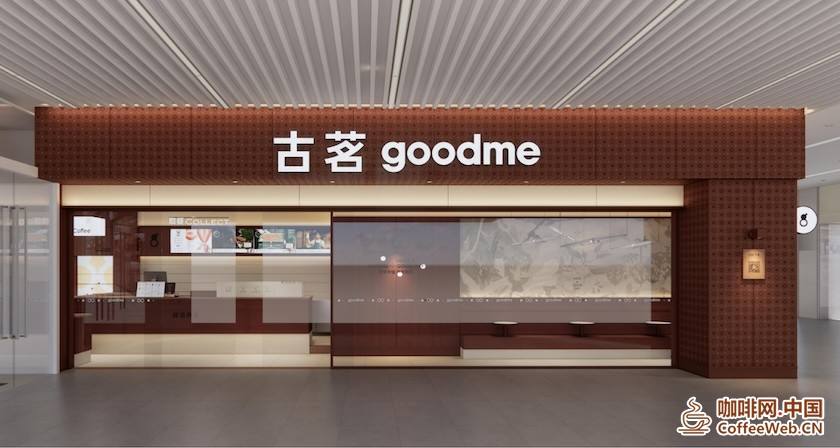
Guming New Store Type. Image source: Guming official website
Gu Ming's lead may only be temporary. Auntie Shanghai has already opened coffee shops in most of the stores, and Chabaidao is accelerating the installation of coffee machines. Meixue Group disclosed in its 2026 interim report that Meixue Ice City has upgraded its coffee making method from "fresh extraction" to "freshly ground". As of the end of June, fully automatic coffee machines have covered over 3000 stores. Meixue Group also has an independent coffee brand, Lucky Coffee, whose core products are usually priced between 2 yuan and 10 yuan.
The collective entry of tea beverage brands into the coffee market will also change the original competitive mode of the coffee industry.
A top chain coffee brand insider told Interface News that the large-scale sales of coffee in milk tea shops will squeeze orders that professional coffee brands could have competed for, making the remaining space in the industry smaller. Some coffee brands are already anxious about this.
This anxiety does not only come from the number of stores.
For Guming, store rent, staff, and most of the supply chain are already borne by the milk tea business. As long as coffee contributes additional orders, it may improve store revenue. Professional coffee shops rely on coffee to bear the rent and labor costs of the entire store. The additional costs borne by coffee brands selling coffee at similar prices are not the same.
Tea beverage brands selling coffee may not only divide the existing market. More than half of Guming's coffee consumers are new customers, and it hopes to steadily increase the proportion of coffee sales to 25% -30% by the end of this year or the first half of next year. It will continue to develop fruit flavored coffee while improving American and basic milk coffee. The former is more likely to attract consumers to try new things, while the latter is related to repeat purchases.
In addition to coffee, Guming has over 1000 stores testing baked goods and will expand its offerings in the future. It wants to fill the morning business with coffee and bread. For a brand with over 14000 stores, growth cannot be achieved solely by opening new stores, but also by extending the sales time of existing stores.
However, how long coffee can sustain Guming depends on whether this business can shift from laying machines to stable repeat purchases.
At present, the coverage rate of Guming coffee machines has exceeded 90%, and the growth space brought by increasing equipment is limited. Next, even if the proportion of coffee sales continues to increase, it still depends on whether it brings in new orders or substitutes for existing milk tea consumption.
It is still difficult to determine whether coffee is a tool for improving single store efficiency or an independent engine that can maintain high growth for Guming.