
At a Glance (China Coffee Network): Lucky Cup is the wholly owned coffee sub-brand of Mixue Ice Cream & Tea, founded in 2017 in Zhengzhou, Henan. Anchored on high quality at extreme value and powered by Mixue’s supply chain, logistics and franchise system, it has become the undisputed leader of China’s down-market coffee channel—and the third domestic brand (after Luckin and Cotti) to enter the “10,000-store club.” With its “national coffee from RMB 5” strategy, Lucky Cup reframed lower-tier consumers’ perception of fresh-brewed coffee and turned it into an everyday drink in counties, campuses and communities.
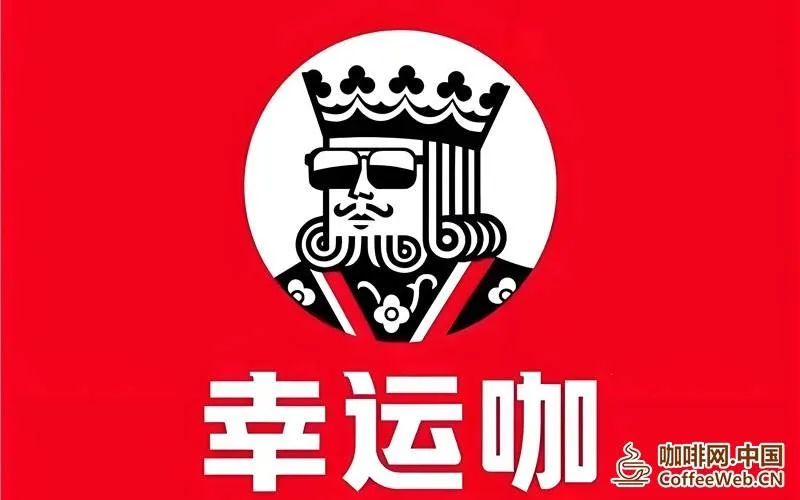
Lucky Cup is the wholly owned coffee sub-brand of Mixue Ice Cream & Tea, founded in 2017 in Zhengzhou, Henan, with its headquarters in Zhengzhou. Centered on a “high-quality, fairly priced, extreme cost-performance” positioning and leveraging Mixue’s formidable supply chain, logistics and franchise network, it has become the absolute leader of China’s down-market coffee channel—and the third domestic coffee brand (after Luckin and Cotti) to enter the “10,000-store club.” Championing “national coffee from RMB 5–10,” its low-price strategy rebuilt lower-tier consumers’ understanding of fresh-brewed coffee and turned it into a daily staple in counties, campuses and communities.
I. Growth Journey: Mixue-Powered, from Regional Dark Horse to a Global 10,000-Store Chain
1. Start-up Exploration (2017–2019). In 2017 Mixue formally launched the coffee project under the brand “Lucky Cup Lucky Cup,” opening its first store that December at Zhengzhou’s Langyue Park Mall. Initially focused on the Henan market with value-priced coffee, it grew slowly due to vague positioning and a thin product range. In 2019 Lucky Cup became a wholly owned Mixue subsidiary under Zhang Hongfu, Mixue’s general manager, who connected it to the group’s R&D, procurement, logistics and factory resources, built out the operating system and iterated the store image to its second generation—laying the groundwork for the later explosion.
2. Strategic Turn and Expansion (2020–2024). 2020 was the pivotal year: Zhang Hongfu led a reform that clarified the high-quality-value core positioning and locked in the RMB 5–10 price band. The group invested RMB 100 million to build the IP mascot “Old K” and rolled out a third-generation store visual that sharply lifted recognition. In April it began franchising from Henan, riding Mixue’s mature model to rapidly penetrate lower-tier markets. In 2021 it launched its signature Iced Latte and built its own coffee-roasting factory for self-supply, cutting costs while securing stable quality. In 2022 the hit Coconut Latte went on sale and annual sales broke 10 million cups, leading the industry’s coconut-milk coffee trend; by June store count passed 1,000 and reached 2,000 by year-end, officially becoming a regional top coffee brand. In 2023–2024, pressured by the Luckin–Cotti price war, growth slowed, but it kept optimizing the single-store model and shored up its down-market base, ending 2024 with about 4,000 stores.
3. 10,000-Store Surge (2025–present). In 2025 Lucky Cup launched a “10,000-store sprint,” doubling in just ten months (4,600 at the start to 10,000 on Nov. 24), averaging over 16 new openings a day and ranking among the industry’s fastest-growing brands. As of May 2026, it runs more than 12,000 stores worldwide, covering 300-plus Chinese cities and some overseas markets, with tier-3-and-below cities accounting for over 70%—firmly China’s No.3 coffee brand.
II. Positioning and Core Strengths
1. Positioning: national value coffee from RMB 5. Lucky Cup precisely targets down-markets (tier-3/4, counties, townships), students and price-sensitive office workers. Its core positioning—“high-quality, fairly priced fresh-brewed coffee”—breaks the notion that “fresh coffee must be expensive”: Americano at RMB 5.9, latte RMB 7–8, fruit coffee RMB 6–8, with a normalized “RMB 6.6 cap” campaign that pushes fresh-brewed coffee to the industry’s floor price, making it a “daily staple” rather than a “light-luxury treat.”
2. Core strengths: Mixue DNA + four moats. Extreme supply chain: cost crushes rivals. It fully shares Mixue’s global procurement network (38 countries); in 2025 it signed a RMB 4 billion Brazilian green-bean purchase deal to lock in low-cost quality beans. Its own roasting factory supplies beans at ≤RMB 70/kg (near cost), about 30% below the industry; direct links with brands like Mengniu cut out middlemen, so even a RMB 5.9 Americano keeps a 48% gross margin—low price without low profit.
Light franchise model: low barrier, high security. Under a “single-store franchise with no revenue skim,” headquarters only charges a franchise fee and takes no cut of sales, lowering franchisee risk. Investment is about RMB 127k (including decoration, equipment and first batch of materials) for a 10–30 sqm pick-up store suited to campuses, communities and street corners; Mixue provides end-to-end training, site support and logistics, and a coffee novice can get started in seven days, with franchisee survival above 90%.
Hit product matrix: localized, high repurchase. Built on “classic coffee + localized flavor + high value,” its three pillars—signature Coconut Latte (over 10 million cups a year), Iced Latte and Americano—carry repurchase above 60%. Innovations fit local tastes: Grape Iced Espresso, Coconut Latte, Macchiato Latte and more, supplemented by non-coffee drinks (lemon tea, shakes) for all-day consumption; in 2025 several new products each surpassed RMB 100 million in sales, with a single item peaking above 3 million cups a month.
Brand marketing: grounded, strongly pervasive. Visually it uses high-saturation red and yellow with the “Old K” mascot (a cartoon figure with a crown and sunglasses)—highly recognizable and approachable, fitting down-market aesthetics. Marketing leans on the “luck” concept with the slogan “Luck in hand, good fortune walks with you,” reinforcing emotional resonance; frequent cross-overs (with Mixue, popular anime) and low-price merchandise (keychains, cups) attract young consumers. Riding Mixue’s store resources, the dual-brand synergy (“coffee + tea”) shares foot traffic and lifts single-store sales.
III. Store Footprint and Performance Data
As of May 2026, Lucky Cup runs more than 12,000 stores worldwide, 98% in China with a small overseas presence in Southeast Asia. Domestically, tier-4-and-below counties account for 70%, tier-3 cities 20% and tier-1/2 cities 10% (accelerating since 2025, with over 1,000 stores in tier-1 cities). Store types are mainly 15–25 sqm pick-up outlets with no or minimal dine-in, keeping rent low and space efficient.
On the operating side, a typical store sells 200–400 cups a day at a RMB 6–8 ticket, generating RMB 50k–150k in monthly revenue with a 15%–25% net margin (higher down-market thanks to low rent). In 2025 the Coconut Latte alone exceeded RMB 200 million in sales, and full-year revenue surpassed RMB 8 billion—becoming Mixue Group’s second growth curve.
IV. Industry Impact and Controversies
1. Industry impact: the enlightener of down-market coffee. Lucky Cup’s rise reshaped China’s coffee landscape into a three-tier ladder—“Luckin (high value), Cotti (mid value), Lucky Cup (extreme value)”—filling the RMB 5–10 gap. Its low prices accelerated coffee culture’s penetration into counties, lifting tier-3/4 consumption frequency from about one cup a year to eight, and cultivating a nationwide coffee habit. It also forced Luckin and Cotti to cut prices down-market, pushing the industry toward “affordable, mass-market” coffee.
2. Controversies and challenges. Behind the rapid expansion, challenges remain: the risk of low-price involution—the RMB 5.9 pricing is questioned as “too thin,” and raw-material inflation can squeeze quality; product homogenization, with hits heavily overlapping Luckin’s and Cotti’s and weak localized innovation; store-management pressure, as some county outlets show inconsistent service and unstable quality with a closure rate above top brands; and difficulty breaking into tier-1/2 markets, where it faces Luckin, Starbucks and independents and a low brand tone struggles to attract high-end customers.
V. Future Roadmap
Lucky Cup will pursue four strategies—“down-market deepening + tier-1/2 penetration + quality upgrade + full-category expansion.” In 2026–2027 it targets over 20,000 domestic and 2,000 overseas stores to consolidate its No.3 rank; it will keep investing in supply chain and smarter roasting to cut costs and lift quality; deepen the “coffee + tea + light food” model with added bread and snacks to raise single-store profit; accelerate localized innovation for differentiated hits and escape the homogenization critique; and steadily advance into tier-1/2 cities, upgrading store image and brand tone toward the ultimate goal of “encircling the cities from the countryside.”
From its first store in 2017 to 12,000 outlets in 2026, Lucky Cup completed a nine-year down-market counterattack—breaking the industry’s price barrier with RMB 5 coffee and rebuilding the franchise ecosystem with the Mixue model. Despite involution and homogenization, with extreme cost-performance, a powerful supply chain and a mature franchise system, Lucky Cup has become synonymous with China’s value coffee, pushing the market from “tier-1/2 niche” to “national mass,” and showing the world the strength of China’s down-market coffee brands.
Original Notice
- This article is an original work of China Coffee Network. No media outlet, website or individual may reproduce, excerpt, copy or mirror it without authorization; violators will be held legally liable.
- All images, charts and videos herein were shot or produced by China Coffee Network and carry its copyright watermark; the copyright belongs to China Coffee Network.
- For reprint licensing, commissions, interviews or business cooperation, please contact: Tel 400-0000-641 (+86-18288016826) | Email 405854472@qq.com | Address: Jinghong, Xishuangbanna, Yunnan Province / Tieling, Liaoning Province
Related Reading
 U.S. Caffeine Regulation: Management Requirements and Oversight Trends for Caffeine in Food
 Starbucks: The Global Coffee Empire and Its China Story
 COTTI Coffee: The Three-Year Sprint to a Global Top-3 Chain
 NOWWA Coffee: China’s Healthy Fruit-Coffee Challenger
 NESCAFE: Nestle’s Flagship Coffee Brand
 Yunnan Aini Agriculture & Animal Husbandry (Group) Co., Ltd.



 Liaoning ICP Security No. 21122402000217