
At a Glance (China Coffee Network): COTTI COFFEE is a breakout Chinese chain founded on Oct. 22, 2022 by Qian Zhiya—Luckin’s founder and former CEO—alongside her original core team, headquartered in Beijing with its operations center in Tianjin. Among the fastest-expanding coffee chains globally in recent years, COTTI leverages four pillars—high value, a full-partnership model, a strong supply chain and global layout—to reach the industry’s first tier in just three years and rewrite China’s competitive map.
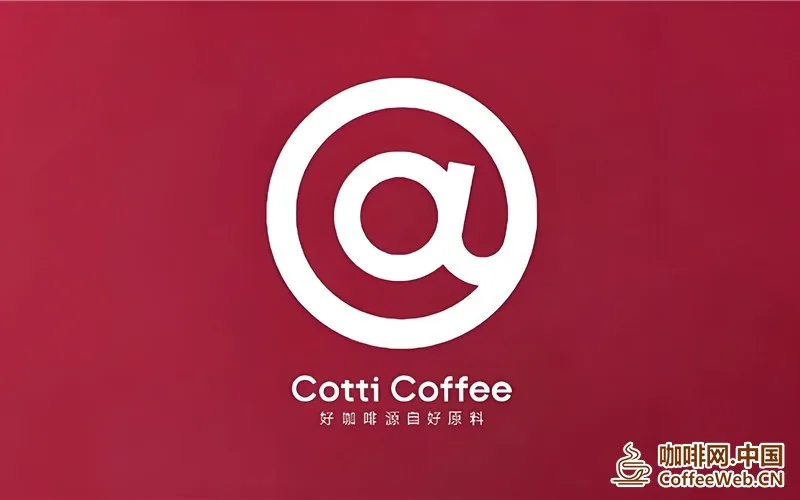
COTTI COFFEE is a breakout Chinese chain founded on Oct. 22, 2022 by Qian Zhiya—Luckin Coffee’s founder and former CEO—alongside her original core team, headquartered in Beijing with its operations center in Tianjin. One of the fastest-expanding coffee chains globally in recent years, it carries the mission “let users easily enjoy the coffee life.” With four core strengths—high value, a full-partnership model, a strong supply chain and a global layout—COTTI reached the industry’s first tier in just three years and thoroughly rewrote China’s coffee competitive landscape.
I. Growth Journey: A Three-Year Sprint, from First Store to a Global 10,000-Store Chain
On Oct. 22, 2022, COTTI opened its global first store in Fuzhou, Fujian, formally entering the coffee race with a seasoned chain-operating team that drew immediate industry attention. 2023 became its “mad-run year”: within ten months store count surpassed 5,000, setting the fastest expansion record for a coffee brand; that July it broke ground on a USD 200 million, 110,000-sqm supply-chain base in Dangtu, Anhui, shoring up capacity.
In March 2024 store count passed 10,000, making COTTI the fastest brand ever to reach the 10,000-store milestone; the same year it completed a dual global supply-base layout, covering 28 countries and regions, and signed on as the Argentine national football team’s global sponsor, beginning a sports-marketing breakout. By October 2025, on its third anniversary, global stores exceeded 18,000 across six continents and 33 countries/regions, firmly the world’s No.3 chain; domestic lower-tier penetration was remarkable, with tier-3-and-below cities above 65%—full coverage from first-tier to county markets.
In 2026 COTTI kept opening over 300 stores a month while advancing its “coffee + convenience store” model to rebuild consumption scenarios and lift single-store profitability.
II. Positioning and Core Strengths
(1) Positioning: high-value national coffee. COTTI precisely targets the mass value coffee market, breaking the ingrained notion that “fresh coffee = high price.” Its core products have long stayed at RMB 8.8–15—far below Starbucks and Luckin equivalents—locking the national psychological price of fresh coffee under RMB 10. Championing “good coffee from good beans,” it offers high quality at friendly prices to workers, students and county consumers alike, positioning itself as “national coffee everyone can afford.”
(2) Core strengths: four moats build competitiveness. Full-partnership model: low barrier, strong binding. Distinct from traditional franchise or direct-operated models, COTTI pioneered the “Coffee Dreamer Plan,” a full-partnership approach with zero franchise fee and zero management fee—taking only a 0–25% service fee from partners’ gross profit, scaling with performance to share risk and reward. A store can open for as little as RMB 120k, with the first two months fully managed plus standardized training and operational support, so even a coffee novice can get started quickly; formats span pick-up, store-in-store and convenience stores in 10–50 sqm, fitting offices, communities, malls and county streets, sharply lowering expansion cost and barrier.
Global supply chain: low cost, high quality. To support a 10,000-store scale and low prices, COTTI invested heavily in a dual-base plus global supply chain: the East-China Dangtu base focuses on domestic roasting with 45,000 tons/year capacity covering domestic needs; the international Wuhu base leverages the Yangtze port for global green-bean import, bonded warehousing and roasting, cutting logistics cost by over 30%. Beans are selected from Ethiopia, Colombia and Brazil, with core use of platinum specialty beans (washed Yirgacheffe, sun-dried Sidamo) offering floral, citrus and caramel notes, and three extraction methods—essence, original and full—balancing quality and personalization. AI smart scheduling analyzes nationwide sales in real time and adjusts production lines within 15 minutes, responding three times faster than traditional firms and securing stable new-product supply and inventory.
Product matrix: hit-driven, localized innovation. COTTI built its edge on hit products plus localized innovation. Early on it borrowed proven hit logic to quickly launch coconut latte, americano, latte and mocha; in 2023 the coconut latte topped 8 million cups a month, becoming a national hit. It then accelerated localization—Wuchang Rice Coffee (blending Northeast rice aroma into coffee for a cross-category breakout), macchiato latte, watermelon coconut latte—and pushed “coffee+” scenarios: in 2025 a convenience-store format added ice cream, western sausages, hot bento and breakfast buns; a RMB 14.9 chicken-leg rice + coffee combo raised the ticket from RMB 12 to 25 and space efficiency by 30%, upgrading from “coffee shop” to “community life station.”
Brand marketing: youthful, global breakout. Its visual identity uses a red main color with a white “@” symbol—simple, fashionable, highly recognizable, fitting young tastes. It signed Wang Yibo and Yang Mi as brand ambassadors to reach young consumers and frequently cross-over with IPs including Nezha, Garfield and Chibi Maruko-chan, while appearing at top events like the Wuhan Open, the League of Legends World Championship and the Golden Rooster & Hundred Flowers Film Festival. Globally it localizes per market—coconut coffee in Southeast Asia, rich americano in Europe—advancing from “product going global” to “value going global” on the strength of “Made in China + global resources + local innovation.”
III. Store Footprint and Performance Data
As of May 2026, COTTI ran more than 19,000 stores worldwide, about 85% in China and the rest across 33 countries/regions including South Korea, Japan, Southeast Asia, Europe and the Americas. Domestically, new-tier-1 cities account for 32.31%, tier-3 19.97% and tier-4-and-below counties over 45%, while tier-1 cities are just 8.92%—deliberately avoiding Luckin’s and Starbucks’ stronghold core cities to capture lower-tier whitespace. Operationally, a typical store sells 300–500 cups a day; lower-tier outlets enjoy low cost and rent, with net margins of 15%–20%. In 2025 domestic revenue exceeded RMB 12 billion, with overseas revenue share rising to 15%—a benchmark for Chinese coffee brands going global.
IV. Industry Impact and Controversies
(1) Industry impact: reshaping the landscape, popularizing coffee. COTTI’s rise changed China’s map from a “Luckin–Starbucks duopoly” to a new pattern of “Luckin and COTTI as dual champions, Starbucks holding the high end.” Its low prices directly drove mass adoption of fresh coffee and accelerated coffee culture’s spread from tier-1 cities to counties; China’s fresh-coffee market surpassed RMB 50 billion in 2025, with COTTI contributing over 20% of the increment. Its partnership model and supply-chain system also gave the industry a replicable growth template, pushing coffee from “high-price niche” toward “affordable mass market.”
(2) Controversies and challenges. Behind the rapid expansion, COTTI faces several disputes: the risk of low-price involution—its long-running RMB 9.9 pricing is questioned as “price-war involution” that limits profit and may hurt quality and service stability; expansion-quality doubts—some county stores suffer weak foot traffic and chaotic operations, with closure rates above tier-1 outlets; homogenization, as products heavily overlap Luckin with few differentiated local hits; and global-expansion challenges—cultural differences, local-brand competition and supply-chain adaptation overseas mean long-term profitability remains to be proven.
V. Future Roadmap
COTTI will pursue three core strategies—“scale expansion + quality upgrade + global deepening.” In 2026–2027 it targets over 30,000 domestic and 5,000 overseas stores to secure the world’s No.2 chain position; it will keep investing in supply chain and AI-driven smart production to cut costs and lift quality; deepen the “coffee + convenience store” model with full-day scenarios of breakfast, afternoon tea and light meals; accelerate localized innovation for more China-taste hits and stronger differentiation; and cultivate overseas markets—Southeast Asia, the Middle East and Europe—to build a global calling card for “Chinese coffee brands.”
From its first store in 2022 to nearly 20,000 worldwide in 2026, COTTI walked in three years what took the industry ten—breaking coffee-consumption barriers with value pricing and rebuilding the rules with an innovative model. Despite disputes and challenges, COTTI has undoubtedly become a core force in China’s coffee industry, pushing the country from a “big coffee-consuming nation” toward a “strong coffee-innovating nation,” and showing the world the speed and strength of Chinese coffee brands.
Original Notice
- This article is an original work of China Coffee Network. No media outlet, website or individual may reproduce, excerpt, copy or mirror it without authorization; violators will be held legally liable.
- All images, charts and videos herein were shot or produced by China Coffee Network and carry its copyright watermark; the copyright belongs to China Coffee Network.
- For reprint licensing, commissions, interviews or business cooperation, please contact: Tel 400-0000-641 (+86-18288016826) | Email 405854472@qq.com | Address: Jinghong, Xishuangbanna, Yunnan Province / Tieling, Liaoning Province
Related Reading
 U.S. Caffeine Regulation: Management Requirements and Oversight Trends for Caffeine in Food
 Starbucks: The Global Coffee Empire and Its China Story
 Lucky Cup: Mixue’s Value Champion of China’s Down-Market Coffee
 NOWWA Coffee: China’s Healthy Fruit-Coffee Challenger
 NESCAFE: Nestle’s Flagship Coffee Brand
 Yunnan Aini Agriculture & Animal Husbandry (Group) Co., Ltd.




 Liaoning ICP Security No. 21122402000217