
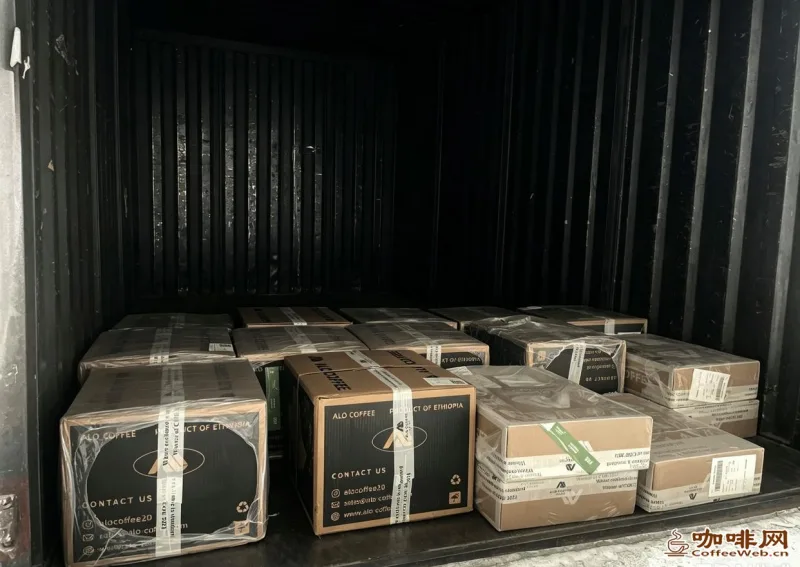
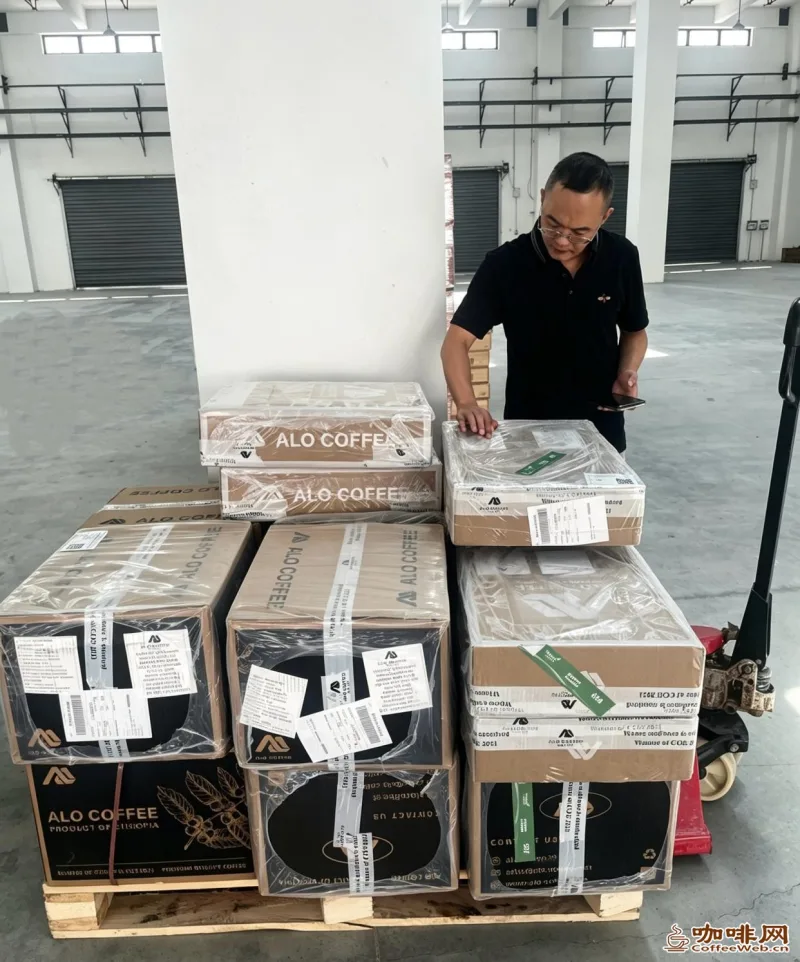
Brief (coffeeyo.com): A new breakthrough: 411 kg of Ethiopian G1-grade green coffee has arrived in Guizhou. Via the “air-to-air” corridor through Addis Ababa and Chengdu, the beans entered the Shuanglong Bonded Logistics Center — the first bonded green-coffee shipment testing a direct-procurement and bonded-warehousing channel for the “coffee champion city” of Guiyang.
GUIYANG NEWS — The first shipment has landed: 411 kg of Ethiopian G1-grade green coffee has entered Guizhou. As the highest grade in Ethiopia’s official classification — premium G1 — the batch comprises five micro-lots priced at 350–1,000 yuan per kg. Guizhou Shuanglong Airport International Trade & Investment Co., Ltd., responding to the needs of Guiyang Youjing Food Co., Ltd., relied on its professional capability and channel strengths in international trade to efficiently complete the full-process service from origin procurement and customs clearance to bonded warehousing, providing strong support for the smooth landing of this first order.
As a leading coffee producer in Guiyang, Guiyang Youjing Food Co., Ltd. has deep industry experience, focusing on the intelligence and efficiency of its specialty-coffee roasting line, with a full layout from R&D to production, committed to building an automated specialty-coffee roasting line suited to coffee trends over the next 5–10 years, balancing dedicated R&D with stable production. Currently, the company’s annual roasted-bean sales exceed 800 tons, and its coffee product line spans coffee beans, drip bags, and filter-bag coffee, with a sales network radiating nationwide. Beyond its own direct-to-consumer online platforms, the company has long supported the growth of local specialty coffee and tea brands such as Dui de Coffee, Qu Chashan, and Ode Coffee.
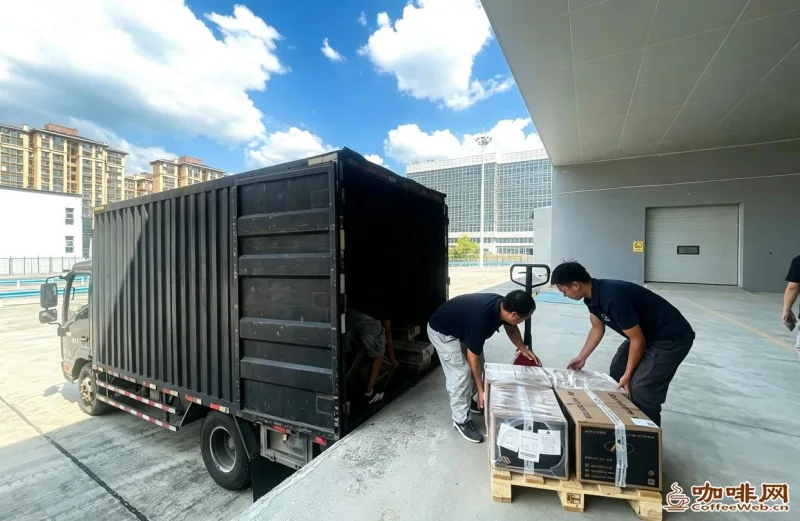
Unlike past imports where beans were shipped from origin to domestic ports such as Shanghai and Guangzhou for customs clearance, this batch flew from Ethiopia to Chengdu and then transferred by air to Guiyang Longdongbao International Airport. Under the efficient customs-clearance facilitation of the Longdongbao airport customs, it smoothly entered the Shuanglong B-type bonded warehousing system. When customers need it, they can draw directly from the bonded warehouse and transfer it to the physical factory for processing. According to a relevant person at Shuanglong International Trade, this import served both as a supply-chain corridor test and as accumulated, mature process experience for Guiyang’s future large-scale, normalized direct overseas procurement and bonded storage of specialty green coffee.
“After these beans arrived at our bonded center via ‘air-to-air’ transport, they will later enter a Guizhou physical factory and then be supplied nationwide,” the person said, adding that the focus this time was the linkage between the first bonded green-coffee shipment and the physical factory.
Air-to-air transfer: opening an “air corridor” for African coffee into Guizhou
Guiyang grows not a single coffee bean, yet it is one of the cities with the highest cafe density in China — over 3,000 cafes citywide, roughly one per 2,000 people, surpassing Shanghai and earning the title “coffee champion city.” But Guiyang’s coffee industry has long faced a raw-material corridor shortfall: imported green beans mostly had to be shipped to coastal ports like Shanghai and Guangzhou first, then transferred to Guizhou by rail or road, with long logistics cycles and high comprehensive costs.
This green-coffee import used a brand-new African air corridor. Relying on the direct flight from Addis Ababa, Ethiopia’s capital, to Chengdu Tianfu, the Ethiopian beans took off from Addis Ababa, flew directly to Chengdu Tianfu International Airport, and then connected via air-to-air transfer to Guiyang. Compared with the traditional routing through coastal ports, all-air transport sharply compresses logistics time and reduces the flavor loss that green beans might suffer from multiple transfers.
A new bonded model: deferred tax, “leaving room” for coffee enterprises
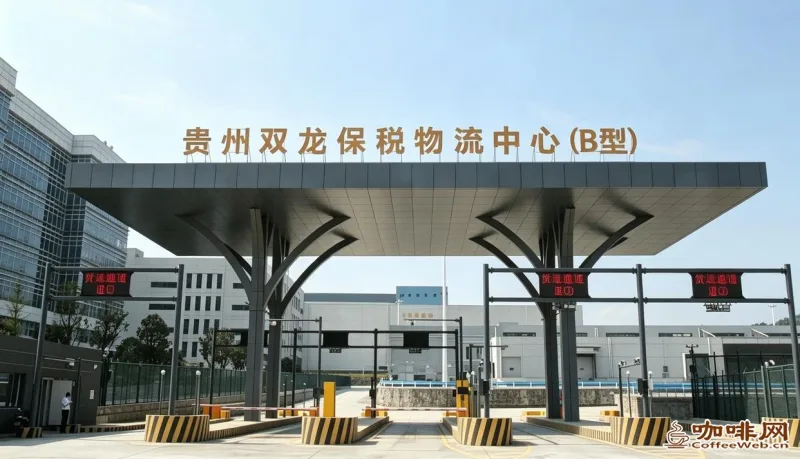
The Guizhou Shuanglong Bonded Logistics Center (Type B) officially commenced operations in December 2025. It now has four bonded warehouses with a total storage area of 33,000 square meters and a cold-storage area of 1,670 square meters, providing enterprises with full-chain services including bonded warehousing, international distribution, entrepot trade, simple processing, and cross-border e-commerce bonded stocking.
The entry of this green coffee into the bonded logistics center used exactly this platform’s core function. Goods from abroad can enter the center without immediately paying import tariffs and VAT, with taxes due only when the goods actually leave the zone for sale. For coffee importers, this model means a major reduction in capital occupation. As a processing raw material, imported green coffee must go through warehousing, distribution, and roasting before reaching the terminal market. Relying on the bonded function, enterprises can flexibly arrange goods leaving the zone according to production rhythm and market orders, realizing “batch-by-batch exit, batch-by-batch taxation,” effectively easing the capital pressure of one-time tax payment.
From bonded warehouse to consumer end: the industry chain takes root in Shuanglong
Notably, the landing of this batch of beans was no mere trade act, but an important practice in localizing the coffee industry chain. After Ethiopian green beans enter the bonded logistics center, they can rely on Guiyang’s processing capacity to complete the critical transformation from green bean to finished product, forming a complete chain of “bonded import — warehousing and distribution — processing and production — market sales.”
In recent years, the Shuanglong Airport Economic Zone has continuously built out a coffee-industry ecosystem, with consumption scenarios such as Houzi Coffee, Shushuo Coffee, and Banlan Coffee already covering the zone, striving to connect the full industry chain of coffee production and processing, on-site experience, product trading, and commercial circulation.
Policy support: Guiyang’s coffee industry enters its “upstream era”
The rise of Guiyang’s coffee industry follows a distinctive path: first the prosperity of the consumer market, then the forced improvement of the upstream supply chain. The city now has six specialty roasting factories holding SC food-production licenses, and the trend of local brands extending from terminal stores toward the upstream industry chain is increasingly clear.
Policy is also accelerating. The “Implementation Opinions on Promoting Coffee-Industry Development in Guiyang and Guian (Trial)” issued by the General Office of the Guiyang Municipal People’s Government in 2026 explicitly encourages enterprises to carry out bonded green-coffee import business, with access to tax “bond, exempt, refund” policies and rewards for first bonded shipments, and provides import interest subsidies for enterprise coffee green-bean import/export business. This Ethiopian green-coffee bonded import is the substantive implementation under that policy direction.
The “Shuanglong path” of a cup of coffee
From the coffee forests of the Ethiopian highlands, taking off from Addis Ababa, transferring through Chengdu, to a hand-brew in a Guiyang alley cafe, the journey of this batch of beans connects multiple nodes — origin, air corridor, bonded platform, and local market. For Guiyang, the “coffee city,” the combination of origin direct procurement and local processing capacity is making “good coffee” closer, faster, and more competitive. And for the Shuanglong Bonded Logistics Center, the landing of the first green-coffee shipment is not only a business breakthrough but also a signal: the deep engagement between airport-bonded functions and a local specialty consumer market is opening new possibilities.
Going forward, the Shuanglong Bonded Logistics Center will continue to leverage its core functions of bonded warehousing and international distribution, deepen coordination with the airport customs, attract more coffee-industry-chain enterprises to settle in, and provide supply-chain support for Guiyang’s ambition to build a nationally influential coffee-consumption destination and coffee-culture experience city.
Reporters: Yang Yuan, Zhao Xi
Reprint Note & Disclaimer
- This article is compiled and edited by coffeeyo.com. The materials and images herein are sourced from public channels and the copyright belongs to the original authors. This site reprints them solely for information sharing within the coffee industry and does not represent our stance; all data and views are subject to the original source. We thank the original authors for their work and sharing.
- For matters concerning content authorization, attribution, copyright, or any other issues, please contact us promptly. We will verify and cooperate in handling them without delay. We also welcome coffee-growing regions, brands, and industry media to exchange and contribute articles with us.
- Contact coffeeyo.com — Tel: 400-0000-641 (+86-18288016826) | Email: 405854472@qq.com | Address: Jinghong City, Xishuangbanna, Yunnan / Tieling City, Liaoning
Reprint Notice & Disclaimer
- This article has been edited and compiled by China Coffee Network. The information and images therein come from public sources and the copyright belongs to the original author. This reprint is intended solely for information sharing within the coffee industry and does not represent the views of this website; all data and opinions are subject to the original article. Our thanks to the original author for creating and sharing it.
- For matters concerning content licensing, attribution, copyright or otherwise, please contact us promptly and we will verify and cooperate in handling them as soon as possible. We also welcome coffee origins, brands and industry media to exchange ideas and contribute articles.
- Contact China Coffee Network: Tel 400-0000-641 (+86-18288016826) | Email 405854472@qq.com | Address: Jinghong, Xishuangbanna, Yunnan Province / Tieling, Liaoning Province
Related Reading
 ‘All-Ice’ Coffee Goes Viral! Will the Next Hit Be Your Personal Favorite?
- Hong Kong’s Dyee Coffee Lands in Qianhai, Building a Specialty Pour-Over Outpost
 Ken Yue Coffee Opens Egg-Tart Pop-Up in Hangzhou: Sweet Craft, Reinvented Classics
 World Cup Enters the Breakfast Slot: Can Coffee-Tea Brands Turn Traffic into Orders?
- ICE Agricultural Futures Mostly Rise at Close; Coffee Futures Up 3.28%
- ‘Sleep Cafés’ Become a New Favorite Among Seoul Office Workers



 Liaoning ICP Security No. 21122402000217