
At a Glance (China Coffee Network): Tide News / reporter Wu Keqin "When young people want to start a business, nothing can stop them!" Wen Ruian's tone was half excitement, half emotion as he said it. As founder of …
Tide News / reporter Wu Keqin
“When young people want to start a business, nothing can stop them!”
Wen Ruian’s tone was half excitement, half emotion as he said it. As founder of the West Lake Science Café, he has met countless young people who want to change the world.
The café covers about 600 square metres and sits on Chongxin Road in Jiangcun Subdistrict, West Lake District, Hangzhou, near the south gate of Zhejiang University’s Zijingang Campus. It began trial operation last October and was officially unveiled this April. In little more than a year, more than 20 companies have landed here, and 70 percent of them were founded by young people only recently out of university.
What exactly is special about a café, and why do young founders keep coming? Over the past few days reporters visited several times. Each time the door opened, conversation came rushing out: a cup of coffee connecting founders, investors, university teachers and students, and linking information, ideas and resources.
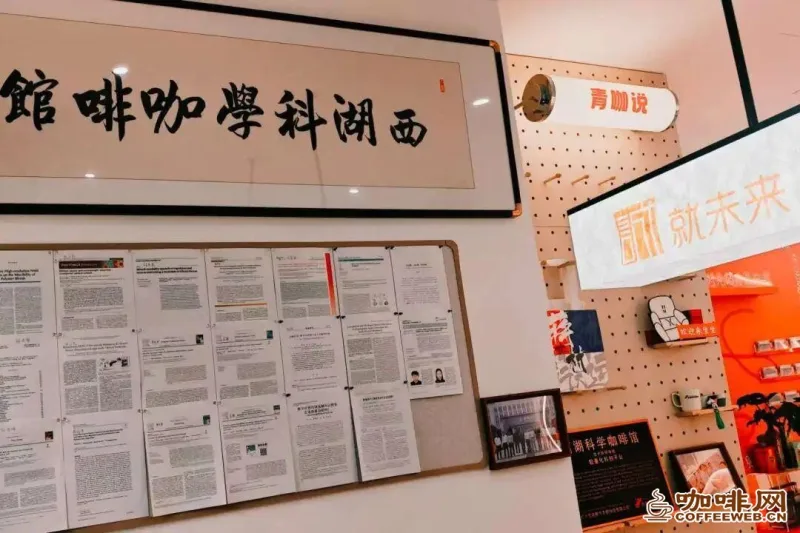
West Lake Science Café. Photo provided by the interviewee
Let us start with the stories of these young people to understand this café.
(I) Young people who get seen
Beside the café stands an osmanthus tree about two metres tall. Planted this spring as a bare trunk, it is now full of green.
On the day it was planted, Wei Yesong, a young man born in 1998 studying for a master’s at the Technical University of Munich, happened to visit the café. Nobody expected that the young man who casually helped plant the tree would return in autumn, half a year later, to land a low-orbit satellite project at the café.
The project could substantially improve the precision of today’s global satellite navigation.
More remarkable still, a young man with no background and no resources came to Hangzhou and had his wild idea caught and held securely.
“If humans may go to Mars in the future, they might also travel in space — how would you navigate then?”
Late 2025, winter in Munich. While Elon Musk was discussing with netizens on social media how to get people and supplies onto Mars, Wei Yesong, then studying space technology, was walking with friends and the question came up.
“Forget space — even satellite navigation on Earth isn’t precise enough yet.”
That one sentence pulled Wei Yesong back to reality and set him thinking: could Earth’s satellite navigation be done properly first?
Wei found that the satellites responsible for navigation signals are very far from Earth, while those close to Earth mainly handle communications. If near-Earth satellites could also take on navigation, precision could be improved dramatically.
The more he thought, the more excited he became. Returning to China for the Spring Festival this year, he wrote a business plan and asked everyone he could to look at it. “Calling it a PPT is generous — it was more like a PDF, all text, as rough as rough can be.”
Wen Ruian had built an online community around the café, and Wei Yesong happened to be added to the group. Learning that Wei wanted to start a company, Wen invited him over for a chat.
A few days later Wei brought that “rough” deck to the café, met several investors and founders for the first time, and explained his idea and path to implementation; with the café making the introduction, he secured his first round of financing on September 5.
For a company at the very earliest stage, lack of money is the biggest hurdle. A first round feels like an angel descending, and is often called the seed round or angel round.
“If I can start this company, I’d be willing to sleep in the café,” Wei said, excited — it meant a step closer to his dream of “navigating the cosmos.” He even gave up a place to do a doctorate at a famous German research institution: “Even with a PhD I would still want to start a company. I can do it now, so why go the long way round?”
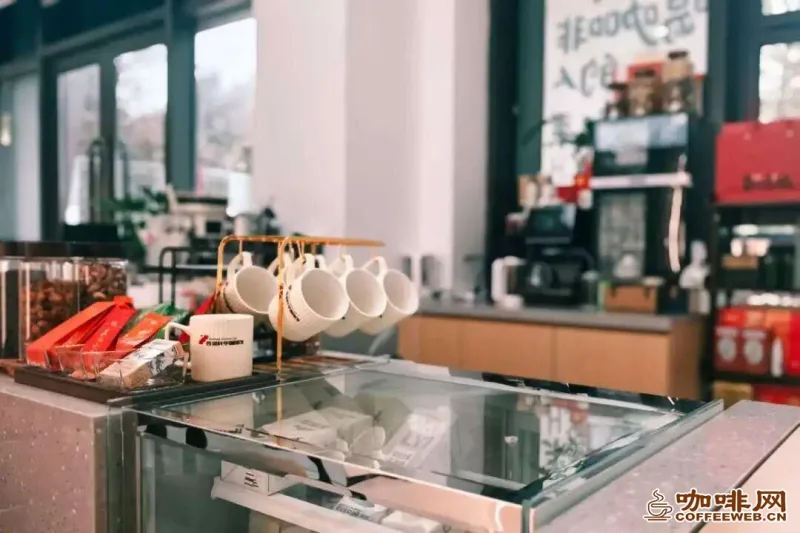
West Lake Science Café. Photo provided by the interviewee
“What young people lack is often not ideas, but a chance for the idea to be seen. West Lake Science Café creates that chance and draws a line between founders and the resources they need,” said Xin Mingang, vice president of Hangzhou Rongze Biotechnology Group, who drops into the café whenever he is free and has encountered one young idea after another.
In the café, ideas are seen, caught and amplified, like seedlings given room to break through the soil, with sunlight and rain.
(II) Startups that get caught
Wei Yesong is not the only one who wants to change the world.
“We want to drive an industrial transformation in how machines perceive the world,” said Zhang Ziyao, one of the founders of Shiwei Perception, the first company to land at the West Lake Science Café — a Zhejiang University master’s graduate and a PhD in engineering from Cambridge. Sensors mounted on machines today sample and compute constantly, burning huge amounts of computing power while remaining not especially responsive. Humans are different: skin feels only when it touches something, and the nervous system filters out masses of irrelevant information, making it both sensitive and efficient.
Could machines be made to sense the world the way people do?
Following that line, Zhang Ziyao and his senior fellow student Ma Rui developed an AI sensing system with a bionic neuromorphic architecture, cutting the power consumption of the whole perception system to one hundredth of the original.
That also implies enormous market potential. Investors spotted the idea early, and when the two decided to return to China to start the company in the first half of last year, they had already secured seed financing.
The next thing that mattered most was choosing a place where an early-stage company could grow. Yet site visits around the country did not go as smoothly as imagined. Zhang found that some places preferred to direct resources toward large enterprises and star teams, and their project was cold-shouldered for a while — first because the team was just two young people fresh out of school and looked rather “thin,” and second because the AI track was crowded with competing projects.
In Hangzhou they felt what it was like to be “taken seriously.” “A lot of places came to us on their own initiative; overnight we went from being ignored to being in demand.”
The young man who came out of Zhejiang University ultimately chose Hangzhou, returning to the neighborhood of his alma mater. At the end of 2025 he settled the company at the West Lake Science Café, embedding it in the innovation ecosystem around Zijingang where universities, capital and industry meet.
In little more than a year the team grew to eight members, mostly from Cambridge, the National University of Singapore and Zhejiang University, with an average age of just 28. They won more than ten entrepreneurship and innovation awards including the gold medal of the China International College Students’ Innovation Competition, and the company’s valuation jumped from 30 million yuan to 200 million yuan.
Throughout, from choosing a site to connecting with investment and financing resources, Jiangcun Subdistrict accompanied them the whole way with dedicated support.
Paying attention to powerful heavyweights is nothing unusual, but how a city nurtures startups that have only just sprouted tests its innovation mechanisms. That “feeling of being taken seriously” is not a one-off exception but a repeatable set of actions that reliably catches and cultivates early projects, forming the city’s innovation climate.
That is the real attraction behind the café.
(III) An incubator that was itself incubated
In Zhejiang, innovation space is not scarce.
In Hangzhou alone, from Dream Town in the west of the city to the Dongguan Technology Enterprise Incubator in Binjiang, from the Yigao High-Tech Startup Park to the Intelligent IoT Incubator of the Zhejiang University Science Park, incubators large and small have long spread across the city.
Data show the city has 705 incubators and maker spaces at municipal level or above, including 65 national-level incubators — the highest number among China’s provincial capitals and sub-provincial cities for 12 consecutive years. Three of Hangzhou’s “Six Little Dragons” came through incubators.
Even so, the West Lake Science Café remains something special.
Its founder, Wen Ruian, is a post-1990s generation member who works in technology transfer at a leading new-type R&D institution in China. Standing at the interface of research and industry, he has accumulated considerable resources and understands the needs of tech entrepreneurs well.
He wanted to build a different kind of incubator, a more open place. Anyone can push the door open and sit down; a few tables, a few cups of coffee, ideas sprouting in conversation, resources linking up through social contact.
But he also knew this would not be easy in a Hangzhou already crowded with incubators.
Last August, Wen went to the relevant West Lake District department on a whim and laid out his idea. In his own words, “I was just talking big; if nobody was interested, I would drop it.”
He was prepared for nothing to come of it. To his surprise, officials from Jiangcun Subdistrict came to see him the very next day.
“I never expected them to take it so seriously,” Wen said. Once the arrangements were settled, subdistrict officials immediately took him to look at venues. It was the hottest stretch of the Hangzhou summer; they spent four afternoons in a row visiting sites before finally fixing on the present place — across one road from Zhejiang University, close to the university with its research talent, and embedded in a community with everyday life around it.
As they left, the officials said, “If you have any difficulty, come to us any time.”
Now the café has become an “atypical” innovation space. The second floor holds desks for resident companies; on the first floor, apart from a 30-square-metre meeting room, everything is open area for drinking coffee and talking. Many young makers, university teachers and students like to come and sit here. Inspiration and cooperation happen quietly.
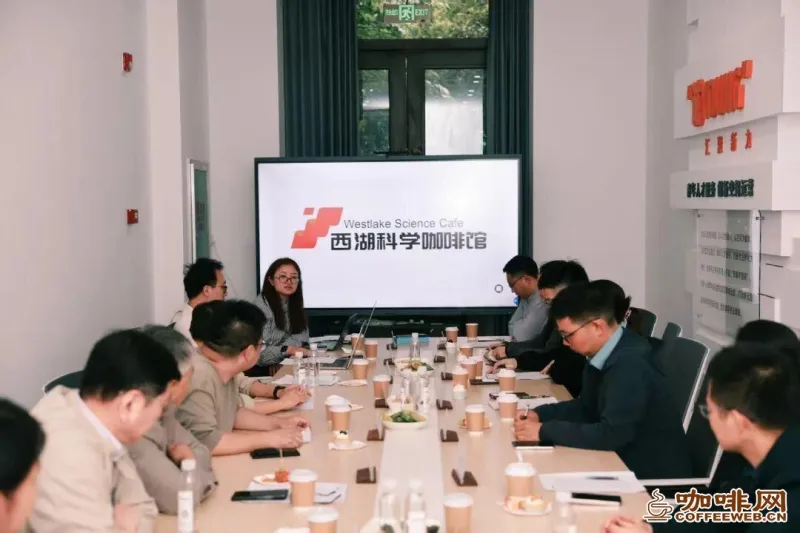
Over the past year or so, around 20 companies have registered and landed at the café, gathering more than 100 industry capital firms. With subdistrict support, a 2,000-square-metre second-phase venue is moving ahead. New founders are still arriving.
Competition in innovation today has long moved beyond one-on-one contests of technology, projects and factors of production; it has become an overall contest of innovation ecosystems and systems. What role should government play? The story of the West Lake Science Café holds one answer: be present when support is needed, and do not interfere when it is time to let go.
(At the interviewee’s request, Wen Ruian is a pseudonym)
“Please indicate the source when reprinting”
Reprint Notice & Disclaimer
- This article has been edited and compiled by China Coffee Network. The information and images therein come from public sources and the copyright belongs to the original author. This reprint is intended solely for information sharing within the coffee industry and does not represent the views of this website; all data and opinions are subject to the original article. Our thanks to the original author for creating and sharing it.
- For matters concerning content licensing, attribution, copyright or otherwise, please contact us promptly and we will verify and cooperate in handling them as soon as possible. We also welcome coffee origins, brands and industry media to exchange ideas and contribute articles.
- Contact China Coffee Network: Tel 400-0000-641 (+86-18288016826) | Email 405854472@qq.com | Address: Jinghong, Xishuangbanna, Yunnan Province / Tieling, Liaoning Province
Related Reading
 How ‘Sea-Flavored’ Coffee Blooms Across Dongtou
- Health Guide: How to Enjoy Your Coffee the Healthy Way
 Study: Regular Coffee and Tea May Lower Dementia Risk, but More Is Not Better
 Frontline Story: A ‘Mobile City Coffee Bar’ Arrives by the Grand Canal
 Yantai’s Wind Tastes of Coffee
 In Zhenyuan, a Cup of Coffee and a Waiting Train







 Liaoning ICP Security No. 21122402000217