


Introduction(Coffeeyo.com, a coffee website):The grand international trade can also be put into practice, adding a sweet flavor to the dining table and providing every family in the Asia Pacific region with an additional choice for livelihood.
Poster News Editor Shi Hui, Zhu Xiaoming
When it comes to APEC (the highest level and most wide-ranging economic cooperation mechanism in the Asia Pacific region), most people's minds are filled with high-level interactive dialogues among the 21 member economies. APEC is actually right beside you and me, and is closely related to everyone's daily shopping.
On the morning rush hour commute, a cup of 9.9 yuan coffee has become an indispensable "energizing necessity" for young white-collar workers in China. But have you ever wondered where such affordable coffee comes from?
The answer lies in the close trade connectivity among APEC members.
The data shows that,In 2025, China's imports of agricultural products from other APEC economies will exceed 100 billion US dollars, firmly securing half of the total agricultural product imports. In the first eight months of this year, it continued to grow by 6.5% year-on-year.
As an important ingredient for affordable coffee, Robusta coffee beans are grown in Vietnam, an APEC economy. ButIn the first seven months of this year alone, China's imports of Vietnamese coffee and products increased by 45.2% year-on-year.
Meanwhile, coffee beans from Peru are becoming increasingly common in the Chinese market. Previously, local transportation of goods to Asia was prioritized through Central and North America. Nowadays,The cargo ship carrying Peruvian coffee beans will depart from Qiankai Port and arrive in Shanghai, China in 28 days.At the same time, the upgraded protocol of the China Peru Free Trade Agreement officially came into effect at the beginning of this month, bringing new benefits to the trade between the two countries.
In addition to coffee beans, cherries, durians, king crabs, and many other agricultural products from all over the Asia Pacific region are also subtly enriching the dining tables of Chinese people.
Cherry is the most typical example. Do you remember a few years ago, a box of cherries with slightly better appearance sold for at least 300 yuan or more, but by the beginning of this year, many supermarkets had cherries priced as low as 99 yuan or 5 pounds, or 2J!
Data shows that in 2024, China imported approximately 450000 tons of fresh cherries, of which 439000 tons came from Chile.
the near future,In Guangdong, China, a batch of Chilean black diamond cherries weighing about 2.5 tons can be transported through the Hong Kong Zhuhai Macao Bridge in just 2 hours.This batch of fresh fruits is going to the surrounding markets,The whole process from picking in Chile to delivering to consumers in Guangdong does not exceed 3 days.
The high standards of the Chinese market are also reshaping the supply side in reverse – in order to meet consumers' demand for large and sweet cherries, Chile has raised the minimum fruit diameter for cherries sent to China to no less than 24 millimeters since December 2021. This threshold has forced local fruit farmers to transform their orchards and upgrade sorting, and now this industry provides about 200000 job opportunities for Chile every year.
Let's talk about durian again. In the past, only a short season of fresh fruits could be eaten domestically. Now, relying on China's opening-up policy,Durian from Thailand, Vietnam, Malaysia, the Philippines and other countries have entered the domestic market one after another, achieving staggered listing.Since the beginning of this year, the retail price of durian in supermarkets has repeatedly fallen below the "1" mark.
According to customs data, the import volume of fresh durian in China reached 1.07 million tons in the first half of this year, a year-on-year increase of nearly 50%. In addition, the rapid development of logistics has further reduced costs. for exampleThe cold chain trains of the China Laos Railway will arrive from Vientiane to Kunming in 26 hours, and the cargo damage rate in Durian will drop from 20% to below 5%.
An even more unexpected surprise came from a small town in Northeast China.
Hunchun in Jilin, which is not by the sea, has transformed into a distribution center for 80% of the country's emperor crabs due to its proximity to Russia. It can be said that,On Chinese dining tables, out of every 5 Russian king crabs, 4 enter from Hunchun.
It is reported that from January to September this year, the import of fresh aquatic products at Hunchun Port maintained a strong momentum, with 24000 tons of fresh aquatic products such as emperor crabs imported, a year-on-year increase of 26.2%.
Of course, the Asia Pacific "flavors" that enrich the dining tables of Chinese people are far more than that. New Zealand kiwis, Thai mangosteen, Peruvian blueberries… APEC has already penetrated into the most ordinary human fireworks of Chinese people.
The grand sounding international trade can also be put into practice, adding a sweet flavor to the dining table and providing every family in the Asia Pacific region with an additional choice for livelihood.
Reproduction instructions and disclaimer
- This article is written byCoffeeyo.com, a coffee websiteEdited and organized, the materials and images in the article are sourced from public channels, and the copyright belongs to the original author. The reposting on this website is only for information sharing in the coffee industry and does not represent the position of this website. The data and opinions in the article are subject to the original text. Thank you to the original author for their creation and sharing.
- If there are any issues related to content authorization, attribution, copyright, or other matters, please contact our website in a timely manner. We will verify and cooperate in handling them as soon as possible; We also welcome coffee producing regions, brands, and industry media to communicate and contribute to us.
- Coffee Network Contact Information: Phone 400-0000-641 (+86-18288016826) Email 478203668@qq.com
Related Reading
 Deep Mountain Freshness in Changbai Mountains: How a Korean Pine Nut Passes the Freshness Test
 New products unveiled to expand agricultural trade
- Luckin Coffee joins the fray? Are home appliance companies worried?
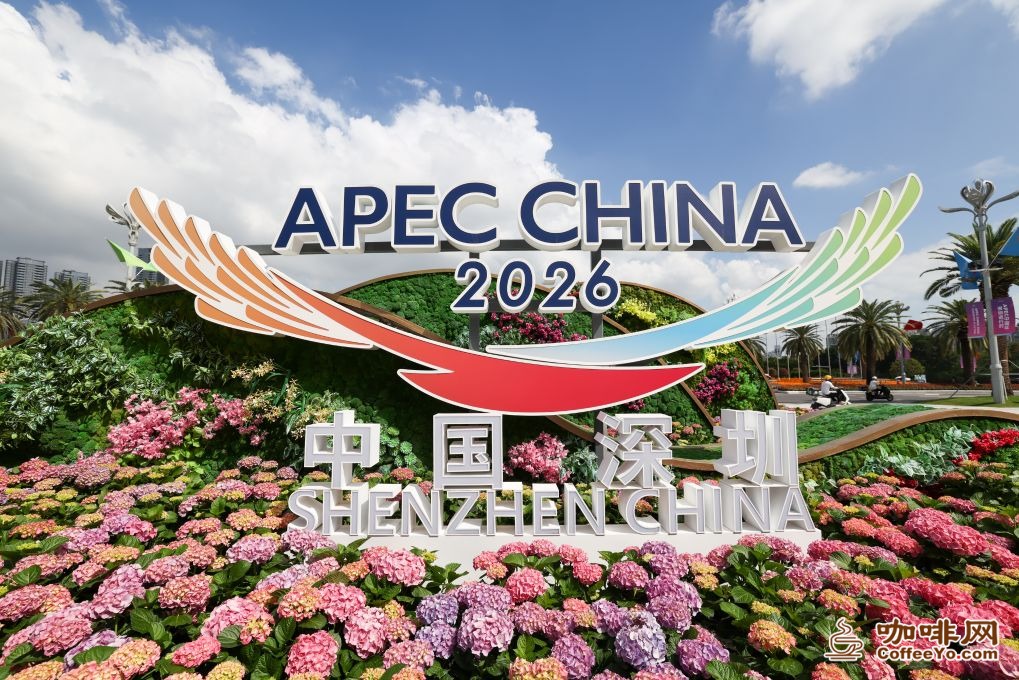 Focus on APEC: Building a Better World Together – Shenzhen APEC Meeting Offers Profound Insights
 Wuhua District, Kunming City, Yunnan Province, established the Coffee Industry Youth League Working Committee to gather the power of "coffee" youth
 Observation of the Great Wall | From Duck Shed Coffee to Thousand Acres of Rice Waves: Zhejiang's Thousand Million Project, What Can Hebei Learn?


 Liaoning ICP Security No. 21122402000217