


Introduction (Coffee Network coffeeyo.com):Winter strawberries in Jiangqiao Village, Guiren Town, Sihong County, Suqian City, Jiangsu Province, have yielded a bumper harvest. Local authorities seized the sales opportunity to broaden agricultural product sales channels through e-commerce livestreaming. Recently, the 23rd China International Agricultural Trade Fair (hereinafter referred to as the "Agricultural Trade Fair"), themed "Building Agriculture into a Modern Major Industry," concluded in Hangzhou, Zhejiang Province. The fair showcased the achievements of high-quality agricultural industry development in an all-round way, with more than 75,000 premium products on display and nearly 65,000 buyers and professional visitors attending for business discussions.
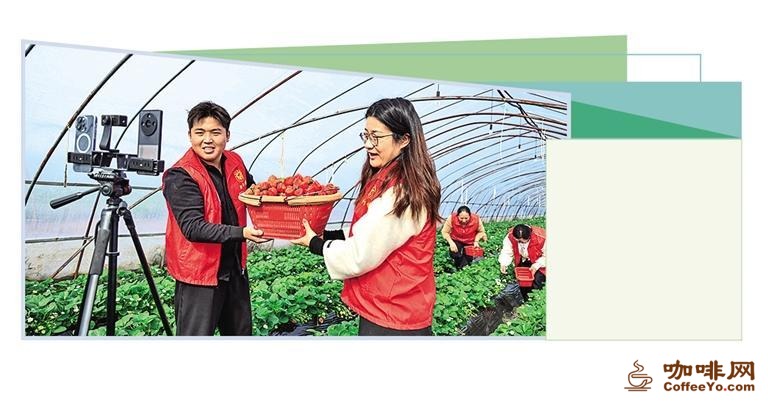
Winter strawberries in Jiangqiao Village, Guiren Town, Sihong County, Suqian City, Jiangsu Province, have yielded a bumper harvest. Local authorities seized the sales opportunity to broaden agricultural product sales channels through e-commerce livestreaming. Photo by Zhang Lianhua (China Economic Vision)
Recently, the 23rd China International Agricultural Trade Fair (hereinafter referred to as the "Agricultural Trade Fair"), themed "Building Agriculture into a Modern Major Industry," concluded in Hangzhou, Zhejiang Province. The fair showcased the achievements of high-quality agricultural industry development in an all-round way, with more than 75,000 premium products on display and nearly 65,000 buyers and professional visitors attending for business discussions.
New concepts and new products became striking highlights of the exhibition, with a batch of smart agricultural equipment and deeply processed agricultural products showcased in a concentrated manner, driving the transformation of agricultural trade from primary commodity circulation toward technology-driven, brand-oriented and green development. Various matchmaking sessions for production and sales built bridges between supply and demand, guiding market demand to drive production upgrading, enabling high-quality, safe and distinctive agricultural products to better connect with domestic and international markets, and injecting lasting momentum into agricultural trade.
Creating New and Premium Products
China's agricultural product consumption has shifted from 'eating more' to 'eating better,'" said Hu Bingchuan, director of the Agricultural Trade and Policy Research Office at the Rural Development Institute of the Chinese Academy of Social Sciences. Over the past decade, primary products contributed about one-third of the increment in agricultural product consumption among Chinese residents, while the other two-thirds came from processing and transformation as well as value-added services, he noted.
In recent years, a large number of innovative products branded with "academies of agricultural sciences" have entered the market and attracted consumer attention. The integration of industry, academia and research to jointly explore the cultural connotations, health benefits and social attributes behind agricultural products is a beneficial exploration by agriculture-related research institutes to actively connect with the market and develop diversified products.
Liu Yinghua, sales manager of Henan Milifang Food Co., Ltd., introduced that the company actively establishes and practices the "big food concept," co-built a research and development center with the Chinese Academy of Agricultural Sciences, adhered to the product positioning of "green, safe and healthy," and developed high-quality health products such as paper salad and crispy tofu. At present, the company's own brands have entered mainstream e-commerce platforms and established long-term strategic cooperation with enterprises such as Hainan Airlines and Walmart offline, achieving diversified development.
The Spice and Beverage Research Institute of the Chinese Academy of Tropical Agricultural Sciences, relying on Hainan's natural endowments and talent advantages, launched products related to tropical specialty crops such as coffee, cocoa and pandan. Fan Liwei, a specialist in the institute's industry development department, told reporters that the institute relies on its affiliated enterprises to carry out whole-industry-chain development of tropical spice and beverage crops, covering variety breeding, crop cultivation, deep processing and market promotion. In addition to food, the institute has also developed daily products such as perfumes and cosmetics based on tropical spice crops.
Beyond new products, only by refining products familiar to consumers and forming differentiated characteristics can the added value of agricultural products be maximized, standing out in homogeneous competition and driving farmers to increase incomes and prosper. This autumn, news of "hairy crab price plunges" flooded social media. At the same time, however, 3-liang hairy crabs from Ningxia were selling for 30 yuan each.
Thanks to the water and soil resources and climate advantages of the Yellow River irrigation area, our hairy crabs can hit the market 20 to 25 days earlier than those from the south," said Ma Hongzhong, head of Ningxia Qinyuanchun Agricultural and Livestock Cooperative. Although shipping to Jiangsu, Zhejiang and Shanghai incurs certain logistics costs, Yinchuan hairy crabs are still favored by southern consumers thanks to their sweet and tender meat, he said.
Zhang Ting, head of the Yellow River Hairy Crab Industry Association in Xingqing District, Yinchuan City, introduced that in the past, crabs raised in rice paddies in Yinchuan were of low quality, and farmers "focused on breeding while neglecting sales," with wholesale prices at only a dozen yuan per jin. In recent years, through the promotion of advanced breeding techniques, Ningxia hairy crabs have achieved stable prices against market trends and a leap in value.
Building Brand Awareness
Branding is a fundamental feature of a modern major agricultural industry and an important hallmark of an agricultural powerhouse.
At present, China's agricultural brand building has bid farewell to the initial stage of extensive cultivation and entered a new cycle of institutionalized, intelligent and quality-oriented coordinated advancement," said Lu Juan, director of the China Agricultural Brand Research Center at China Agricultural University, at the brand promotion event of this year's fair. The market is shifting from the traditional "people seeking goods" search-based purchasing, standardized supply and functional satisfaction toward new consumption patterns of personalized customization, experiential resonance and value recognition, she said.
Lu Juan suggested that agricultural business entities should update their quality concepts. On the premise of maintaining the bottom line of objective quality, they should make sustained efforts in four directions—quality visualization, experiential scenarization, accessible communication and differentiated perception—to transform the high quality hidden in fields into high quality that consumers can see, perceive and trust, continuously enhancing perceived value. Through differentiated brand marketing, they can strengthen consumers' willingness to pay a premium, enable premium agricultural products to realize market value, and achieve win-win outcomes for consumers, business entities, the industry and society.
Fengjie in Chongqing has long enjoyed the reputation of "Hometown of Fruits," with more than 20 varieties of premium fruits such as navel oranges. How can Fengjie's premium agricultural products be promoted to more places? Wu Tao, deputy secretary of the Fengjie County Party Committee and county magistrate of Chongqing, introduced that the locality embeds innovative elements into agricultural scenarios to cultivate new quality productive forces, enhances industrial competitiveness through standardization, quality improvement and traceability, and captures high-end value in the industrial chain through a brand value-added system. Against this backdrop, the regional public brand "Fengshang Haopin" was created, with authorized enterprises achieving annual sales of 980 million yuan in 2025 and a premium of over 8%, with products exported to more than 20 countries and regions.
The state farm system is the backbone and representative of the state-owned agricultural economy, playing a demonstrative and leading role in standardization system construction, whole-industry-chain integration and agricultural product market circulation. In recent years, state farms have continued to improve brand work mechanisms and intensify cultivation and promotion efforts. The state farm system recently released the "China State Farm Brand Directory (2026)," which includes 560 brands—29 public brands, 218 enterprise brands and 313 product brands—forming a state farm brand system with rich categories.
Experts say that as the strategy of strengthening agriculture through brands advances in depth, agricultural brands are not just a calling card for agricultural products but also a key lever for extending industrial chains and consolidating the foundation of rural industries.
Promoting International Exchange
Another highlight of this year's fair was the international exhibition area, which brought together 72 overseas enterprises from 23 countries, serving as a window for agricultural policy communication, trade matchmaking and cultural mutual learning between China and other countries. A relevant official from the Department of Market and Information Technology of the Ministry of Agriculture and Rural Affairs introduced that this year's fair made full use of the exhibition platform to build a high-level international exhibition area, deepen agricultural economic and trade exchanges and policy communication between China and other countries, and promote multilateral agricultural cooperation from consensus to practical action.
Malaysian Musang King durians, Indonesian specialty coffee, Kyrgyz honey, Korean seaweed and aquatic products… At the newly established China-APEC Agricultural Cooperation Pavilion, more than 200 specialty agricultural products showcased the differentiated agricultural resource endowments of the Asia-Pacific region. The pavilion focused on the themes of food security and sustainable agricultural development, building a platform for achievement display and business negotiations.
Mexico, the place of origin of crops such as corn and agave, participated as the guest country of honor at this year's fair, bringing local specialty agricultural products such as tequila, traditionally made cocoa products and organic bananas to convey the characteristics of Latin American agricultural development and help China-Mexico and China-Latin America agricultural cooperation reach a new level.
Tong Jinbao, sales manager of Hainan Blue Frog International Supply Chain Co., Ltd., told reporters that the company is deeply engaged in bulk trade and deep processing of Mexican avocados, pairing imported avocado puree with fresh fruits and vegetables such as bananas and kale to develop low-sugar healthy avocado beverages that are popular in the tea beverage market. He looks forward to connecting with more domestic new tea beverage and coffee brands through the fair to reach procurement cooperation intentions.
Liu Tingfeng, sales director of Yishe Life (Shenzhen) Co., Ltd., observed that both Chinese and foreign consumers are paying more attention to organic and all-natural functional foods. "My clients and I are attending the fair for the first time. The olive oil, pasta and biscuits we brought highlight health attributes such as naturalness and antioxidant properties, and we hope to use this opportunity to test market response. The company is also planning to build a showroom restaurant to introduce premium agricultural products originating in Italy to the domestic market," he said.
With agricultural products from five continents gathered and delicious food in the air, the international exhibition area of this year's fair used exhibitions as a bridge and trade as a bond to promote mutual learning between Chinese and foreign agriculture and boost global agricultural trade development.
Reprint Notice and Disclaimer
- This article is compiled byCoffee Network coffeeyo.com. The materials and images in this article come from public sources, and the copyright belongs to the original authors. This reprint is solely for sharing information about the coffee industry and does not represent the position of this website. The data and views in this article are subject to the original text. We thank the original author for their creation and sharing.
- If there are any matters concerning content authorization, attribution, copyright or otherwise, please contact this website promptly, and we will verify and cooperate in handling the matter as soon as possible. We also welcome coffee-producing regions, brands and industry media to exchange and contribute articles with us.
- Coffee Network contact information: Tel 400-0000-641 (+86-18288016826) Email 478203668@qq.com
Related Reading
 Deep Mountain Freshness in Changbai Mountains: How a Korean Pine Nut Passes the Freshness Test
- Luckin Coffee joins the fray? Are home appliance companies worried?
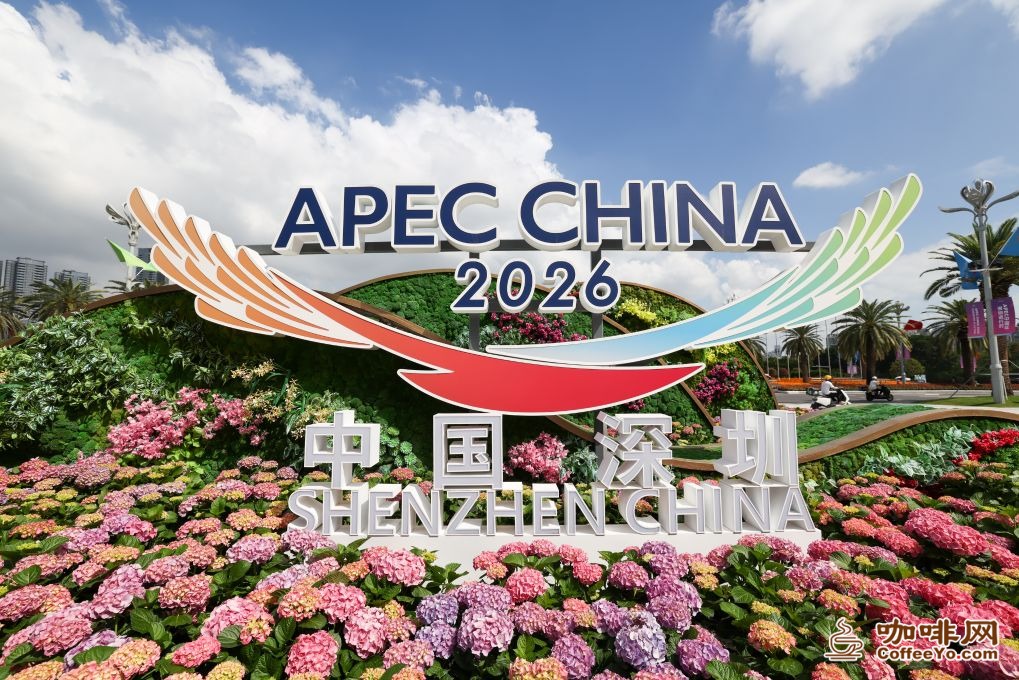 Focus on APEC: Building a Better World Together – Shenzhen APEC Meeting Offers Profound Insights
 Wuhua District, Kunming City, Yunnan Province, established the Coffee Industry Youth League Working Committee to gather the power of "coffee" youth
 Observation of the Great Wall | From Duck Shed Coffee to Thousand Acres of Rice Waves: Zhejiang's Thousand Million Project, What Can Hebei Learn?
 People's Daily: Those betting against China's economy will ultimately fail.


 Liaoning ICP Security No. 21122402000217