


At a Glance (China Coffee Network):Nestle’s latest Nescafe Plan progress report shows that in 2025, 53% of the green coffee beans Nestle purchased came from farmers adopting regenerative agriculture practices, an.
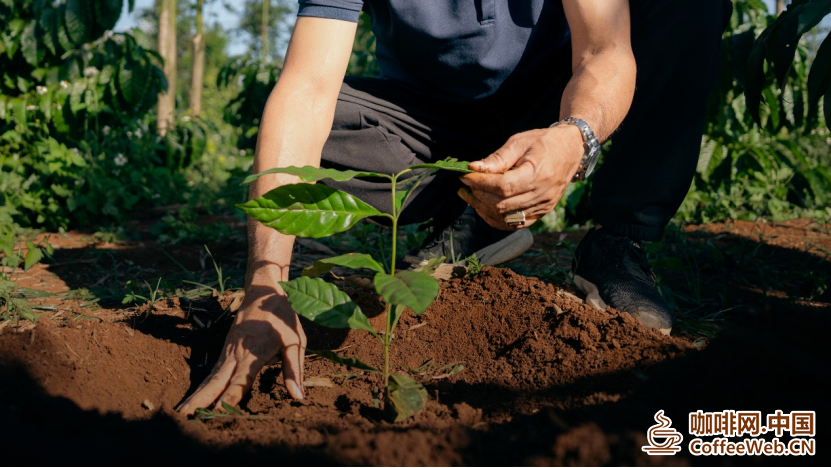
Nestle’s latest Nescafe Plan progress report shows that in 2025, 53% of the green coffee beans Nestle purchased came from farmers adopting regenerative agriculture practices, an important interim achievement and a substantial increase from 32% in 2024, driven by growing supply volumes from partner farmers and the continuous expansion of field-support programs.
In 2025, more than 1,600 Nestle agronomists and frontline staff provided local coffee farmers in 15 countries with training and technical support related to regenerative agriculture. The brand also optimized its procurement strategy, further increasing the share of purchases from farmers practicing regenerative agriculture.
This report also extended its assessment scope to the entire coffee value chain. 2025 also marks the 15th anniversary of the Nescafe Plan. Backed by long-term investment, the plan is dedicated to strengthening the coffee value chain’s ability to cope with climate change and creating tangible environmental and social value.
The Nescafe Coffee 2030 Plan lists regenerative agriculture as a core measure. This model can optimize planting methods and strengthen the resilience of the coffee supply chain while benefiting coffee farmers and farmland ecosystems. Practices such as agroforestry, cover crops, and scientific fertilization can effectively improve soil conditions and ensure stable long-term yields; intercropping can also help farmers open new income channels and diversify earnings. Using 2018 as the baseline, Nestle’s greenhouse gas emissions related to green coffee beans had cumulatively fallen 18.3% by 2025.
Antje Shaw, head of sustainability for Nescafe, said: “In 2025 more than half of our coffee beans came from farmers practicing regenerative agriculture, an important milestone. It also confirms that we are working hand in hand with coffee farmers to scale up regenerative agriculture across the entire coffee supply chain. We will keep helping farmers complete the transition in planting models, improve the industry’s climate resilience, and secure a long-term, stable supply of coffee beans for Nestle, which is also an important growth driver for the company.”
As coffee trees age, their yields naturally decline and their ability to withstand climate change weakens. To address this, Nestle promotes new coffee varieties with stronger disease resistance and climate adaptability to farmers, helping farms renew and upgrade. In 2025, Nestle distributed a cumulative 20.3 million coffee seedlings to farmers.
In the same year, 94.3% of Nescafe’s raw materials were responsibly sourced. All green coffee beans can be traced to specific farmer groups and are certified or verified by independent bodies in line with Nestle’s responsible sourcing standards.
Beyond the cultivation stage, this report also covers the entire value chain including coffee production, logistics, and packaging. Production, logistics, and packaging are the three main sources of carbon emissions in Nescafe’s business. In 2025, 98.6% of the electricity used at Nescafe production sites came from renewable energy, providing strong support for achieving overall emissions-reduction targets.
Rooted in the Nestle Greater China market, Nestle China upholds the philosophy of creating shared value and has spent more than three decades continuously supporting the development of Yunnan’s coffee industry and local communities, advancing the local implementation of the Nescafe 2030 Plan. Nestle China has provided free professional training to nearly 30,000 coffee farmers, and all locally purchased coffee beans are 4C certified. Since 2022, Nestle China has systematically rolled out three major regenerative agriculture measures: collecting about 200 soil samples each year for soil testing and formula-based precision fertilization; planting more than 900,000 trees cumulatively by 2025 through its global reforestation program; and replacing traditional washed processing with micro-water processing equipment to handle coffee beans, achieving water savings of over 80%.
Built on this systematic, integrated approach, the Nescafe Coffee 2030 Plan will continue to create a more resilient, future-ready coffee supply chain.
Reprint Notice & Disclaimer
- This article has been edited and compiled by China Coffee Network. The information and images therein come from public sources and the copyright belongs to the original author. This reprint is intended solely for information sharing within the coffee industry and does not represent the views of this website; all data and opinions are subject to the original article. Our thanks to the original author for creating and sharing it.
- For matters concerning content licensing, attribution, copyright or otherwise, please contact us promptly and we will verify and cooperate in handling them as soon as possible. We also welcome coffee origins, brands and industry media to exchange ideas and contribute articles.
- Contact China Coffee Network: Tel 400-0000-641 (+86-18288016826) | Email 478203668@qq.com
Related Reading
 Tim Hortons China Q3: System Sales Up 6.3% Quarter on Quarter
- CRH Plans OATLY Exit, Nayuki Leaves Wenzhou | Tea & Coffee Weekly
 The 2026 Asian Coffee Association Annual Meeting will be held in Dehong, Yunnan, and the Asia ABODY Coffee System Standard will be officially released
 The President of Brazil's Victoria Coffee Business Center (CCCV) led a delegation of four people to Pu'er, Yunnan to conduct a special inspection of the coffee industry
 Behind the 1836 yuan "King of Brands": The Full Industry Chain and Offline Layout of Xinlu Coffee
 From a raw bean to a fragrant cup, Xiamen International Coffee Exhibition unlocks a new picture of the entire industry chain


 Liaoning ICP Security No. 21122402000217