


At a Glance (China Coffee Network):
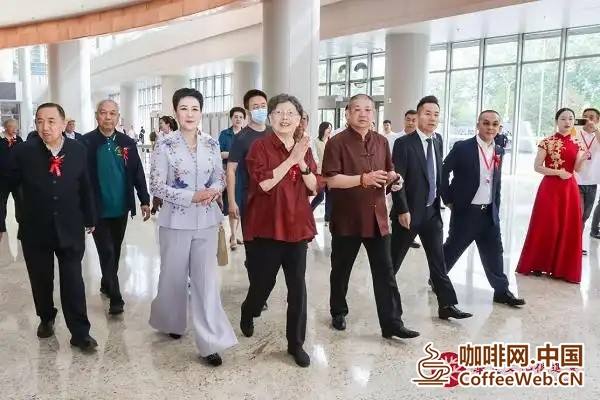
Beijing National Convention Center. People entering the lobby noticed a scent different from the usual — the air no longer carried the building’s customary mellow coffee aroma, but a delicate herbal medicinal fragrance. In June 2025, this subtle change became a meaningful footnote to the “First Huaxia Great Health and Wellness Culture Conference” held there that day.
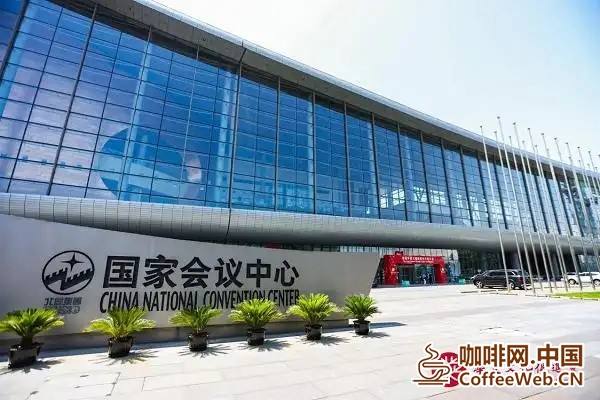
Coffee symbolizes the efficiency and fast pace of modern business life, while herbal fragrance points to the Eastern wellness philosophy of nourishment and balance. Here, the “handover” between the two scents serves as a metaphor for a deeper shift: the health agenda is moving from personal lifestyle preference to the core agenda of national strategy and industrial development.
The conference is regarded as the first deep convergence in practice between the “Healthy China 2030” Planning Outline and the Implementation Plan for the Major Project to Revitalize and Develop Traditional Chinese Medicine. The former lays out a full-lifecycle health service system, while the latter provides a concrete path for the modernization of traditional Chinese medicine. In the past, these two main threads often advanced separately — on one side, the building of the public health system and medical insurance reform; on the other, the extension of TCM clinics to grassroots communities and the inheritance of intangible cultural heritage. Yet at the National Convention Center, a venue that has witnessed countless international business dialogues, policy making, academic research, industrial translation, and mass communication sat down at the same round table for the first time.
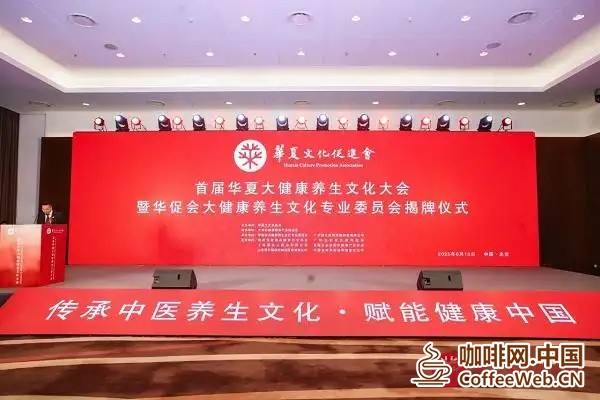
The composition of the attendees clearly displayed this ecosystem chain. The collective appearance of three academic authorities — National TCM Masters Tang Zuxuan, Li Diangui, and Wang Shimin — connected classical theory with modern application. Tang Zuxuan’s report on “the industrialization path of medicine and food sharing the same origin” drew keen interest from industry representatives; Li Diangui’s systematic exposition of the “Turbid Toxin Theory” was discussed repeatedly inside and outside the venue. At the same time, public figures such as singer Yang Hongji, former CCTV host Zhang Hongmin, and actor Zhang Guangbei joined across sectors as “Health Ambassadors”, pushing wellness topics from professional circles into mass communication. When these figures from different fields stood on the same group-photo stage, some attendees called it “a preview of Healthy China 2030” — it foreshadows that the evolution of China’s future health ecosystem will inevitably be a deep integration of top-level design, academic support, industrial strength, and mass culture.
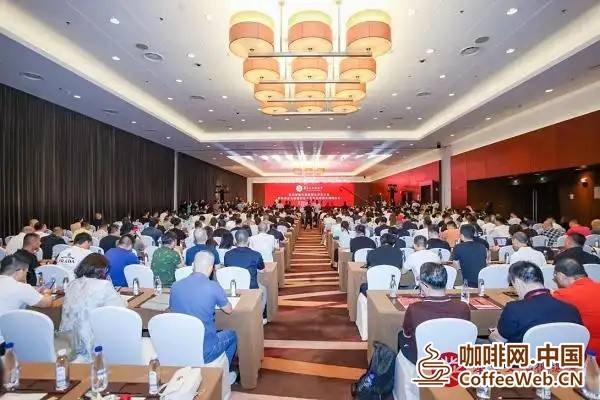
One of the conference’s core topics was the shift in health logic from “treating disease” to “nurturing life”. Gao Qiang pointed out in his speech that in the past discussions of health centered on treating illness, while today they should turn toward nourishment and care. This view was echoed by many experts. National TCM Master Tang Zuxuan shared at a sub-forum: “Health is the common wish of everyone; how to help more people achieve health is a question every TCM practitioner must ponder.” Several industry representatives said that policy signals now clearly point to “prevention first, moving the checkpoint forward”, and this is changing the investment logic of the great health industry — from health management to functional foods, from TCM smart devices to wellness service chains, the focus of capital and technology is migrating toward “the front end of nourishment and care”.
It is against this backdrop that a health science column, “Jingyi Qiujing”, held its launch ceremony at the conference. Created by China Traditional Chinese Medicine News, the column has National TCM Master Tang Zuxuan as chief advisor, Li Ping, a renowned TCM physician and hospital president from Tianjin, as resident guest, and actor Zhang Guangbei as Health Ambassador. Positioned as “making national TCM masters within reach in the internet era”, it focuses on the popularization of TCM knowledge, covering seasonal wellness, chronic disease management, practical family prescriptions, and more, and plans to spread through new media formats such as short videos and livestreams. Its appearance aims to answer the public’s demand for authoritative, practical wellness information and to fill the information gap between professional TCM knowledge and public understanding. Within the grand narrative of the whole conference, the launch of this column is merely a small, concrete footnote in practice — it attempts to translate discussions at the national strategy level into everyday knowledge accessible to ordinary families.
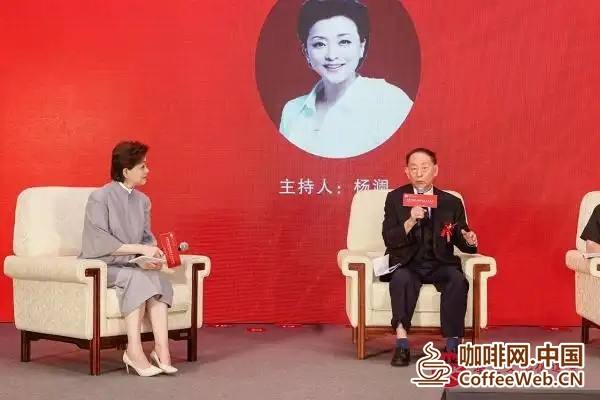
In fact, the shift from coffee aroma to herbal fragrance cannot be summed up by any single person’s “memorable quote”, but is a collective signal sent by the entire conference. What attendees took away was not the memory of a particular detail, but a clear judgment: the weight of health issues on the national agenda is rising significantly. During a day of intensive discussions, policy makers, academic authorities, and industry representatives repeatedly mentioned the same keyword — “front-loading”. The focus of health management is migrating from disease treatment toward risk intervention and daily nourishment, and traditional Chinese medicine happens to hold unique tool advantages and a cognitive foundation in this link. Data presented at the conference showed that the scale of China’s great health industry has surpassed 12 trillion yuan, with services and products directly related to TCM wellness posting a compound annual growth rate above 15% for three consecutive years. These numbers speak more eloquently than any sentimental detail.
The launch of the “Jingyi Qiujing” column is precisely a concrete move in this trend at the communication level. It does not take on the task of grand narrative, but tries to solve a practical problem: as more and more people begin to pay attention to TCM wellness, can they obtain authoritative, clear, and actionable information? The answer still needs time to test, but at least a content system led by national authoritative media, vetted by National TCM Masters, and distributed through new media channels has gotten underway.
The fragrance will fade and the conference will end. But the directional change refracted by this “change of scent” at the National Convention Center — health issues moving from the margins to the center, from personal preference to public policy, from traditional wisdom to modern industry — is entering people’s lives in more tangible ways.
Reprint Notice & Disclaimer
- This article has been edited and compiled by China Coffee Network. The information and images therein come from public sources and the copyright belongs to the original author. This reprint is intended solely for information sharing within the coffee industry and does not represent the views of this website; all data and opinions are subject to the original article. Our thanks to the original author for creating and sharing it.
- For matters concerning content licensing, attribution, copyright or otherwise, please contact us promptly and we will verify and cooperate in handling them as soon as possible. We also welcome coffee origins, brands and industry media to exchange ideas and contribute articles.
- Contact China Coffee Network: Tel 400-0000-641 (+86-18288016826) | Email 478203668@qq.com
Related Reading
 Jiangxi Wuyuan: Rural Coffee Unlocks New Cultural Tourism Formats
 Jiangxi Wuyuan: Rural Cafes Unlock New Cultural Tourism Formats
 Global quality goods gather at Hongqiao Import Commodity Exhibition Center, setting "Chinese standards" for coffee
- Global premium products gather to set China's coffee standards as Hongqiao Import Commodity Exhibition Center keeps the CIIE spirit alive
- Global quality goods gather as Hongqiao Import Commodity Exhibition Center and CIIE forge lasting partnership to set China's coffee standards.
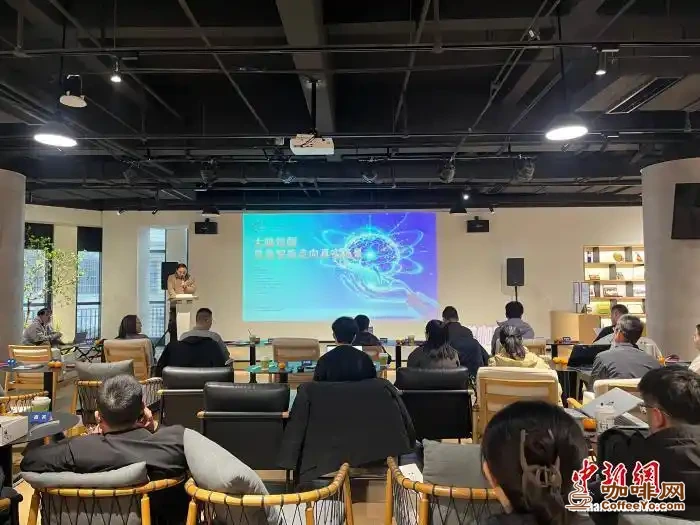 Zhejiang "Science Cafe" Promotes Embodied Intelligence in Real-World Scenarios


 Liaoning ICP Security No. 21122402000217