


At a Glance (China Coffee Network): Farmers in South Sudan have restarted coffee cultivation, and the niche bean variety Excelsa is being rediscovered out of both survival and flavor needs.
In the Western Equatoria State of South Sudan, farmers in several counties have replanted coffee. This area experienced war in the 1980s, and its coffee plantations lay abandoned for a long time; the plots now being opened up are planted with a local old variety, a coffee known as Excelsa.
Excelsa was not considered an independent species in the past. It was once written as Coffea liberica var. dewevrei and regarded as a variety of liberica.
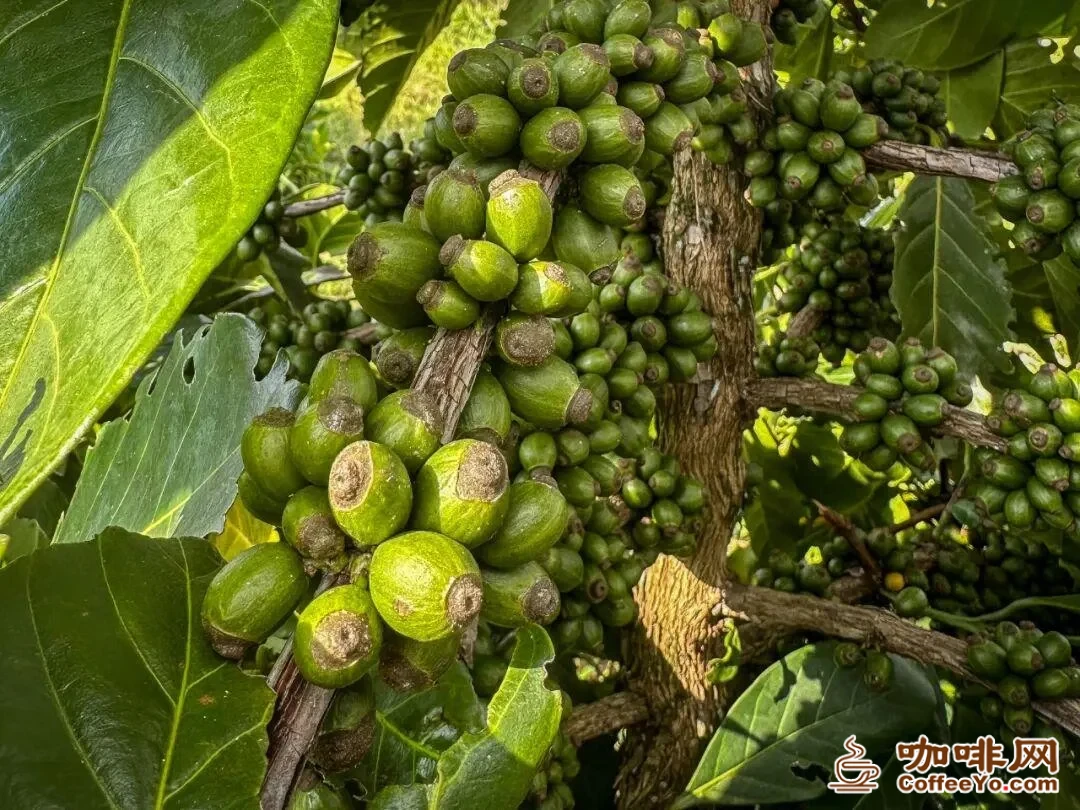
Excelsa coffee fruit growing on the branch
In August 2025, a team from the Royal Botanic Gardens, Kew proposed that Excelsa should be regarded as an independent species. Publishing in Nature Plants, the team split liberica based on genomic data, with Excelsa as one of its varieties, under the scientific name Coffea dewevrei. In other words, the term “fourth coffee” has only emerged in the past two years or so.
After being introduced from Africa, its ability to take root and grow in South Sudan relies on drought and heat tolerance, bearing good fruit even at low altitudes. Once ripe, the fruit can also hang on the branches for a relatively long time, giving a longer harvesting window than arabica; its size and shape are also close to arabica, with thin skin and soft flesh, so existing processing workflows can be followed.
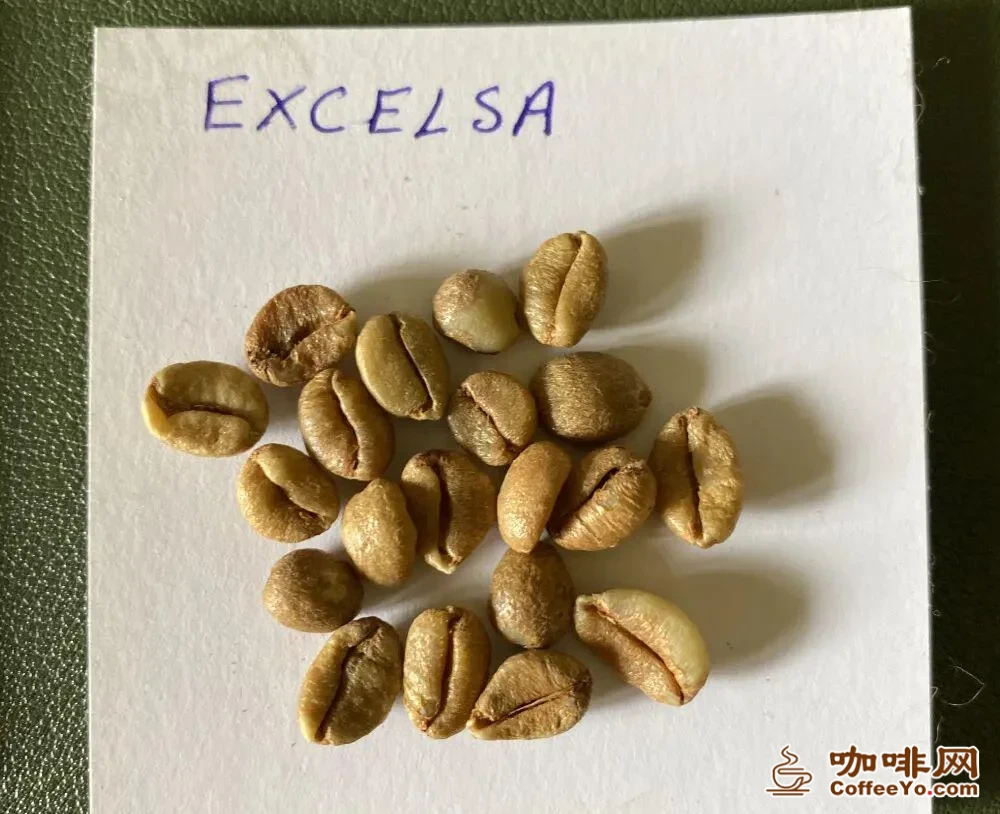
Excelsa coffee beans, pointed at both ends
Kew’s research describes its flavor as cocoa nibs, peanut butter, dried fruit, Demerara sugar, and maple syrup; it also has fruity notes of raspberry jam, fig, and plum. Its cupping score stabilizes above 80. The research team says it is closer to arabica, and when properly processed it is low in acidity and bitterness, but its flavor expression may be less diverse than arabica’s.
It was not a company focused on coffee cultivation that brought coffee back to this hillside. ETC grows teak in South Sudan, ranking second in scale in Africa. After finishing one harvest cycle from 2015 to 2020, it realized the next cycle would take nearly 25 years; the community could not wait for such a long period, so coffee was introduced as a short-cycle income support.
ETC now has 1,500 contracted farming households and 1,360 acres of Excelsa cultivation, providing about 190 direct jobs locally. Coffee is intercropped with teak, peanuts, and bananas, allowing a single plot to bring farmers several streams of income. Last year it harvested 5 tons of green beans, and future output is expected to keep climbing.
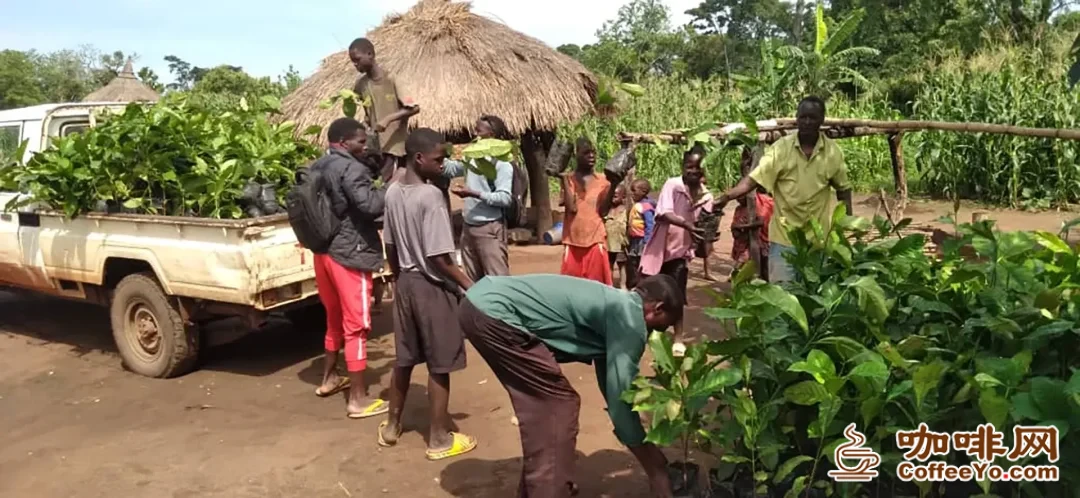
Excelsa coffee seedlings delivered to the village
Combined, liberica and Excelsa account for a very small share of global production—roughly one ten-thousandth of global coffee exports. In the short term it cannot become a regular on coffee retail shelves; a more realistic position for it is as a germplasm resource, a cash-flow crop for producing regions, and a small-batch experimental specialty.
Whether an emerging bean variety can enter the market depends not only on flavor, but also on the realities of its place of origin.
At the end of the 19th century, the Ceylon leaf rust disease prompted many Asian estates growing arabica to urgently introduce liberica; by the early 20th century, liberica was again crowded out of the market by the more convenient robusta.
This time, what has made Excelsa seen by more people is climate and livelihood: the lowlands of South Sudan are hot year-round with long dry seasons, making it hard for arabica to stabilize yield and quality, whereas Excelsa has grown on this land for over a century and adapts well to the environment; moreover, producing-region communities need cash flow, and its short cycle and ability to be intercropped neatly fill the gap left by teak.
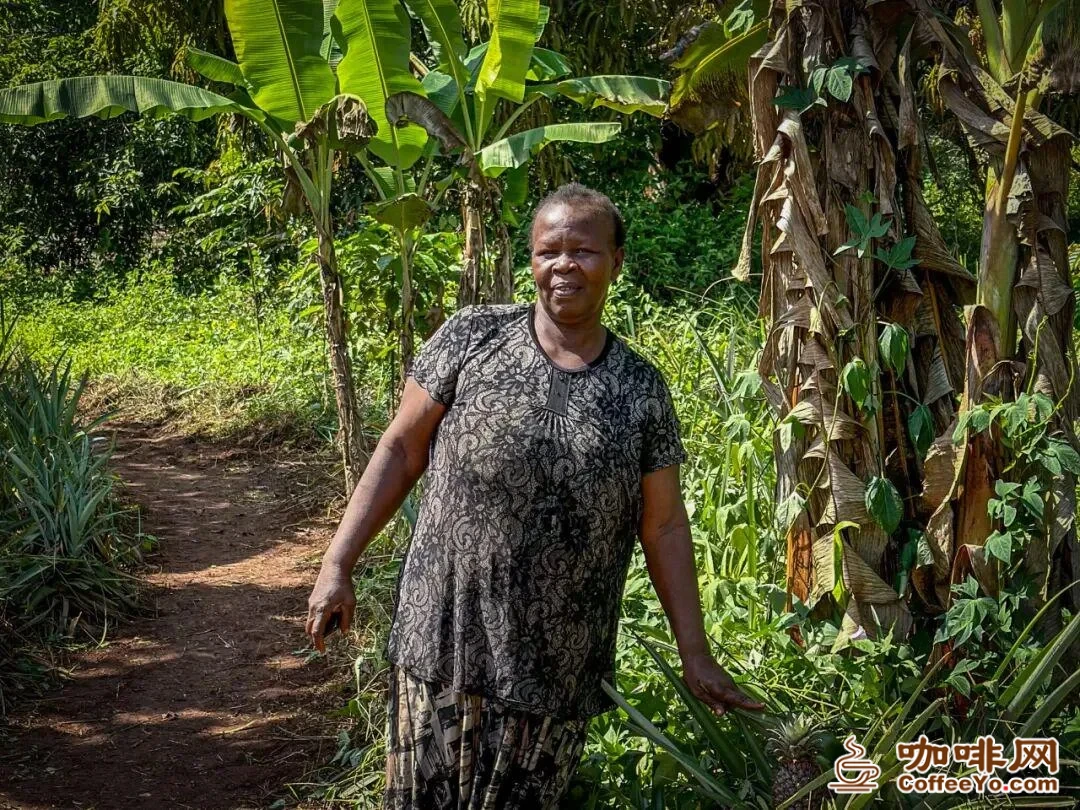
Farmers participating in the Excelsa planting program, with intercropped banana trees behind them
Ninety percent of South Sudan’s government revenue comes from oil, while most people make a living from agriculture. For the locals, Excelsa is first and foremost a reliable crop: it can survive the dry season, serves as farmers’ second income besides teak, and can provide more local jobs; it is also one of the few things the country can exchange for foreign currency besides oil. As for whether it will become a famous coffee, that is a matter for the future.
Reprint Notice and Disclaimer
- This article is edited and compiled by Coffee Network coffeeyo.com, reprinted from Coffee Salon Network’s “The Forgotten ‘Fourth Coffee’ Is Growing Back in South Sudan.” The copyright of the original text belongs to Coffee Salon Network and the original author. This site’s reprint is solely for sharing coffee industry information and does not represent this site’s position; all data and viewpoints herein shall be based on the original. We thank the original author for their creation and sharing.
- Original reading: Coffee Salon Network’s “The Forgotten ‘Fourth Coffee’ Is Growing Back in South Sudan”
- If issues involving content authorization, attribution, copyright, or other matters are involved, please contact this site promptly; we will verify and cooperate in handling them as soon as possible. We also welcome coffee companies and industry media to communicate and contribute articles with us.
- Coffee Network coffeeyo.com contact: Tel 400-0000-641 (+86-18288016826) Email 478203668@qq.com Address: Jinghong City, Xishuangbanna, Yunnan Province
Related Reading
 Tim Hortons China Q3: System Sales Up 6.3% Quarter on Quarter
- CRH Plans OATLY Exit, Nayuki Leaves Wenzhou | Tea & Coffee Weekly
 The 2026 Asian Coffee Association Annual Meeting will be held in Dehong, Yunnan, and the Asia ABODY Coffee System Standard will be officially released
 The President of Brazil's Victoria Coffee Business Center (CCCV) led a delegation of four people to Pu'er, Yunnan to conduct a special inspection of the coffee industry
 Behind the 1836 yuan "King of Brands": The Full Industry Chain and Offline Layout of Xinlu Coffee
 From a raw bean to a fragrant cup, Xiamen International Coffee Exhibition unlocks a new picture of the entire industry chain


 Liaoning ICP Security No. 21122402000217