


At a Glance (China Coffee Network): Starbucks China had 8,962 stores at the end of October. On 12 November it launched in-store baking at 28 stores in five cities with 11 items at 14-25 yuan, targeting over 100 stores in about 30 cities by 19 November; breakfast singles start at 9.9 yuan.
By Lei Jun
Edited by Meng Jiayi
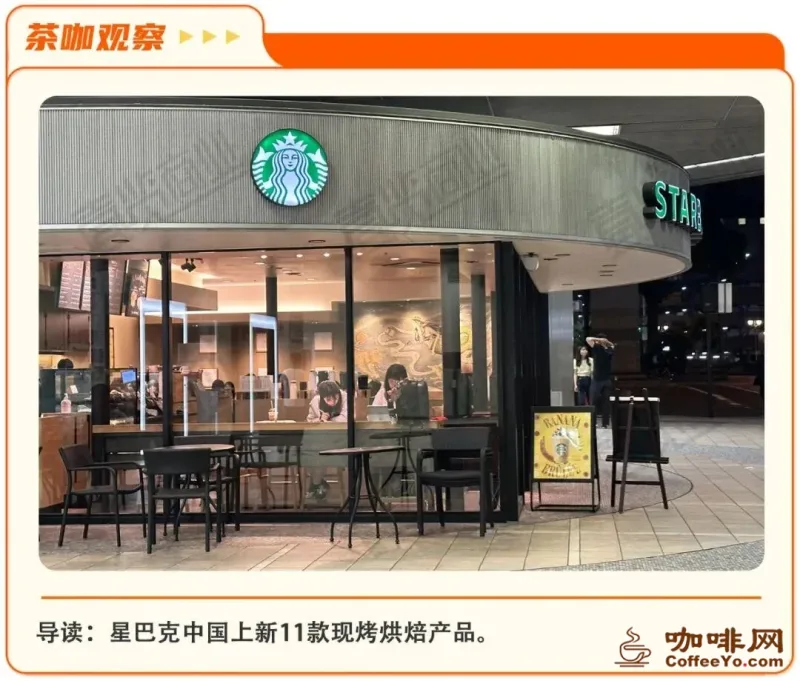
Starbucks China has moved ovens into its stores.
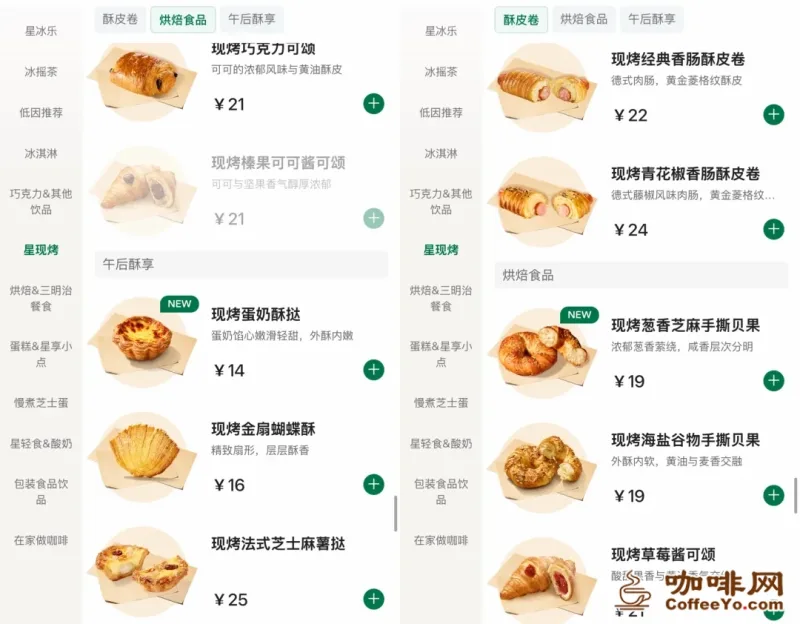
On 12 November, Starbucks China rolled out its ‘Xing Xian Kao’ in-store baking range at 28 stores in five cities — Guangzhou, Shenzhen, Zhuhai, Qingyuan and Huizhou — offering 11 bakery items such as pastry rolls, croissants, bagels and cheese mochi tarts at regular prices of 14 to 25 yuan.
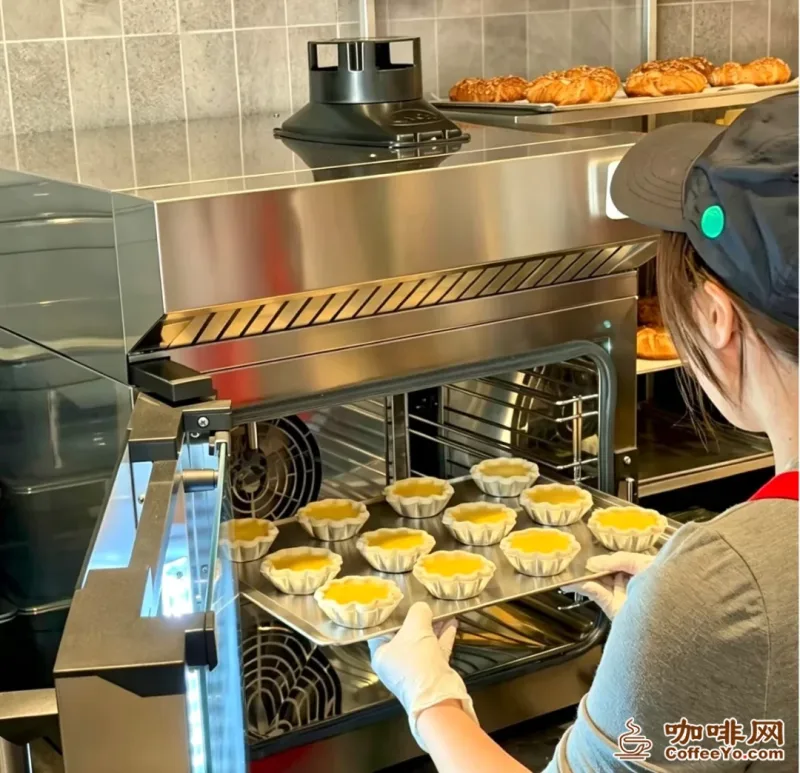
Unlike previous bakery offerings, Starbucks China has moved the baking step itself into stores: items are baked on site and sold the same day they are baked. Freshly baked products are displayed at room temperature, and customers can take them as they are or have them heated when ordering. This keeps the ‘baked today’ freshness appeal while suiting the pickup speed of a coffee store.
Beyond those five cities, selected stores in Beijing, Xi’an, Fuzhou, Changsha, Hangzhou, Chengdu, Dalian and elsewhere will roll out the range in turn. By 19 November, ‘Xing Xian Kao’ is expected to reach more than 100 stores in about 30 cities.
Bagels and croissants have long been on Starbucks China’s menu. Why, then, add baking equipment to existing stores and change the preparation workflow?
First, China’s bakery market keeps expanding, and everyday purchases provide a demand base for in-store bakery sales. iiMedia Research data show the retail bakery market reached 561.42 billion yuan in 2023, up 9.2% year on year, and is forecast to reach 859.56 billion yuan by 2029. Its survey also found that 90.6% of respondents buy bakery products at least once a week.
Freshness is a quality cue consumers value when choosing, and in-store baking gives Starbucks China a chance to win over freshness-minded bakery buyers. An iiMedia Research survey found 43.2% of respondents look at freshness when buying bakery items, second only to taste at 44.3%. A separate survey by ‘Interesting Report’ found 72.4% more often consume freshly baked bread.
Starbucks China’s earlier in-store baking experience offers a reference for setting fresh-baking workflows at existing coffee stores, cutting the trial-and-error cost of the pilot. In 2017, Princi entered China with the opening of the Starbucks Reserve Roastery Shanghai, where an in-house team made bread and desserts on site. Starbucks China later launched a Reserve coffee bakery in Shanghai, making daily in-store baking a store feature.
Second, Starbucks China can use the time customers spend in store to create add-on purchase opportunities for freshly baked items. It positions stores as a ‘third place’ beyond home and work, somewhere to stay, rest and meet. While ordering or waiting for their drinks, customers see croissants and bagels fresh from the oven; those who came in only for coffee may add a baked item on the same visit, lifting food attach rates and average spend.
Finally, daypart promotions let freshly baked items cover more consumption occasions while keeping same-day waste in check.
At breakfast, single-item deals cater to commuters. Selected items such as the freshly baked butter croissant and the scallion-sesame hand-pulled bagel go as low as 9.9 yuan, lowering the barrier to buying breakfast on its own.
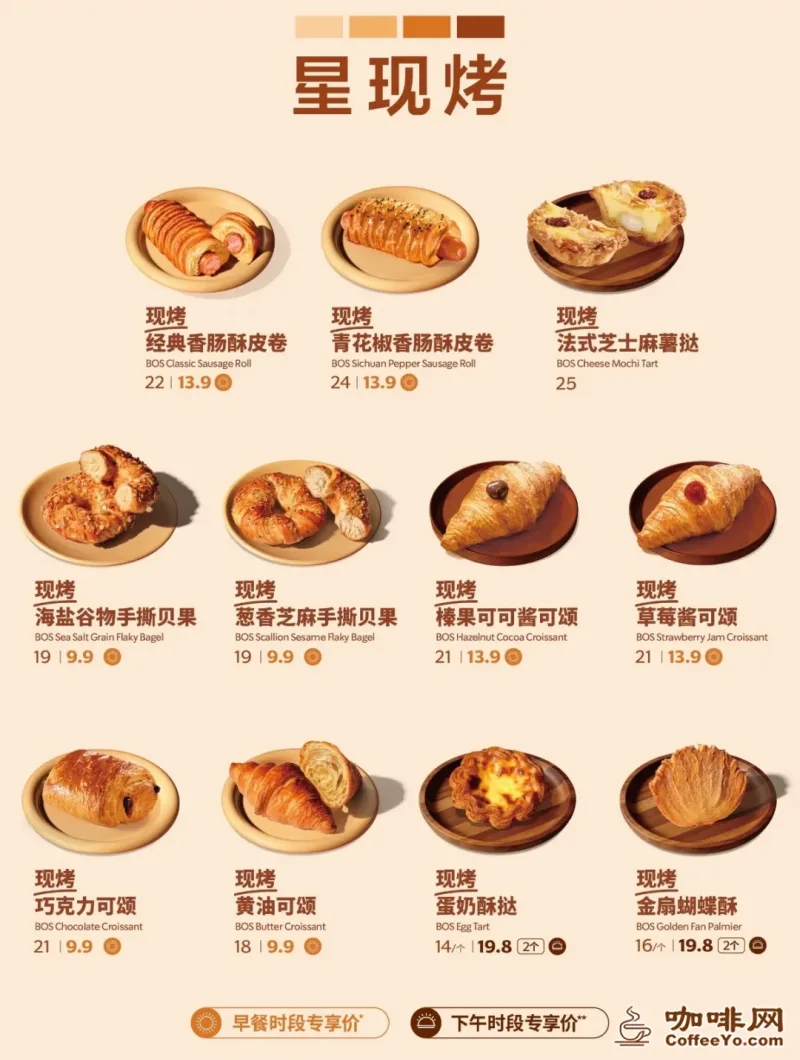
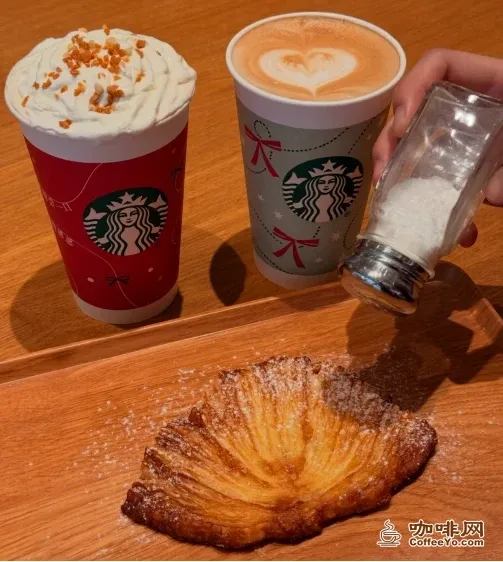
At afternoon tea, two-item bundles create more afternoon sales opportunities. The freshly baked custard souffle tart and golden fan palmier are offered at two for 19.8 yuan, suited to picking several pastries at once or sharing. For stores with thin afternoon traffic, bundles let existing floor space and staff on shift absorb additional food orders.
Discounts after 5 pm mainly cut same-day write-offs. Freshly baked items are sold only on the day of baking, and stores move leftover stock faster with 30% off two items and 40% off three. Concentrating discounts in the evening also leaves earlier dayparts a window to sell at regular prices or their own promotional rates.
Data from Yilan Business show Starbucks China had 8,962 stores in China as of the end of October. Against that base, a fresh-baking rollout planned for just over 100 stores remains a small pilot. Whether it expands will depend on steady fresh-baked sales at breakfast and afternoon tea, and on whether gross margins cover equipment amortisation, extra labour hours and same-day write-offs.
End
Reprint Notice & Disclaimer
- This article has been edited and compiled by China Coffee Network and reprinted from NetEase, “最低9.9元 星巴克中国开始在店里烤面包.” The copyright of the original text belongs to NetEase and the original author. This reprint is intended solely for information sharing within the coffee industry and does not represent the views of this website; all data and opinions are subject to the original article. Our thanks to the original author for creating and sharing it.
- Read the original: NetEase, “最低9.9元 星巴克中国开始在店里烤面包”
- For matters concerning content licensing, attribution, copyright or otherwise, please contact us promptly and we will verify and cooperate in handling them as soon as possible. We also welcome coffee origins, brands and industry media to exchange ideas and contribute articles.
- Contact China Coffee Network: Tel 400-0000-641 (+86-18288016826) | Email 405854472@qq.com
Related Reading
 Mega Scenarios Empower the ‘Little Golden Bean’: Yunnan Builds a 200-Billion-Yuan Specialty Coffee Chain
 From a Well-Paid Job to a National Coffee Roasting Champion: A Guangzhou Youth’s Story
- Brazil’s Coffee Industry Upgrades Open New Space for China-Brazil Cooperation
 Coffee as Daily Life in Kunming and a Hundred-Billion-Yuan Industry Chain
 Ten Leading Coffee-Drink Brands, Ten Different Market Playbooks — Which Do You Favour?
 Pour-Over Coffee Basics: Drippers, Filters and the Fundamentals of Pouring Water


 Liaoning ICP Security No. 21122402000217