


At a Glance (China Coffee Network):In the mountainous region of southern Zhejiang, there is a mountain city that grows no coffee beans, yet boasts a cafe density far exceeding that of many large and medium-sized.
In the mountainous region of southern Zhejiang, there is a mountain city that grows no coffee beans, yet boasts a cafe density far exceeding that of many large and medium-sized cities. Here, coffee is not an imported fashion symbol, but a fundamental part of daily life woven into the streets and alleys. This is Qingtian County, Lishui City, Zhejiang Province—an overseas Chinese hometown that has engraved coffee into its urban fabric.
From a private drink in emigrant families, to citywide public consumption, to a regional brand linking culture and tourism, the path Qingtian coffee has traveled reflects the pioneering, China-and-world-bridging spirit of the people of this overseas Chinese hometown, and also offers a vivid observation sample for the development of county-level characteristic economy.
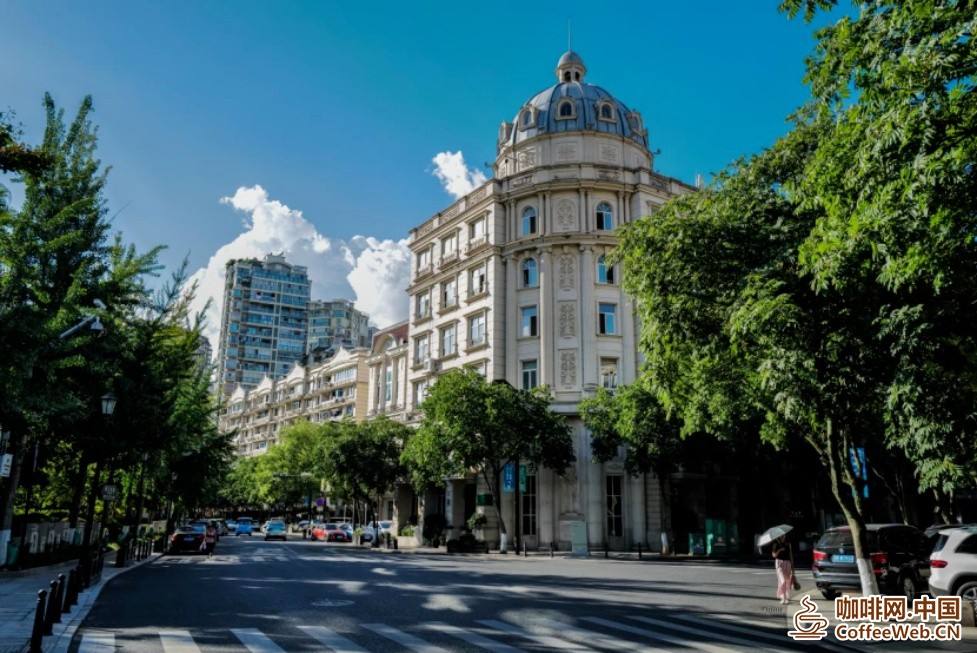
Linjiang East Road, Qingtian County—European-style street
From the Family Dining Table to Aroma Across the City: The Evolution of a Lifestyle
The formation of Qingtian’s coffee culture did not originate from a short-term market trend, but was naturally accumulated over decades along with the footsteps of several generations of overseas Chinese.
In the early days, coffee was a “mark of a foreign land” in the lives of emigrant families. Qingtian overseas Chinese who went to Europe to make a living in earlier years developed the habit of drinking coffee in foreign lands. When they returned to their homeland with their savings and experiences, coffee pots, coffee beans, and brewing skills came back with them. In those years, coffee mostly existed in the living rooms and dining tables of overseas Chinese families, becoming a distinctive beverage for gatherings of relatives and friends and for entertaining guests, bearing a distinct mark of overseas Chinese hometown life.
Subsequently, coffee moved from the family to the streets, integrating into everyday life. Driven by emigrant circles and joined by local entrepreneurs, the first public-facing cafes emerged in Qingtian. Over more than three decades, cafes have continuously extended along both banks of the Ou River, penetrating from the main urban area to township streets, transforming from a novelty for a few into a daily choice for the masses. Coffee no longer needs to be explained as “what it is,” but has become one of the ordinary options of “what to drink.”
In recent years, Qingtian coffee has accelerated toward standardization and branding. In 2024, local authorities issued relevant regulations on coffee preparation, establishing a relatively systematic industry standard from talent cultivation to output standards. This craft, which in the past relied mostly on experience and word-of-mouth transmission, began to have a unified quality yardstick, laying the foundation for Qingtian coffee’s transition from “local habit” to “characteristic industry.”
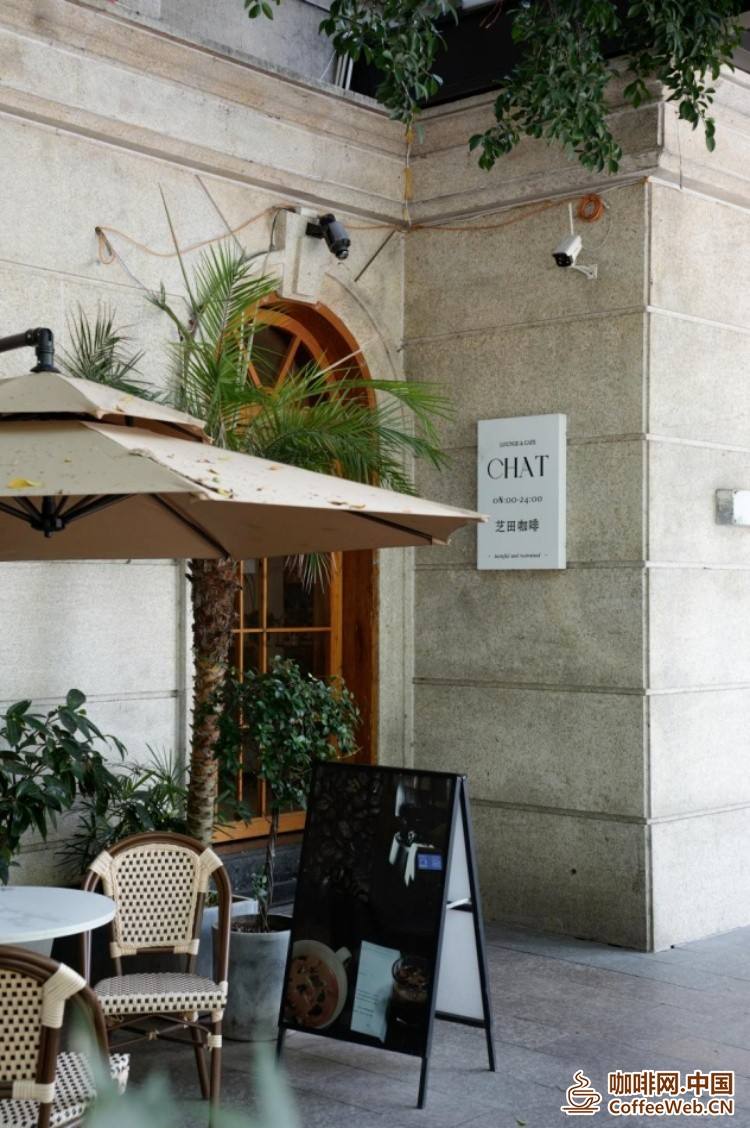
Zhitian Coffee
Diverse Formats Among the Streets and Alleys: A Coffee Ecosystem Sustained by Local Shops
In Qingtian, the dominant force in the coffee market is not national chain brands, but local small and medium-sized cafes rooted in communities, each with its own characteristics. Diverse in style, they together constitute the city’s unique coffee ecosystem.
The “scenic belt” along the Ou River is a concentrated showcase window for Qingtian coffee. Along Linjiang East Road, river views and European-style architecture complement each other, forming a unique visual atmosphere. Zhitian Cafe, located at No. 52 Linjiang East Road, is popular with many consumers for a balanced-tasting “dirty coffee,” with its interior blending retro and fresh elements in a relaxed and cozy ambiance. Yufei Coffee on the same road is a long-established shop operating for over a decade, with its own independent roasting workshop, insisting on self-roasting beans to maintain flavor stability; its distinctively shaped signature coffees and single-origin pour-overs cater to the different needs of both newcomers and seasoned enthusiasts.

Yufei Coffee
Going deep into communities and alleys, one can sense the more unadorned everyday warmth of Qingtian coffee. Tiandog Coffee on Tashan Road has a small storefront but has accumulated a group of regular customers through specialty drinks and homemade desserts, and its limited-time beverages launched in line with the seasons are also quite ingenious. Mingwen Coffee in Hecheng Subdistrict follows a community-oriented route, with a spacious, simply decorated space, and likewise insists on self-roasting beans, with its dark-roast series enjoying high repeat-purchase rates. Fuli Coffee in Hedong Residential Community comes with a quiet courtyard, its cappuccino featuring a dense, creamy texture, and also offers DIY coffee-bean bracelet making as a casual experience for in-store customers.
In addition, large numbers of family-style small cafes are distributed across areas such as Linjiang East Road and Hecheng Subdistrict, each with its own focus and flavor. For local Qingtian residents, choosing a cafe rarely relies on so-called “popular rankings,” but more often is based on taste habits and neighborhood trust—walking into a small shop that catches your eye is the most authentic way to experience it.
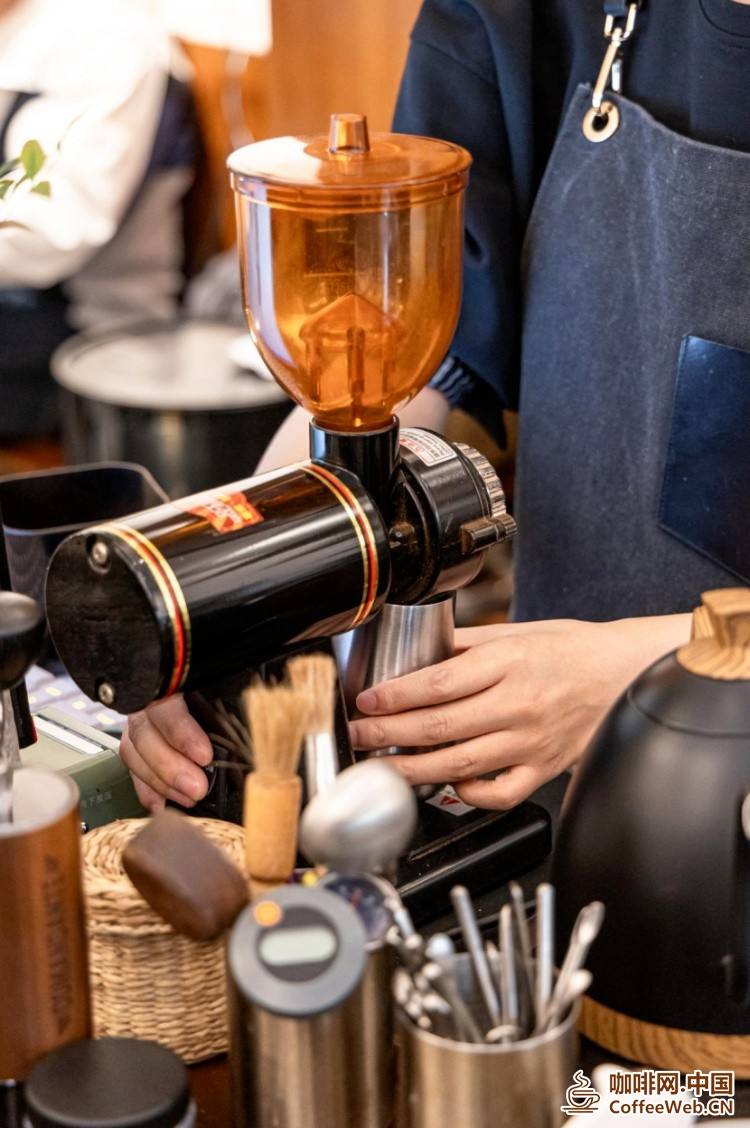
A barista makes coffee
Using Coffee as a Medium: Exploring the Integration of Overseas-Chinese-Hometown Tourism
When coffee rises from a daily beverage to an urban cultural symbol, it naturally becomes an important carrier for Qingtian to promote the integrated development of culture and tourism.
For tourists from surrounding areas, Qingtian, with its unique overseas Chinese hometown character and European charm, has become a suitable choice for short-distance leisure travel. Sitting down by the Ou River, ordering an authentic coffee, and admiring the river view and exotic-style architecture, one can feel a different kind of vacation atmosphere without traveling far. The combination of coffee and travel photography is also becoming increasingly mature; the distinctive cafes themselves are sightseeing nodes—after finishing their coffee, visitors can walk to attractions such as the European-style district and the internet-famous bridge, forming a convenient “coffee tasting + sightseeing” route, especially favored by young people and family travelers.
From a pack of coffee beans in an overseas Chinese traveler’s luggage, to thousands of cafes spread across urban and rural areas, to a calling card in regional culture-tourism promotion, the story of Qingtian coffee is, in the final analysis, a process in which a beverage and a local land achieve mutual success. It does not depend on a raw material origin, yet relying on the profound heritage of overseas Chinese hometown culture, it has internalized an imported lifestyle into a unique urban gene.
This composure and inclusiveness, precipitated in the hustle and bustle of everyday life, is precisely what is most worth savoring about Qingtian coffee, and also provides a warm footnote for observing the practical path of “culture empowering industry” in China’s county-level economy.
Source | Qingtian Release
Editor | Zhang Meidi
Proofreading | Lin Ting
Review | Zou Lingling
Draw wenj1h draw wenj1
Scan the QR code to follow the Qiaoyin Magazine cloud reading platform
Swipe left and right to view more
Draw wenj1h draw wenj1
Draw wenj1h draw wenj1
Original title: “Qingtian, the Overseas Chinese Hometown: A New Model of County-Level Economy in a Cup of Coffee”
Reprint Notice & Disclaimer
- This article has been edited and compiled by China Coffee Network. The information and images therein come from public sources and the copyright belongs to the original author. This reprint is intended solely for information sharing within the coffee industry and does not represent the views of this website; all data and opinions are subject to the original article. Our thanks to the original author for creating and sharing it.
- For matters concerning content licensing, attribution, copyright or otherwise, please contact us promptly and we will verify and cooperate in handling them as soon as possible. We also welcome coffee origins, brands and industry media to exchange ideas and contribute articles.
- Contact China Coffee Network: Tel 400-0000-641 (+86-18288016826) | Email 478203668@qq.com
Related Reading
 Tim Hortons China Q3: System Sales Up 6.3% Quarter on Quarter
- CRH Plans OATLY Exit, Nayuki Leaves Wenzhou | Tea & Coffee Weekly
 The 2026 Asian Coffee Association Annual Meeting will be held in Dehong, Yunnan, and the Asia ABODY Coffee System Standard will be officially released
 The President of Brazil's Victoria Coffee Business Center (CCCV) led a delegation of four people to Pu'er, Yunnan to conduct a special inspection of the coffee industry
 Behind the 1836 yuan "King of Brands": The Full Industry Chain and Offline Layout of Xinlu Coffee
 From a raw bean to a fragrant cup, Xiamen International Coffee Exhibition unlocks a new picture of the entire industry chain


 Liaoning ICP Security No. 21122402000217