


At a Glance (China Coffee Network): (Source: Shangguan News) In recent years, Changning District has used “new dining” as a lever, focusing on the full-life-cycle development needs of enterprises, and through precise services, institutional innovation, policy support, and coordination with commercial districts, has continuously raised the level of consumption. Against this backdrop, Luckin Coffee (Shanghai) Co., Ltd., based in Changning, has actively explored an integrated cross-industry consumption model of “dining plus public service plus digital experience”
(Source: Shangguan News)
In recent years, Changning District has used “new dining” as a lever, focusing on the full-life-cycle development needs of enterprises; through precise services, institutional innovation, policy support, and coordination with commercial districts, it has continuously raised the level of consumption. Against this backdrop, Luckin Coffee (Shanghai) Co., Ltd., based in Changning, has actively explored an integrated cross-industry consumption model of “dining plus public service plus digital experience,” using the “urban service station” as its core vehicle, laying out integrated consumption scenarios in public spaces such as core Shanghai metro stations and telecom service halls, bringing convenience and warmth to citizens’ lives.
Precisely Embedded in Public Spaces
Commuter Stations Solve Everyday “Pain Points”
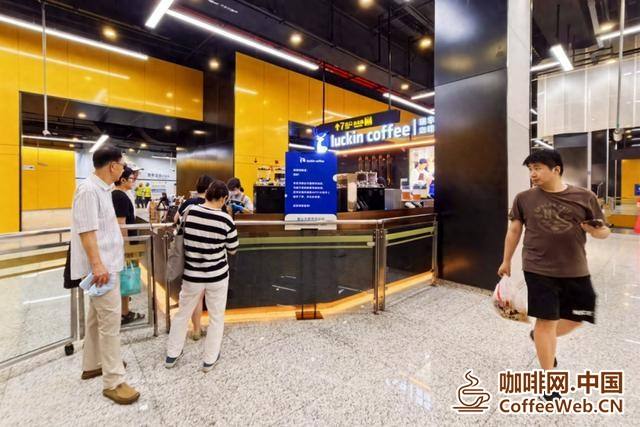
In the Hongqiao-Gubei commercial district, at Loushanguan Road Station on Metro Line 15, crowds flow steadily, and citizens wait in orderly fashion to pick up orders in front of a Luckin Coffee commuter station. “With this station, I order ahead and grab it on my way off the train, especially convenient, and the coffee quality is guaranteed too,” said white-collar worker Ms. Xu, who placed her order in advance through the WeChat mini-program, then scanned a code and picked up her coffee at the counter, the whole process taking less than 2 minutes. This convenient experience is a microcosm of Luckin introducing the “new dining” concept into public services and solving everyday pain points.
These commuter stations make use of idle spaces such as scattered areas of metro station halls, transfer passages, and even abandoned ticket offices; without adding new commercial land, they use lightweight renovation to embed high-quality coffee, tea drinks, and light-meal services into citizens’ daily commuting routes. The stations have no dine-in area, featuring “grab and go,” which ensures the order of heavy metro passenger flows is not affected.
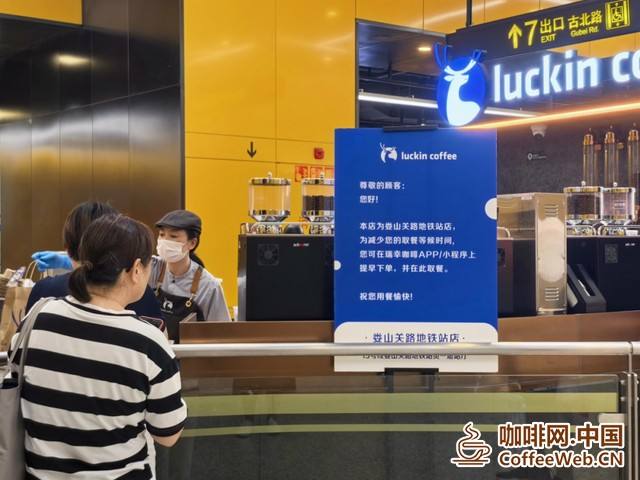
At present, commuter stations like these have been deployed across several metro lines passing through Changning, covering core stations of the Shanghai metro network and serving tens of thousands of commuter passenger trips per day. As of April 2026, Luckin had built more than 50 stations covering 13 metro lines. Some stations saw cup volume climb rapidly from 300 cups at opening to 800, directly confirming how precisely this model hits immediate consumption demand.
Cross-Industry Integration Reshapes the Experience
Digital Stations Upgrade the “Quality” of Public Service
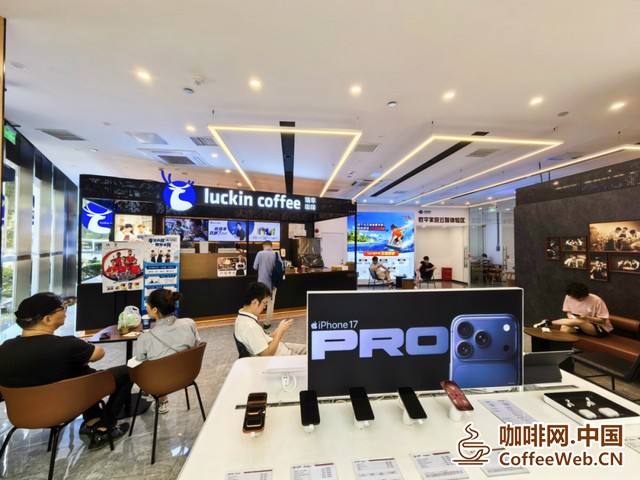
In the Zhongshan Park commercial district, next to the traditional service area of the China Unicom Building, a modern Luckin Coffee “digital station” is a refreshing sight. While waiting to handle broadband business, citizen Mr. Wang bought an iced latte at the station. “In the past, waiting for business to be handled felt like time dragging; now with a coffee and a chance to try new products, waiting turns into leisure, and the service experience is completely different,” Mr. Wang said.
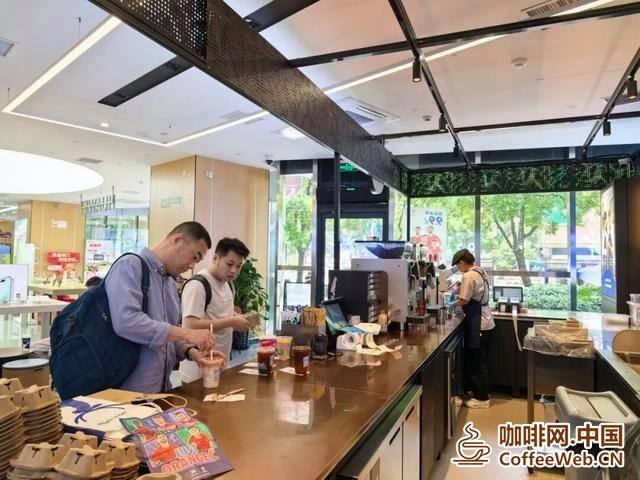
This is the result of deep cooperation between Luckin Coffee and Shanghai Unicom. Through scenario reconstruction and format upgrading, the traditional telecom service hall has transformed from a single business-handling window into a “community digital living room” integrating convenience services, quality consumption, and digital experience. The station has also innovatively launched cross-industry benefit campaigns such as “top up your phone bill, get coffee”: users who recharge through Unicom’s payment system receive coffee vouchers, achieving two-way traffic generation and value exchange between telecom services and dining consumption. This integration not only raises the added value of public service spaces, but also connects user systems through digital means, opening new growth channels for all parties.
Digital Technology Empowers Across the Board
Building an Efficient, Intelligent Operating Ecosystem
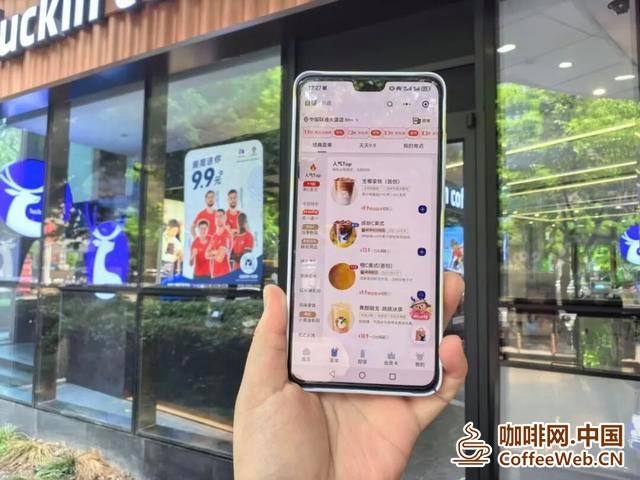
Behind the efficient operation of the stations is a powerful digital operating system. All stations are connected to Luckin’s self-developed digital ordering and fulfillment system and big-data precision marketing system. Citizens place orders online in advance through the Luckin app or mini-program and pick up quickly at the station, forming a standardized consumption loop of “order online, pick up at the station,” with average time kept within 2 minutes, greatly optimizing the consumption experience.
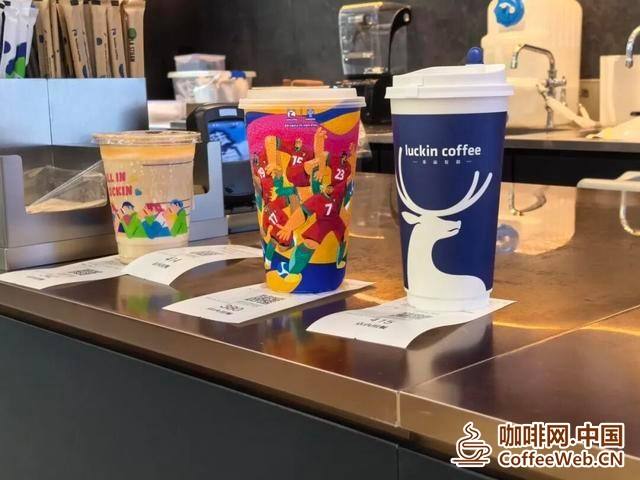
On the operations side, the system pushes breakfast-set discounts to commuters based on user habits, or issues targeted coffee vouchers to Unicom users, effectively promoting efficient conversion and cross-repeat purchases of traffic from different scenarios. Inside digital stations, smart interactive devices integrate functions such as voice wake-up, motion capture, and digital-life experiences, turning traditional waiting time into an immersive, rewarding interactive experience and reflecting the deep coupling of “digital experience” with public service scenarios.
Multi-Party Win-Win and Sustainable
Building a Replicable “Changning Model”
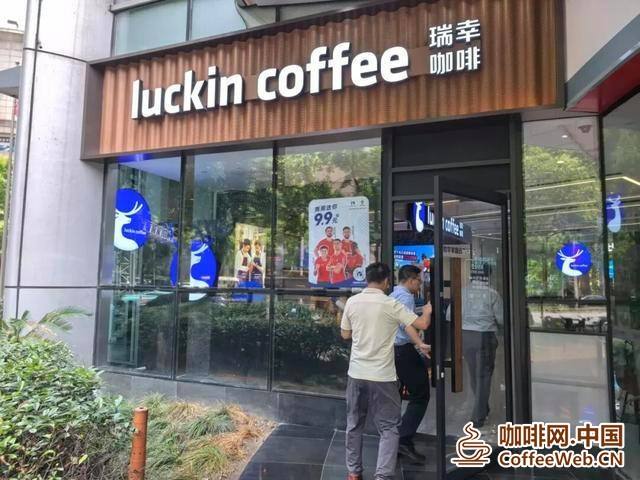
Luckin Coffee has established long-term, deep strategic partnerships with Shentong Metro and Shanghai Unicom, forming a mature mechanism of complementary resources, shared benefits, and coordinated operations. Shentong Metro opens up passenger-flow and scenario resources, Shanghai Unicom opens up space and user resources, while Luckin contributes brand, products, and digital operating capabilities. Commuter stations solve dining needs “in transit,” and digital stations optimize the waiting experience “while handling business”; the two scenarios are organically linked through unified brand image, operating standards, and digital systems, building a convenience service network covering citizens’ high-frequency daily activity trajectories, fully reflecting the cross-industry, intelligent, and inclusive nature of the new integrated consumption scenario. Within 2026, Luckin Coffee plans to expand metro stations to 100 and extend to other public service spaces such as government service centers, transport hubs, hospital waiting areas, and university libraries.
Behind the success of Luckin Coffee's "urban service stations" lies a vivid footnote to Changning District's deep cultivation of the "new dining" track and its practice of cross-industry integration and resource sharing.
As consumer demand keeps iterating and upgrading, Changning District has taken the initiative to guide dining companies to step outside the traditional positioning of "simply providing meals," pushing the industry from basic "filling stomachs" toward a composite experience driven by emotional value, scenario integration, and digital intelligence efficiency, constantly breaking out of traditional dine-in spaces and extending toward outdoor, retail, and multi-format integration.
At the same time, Changning District keeps deepening thoughtful business services: under the guidance of the municipal water authority, it has implemented a drainage permit "commitment system plus post-approval supervision" and a "drawing-free" simplified handling model, quickly resolving store-approval bottlenecks for new dining enterprises and using institutional innovation to escort format innovation.
This development model is opening new growth space for the dining industry and has become an important lever for the region to stimulate consumption vitality and raise the warmth of urban services, continuously releasing dividends that benefit and convenience the public.
Reporter/Photographer: Li Songnan
Editor: Shi Huanhuan
Editor in Chief: Yan Wenbin
(Source: Shangguan News)
Accurately embedded in public spaces
Global empowerment of digital technology
Multi party win-win and sustainable
Create replicable ‘Changning samples’
Reporter/Photographer: Li Songnan
Editor: Shi Huanhuan
Editor in Chief: Yan Wenbin
Reprint Notice & Disclaimer
- This article has been edited and compiled by China Coffee Network. The information and images therein come from public sources and the copyright belongs to the original author. This reprint is intended solely for information sharing within the coffee industry and does not represent the views of this website; all data and opinions are subject to the original article. Our thanks to the original author for creating and sharing it.
- For matters concerning content licensing, attribution, copyright or otherwise, please contact us promptly and we will verify and cooperate in handling them as soon as possible. We also welcome coffee origins, brands and industry media to exchange ideas and contribute articles.
- Contact China Coffee Network: Tel 400-0000-641 (+86-18288016826) | Email 478203668@qq.com
Related Reading
 Tim Hortons China Q3: System Sales Up 6.3% Quarter on Quarter
- CRH Plans OATLY Exit, Nayuki Leaves Wenzhou | Tea & Coffee Weekly
 The 2026 Asian Coffee Association Annual Meeting will be held in Dehong, Yunnan, and the Asia ABODY Coffee System Standard will be officially released
 The President of Brazil's Victoria Coffee Business Center (CCCV) led a delegation of four people to Pu'er, Yunnan to conduct a special inspection of the coffee industry
 Behind the 1836 yuan "King of Brands": The Full Industry Chain and Offline Layout of Xinlu Coffee
 From a raw bean to a fragrant cup, Xiamen International Coffee Exhibition unlocks a new picture of the entire industry chain


 Liaoning ICP Security No. 21122402000217