
At a Glance (China Coffee Network): At the 48th WorldSkills Competition’s “One Province, One Skill” showcase, Jiang Lingxia of Hu Qing Yu Tang demonstrated the TCM incense-bead bracelet craft—and the century-old Hangzhou pharmacy’s “ginseng coffee” sells 500–600 cups a day.
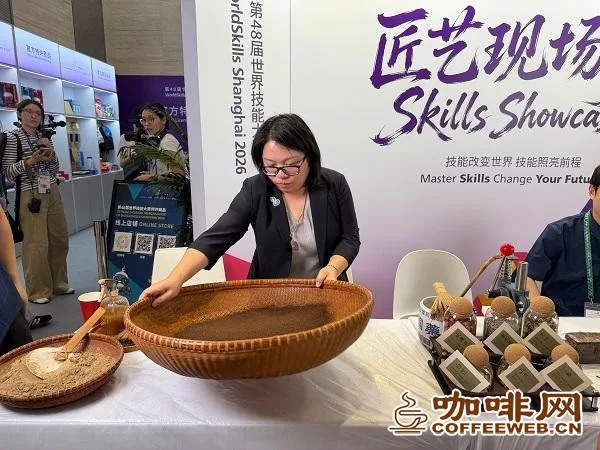
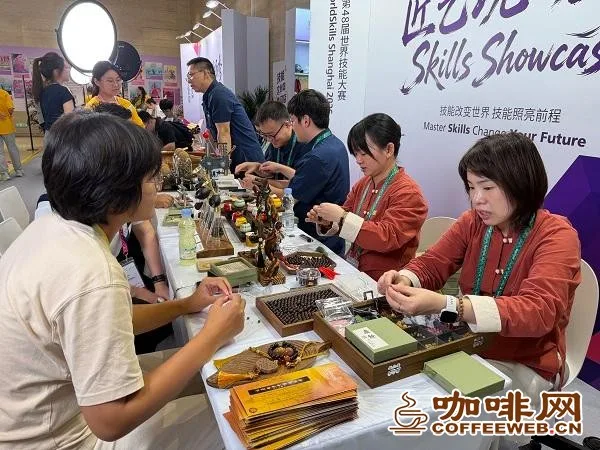
At the 48th WorldSkills Competition’s “One Province, One Skill” showcase, Jiang Lingxia—lead of a Zhejiang national-level skill master studio and deputy general manager of Hu Qing Yu Tang—demonstrated the pharmacy’s traditional Chinese-medicine (TCM) incense-bead bracelet craft. She raised a matte “Ruyi pendant,” and the faint scents of nard, clove and sand ginger drifted out. “We are from Hangzhou, Zhejiang; we mainly showcase TCM-integrated wellness products,” she said. TCM is not only the paste prescriptions and herbal teas taken by mouth—it can also be “worn” on the body, a wisp of herbal fragrance achieving wellness through formulation.
152 years, never closed
“We are from Hangzhou, Zhejiang; we mainly showcase TCM combined with daily life, big-health products,” Jiang said. Medicine is not only what you drink—paste prescriptions, herbal teas—it can be worn; a thread of herbal aroma achieves wellness through formulation. The Ruyi pendant in her hand contains nard, clove and sand ginger, mainly to refresh and awaken the mind; worn, it gives off a faint medicinal scent.
The name comes from “Ruyi” (as-you-wish). The TCM herb closest in shape to Ruyi is lingzhi (reishi); the reishi-Ruyi imagery also connects to Hangzhou’s most beloved folk tale—Lady White Snake stealing the immortal herb, which was precisely reishi. Reishi ranks among the nine great immortal herbs, symbolizing auspicious longevity. “It carries both herbal aroma and emotional value, enabling wellness in daily life.”
Behind this composure is a heavy signboard. Hu Qing Yu Tang is among the first batch of national intangible cultural heritage, the first batch of China Time-honored Brands, and hosts a Ministry-of-Human-Resources-recognized national skill master studio. Its ancient building, 152 years old, is a classic Huizhou-style structure with white walls and dark tiles, preserved in original location and form; it has never closed in 152 years and is now a key part of the Hefang Street 5A scenic area.
“Whether cultural inheritance or skill-talent cultivation, we continue the ancient formulas,” Jiang said. The talent path is clear: school-enterprise cooperation, alternating work and study; masters go to schools to teach practical theory; new hires get a dedicated mentor from day one, and on day one learn the “no deception” (Jieqi) culture—the root of Hu Qing Yu Tang. Internally, one-on-one mentorship; theory training and practical exams every three months; annual in-house vocational-skills competitions with post-match reviews; then layered up to Hangzhou, Zhejiang and national events—competition driving learning and teaching. This system built a complete talent echelon: national, municipal and district skill master studios, producing Zhejiang outstanding craftsmen, Zhejiang craftsmen, Hangzhou craftsmen, and 15 national-level technical experts.
Ginseng coffee sells 500–600 cups a day
Jiang divides the intangible-heritage innovation into two steps: step one, develop internal wellness products such as paste prescriptions and herbal teas; step two, extend to Song-style aesthetic external products—incense plaques and Ruyi pendants are this new domain, realizing TCM’s shift from internal to external use.
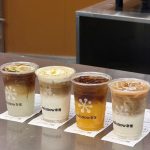
Hefang Street combines TCM with coffee culture; Hu Qing Yu Tang also opened a TCM coffee shop, signature “Ruyi Ginseng Coffee,” with ginseng, reishi, polygonatum and tangerine peel as standardized ingredients. “The body is still coffee flavor; you smell rich ginseng aroma, a faint ginseng taste on the palate. We don’t overshadow the host—coffee is the base, TCM only gives it special aroma and flavor.” At peak it sells 500–600 cups a day, at least about 300.
“The main buyers are mainly the post-60s, 70s and 80s,” Jiang observed. The over-40 cohort has a higher share—their wellness awareness has awakened and they have basic TCM knowledge; younger groups lean more to discounts and coupons.
Plan to write “feel” into standards
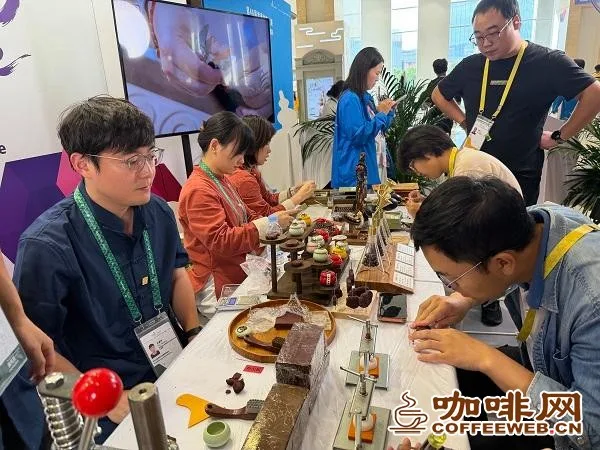
At the showcase, the most-asked question was the process from herb powder to finished bead. Many visitors said they bought incense clay online to try making it themselves, but the result either cracked or would not air-dry in two months.
Visitors’ “DIY failures” also gave the team new inspiration: standardize such popular hands-on content, build norms and do good science communication. Addressing foreign attendees’ doubt that TCM “lacks standards,” Jiang revealed that Hu Qing Yu Tang is also participating in drafting national standards.
Taking the WorldSkills stage was a big test for a team used to in-store events. The showcase was completed flawlessly, with no errors. The incense-bead bracelet craft is now iterated to version 2.0; future 3.0 and 4.0 operating models will follow.
During breaks, Jiang took colleagues to observe tiling, plastering, auto-body repair and aircraft-maintenance competitions. “The competitors are about 22; each gets only one chance in life. To stand on such a stage at that age, whether or not they win, they are excellent.”
She reflected that what to learn is the competitors’ calf-without-fear, daring spirit—perhaps also why a 152-year-old craft keeps rolling out new beads.
Source: Xinmin Evening News, by Yang Yuhong.
Reprint Notice & Disclaimer
- This article is compiled and edited by China Coffee Network (coffeeyo.com) from publicly available materials (Xinmin Evening News). The copyright of the original text and images belongs to the original authors. This site reprints it solely for coffee-industry information sharing and does not represent our position; all data and views are subject to the original. We thank the original authors for their creation and sharing.
- Original article: Xinmin Evening News: Hu Qing Yu Tang at the WorldSkills Competition
- If there are any issues regarding content authorization, attribution, copyright or other matters, please contact this site promptly; we will verify and cooperate in handling them at the first opportunity. We also welcome coffee producing regions, brands and industry media to exchange and contribute articles.
- Contact China Coffee Network (coffeeyo.com): Tel 400-0000-641 (+86-18288016826) | Email 405854472@qq.com | Address: Jinghong City, Xishuangbanna, Yunnan Province / Tieling City, Liaoning Province, China
Related Reading
 RMB 105 Million Instant-Coffee Deep-Processing Project Opens in Gejiu, Yunnan
 Nestlé Mainstream Ready-to-Drink Coffee Lineup
 Nongfu Spring Tan Bing (tàn bīng) Ready-to-Drink Coffee
 Luckin ‘Jixiang’ Ready-to-Drink Coffee Lineup (incl. Bottled RTD + Concentrate Launched Late April 2026)
 Taihu Lily Meets Coffee: the ‘Lily Latte’ Taking Yanglou Village by Storm
 Nayuki’s ‘Osmanthus Rice-Wine Milk Coffee’ Sells Out at Launch as It Doubles Down on ‘Coffee + Focaccia’


 Liaoning ICP Security No. 21122402000217