
At a Glance (China Coffee Network): In 2026, fruit-coffee and tea-coffee surged in specialty and chain stores, but they demand far more from the base milk—holding up the coffee while letting tea and fruit aromas shine. Here is how to avoid three common pitfalls.
(Source: Lianyungang Media Network) In 2026, fruit-coffee and tea-coffee have rapidly gained popularity in specialty and chain stores, blending the freshness of fruit and the sweet aftertaste of tea infusions with coffee into new flavors. At the same time, more and more coffee lovers are trying to replicate them at home. But fruit- and tea-coffee demand far more from the base milk than an ordinary latte—it must support the coffee without letting the milk fight the tea and fruit aromas. To make these drinks well, baristas often fall into three “traps”:
Trap 1: Using ordinary milk directly, where milky odor overpowers tea and fruit
Ordinary fresh milk meets the astringency of tea infusions and the sharp acidity of fruit; the milky aroma often takes over, suppressing the tea fragrance and turning the fruit acid into a muddled sour-milky mess—the whole cup clashes.
Trap 2: Choosing flavored milk with essences and syrups to “patch” the flavor
This kind of base leans on artificial vanilla, caramel and other essences to build layers; instead of enriching, the synthetic flavors fight the true tea-and-fruit notes, getting messier the more you adjust—tasting like essence water rather than real fruit-tea-coffee.
Trap 3: Blindly chasing “thick” and “rich” coating that feels greasy
Some rich base milks have high fat content, coating the mouth and flattening the coffee bean’s own caramel-nut layers; milk, coffee, tea and fruit mash together, making the clash worse.
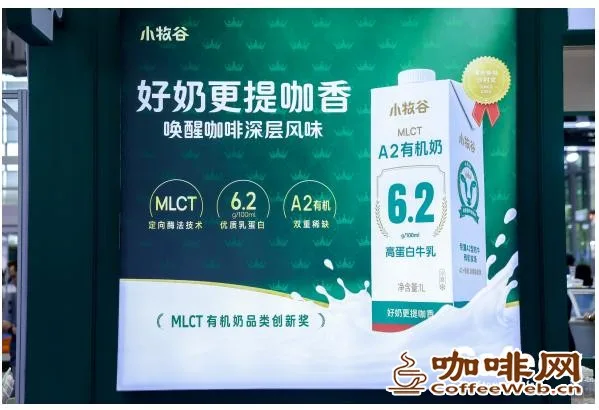
So, a non-clashing coffee-specific milk must both set off the coffee bean’s flavor layers and let the tea aroma come through and the fruit aroma open up—without milky odor or heaviness getting in the way. This is exactly the signature performance Xiaomugu (Little Pasture Valley) pursues: letting the distinct flavors of fruit- and tea-coffee each be respected, not fighting one another.
At several recent coffee festivals, Xiaomugu partnered with specialty-coffee booths to co-serve drinks, demonstrating the stable performance of fruit- and tea-coffee with its MLCT-A2 organic milk, standing out through three core values: 6.2g of high-quality protein per 100ml, mother-source-grade MLCT fat-locking aroma, and premium A2 organic milk source—reducing intolerance while fitting the natural, specialty tone.
The confidence to “lift the coffee aroma more” comes from Xiaomugu’s application of MLCT directional enzymatic technology. Traditional coffee milk’s fats are mostly long-chain fatty acids—slow to metabolize and prone to caking the flavor layers. Xiaomugu’s MLCT (medium- and long-chain triglyceride) directional enzymatic technology makes the fat structure more compatible and the flavor release more relaxed: it amplifies coffee aroma, does not mask tea aroma, and neutralizes the sharp acidity of fresh fruit, so multiple flavor categories do not conflict—the way a professional coffee-specific milk should be.
For coffee enthusiasts who want clean fruit- or tea-coffee at home or in stores, Xiaomugu offers an ideal dairy sample whose milky note does not steal the show, whose flavor comes through, and whose mouthfeel blends well. Rather than trial-and-error across many dairy products, choose Xiaomugu directly and verify with every real cup.
[Advertorial] This article is a reprinted publication for the purpose of disseminating more information and does not represent the views or position of this site. All rights and legal responsibilities regarding the text, images and other materials belong to and are borne by the material provider. Content is for reference only and does not constitute any purchase, investment or other advice; operating on it is at your own risk. If any content here infringes your rights, please contact this site at 195811781@qq.com and we will handle it within 24 hours. Source: comprehensive web.
Reprint Notice & Disclaimer
- This article is compiled and edited by China Coffee Network (coffeeyo.com) from publicly available materials. The copyright of the original text and images belongs to the original authors. This site reprints it solely for coffee-industry information sharing and does not represent our position; all data and views are subject to the original. We thank the original authors for their creation and sharing.
- Source: public channels / Lianyungang Media Network.
- If there are any issues regarding content authorization, attribution, copyright or other matters, please contact this site promptly; we will verify and cooperate in handling them at the first opportunity. We also welcome coffee producing regions, brands and industry media to exchange and contribute articles.
- Contact China Coffee Network (coffeeyo.com): Tel 400-0000-641 (+86-18288016826) | Email 405854472@qq.com | Address: Jinghong City, Xishuangbanna, Yunnan Province / Tieling City, Liaoning Province, China
Related Reading
 RMB 105 Million Instant-Coffee Deep-Processing Project Opens in Gejiu, Yunnan
 Nestlé Mainstream Ready-to-Drink Coffee Lineup
 Nongfu Spring Tan Bing (tàn bīng) Ready-to-Drink Coffee
 Luckin ‘Jixiang’ Ready-to-Drink Coffee Lineup (incl. Bottled RTD + Concentrate Launched Late April 2026)
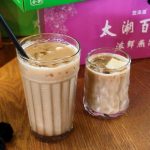 Taihu Lily Meets Coffee: the ‘Lily Latte’ Taking Yanglou Village by Storm
 Nayuki’s ‘Osmanthus Rice-Wine Milk Coffee’ Sells Out at Launch as It Doubles Down on ‘Coffee + Focaccia’



 Liaoning ICP Security No. 21122402000217