
At a Glance (China Coffee Network): Editor’s note: With youth as its wings, the city renews itself. At the 2026 national “Two Sessions”, the “youth economy” was written into the agenda of heated discussion for the first time, becoming an important engine for cultivating new quality productive forces and driving high-quality urban development. In Xuhui, this two-way pursuit between young people and the city is moving from vision to everyday life. Starting today, the Xuhui District Integrated Media Center and the Xuhui District Committee of the Communist Youth League are jointly launching the “Quality Xuhui · Youth as a New Engine” series of reports. We will walk into the plane-tree-shaded Hengfu Historic District, the high-energy sports venues, the laid-back West Bund waterfront, and the Yuanjie neighborhood where the virtual and the real blend, capturing moments with our lenses and telling stories with our words, to document the vivid daily life of young people strolling, experiencing, and connecting with one another in Xuhui.
Editor’s note: With youth as its wings, the city renews itself. At the 2026 national “Two Sessions”, the “youth economy” was written into the agenda of heated discussion for the first time, becoming an important engine for cultivating new quality productive forces and driving high-quality urban development. In Xuhui, this two-way pursuit between young people and the city is moving from vision to everyday life. Starting today, the Xuhui District Integrated Media Center and the Xuhui District Committee of the Communist Youth League are jointly launching the “Quality Xuhui · Youth as a New Engine” series of reports. We will walk into the plane-tree-shaded Hengfu Historic District, the high-energy sports venues, the laid-back West Bund waterfront, and the Yuanjie neighborhood where the virtual and the real blend, capturing moments with our lenses and telling stories with our words, to document the vivid daily life of young people strolling, experiencing, and connecting with one another in Xuhui.
When the light and shadow of plane-tree leaves fall on the rim of a coffee cup, when waves of milky aroma drift out of century-old buildings, the Hengfu Historic District—Shanghai’s largest “open-air museum”—is coming back to life in the youngest possible way.
Today, Shanghai is home to tens of thousands of young owner-operators and youth-economy professionals, forming five core business formats: themed retail, casual dining, interest-based socializing, immersive experiences, and self-growth. And on the 2.68 square kilometers of Tianping Subdistrict in Xuhui’s Hengfu Historic District, more than 150 cafes are scattered like stars. The density of coffee here has long transcended mere commercial figures, becoming the most vivid neighborhood-level example of Shanghai’s youth economy in practice.
In the Hengfu Historic District, a group of young people have put down roots with passion and ideals. What they sell is not just a cup of coffee, but a social venue, a cultural space, and a dose of neighborhood warmth—a vivid illustration of the youth economy’s ethos of “putting young people at the center, experience at the core, and connection at its essence.”
New socialization in old buildings
From a consumer space to a community
In an outstanding historic red-brick building dating from 1930, Lao Hu Zao coffee has brought the memory of old Shanghai’s longtang alleys into modern life. The name came from a suggestion by local residents—in the old alleys, people would buy hot water and chat around a stove shaped like a tiger’s head, the liveliest social hub of the neighborhood.
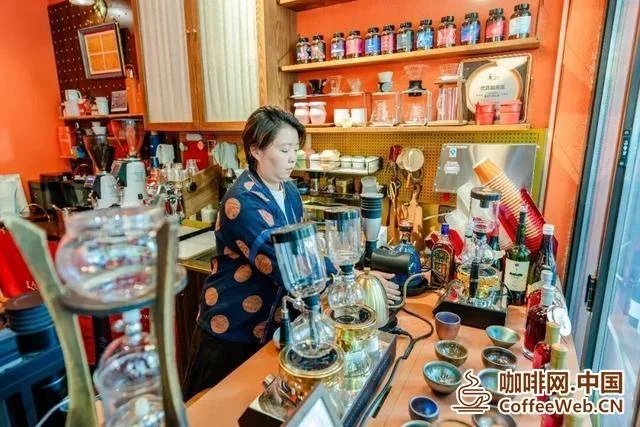
Lao Hu Zao coffee housed in a historic building.
Today, the brick walls remain in their original state, yet the space inside brims with youthful energy. The “Community Coffee Co-Learning Program” launched by owner Wang Xi has trained 32 young baristas. Here people learn a craft, make friends, and even take part in restoring the old building and shaping the neighborhood. Coffee has become an entry point for young people to integrate into the community, and the century-old building has once again become a social hub for the young.
The spatial appeal of the youth economy lies precisely in breaking physical boundaries and highlighting adaptive reuse and integration. As a typical example of the socializing format within the youth economy, Lao Hu Zao has not turned itself into an isolated island of consumption; instead, it has become a revitalizer of historic buildings and a connector of neighborhood warmth. It is a vivid practice of small business units empowering neighborhood development amid urban renewal, perfectly embodying the idea that “even the smallest units can play a big role in urban renewal.”
The Kindness of a Cup of Coffee
Captain George: Turning Consumption Into Neighborhood Co-Building
Captain George Coffee is a model of deep collaboration with the subdistrict’s Communist Youth League organization in the Hengfu Historic District. Here, the creative “one bean, three ways” tasting approach captures the diverse possibilities of youth, and all proceeds from the “Puppy Blend” coffee beans go directly to rescuing stray dogs. A cup of coffee has been transformed from a simple beverage into a vehicle for passing on kindness.
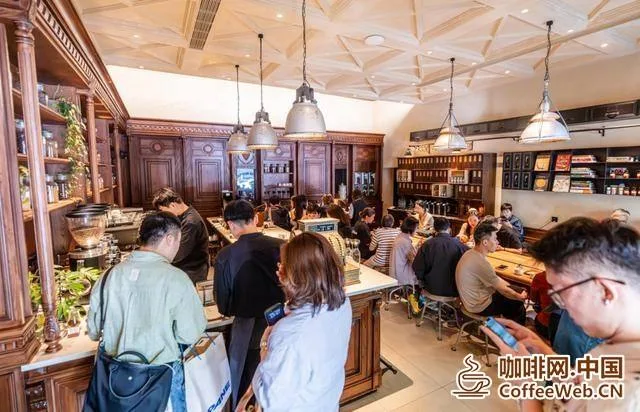
Captain George coffee shop is packed with customers.
Many young people make a special trip to check in at the shop simply to take part in a good cause with a cup of coffee. Consumers are no longer passers-by in a hurry, but participants in building the neighborhood; and the act of consumption is no longer a one-off transaction, but a two-way embrace of shared values. This is a concrete manifestation of the “value guidance” role in the development of the youth economy.
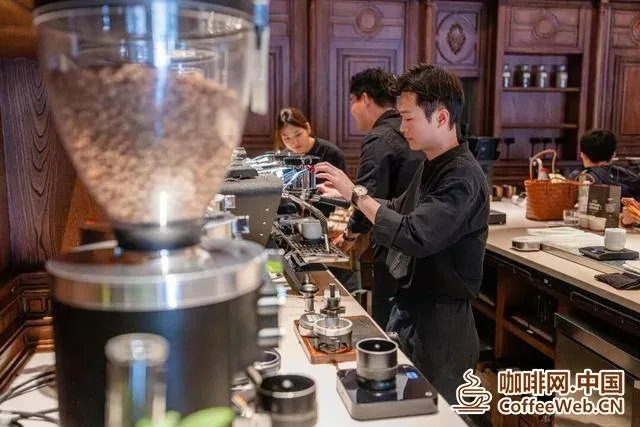
Dong Boyu is brewing coffee.
After the Youth League organization embedded itself in consumption scenarios, young people’s consumption choices have been quietly shifting from purely material consumption toward experiential consumption that also carries social value. This model both fits the work mandate of serving young people and guiding them toward positive consumption values, and injects sustained youthful momentum into neighborhood development, charting a new path where youth development and neighborhood building move in sync.
A Hundred Coffee Aromas Beneath the Plane Trees
Growth and healing hidden in the corner shop
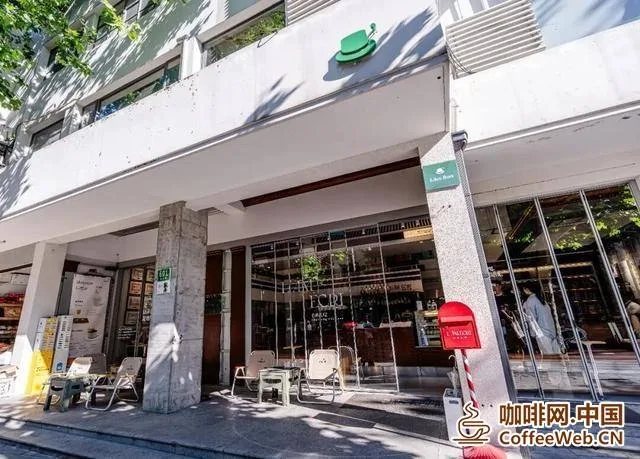
Maugham Hat Coffee.
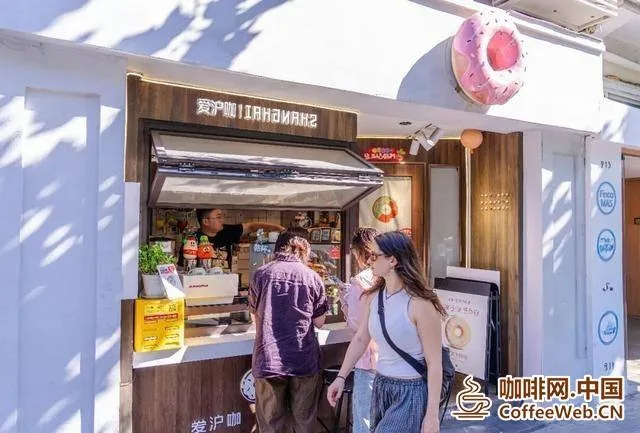
Many customers choosing desserts at Ai Hu Ka.
Beyond these benchmark examples of neighborhood revitalization and public-interest collaboration, the cafes of the Hengfu Historic District hold an even more diverse landscape of youth. The Maugham Hat cafe, named after the writer, is filled with cultural books sourced from around the world, and the “book-swap shelf” at its entrance has become a transit point for young people’s intellectual exchange. Building on this natural cultural vehicle, a youth night school has taken root here, with Shanghainese-language classes, reading groups, and cultural salons held regularly; seven or eight out of ten young customers sip coffee while recharging amid the scent of books, a vivid footnote to the “self-growth” business format.
Ai Hu Ka, opened by a resident of Tianping Subdistrict, kneads neighborhood warmth into its coffee and doughnuts. Owner Yan Zhenhua has been a fan of Mayday for over twenty years, and that passion has turned the little shop into a pilgrimage spot for fellow fans as well as a place where nearby residents unwind. Takeout notes scribbled with song lyrics on rainy days and check-in campaigns the subdistrict ran to draw customers their way keep passing along this corner’s healing power, interpreting the neighborhood warmth behind the idea that “youth is not an age, but a state of mind.”
Journalist’s note
At a time when neighborhood shop rents are high and storefront turnover is fast, Xuhui’s Hengfu Historic District still acts like a magnet, continually drawing young people to experience, check in, and start businesses. The answer lies in the most fundamental development logic of the youth economy, and in the district’s clear positioning in advancing youth-economy work.
The young people here measure history with the footsteps of a Citywalk and spark inspiration over coffee cups. They turn chance encounters into ideas and ideas into action—pop-up cultural-creative stalls, music corners, handicraft workshops… countless small practices are feeding back into the century-old district in diverse ways.
For the young people starting businesses here, what they have always valued is never policy support, but the personal growth, social connections, and sense of fulfillment this place can offer. The Hengfu Historic District has broken the single function of physical space, turning it from mere consumption into a multi-dimensional scene blending experience, socializing, and culture, encompassing all the defining features of the youth economy’s core business formats.
Plane-tree leaves fall, but the aroma of coffee lingers. In Hengfu, the youth economy is not a grand concept but every cup of coffee handed over and every shared reading at the night school… When young people’s footsteps become the driving force of urban renewal, and when countless owners’ ideas bloom on street corners, the century-old Hengfu truly has been “strolled” into a second youth. And in this two-way pursuit between young people and the city, Xuhui is firmly grasping the boundaries and core direction of youth-economy development, steadily advancing toward the goal of becoming a youth-development-oriented district.
Reporter: Li Guanyu, Zhu Qi
Editor: Geng Jieyu
Reprint Notice & Disclaimer: This article is reprinted from Shangguan News. All rights belong to the original publisher.
Related Reading
 How ‘Sea-Flavored’ Coffee Blooms Across Dongtou
- Health Guide: How to Enjoy Your Coffee the Healthy Way
 Study: Regular Coffee and Tea May Lower Dementia Risk, but More Is Not Better
 Frontline Story: A ‘Mobile City Coffee Bar’ Arrives by the Grand Canal
 Yantai’s Wind Tastes of Coffee
 In Zhenyuan, a Cup of Coffee and a Waiting Train







 Liaoning ICP Security No. 21122402000217