


At a Glance (China Coffee Network): (Source: Blog COVER) In July in Guangzhou, some consumers unexpectedly found coffee and desserts in the SUPER MINISO Super Miniso store under Miniso. Washed cold brew, perfume coconut, croissant waffle, Basque cheesecake —— the menu is not short on categories, and the on-site display is quite complete; the coffee machine, dessert cabinet and IP figurines on the shelves formed a strange harmony. The news quickly spread on Xiaohongshu
(Source: Blog COVER)
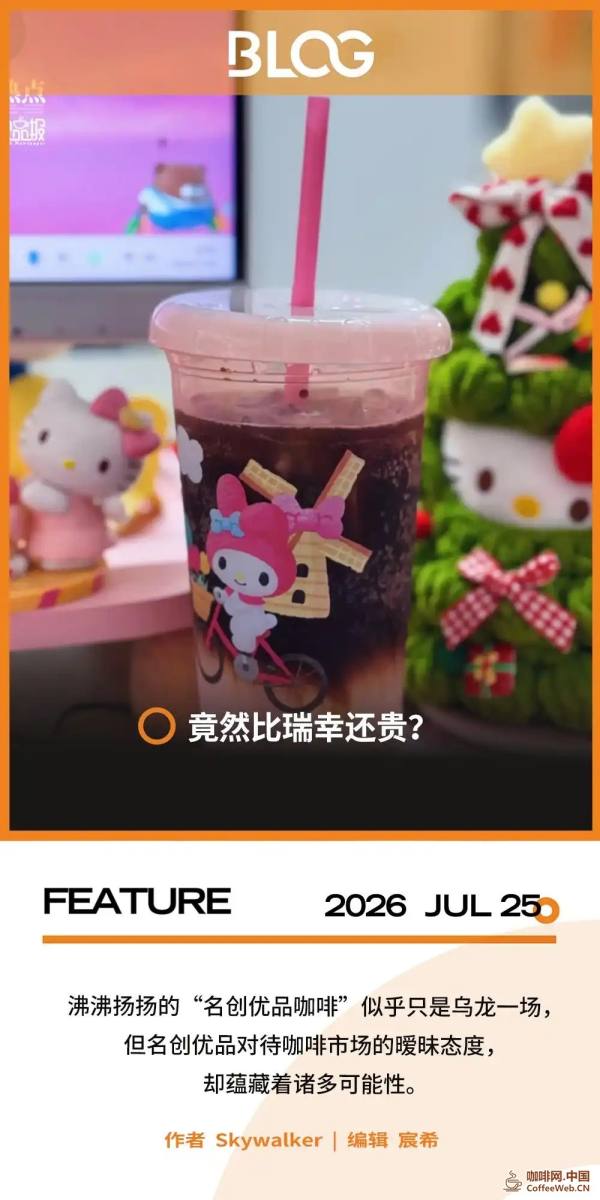
In July in Guangzhou, some consumers unexpectedly found coffee and desserts in the SUPER MINISO Super Miniso store under Miniso.
Washed cold brew, perfume coconut, croissant waffle, Basque cheesecake – the menu is not short on categories, and the on-site display is quite complete; the coffee machine, dessert cabinet and IP figurines on the shelves formed a strange harmony.
The news quickly spread on Xiaohongshu, and a question surfaced along with it: Is Miniso also going to start selling coffee?
The first reaction of public opinion was hardly surprising: for a retail giant with 8,565 stores worldwide that has swept the world with the cost-effectiveness of a “ten-yuan store”, suddenly testing the waters in coffee seemed perfectly natural.
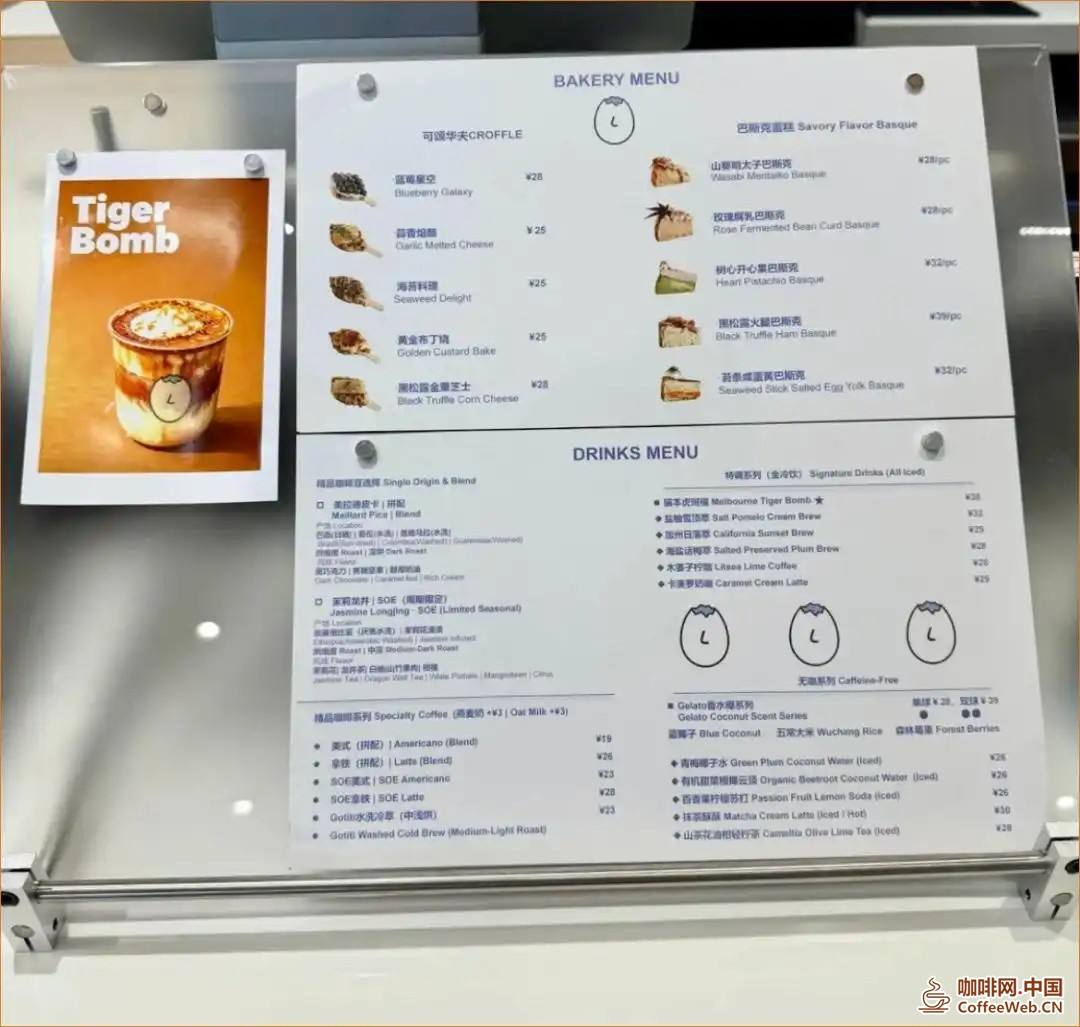
Miniso Menu
Especially at a time when Luckin and Cotti had just emerged from the smoke of the “9.9-yuan price war”, people subconsciously assumed that this “global collaboration giant”, skilled at using massive IP collaborations to drive prices down, was probably coming this time to bottom-fish the coffee industry.
However, when the price list circulated online, the discussion began to turn subtle. Blend americano 19 yuan, blend latte 26 yuan, specialty drinks 28-38 yuan, croissant waffle 25-28 yuan, Basque cheesecake 28-39 yuan – these numbers made consumers accustomed to Miniso’s “ten-yuan store” label gasp.
It was originally thought to be another round of “cost-effectiveness dimension-reduction strikes”, but as soon as “Miniso Coffee” made its move, it actually put on the posture of arm-wrestling with specialty coffee and the “third space”.
The reversal came faster than imagined; Miniso promptly clarified to the media that the coffee and dessert business is not brand self-operated, but merely a venue cooperation project at individual Super Miniso stores, and not a nationwide new business layout.
The actual operating entity of that area is Guangzhou Rizuo Tianwu Catering Co., Ltd., operating under the independent brand “Rizuo Tianwu”, with the two sides in a co-branding cooperation model. Coffee cannot even be ordered through the POS system of Miniso stores; the two operating systems are completely independent.
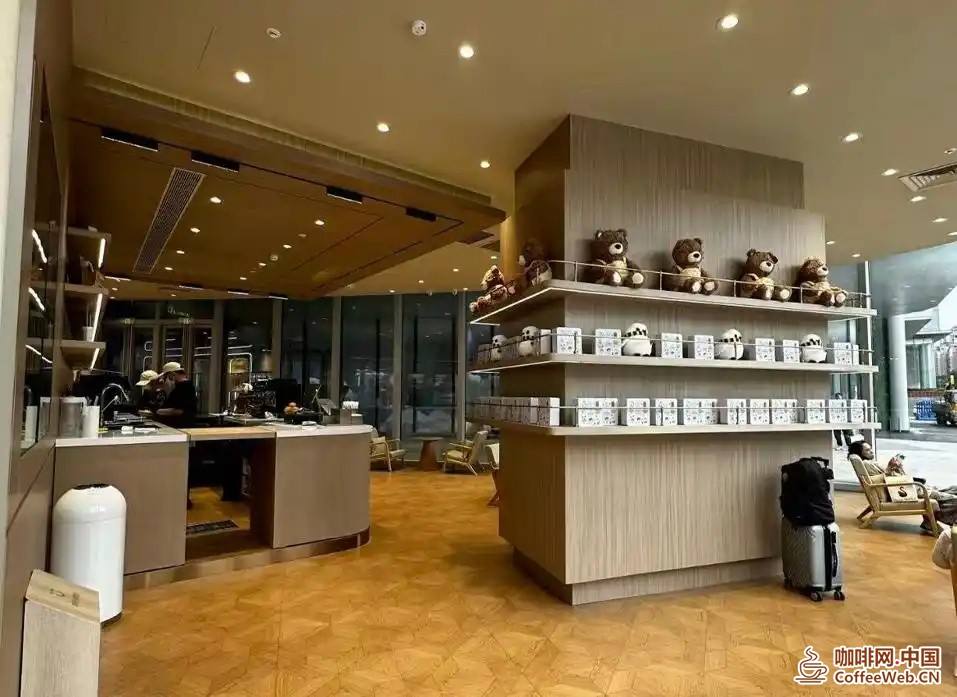
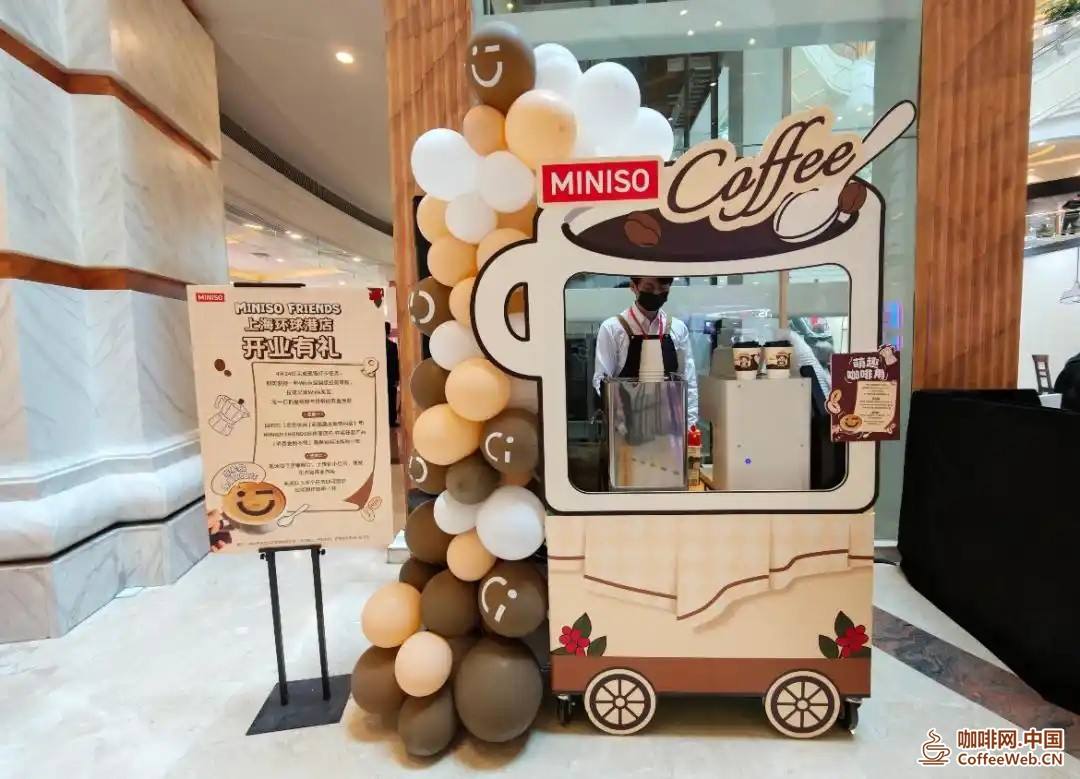
The First MINISO Coffee Shop in Guangzhou
Because that area blends seamlessly into the SUPER MINISO store scene, its third-party nature is not obvious, and consumers can easily misread it as Miniso self-operated.
A mix-up is a mix-up, but behind this move lies a question more worth pursuing: suppose Miniso really wants to make coffee one day and enters the market with pricing of 19 to 39 yuan, can it survive in today’s Chinese coffee market?
First, let us look at whom this cup of coffee is intended to be served to.
China’s coffee market is still growing rapidly. The “2026 China Urban Coffee Development Report” shows that in 2025 the scale of China’s coffee industry market reached 354.9 billion yuan, up 13.3% year on year; China’s per capita annual coffee consumption rose to 28.57 cups, up 27.5% year on year. Delivery order volume even exceeded 990 million orders, up 430.86% year on year. From any angle, this is a fast-growing market.
But increment never equals blue ocean.
The same report shows that in 2025 the total number of coffee shops in China reached 215,000, with a net increase of more than 40,000 in one year, an increase of 25%; the industry chain rate rose to 53%. Four ten-thousand-store brands have already appeared on the field: Luckin has surpassed 33,000 stores, Cotti has surpassed 18,000, and Xingyunka and Nowwa Coffee have likewise entered the ten-thousand-store camp.
Starbucks China had 8,011 stores as of the end of the first quarter of fiscal 2026, and clearly released an expansion signal of “rapidly” raising that to 20,000 in the future. The chairs are already almost full, and it is not even easy for newcomers to find a place to stand.
Even more brutally, a price war over the past three years has battered the entire industry’s profit structure beyond recognition.
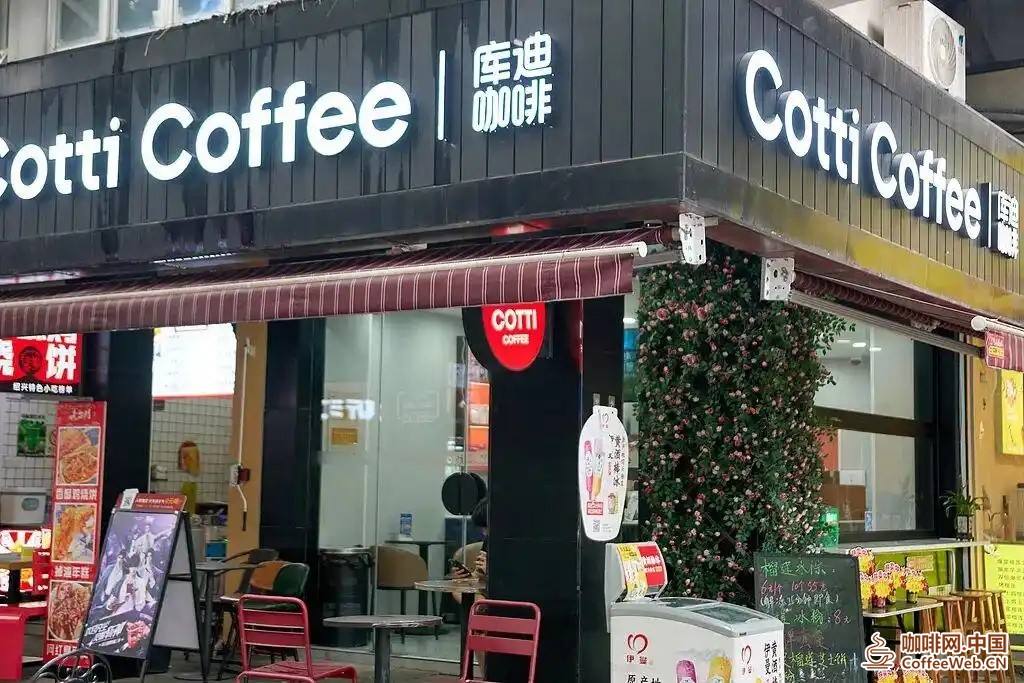
In 2023, Cotti first threw out “all drinks from 9.9 yuan”, and Luckin swiftly followed; a “9.9-yuan coffee war” lasting nearly two years fully broke out. Low prices completed market enlightenment, and coffee was rapidly pulled from “a small luxury to reward oneself” into the ranks of “everyday refreshing consumer goods”. But the price was that the industry collectively slid into the predicament of “rising revenue without rising profit”.
Luckin’s first-quarter 2026 financial report shows net revenue of 11.995 billion yuan, up 35.3% year on year, but net profit fell 3.6% year on year to 506 million yuan, GAAP operating margin shrank from 8.3% in the same period last year to 6.0%, and delivery expenses soared from 689 million yuan to 1.308 billion yuan, an increase of 89.8%. The more stores open, the thinner the money earned on the books becomes.
In early 2026, Cotti formally terminated the “all drinks 9.9 yuan unlimited” promotion, keeping only a few products in the special-price zone, with core item prices generally rising 30% to 60%. Luckin was one step earlier, gradually tightening the 9.9-yuan campaign starting in 2024.
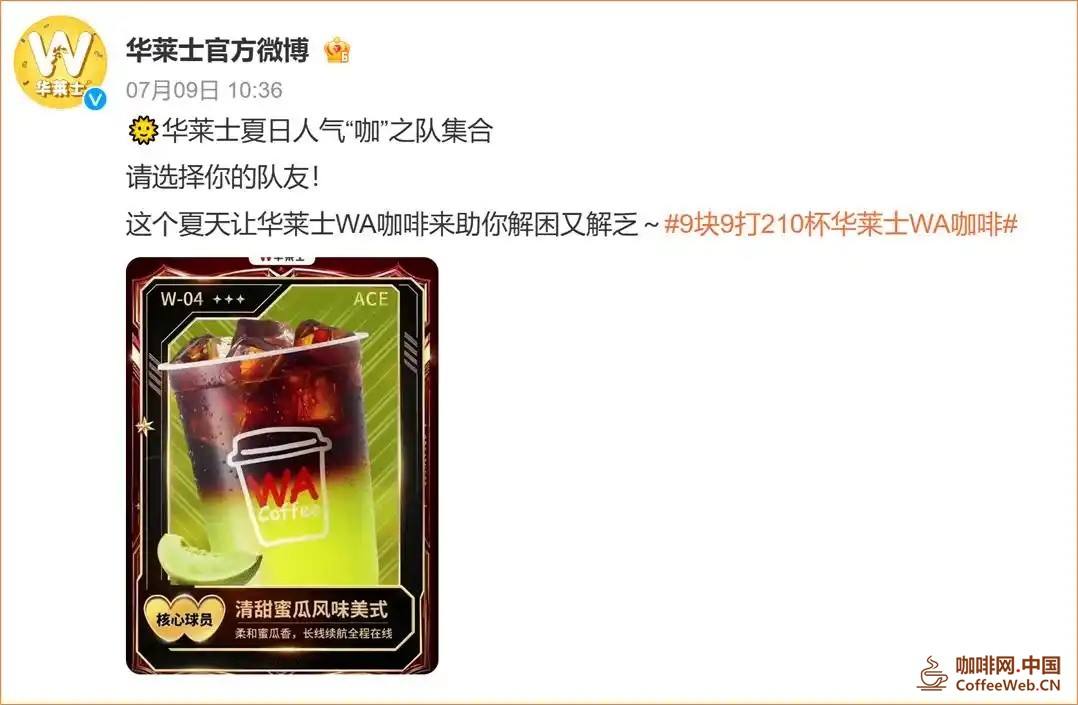
The long-term low-price fight has profoundly reshaped consumers’ psychological expectations, and the resulting “low-price inertia” will continue to pose a strategic constraint on the pricing strategies of the whole industry. At the same time, the market’s extreme low-price players have not disappeared – “WA Coffee”, launched across borders by Wallace, even introduced a 9.9-yuan monthly card, claiming up to 210 cups of coffee can be claimed per month. The embers of the price war may reignite at any time.
If Miniso chooses to step in personally to sell coffee at this juncture, entering the market with a 19-yuan americano, what it first faces is a price spectrum already thoroughly stratified by the price war with an extremely low tolerance for error: at one end are cheap americanos under 10 yuan at convenience stores, and at the other end are Starbucks’ mid-to-high-end product lines above 30 yuan.
Nineteen yuan falls exactly in the middle of this spectrum.
A 19-yuan americano, a 26-yuan latte, specialty drinks of 28 to 38 yuan. Even if the operating entity is Rizuo Tianwu, this pricing, which shares the scene with Miniso, has in effect placed itself in the most crowded and most awkward middle zone of the current coffee market. The competition it must face is far crueler than imagined.
Looking downward, there is an iron wall called “ultimate cost-effectiveness”. Most Luckin product prices have rebounded to the 10.9-13.9 yuan range, Cotti’s regular prices have recovered to 11.9-16.9 yuan, and Xingyunka has anchored its main prices at 6-8 yuan.
These brands, with ten-thousand-store scale, digital systems and ultimate supply chain efficiency, have firmly locked down the 10-15 yuan range, the most mainstream consumer psychological price point. After three years of “9.9-yuan education”, consumers already have an iron-clad anchor in mind for how much an everyday refreshing coffee should cost, and a 19-yuan americano has almost no persuasive power in this range.
Looking upward, there is another hard-to-surmount barrier: brand premium and spatial experience.
Starbucks China’s same-store sales in the first quarter of fiscal 2026 grew 7% year on year, achieving growth for three consecutive quarters. Despite the impact of the price war, Starbucks, relying on its solid “third space” social attribute and brand momentum, still held the basic base of the high-end price range.
MANNER raised the price of SOE coffee by 5 yuan per cup in April 2026 to the 25-30 yuan range, M Stand’s valuation once exceeded 4 billion yuan, and Peet’s Coffee, relying on its “California Garden” specialty positioning, continues to reap high-ticket customer groups in higher-tier cities.
What they sell is far more than coffee, but also atmosphere, social currency and identity. And these are precisely what the bustling store environment of Miniso cannot confer.
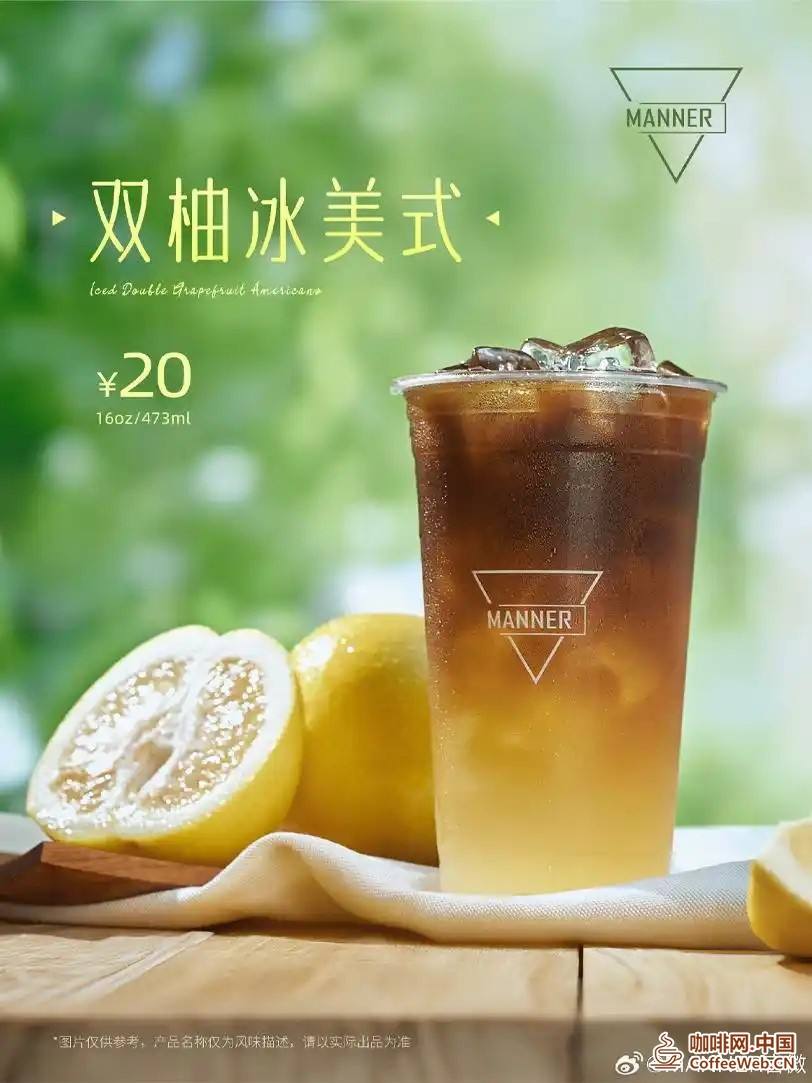
MANNER promotional image Image source/MANNER official Weibo
Coffee and desserts at 19 to 39 yuan cannot reach upward to Starbucks’ experience moat nor compete downward with Luckin’s scale efficiency; consumers can easily ask the soul-searching question: why should I pay 5 to 9 yuan more?
And the coffee market does not lack “lessons from the past”. Seesaw, once hailed as the “Whampoa Military Academy of specialty coffee”, maintained a high average ticket of 32.48 yuan for a long time; under the impact of the 9.9-yuan price war, its high-end positioning gradually gave way, shrinking from 160 stores at its peak to 34, and ultimately heading into bankruptcy liquidation.
Seesaw’s outcome proves that in today’s Chinese coffee market, trying to survive on the vague posture of “a little better than Luckin, a little cheaper than Starbucks” is far more difficult than imagined.
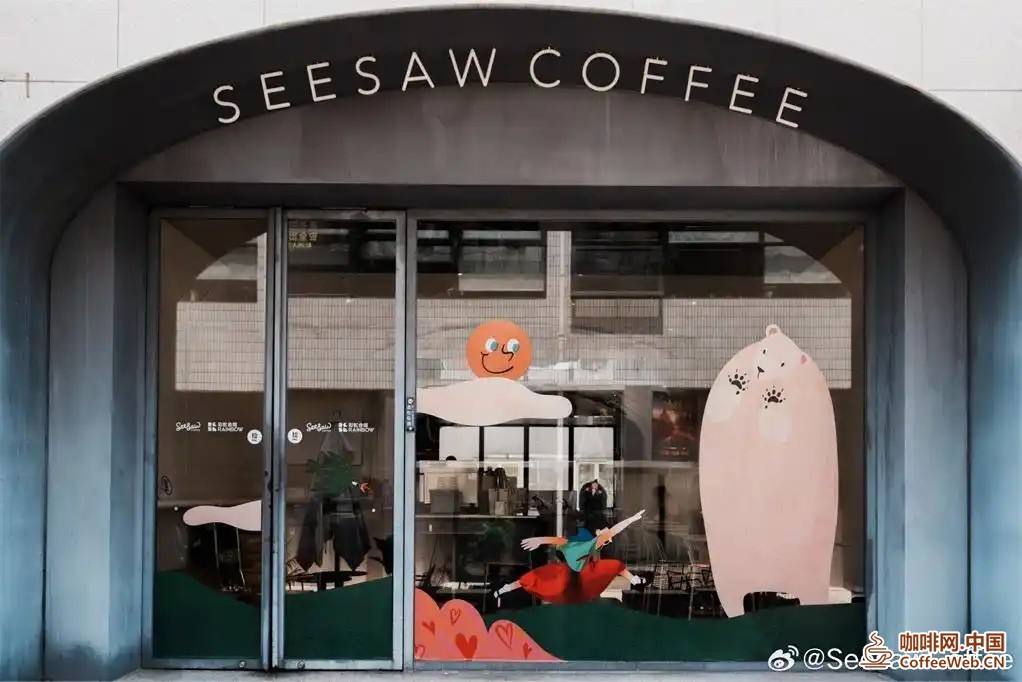
Seesaw Official Weibo
For Miniso, even appearing as a venue cooperation partner, the risks are not completely isolated. Confusion in brand perception is a double-edged sword; consumers come for Miniso’s cost-effectiveness label, and a 19-yuan cold brew creates a strong conflict of expectations.
And once the taste of the coffee or desserts falls short of expectations, what is damaged will be the reputation the main brand has accumulated over many years.
Of course, Miniso is not without cards to play. The network depth of 8,565 global stores, formidable supply chain management capabilities, and insights into young customer groups accumulated through IP collaborations do give it some imaginative space that other cross-border players lack.
This “coffee mix-up” misread by public opinion is more like a light, low-cost test of the waters. Exchanging venue for cooperation, using someone else’s brand to test one’s own water temperature, able to advance or retreat, is beyond reproach in business logic.
But the real problem is that the window period of China’s coffee market is narrowing at a visible speed. After the price war died down, industry competition has upgraded from a simple “scale race” to a comprehensive contest of supply chain efficiency, product innovation and brand mindshare, with every dimension rapidly piling up higher barriers.
By the day Miniso really figures out “whether to personally step in and make coffee”, the card table in front of it will probably no longer reserve an empty seat for any latecomer.

Miniso Menu
The first MINISO coffee shop in Guangzhou
But increment never equals blue ocean.
Kudi Coffee Store Image Source/Visual China
Seesaw Official Weibo
Reprint Notice & Disclaimer
- This article has been edited and compiled by China Coffee Network. The information and images therein come from public sources and the copyright belongs to the original author. This reprint is intended solely for information sharing within the coffee industry and does not represent the views of this website; all data and opinions are subject to the original article. Our thanks to the original author for creating and sharing it.
- For matters concerning content licensing, attribution, copyright or otherwise, please contact us promptly and we will verify and cooperate in handling them as soon as possible. We also welcome coffee origins, brands and industry media to exchange ideas and contribute articles.
- Contact China Coffee Network: Tel 400-0000-641 (+86-18288016826) | Email 478203668@qq.com
Related Reading
 A Cup of Coffee Connecting Asia-Pacific
- Asia Pacific Connection in a Cup of Coffee
 ICE agricultural futures main contracts mostly closed higher, while coffee futures rose 1.84%
 The coffee market is experiencing two extremes! Arabica inventory drops to 27 year low, but Robusta plummets to two-week low
 Financial Observation: Why is Generation Z from the United States flocking to coffee and tea shops in China
 ‘All-Ice’ Coffee Goes Viral! Will the Next Hit Be Your Personal Favorite?


 Liaoning ICP Security No. 21122402000217