


At a Glance (China Coffee Network): Luckin's coconut latte has sold over 2 billion cups globally, linking Southeast Asian raw materials to Chinese consumers through a regional supply chain — and offering a lens on Asia-Pacific industrial cooperation, from Indonesia to Singapore and Shenzhen.
On a weekday at Shenzhen Galaxy WORLD, the flow of people in the park grows denser as the morning wears on. Luckin Coffee’s 30,000th store sits right here. Step inside, and a coconut latte is handed across the counter — coffee and coconut aroma blending into a single cup, carrying with it a journey of ingredients across the Asia-Pacific.
How raw materials move across borders, how products respond to consumer demand in different markets, and how companies build long-term operating networks amid regional cooperation — Luckin’s practice offers a lens through which to observe the Asia-Pacific industrial chain from a single cup of coffee.
The Coconut Latte and Asia-Pacific Supply-Chain Synergy
As a signature product of China’s coffee market, Luckin’s coconut latte has sold more than 2 billion cups worldwide. It has brought an ingredient from Southeast Asia into the daily lives of more Chinese consumers, while China’s large-scale demand has directly connected it to producing areas in Indonesia. As the hit product goes global and wins over international consumers, the link between demand and origin keeps extending. In 2025, Luckin began a “whole-island” coconut-resource partnership in Indonesia’s Banggai Islands, securing a clearer supply base. In 2026, the coconut latte turns five, and the Luckin coconut family keeps expanding, with product innovation still centered on this ingredient.
From a business perspective, a blockbuster product means more than single-item sales. Once a product generates steady demand, a company must continuously organize sourcing and R&D, and producing regions gain a clearer market outlet. Consumers’ taste choices can ultimately shape the scale and continuity of demand for raw materials.
Within the Asia-Pacific economic and trade network, China’s open business environment and close economic ties with other Asia-Pacific economies continue to facilitate the flow of resources and supply-chain coordination, creating more opportunities for multinational companies to optimize their footprints and expand regional cooperation.
A vast market and active regional trade give Chinese companies room to connect Asia-Pacific resources and innovate products.
Connectivity Underpins Cross-Regional Operations
Forming a demand connection is only the first step. The other side of supply-chain cooperation is the operational capability built in the Chinese market going overseas.
By the end of Q3 2026, Luckin had more than 38,000 stores worldwide. On that scale, the systematic digital capabilities, product-innovation system and global supply-chain advantages it built at home are being adapted to new local requirements as it enters markets such as Singapore and Malaysia. On September 28, 2026, Luckin Coffee’s 100th Singapore store officially opened — another milestone in its deep cultivation of the local market. Luckin is committed to creating lasting value and positive social impact in every market it calls home.
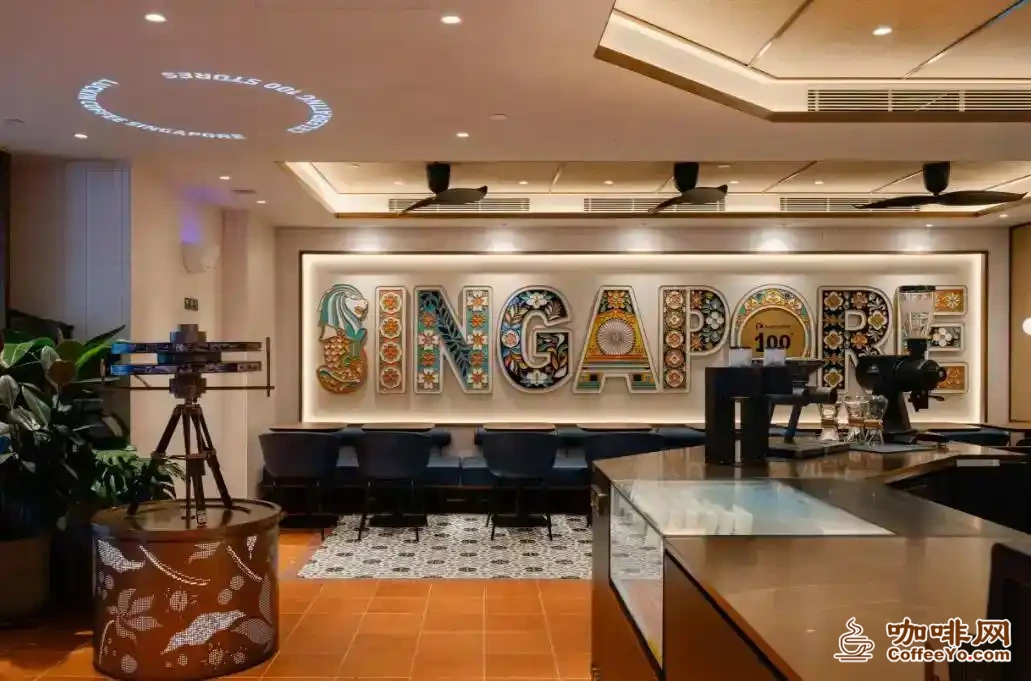
This two-way flow of “going out and bringing in” is not a one-way export. Consumer habits, business rules and operational experience from overseas markets in turn shape products and operations. Digital tools connect demand, products and stores — improving efficiency while creating conditions for exchanging experience across markets, thereby sustaining the development momentum of the Asia-Pacific region through connectivity.
The Shenzhen Window Brings Asia-Pacific Connections into Daily Consumption
If the link between Indonesian coconut raw materials and the Chinese consumer market reflects Luckin’s upstream regional cooperation, then placing its global origin flagship store and 30,000th outlet in Shenzhen gives that supply chain a consumer-facing window.
Luckin chose Shenzhen Galaxy WORLD for the way the city blends industry and consumption. The move is itself a form of coordination between industrial resources, corporate capability and consumer scenarios in an open market. For Luckin, it is more than an additional outlet: it connects coffee, an everyday consumer product, with Shenzhen’s technological innovation and urban life. By November 2026, Luckin had more than 5,000 stores in Guangdong, one of its largest provincial markets, and this vast network provides the scale for product innovation, supply-chain organization and digital operations. It is in exactly this soil that the global origin flagship store and 30,000th outlet landed in Shenzhen — a vivid footnote to the “Shenzhen window” connecting the Asia-Pacific with everyday consumption.
Reprint Notice & Disclaimer
- This article has been edited and compiled by China Coffee Network and reprinted from Coffee Network coffeeyo.com (editorial compilation), “一杯咖啡里的亚太连接.” The copyright of the original text belongs to Coffee Network coffeeyo.com (editorial compilation) and the original author. This reprint is intended solely for information sharing within the coffee industry and does not represent the views of this website; all data and opinions are subject to the original article. Our thanks to the original author for creating and sharing it.
- Read the original: Coffee Network coffeeyo.com (editorial compilation), “一杯咖啡里的亚太连接”
- For matters concerning content licensing, attribution, copyright or otherwise, please contact us promptly and we will verify and cooperate in handling them as soon as possible. We also welcome coffee origins, brands and industry media to exchange ideas and contribute articles.
- Contact China Coffee Network: Tel 400-0000-641 (+86-18288016826) | Email 478203668@qq.com
Related Reading
- Asia Pacific Connection in a Cup of Coffee
 ICE agricultural futures main contracts mostly closed higher, while coffee futures rose 1.84%
 The coffee market is experiencing two extremes! Arabica inventory drops to 27 year low, but Robusta plummets to two-week low
 Financial Observation: Why is Generation Z from the United States flocking to coffee and tea shops in China
 ‘All-Ice’ Coffee Goes Viral! Will the Next Hit Be Your Personal Favorite?
- Hong Kong’s Dyee Coffee Lands in Qianhai, Building a Specialty Pour-Over Outpost


 Liaoning ICP Security No. 21122402000217