
At a Glance (China Coffee Network): In China, where would you think of going for a cup of high-quality coffee? On social media, the breakout names are owner-run shops on Yongkang Road in Shanghai, the "village cafés…
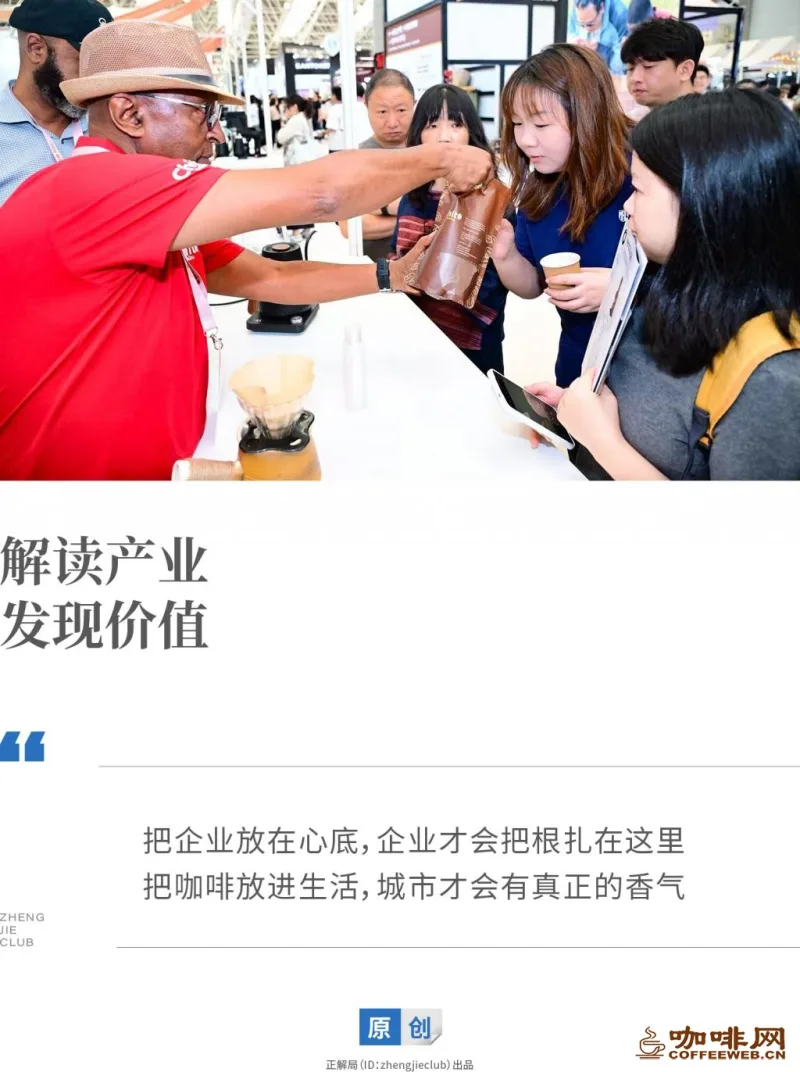
In China, where would you think of going for a cup of high-quality coffee?
On social media, the breakout names are owner-run shops on Yongkang Road in Shanghai, the “village cafés” by West Lake in Hangzhou, and assorted “handmade” spots in Yunnan’s tourist areas.
But for those truly in the know—and for businesses—the first reaction is often: Kunshan.
Starbucks’ China industrial park is in Kunshan; Luckin’s Jiangsu roasting base is in Kunshan; roasting-and-contract-manufacturing giants such as Yizheng and Zhenjin are in Kunshan; and the Asia-Pacific green-bean distribution center is also in Kunshan.
Did you know? More than half of China’s coffee-roasting capacity, and the supply chains of tens of thousands of coffee shops, all sit in this county-level city that grows not a single coffee bean.
This is highly unusual. Why does a county town sit at the very core of China’s coffee-industry chain?
On September 24, 2026, the Kunshan International Convention and Exhibition Center answered that question with a trade show.
A 20,000-square-meter exhibition, over 230 exhibitors, companies flying in from 21 countries—and at the opening ceremony, Fan Haiyan, executive deputy general manager of BolognaFiere (Bohua), articulated a positioning no one had claimed before:
“This is China’s first professional exhibition with specialty coffee as an independent theme.”
When it comes to exhibitions, we often think of Beijing or Shanghai, but in the field of coffee, perhaps no city has more of a say than Kunshan.
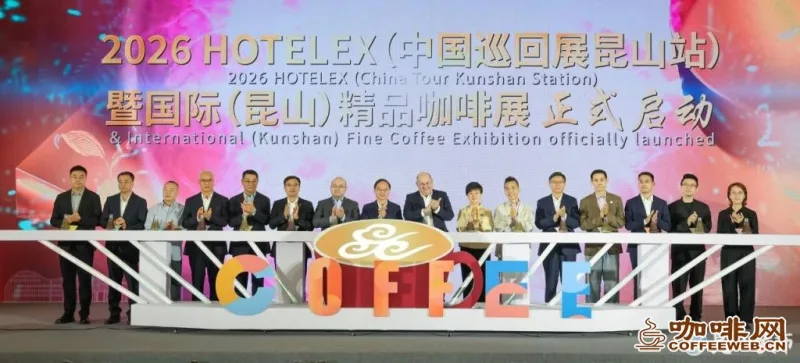
The opening ceremony of the 2026 International (Kunshan) Specialty Coffee Exhibition and Kunshan Coffee Industry Development Promotion Conference was held at the Kunshan International Convention and Exhibition Center.

To brew a great cup of coffee, what is the core?
Naturally, it is high-quality coffee beans.
Today, Kunshan ranks among the top nationally in both green-bean imports and roasting volume; the Asia-Pacific coffee green-bean distribution center is built in Kunshan’s Comprehensive Bonded Zone, with constant temperature and humidity. Beans from more than 30 origins—Ethiopia, Uganda, Brazil, Colombia—all converge here.
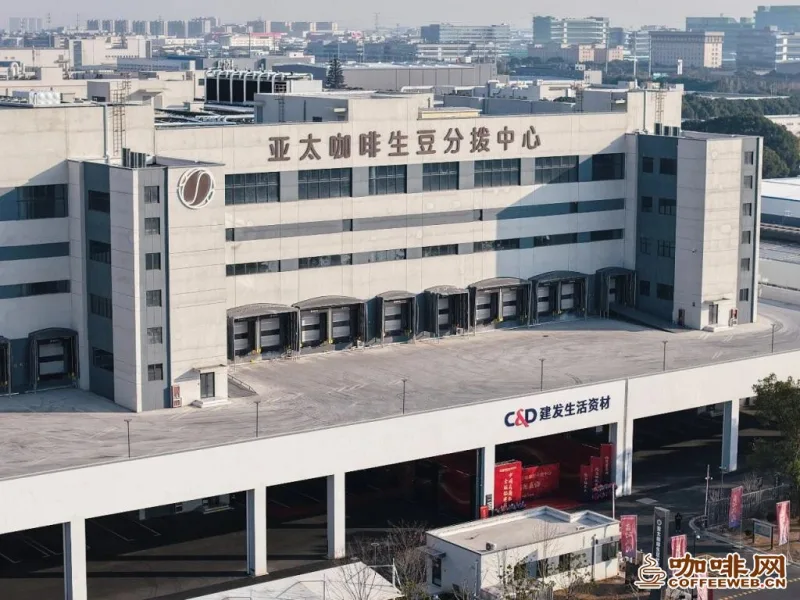
Asia-Pacific Coffee Green-Bean Distribution Center
Why do these supply chains choose Kunshan?
Because anywhere else they would have to build their own green-bean warehouses—too costly; only Kunshan has already built the constant-temperature, constant-humidity international-standard warehouses, so it’s a matter of simply moving in.
Downstream, end-market companies also know Kunshan’s importance: Luckin’s Jiangsu roasting base went into production in 2024 with fully automated smart roasting. Going further down the list—Zhenjin, Bojin, SanDunBan’s equipment headquarters, Vietnam’s Trung Nguyen, Sucafina, Mitsui—more than 40 leading enterprises have all set up here.
It is often said that Shanghai is the Chinese city with the highest coffee density and the largest coffee-drinking population.
But it is little noticed that what underpins Shanghai’s coffee supply chain—and what lets a cup of coffee sell for 38 or even 88 yuan—is this neighboring county.

Good coffee is about craftsmanship, about the owner’s ingenious imagination.
But the least “coffee” thing about Kunshan coffee is that it tells almost no flavor stories; what it talks about more is how to manage the SOP that supplies cafés across the country.
Green coffee beans have a short shelf life; they fear moisture, they fear odor cross-contamination, and above all they fear being held up at customs for half a month.
The traditional import model treats coffee beans as agricultural products, inspecting them batch by batch; before the beans even hit the shelf, their flavor is gone.
Flavor is a race against time—so how do you save time?
To better fit industry needs, Kunshan Customs’ solution is launching a “bulk-commodity smart supervision support platform,” enabling “inspect-on-report” for 90% of imported green coffee beans.
More crucial is the ledger: Customs has broken the bean in-out-zone process into 13 categories, using a service-trade ledger for seamless whole-process traceability.
Green beans have gone from “agricultural product” to “industrial components” manageable by batch, moisture content, and origin. Small and mid-sized roasters no longer gamble on luck or build their own constant-temperature warehouses—they just come to Kunshan and pick up their order.
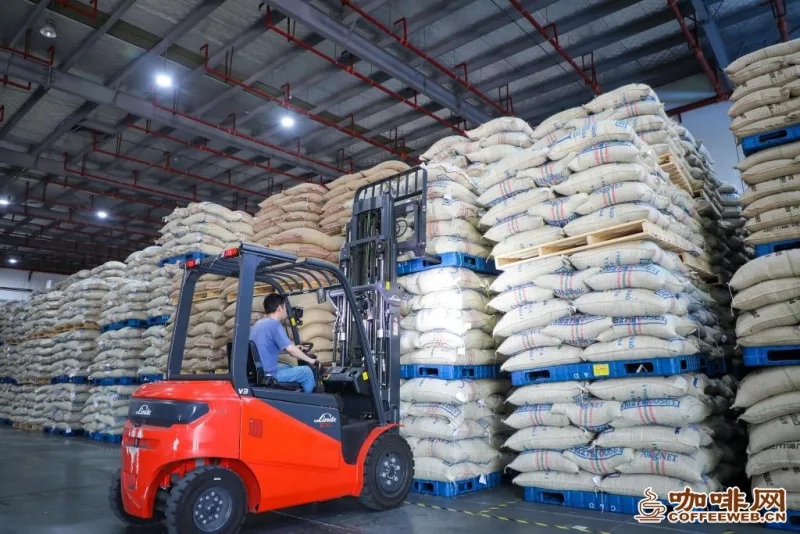
Coffee Green-Bean Warehouse
Beans from Ethiopia can, in the shortest possible time, travel from Kunshan to the rest of the country, preserving coffee flavor to the greatest extent.
Roasting is the hard core. The matter of “heat control” relies on a master’s tongue in a traditional café, but in Kunshan it relies on temperature-control curves.
Luckin links green-bean processing, roasting, packaging, and logistics with a fully automated smart production line; Yizheng pairs a 9,000-ton green-bean warehouse with customized coffee-roasting services.
Where is the master’s handiwork? What Kunshan believes in is an SOP precise to the second, precise to ±0.5°C.
No matter the wind and rain outside, the beans ship steadily—that is true “craftsmanship.”

Of course, industrial beauty alone is not enough for Kunshan to host a globally attractive exhibition.
Italy used espresso to tell the world “how to drink coffee”; London used auctions and futures to tell the world “how to price coffee.”
On how to make China a highland of world coffee, Kunshan still carries more of the burden.
First, talent.
In March 2026, the Kunshan Coffee Industry College was established—among the nation’s first and Jiangsu’s only teaching institution offering a “coffee processing and applied technology” program, covering everything from cupping and roast management to smart-equipment operation and brand operations, all in one pipeline.
Although coffee is an imported beverage, Chinese baristas’ skills already stand at the forefront of the world. The number of Chinese baristas and their award count both surpass those of Italy, the United States, and France.
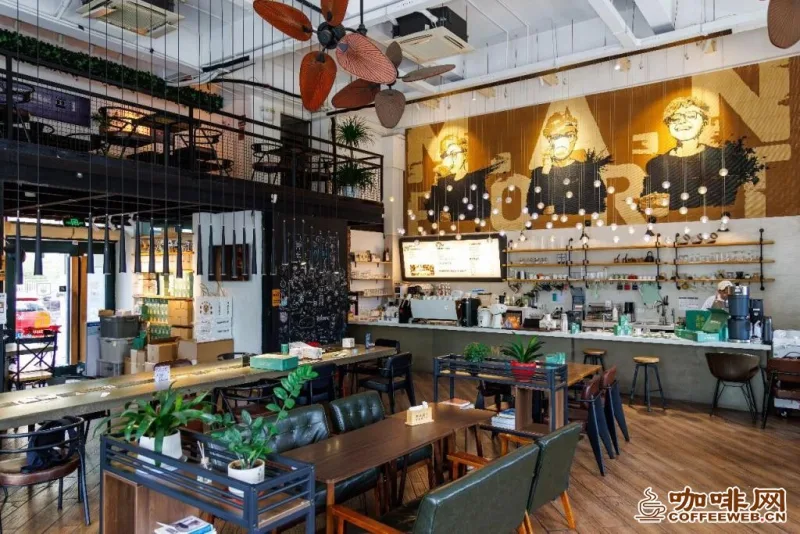
Kunshan’s distinctive cafés
Kunshan needs to go further—turning these baristas into coffee merchants, exporting both product and culture.
So at this coffee exhibition, Kunshan further expanded its influence through competitions: the barista competition sets the cup-standard, the roasting competition sets the curve, the latte-art competition sets the milk foam and presentation.
International judges score on-site in Kunshan; imperceptibly, this plugs “Kunshan parameters” into the yardstick of global specialty coffee.
Upgrading from contract roasting to setting standards, the competition design carries deeper significance than signing letters of intent.
On another front, Kunshan has also created a distinctive coffee festival—Mid-Autumn-themed check-ins, main-stage events, champion demonstrations, and barista/roasting/latte-art divisional competitions open to the public.
A cup of coffee crosses over into cuisine, baking, chocolate, alcohol, gaming, and outdoor camping, and is paired with Song-style tea whisking, Tang-style boiling, incense art, and spent-coffee-grounds crafts.
Zhengjie Bureau noticed on-site that many of the citizens coming to check in were not just young people; quite a few middle-aged and elderly visitors were also drawn to the liveliness.
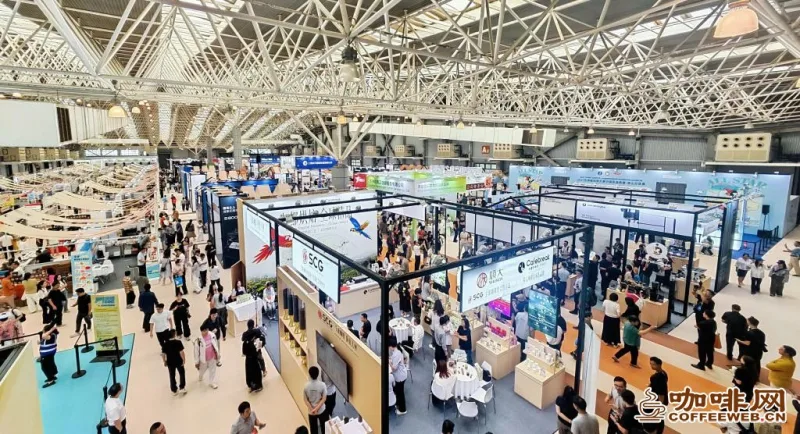
2026 International (Kunshan) Specialty Coffee Exhibition and Kunshan Coffee
Industry Development Promotion Conference site
Italy used espresso to define Europe’s everyday, Melbourne used flat white to define the Southern Hemisphere’s milk coffee, and Kunshan is using osmanthus, Longjing tea, Kunqu opera, and Mid-Autumn to define Eastern coffee.
Today’s Kunshan does not intend to be merely China’s roasting contract factory; it also wants more people to move from “seeing what Kunshan has” to “seeing what can be achieved by coming to Kunshan.”

Of course, for Kunshan coffee to have come this far, hardware and buzz are only the obvious cards. The real trump card is the service that never makes it in front of the camera.
In 2017, Yizheng settled in Kunshan; after arriving, this foreign company took the initiative to broker connections, bringing many downstream green-bean traders and clients into Kunshan.
What lies behind this? The business environment.
When many cities summarize their investment promotion, they habitually write “how many teams we formed, how many promotion events we ran, how many major projects we signed.”
Kunshan follows a different logic: those truly doing investment promotion day in and day out are not necessarily government officials, but the enterprises that have already made money here, expanded production, and called their friends over.
An enterprise’s word-of-mouth is the best business environment for a place.
Kunshan’s service goes beyond “getting things done” to “making scenarios real.” Through service mechanisms such as the “Scenario Office,” it expands “coffee-plus” integration scenarios around the coffee industry, drives deep alignment between coffee and culture, tourism, and rural revitalization, and uses scenarios to pull demand and demand to drive investment.
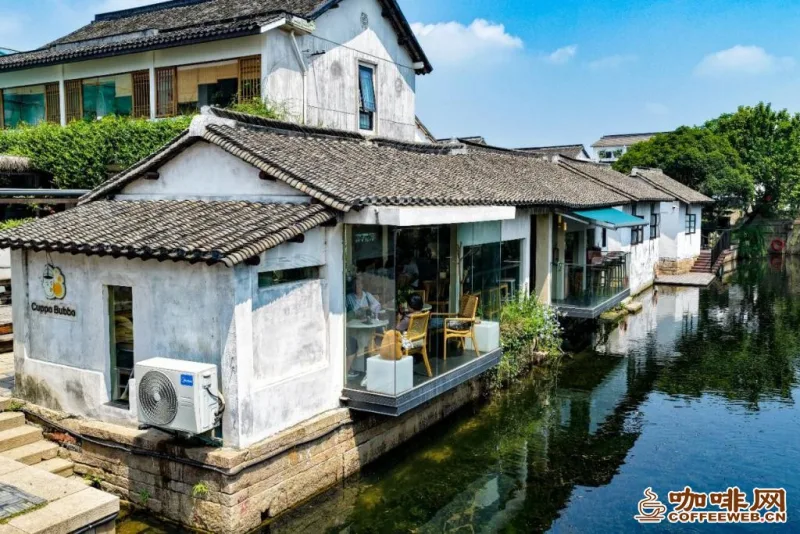
Xiemaqiao Village Café
In Kunshan, people follow the work; when enterprises come asking about food permits or roasting support, Kunshan’s dedicated task force routes them by division like a hospital triage desk, sparing enterprises from blindly hunting through departments.
Enterprise setup goes through “Full-Chain Pass”—one form, one set of materials, one submission, time-limited completion; getting things done within 0.5 working days has become routine.
For investment projects needing land, Kunshan pushes “start construction upon land acquisition” and “pile foundation first”; major items can get “multiple certificates issued in one day.” Many districts and towns have launched “one-window processing plus dedicated follow-up” services—simple issues get a 1-hour response, 1-day coordination, and time-limited completion.
Looking at the talent side: a young person coming to Kunshan gets commute subsidies for interviews and up to 30 days of free accommodation, a talent housing voucher of up to 3 million yuan, plus surrounding 15-minute living circles, education and medical care, and shared spaces.
What moves many enterprises is that Kunshan even anticipates, in advance, practical issues like employee home purchases, medical security, and commuting settlement—delivering service before the enterprise even asks.
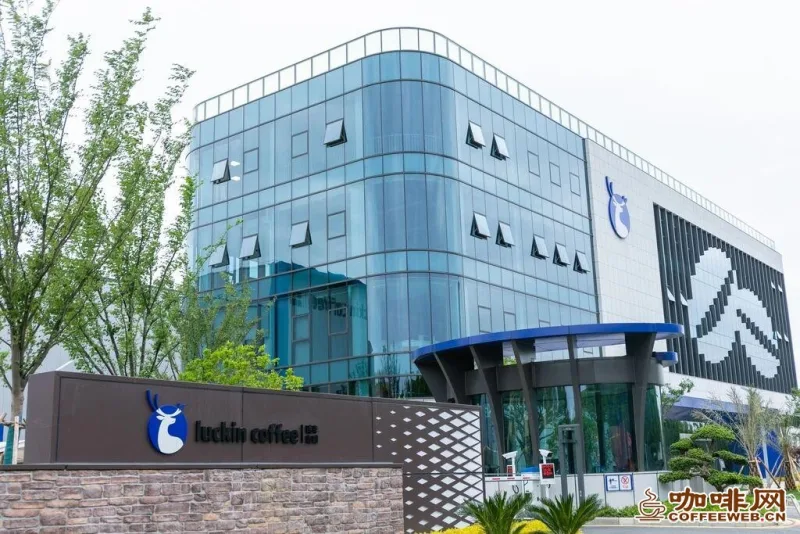
Luckin Coffee Jiangsu Kunshan Roasting Base
Only when you keep enterprises in your heart will they root themselves here; only when you put coffee into daily life will the city have a true aroma.
What Kunshan truly wants to accomplish today is not just a trade show; it wants to create a conditioned reflex in the whole world:
Discuss the coffee-industry chain, and you cannot bypass Kunshan; discuss Chinese coffee culture, and you cannot bypass Kunshan; discuss the future of Chinese coffee, and still it is Kunshan.
The temperature is always right, the flavor naturally stable; delivering certainty and a sense of security—that is the deepest trump card of Kunshan coffee.
✎
THE END
About Zhengjie Bureau
Zhengjie Bureau is a financial-content institution focused on industrial-economics research. It has long analyzed cities, enterprises, and regional competition from an industry perspective, providing in-depth reporting on industry trends and urban development as well as industry-research services. Governments, enterprises, and institutions are welcome to invite collaboration and research.
Reprint Notice and Disclaimer
- This article is compiled and edited by China Coffee Network (coffeeyo.com). The materials and images herein are sourced from public channels, and copyright belongs to the original authors. This site reprints it solely for coffee-industry information sharing and does not represent this site’s position; all data and viewpoints are subject to the original. We thank the original authors for their creation and sharing.
- If content authorization, attribution, copyright, or other matters are involved, please contact this site promptly; we will verify and cooperate in handling them as soon as possible. We also welcome coffee-producing regions, brands, and industry media to exchange and contribute articles with us.
- China Coffee Network contact: Tel 400-0000-641 (+86-18288016826) | Email 405854472@qq.com | Address: Jinghong City, Xishuangbanna, Yunnan Province / Tieling City, Liaoning Province
Reprint Notice & Disclaimer
- This article has been edited and compiled by China Coffee Network. The information and images therein come from public sources and the copyright belongs to the original author. This reprint is intended solely for information sharing within the coffee industry and does not represent the views of this website; all data and opinions are subject to the original article. Our thanks to the original author for creating and sharing it.
- For matters concerning content licensing, attribution, copyright or otherwise, please contact us promptly and we will verify and cooperate in handling them as soon as possible. We also welcome coffee origins, brands and industry media to exchange ideas and contribute articles.
- Contact China Coffee Network: Tel 400-0000-641 (+86-18288016826) | Email 405854472@qq.com | Address: Jinghong, Xishuangbanna, Yunnan Province / Tieling, Liaoning Province
Related Reading
 ‘All-Ice’ Coffee Goes Viral! Will the Next Hit Be Your Personal Favorite?
- Hong Kong’s Dyee Coffee Lands in Qianhai, Building a Specialty Pour-Over Outpost
 Ken Yue Coffee Opens Egg-Tart Pop-Up in Hangzhou: Sweet Craft, Reinvented Classics
 World Cup Enters the Breakfast Slot: Can Coffee-Tea Brands Turn Traffic into Orders?
- ICE Agricultural Futures Mostly Rise at Close; Coffee Futures Up 3.28%
- ‘Sleep Cafés’ Become a New Favorite Among Seoul Office Workers



 Liaoning ICP Security No. 21122402000217