


Introduction (Coffeeyo.com):Luckin Coffee has entered the national pavilions of Brazil and Indonesia as the designated coffee brand of the China International Import Expo, shifting from buying raw materials to organizing supply chains and reshaping the global coffee industry chain with Chinese-scale consumption.
China Economic News Network 2026-11-07 16:55:13
The 9th CIIE will be held in Shanghai from November 5th to 10th. Luckin Coffee appeared as the designated coffee brand for the China International Import Expo and entered multiple national pavilions in Brazil, Indonesia, and other countries, providing coffee supply to exhibitors from all over the world.
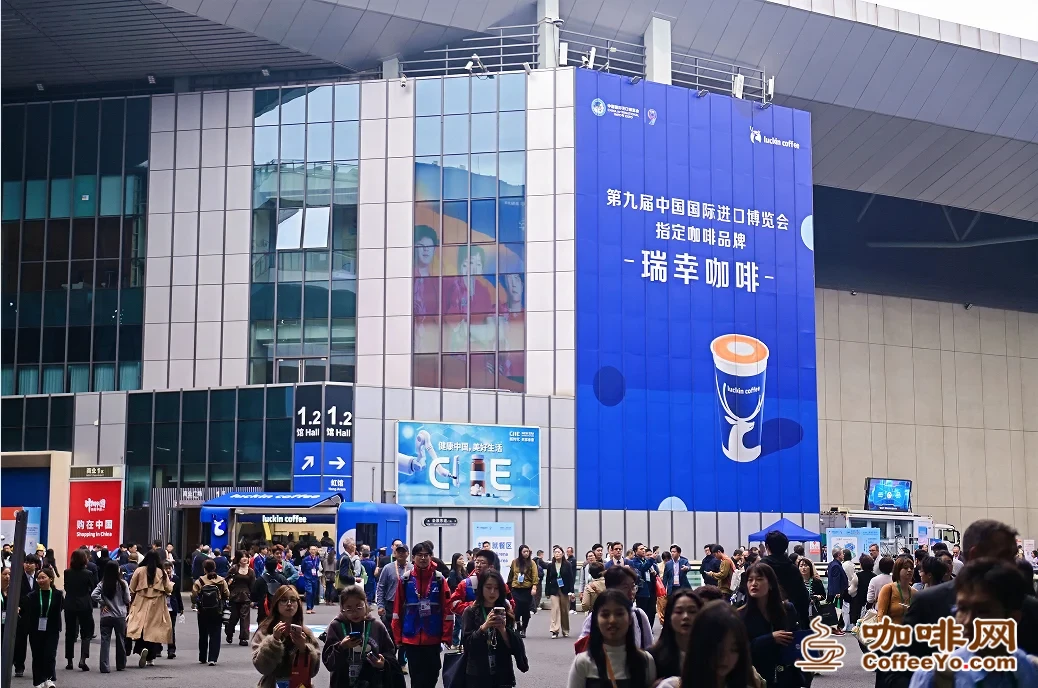
Why can a Chinese coffee brand appear on high-level platforms showcasing its national image in various countries?
What does this mean?
China's cup volume is rewriting the discourse power of coffee
Luckin Coffee is the first and only Chinese coffee brand invited to join multiple national pavilions in Brazil, Indonesia, and other countries.
“It is a great honor for Luckin Coffee to take part in this year’s CIIE as the designated coffee brand. This is our third consecutive year,” said Guo Jinyi, co-founder and CEO of Luckin Coffee. Coffee is the world's language, and the supply chain covers the world. Luckin Coffee accounts for 30% of China's imported coffee beans, with a large amount coming from Brazil, Indonesia, and Ethiopia.
This detail points to a deeper industrial change: Luckin Coffee's role in the global coffee industry chain has undergone a fundamental shift from “buying raw materials” to “organizing the supply chain”. And behind this, the advantage of China's super large market is being transformed into global industrial influence.
Let's first look at two sets of data. According to the 2026 China Urban Coffee Development Report, the scale of China's coffee industry has increased from 313.3 billion yuan in 2024 to 354.9 billion yuan in 2025, a year-on-year growth of 13.3%; The per capita annual coffee consumption in China has increased from 22.24 cups to 28.57 cups, a growth of over 70% in two years.
At the same time, Luckin Coffee's store scale continues to expand, with a total of 38909 stores worldwide as of the end of the third quarter of this year.
The scale advantage of the consumer end is extending upstream.
Luckin Coffee's procurement scale in Brazil is gradually upgrading: from a 3-year 45000 ton procurement plan in 2022, to a two-year 120000 ton cooperation letter of intent in June 2024, and then to a 5-year 240000 ton cooperation memorandum worth 10 billion yuan in November 2024. At the same time, Luckin Brazil's office, grower support center, and high-quality planting base were also listed simultaneously.
Last year, Luckin Coffee signed a memorandum of understanding with the county government of the Banggai Islands in Indonesia, obtaining exclusive procurement rights for coconut resources in the islands and collaborating with partners to establish an agricultural planting center in the area, providing farmers with production materials such as seedlings and fertilizers.
The significance of these actions lies not in 'buying more', but in 'how to buy'.
When the purchasing volume is large enough, buyers are no longer just price takers, but deep participants in industrial upgrading. Under the procurement contract, Luckin Coffee is doing in Brazil and Indonesia to integrate the planting end controlled by farmers into its supply chain system.
For countries of origin, Luckin Coffee has helped them establish their place of origin in the vast Chinese market. Brazilian coffee and Indonesian coconut, which were previously unclear on the consumer side, are becoming clearer through cups of coffee.
Over the past year, Luckin Coffee has sold more than 4 billion cups of beverages in China. Guo Jinyi said, "We believe that coffee is a very good link that can combine overseas coffee production resources with the large-scale domestic market, and promote the opening up of the coffee industry to the outside world through the large-scale domestic market
The core logic of Luckin Coffee's cooperation with Brazil and Indonesia is to use the scale advantage of the Chinese market to exchange for a more stable and in-depth discourse on industrial upgrading in the country of origin.
But the more noteworthy changes occur on the product side.
Chinese innovation is redefining coffee quality standards in reverse
Coconut latte is a phenomenal single product of Luckin Coffee, with continuous sales since its launch. As of March 2026, the global cumulative sales have exceeded 2 billion cups. The entire industry is following suit.
Guo Jinyi mentioned that Luckin Coffee's coconuts account for over 60-70% of the entire 2B coconut market sales in China, and most of these raw materials need to be imported.
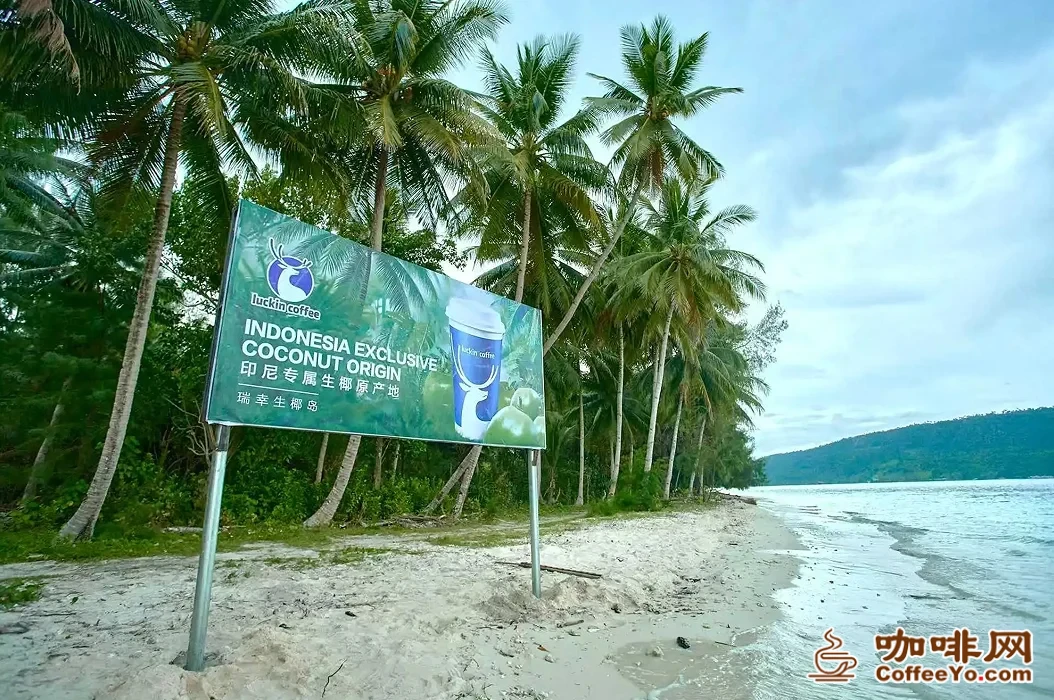
So, the significance of this product is not just a hit. On the one hand, it has made "raw coconut", which was originally almost unrelated to coffee, an important ingredient in the coffee industry. On the other hand, let Luckin go deep into the upstream production areas and promote the upgrading of coconut products.
In the past, the supply chain logic of the coffee industry was "origin defined coffee flavor" – Brazilian beans tend to be nut chocolate, Ethiopian beans tend to be floral fruity, and whatever comes from the origin, the consumer market drinks it.
But the coconut latte breaks this one-way logic: product innovation in the Chinese market defines the origin, processing, and supply standards in reverse.
Origin is no longer just a "supplier", but is defined by product innovation in the Chinese consumer market.
This is just a reverse definition at the product level. The underlying changes are the standards.
Luckin Coffee's underlying logic, whether in procurement or co building with the value of the place of origin, is to incorporate the flavor resources of the place of origin into a quality evaluation system developed by the Chinese consumer market. Once this system is established, Luckin's role in the global industrial chain will be upgraded from a "purchaser" to a "standard setter".
The value of standard definition rights lies not only in Luckin's own use, but also in its spillover to the entire industry.
Firstly, standard overflow. The procurement and quality control standards established by Luckin in the country of origin provide reference for other brands. The origin will also be planted and processed according to this set of standards, which will raise the bottom line of the entire industry's raw materials.
Secondly, infrastructure spillover. Covering islands, building factories, developing cold chains, and specializing in production areas may appear to be Luckin's own supply chain, but upgrading the supply capacity of the production area allows other brands to obtain more stable and standardized raw materials.
Thirdly, consumer cognition spillovers. Luckin Coffee uses its scale to help its origin brand establish its name in the Chinese market, so other brands do not need to explain from scratch when following up, and the entire category benefits.
The ultimate competition in the supply chain is not who can buy cheaper, but who has the qualification to say 'what is good'.
Luckin Coffee is moving from "buying good beans" to "defining good beans", with the former being trading ability and the latter being standard power. This leap is even greater than the number of stores increasing from 10000 to 30000.
One end is Chinese-scale consumption, and the other end is the livelihood of production areas. Luckin Coffee is restructuring its globalization logic
Taking a broader perspective, Luckin's appearance at the CIIE showcased a globalization path that is different from traditional going global.
One end is the daily cup volume of Chinese consumers, and the other end is the upgrading of production capacity and farmers' livelihoods in the country of origin. Luckin Coffee becomes a two-way connector – not simply selling Chinese coffee overseas, nor simply buying raw materials from overseas, but using the consumption engine of the Chinese market to organize the global supply chain.
In the past, the mainstream path for Chinese brands to globalize was to "sell products globally" and earn the price difference. Luckin Coffee is taking a different path: using the Chinese market as the "center of gravity" and making global origin a stakeholder in the Chinese market.
The upgrading of production capacity, livelihood of farmers, and industrial standards in the country of origin are all tied to the Chinese market. This relationship is long-term, embedded, and more stable and sustainable than a simple buying and selling relationship.
This also explains why Luckin appeared in the national exhibition of the CIIE, showcasing the country's image and industrial capabilities. It indicates that it is no longer just a purchaser, but an industrial partner of countries such as Brazil and Indonesia in the Chinese market.
The inspiration for the industry is that in the next stage of globalization, it's not about who sells goods to whom, but about who can organize the resources, production capacity, and demand of different countries and make them mutually beneficial.
Luckin Coffee is using the scale and innovation capabilities of the Chinese market to weave Brazilian coffee beans, Indonesian coconuts, and Chinese consumer demand into the same supply chain network.
From buying raw materials to setting standards, from selling products to organizing networks, Luckin's appearance at the CIIE showcased a different path of globalization.
The core of this path is not to sell a cup of coffee to more countries, but to use the scale and innovation capabilities of the Chinese market to pull global origin into the same value network.
When Chinese brands began to define "what is good", the global coffee story shifted from a one-way "origin → consumption destination" to a two-way "consumption drives origin upgrading, and origin feeds back consumption standards".
This is more worthy of industry attention than 'how many cups have been sold'.
Reproduction instructions and disclaimer
- This article is written byCoffeeyo.comEdited and reprinted from China Economic News Network's article "Invited to Brazil and Indonesia National Pavilions, Luckin Coffee rewrites the global coffee industry chain with Chinese cup volume". The original copyright belongs to China Economic News Network and the original author. The reposting on this website is only for information sharing in the coffee industry and does not represent the position of this website. The data and opinions in the article are subject to the original text. Thank you to the original author for their creation and sharing.
- Original reading:Invited to the national pavilions of Brazil and Indonesia, Luckin Coffee rewrites the global coffee industry chain with Chinese cup volume
- If there are any issues related to content authorization, attribution, copyright, or other matters, please contact our website in a timely manner. We will verify and cooperate in handling them as soon as possible; We also welcome coffee companies and industry media to communicate and contribute to us.
- Coffeeyo.com Contact Information: Phone 400-0000-641 (+86-18288016826) Email 478203668@qq.com Address: Jinghong City, Xishuangbanna, Yunnan Province
Related Reading
 The "Export to China" Coffee Industry International Matchmaking Conference was held in Xiamen
 Speed Matters: From a Single Coffee Bean to a Cup
 China-Africa Coffee Trade Gathers Momentum
- A Northern Province That Grows No Coffee Beans Quietly Anchors the Global Coffee Supply Chain
 Cross-Border Arrival | A Coffee Bean: World Flavors Flowing Through the Trade Chain
- The two-way rush of the coffee industry goes far beyond buying and selling


 Liaoning ICP Security No. 21122402000217