
Editor’s note (coffeeyo.com): Editor’s note (coffeeyo.com): A coffee bean flows around the globe through the cross-border trade chain, reflecting the open landscape of China’s coffee market and the blending of world flavors.
Order a cup of specialty coffee on the street and you may taste a distinctive flavor from across the ocean. In recent years, China’s coffee-bean imports have grown steadily, reaching 223,800 tonnes in 2025—3.9 times the level a decade ago. The domestic coffee consumption market keeps expanding; chain brands, specialty cafés, and new tea-drink brands are all proactively seeking good beans in global producing regions, bringing coffee aromas from around the world from niche tasting circles into everyday life.
Grid Coffee, a brand focused on single-origin coffee, is one of them. This May, a “World-Class Guest” event was held at its Wangfujing Central Plaza store. The ONA Coffee team from Australia brought new beans—Kenya Katakawa AB, Honduras Finca La Montaña Geisha, and Panama Iris Farm Geisha—to meet Beijing consumers. Distant origin names became flavors consumers could directly taste in the cup; with one coffee, you can read the origin environment behind the bean, the local farming community, and the story of innovative processing.

“For example, the Kenya Katakawa AB uses the classic SL28 and SL34 varieties with washed processing, and its tasting notes describe yellow tropical fruit, lime, and green apple; the washed Geisha from Honduras’ Finca La Montaña shows caramel, yellow peach, and floral notes,” the store staff member explained. “Some prefer bright acidity, others like a full, smooth mouthfeel with a chocolate texture. We want to make these differences clear and help consumers find the cup they love.”
The ever-richer origin choices on the menu are a microcosm of the continuous upgrading and segmentation of the domestic coffee market. A bean trader deeply engaged in coffee import trade told the reporter that a decade ago an overseas origin mostly offered a single basic bean, with only three mainstream processing methods—sun-dried, washed, and honey. Today, the same region can launch a dozen differentiated products, with innovative techniques like anaerobic, honey, and double fermentation emerging one after another. Changing market demand forces the origin side to keep iterating, and drives industrial upgrading and craft competition in coffee-producing countries.
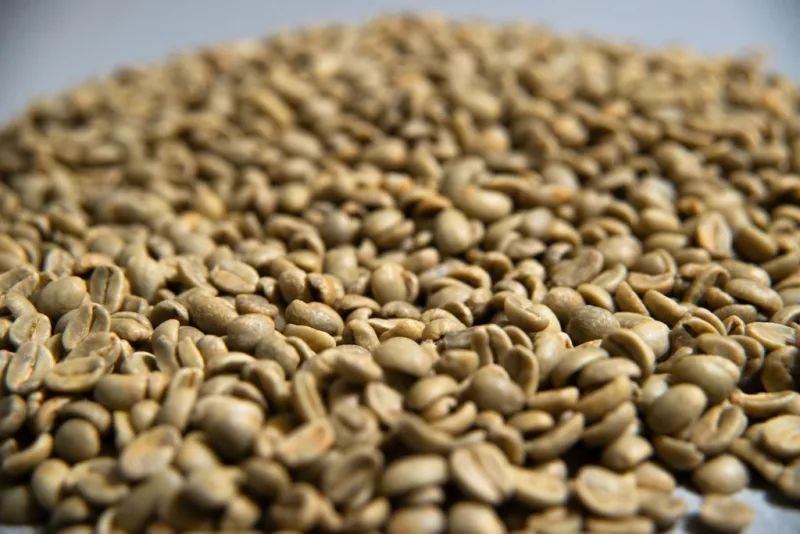
Yet a good cup of coffee with stable flavor is not as simple as just buying overseas beans back. For a quality green bean to travel from an overseas estate to the bar counter of stores across China, cross-border procurement is only one link in a long chain. Each link—origin harvesting rhythm, ocean-shipping timing, green-bean quality fluctuation, domestic roasting-plan matching, and store-output standardization—hides uncertainty, testing the stable integration capability of the supply chain.
Ethiopia Sidama ALO is a long-term bestseller on Grid Coffee’s daily menu. In Ethiopia’s Sidama region, local plantations complete coffee cherry harvesting, sorting, and primary processing, and qualified green beans enter the supply lists of global traders. After cross-border quarantine and customs clearance, the beans enter China and are batch-roasted by roasting factories according to store demand and flavor positioning, then shipped directly to each store. From sample confirmation to shelf sales at Beijing stores, the whole cycle usually takes 120 to 180 days.
As coffee consumption gradually spreads, new tea-drink brands have also crossed over. After ChaPanda entered the coffee track, it launched the popular Geisha beans, even selling a Geisha SOE Americano for under 10 yuan. “Geisha is a globally renowned fine-coffee variety; finding a batch of high-quality Geisha raw material is not hard—the difficulty lies in long-term stability, ensuring every batch keeps its signature floral and citrus notes,” a ChaPanda representative said.
It is precisely by relying on a mature global cross-border supply chain, scaled centralized procurement, and logistics systems that scale effects keep thinning raw-material, storage, and roasting costs, allowing Chinese retail brands to bring the once high-threshold Geisha flavor into affordable everyday options.
Behind the market expansion, market-access and customs-clearance facilitation policies keep opening channels for coffee trade. This May, the General Administration of Customs announced that, starting July 20, coffee beans from 53 African countries with diplomatic ties to China may all be exported to China, making coffee beans the second agricultural product—after dried chili—to achieve comprehensive quarantine access.
Continuously growing consumption demand has made China one of the world’s fastest-growing coffee-bean consumption markets. The diverse preferences on the domestic demand side also drive the constant segmentation of global coffee supply, while high-level opening-up, customs facilitation, and the continuous upgrading of supply-chain systems, in turn, let more origin flavors and new techniques keep entering the Chinese market.
The journey of a coffee bean across the ocean is not merely the simple circulation of a consumer good, but a vivid footnote of open cooperation and flavor exchange within the world’s trade chains.
More breaking news, authoritative information, and in-depth analysis are all on the Beijing Daily App
Source: Beijing Daily Client
Reprint Notice and Disclaimer
- This article is compiled and reprinted by coffeeyo.com from Baidu Baijiahao (Beijing Daily Client). The copyright belongs to the original source and author. This reprint is for coffee-industry information sharing only and does not represent the views of this site; all data and opinions are subject to the original. We thank the original author for their work and sharing.
- For content authorization, attribution, copyright, or other matters, please contact us promptly; we will verify and cooperate in handling at the first opportunity. We also welcome coffee enterprises and industry media to exchange contributions with us.
- Original article: 跨境而来|一颗咖啡豆:流转在贸易链里的世界风味
- Contact coffeeyo.com: Tel 400-0000-641 (+86-18288016826) Email 405854472@qq.com Address: Jinghong City, Xishuangbanna, Yunnan Province, China
Related Reading
 Historic First: Nujiang Signs China Inaugural Coffee Export Order to Pakistan
 Mixue Group and Yuexianhuo Sign Strategic Cooperation Agreement on Fresh Milk
- Coffee Supply Chain & Trade Cooperation Services
- Yunnan Coffee Export and Logistics Corridors: From Producing Regions to Markets
- Green Coffee Procurement Guide: Varieties, Processing Methods, Defect Rate and Cupping Grades
- Yunnan Coffee Industry Chain: Planting, Primary Processing, Deep Processing and Capacity




 Liaoning ICP Security No. 21122402000217