
Brief (coffeeyo.com): Pu’er is named for tea and hailed as the “source of tea of the world,” yet it is also China’s “coffee capital.” In recent years the city has cultivated tea and coffee as twin pillar industries, creating a new lifestyle of “coffee in one hand, tea in the other.”
PU’ER, Sept 20 (CNR Network — reporter Zhao Beibei) — Pu’er is named for tea and hailed as the “source of tea of the world”; at the same time, it is also China’s “coffee capital.” In recent years Pu’er has worked to cultivate tea and coffee as two pillar industries, creating a new lifestyle trend of “coffee in the left hand, tea in the right.”
In the roasting experience workshop of Beigui Coffee Estate in Nandaohe Village, Nanping Town, Simao District, visitor Ms. Li put on heat-resistant gloves and poured just-roasted beans into the cooling tray; the roasty aroma instantly filled the room. In another corner of the estate, at the Pu’er tea tasting area, a tea artist was brewing this year’s spring tea in a gaiwan — the liquor golden and clear, with a faint orchid fragrance.
“A cup of Pu’er ripe tea in the left hand, a cup of pour-over in the right — we call this pairing ‘mountains and seas meeting,'” the estate manager said with a smile. Founded in 1988, the estate carries nearly 40 years of coffee heritage, was the first domestic enterprise to earn international fair-trade coffee certification, and even hosted the space-bred coffee-seed research for Shenzhou-9. Yet little known is that Nandaohe Village, where the estate sits, is also an important tea-producing area of Pu’er.
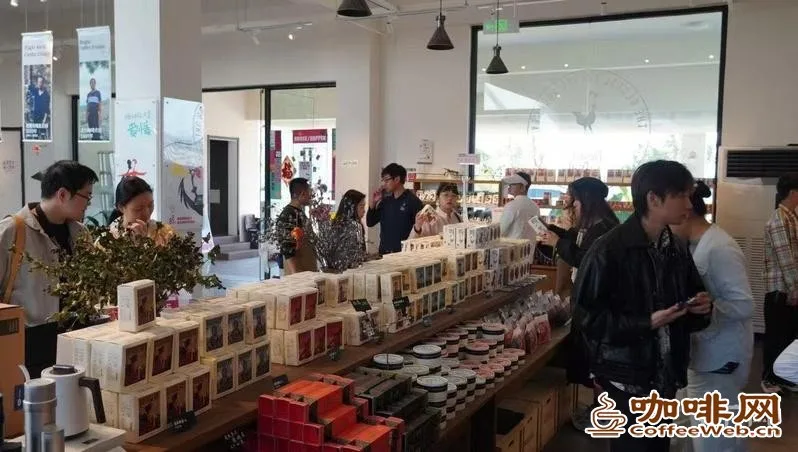
“Our old tea farmers here all have tea gardens at home; in the past they only sold crude tea, and the price wouldn’t rise,” said Ms. Zhang, a Nandaohe tea farmer. After Beigui Coffee Estate completed its overall upgrade in 2024, it linked 17 coffee-growing cooperatives and also brought surrounding tea farmers into the tea-coffee fusion industry chain. “Now tourists come and can both experience coffee roasting and taste Pu’er tea; the sales channels and prices of tea have improved quite a bit,” Ms. Zhang said.
The estate’s supporting spaces — a coffee-culture exhibition hall, a global coffee-bean display hall, study classrooms, specialty dining, and guesthouse lodging — enable immersive experiences such as coffee-orchard tours, bean picking, green-bean tasting, roasting, pour-over and latte art, and drip-bag DIY, while also weaving in Pu’er tea culture such as tea-cake pressing, tea-hill hikes, and tea-table tasting.
One cup of tea-coffee tells the larger story of Pu’er’s industrial transformation. Currently the city’s tea-garden area reaches 2.243 million mu, with comprehensive output value surpassing 51.3 billion yuan; coffee planting area is 734,000 mu with output of 84,000 tons, about half of the national total. Pu’er aims for the tea industry’s comprehensive output value to top 52 billion yuan and the coffee industry’s to reach about 12.5 billion yuan in 2026.
In 2026, nine departments including Yunnan’s Department of Commerce and Development and Reform Commission issued “Several Measures to Promote High-Quality Development of the Catering Industry in Yunnan,” explicitly calling for polishing Yunnan’s coffee and tea-drink brands, supporting the building of coffee estates and coffee/tea-drink consumption clusters, and advancing the integrated development of “coffee + cultural tourism” and “tea-drink + cultural tourism.” In Pu’er, the two industries are accelerating into a “dual-engine drive” pattern.
Not far from Beigui Coffee Estate, in the Baishapo village group, a “Beautiful Star Village · Windy Coffee Valley,” built as a key Shanghai-Yunnan collaboration project, officially opened in July 2024. Stepping into Windy Coffee Valley, a 1,700-square-meter coffee-culture experience center stands out, with boutique guesthouses, a Windy Farm, a Windy Equestrian Center, and a startup incubator all in place. The project revitalizes villagers’ idle courtyard resources and cultivates distinctive formats such as woodblock printing, Wa brocade, hand tie-dye, coffee-roasting experiences, kiln-roasted specialties, and farming study trips. At the same time, Pu’er tea culture is deeply embedded — visitors can sit in villagers’ homes for tea, experience the full process from plucking to making tea, and feel the thousand-year echoes of the “Tea Horse Road.”
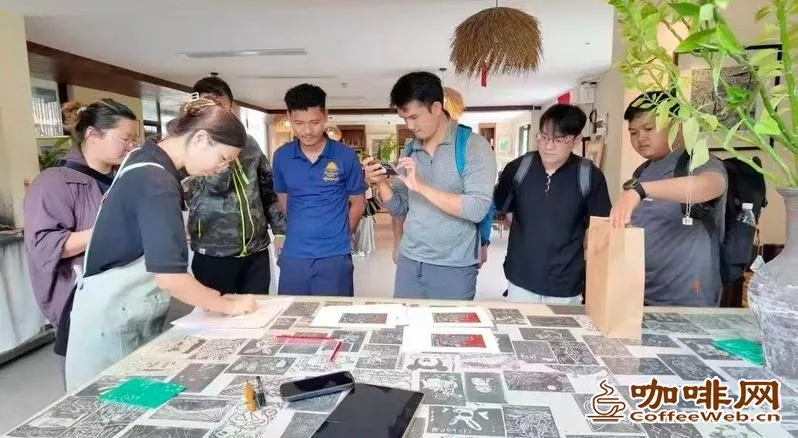
“In the past we could only wait for buyers to come for our coffee; now tourists pick it themselves in the fields, and a cup of pour-over sells for dozens of yuan. The home Pu’er tea also found new channels — many visitors buy a few cakes to take home after drinking,” said a villager running a coffee-experience shop.
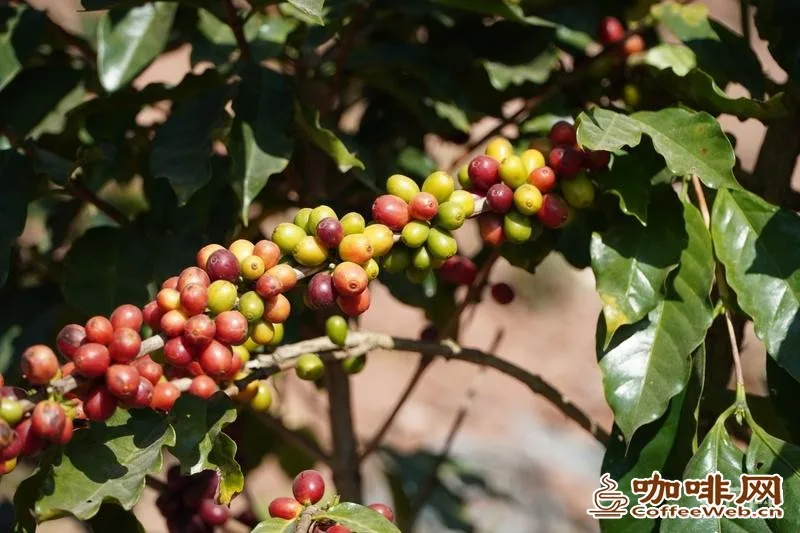
From one estate to one village, from one leaf and one bean to one cup of tea-coffee, Pu’er’s tea-coffee fusion is extending from the industrial end to the cultural end and the lifestyle end. Tea-coffee fusion has become the keyword of Pu’er’s industrial development.
From the clatter of hooves on the Tea Horse Road to the speeding trains of the China-Laos Railway; from a tea leaf’s millennium of inheritance to a coffee bean’s global journey — Pu’er, driven by the twin engines of tea and coffee, is writing its answer of fusion for the new era upon the thousand-year tea road.
Reprint Note & Disclaimer
- This article is compiled and edited by coffeeyo.com. The materials and images herein are sourced from public channels and the copyright belongs to the original authors. This site reprints them solely for information sharing within the coffee industry and does not represent our stance; all data and views are subject to the original source. We thank the original authors for their work and sharing.
- For matters concerning content authorization, attribution, copyright, or any other issues, please contact us promptly. We will verify and cooperate in handling them without delay. We also welcome coffee-growing regions, brands, and industry media to exchange and contribute articles with us.
- Contact coffeeyo.com — Tel: 400-0000-641 (+86-18288016826) | Email: 405854472@qq.com | Address: Jinghong City, Xishuangbanna, Yunnan / Tieling City, Liaoning
Reprint Notice & Disclaimer
- This article has been edited and compiled by China Coffee Network. The information and images therein come from public sources and the copyright belongs to the original author. This reprint is intended solely for information sharing within the coffee industry and does not represent the views of this website; all data and opinions are subject to the original article. Our thanks to the original author for creating and sharing it.
- For matters concerning content licensing, attribution, copyright or otherwise, please contact us promptly and we will verify and cooperate in handling them as soon as possible. We also welcome coffee origins, brands and industry media to exchange ideas and contribute articles.
- Contact China Coffee Network: Tel 400-0000-641 (+86-18288016826) | Email 405854472@qq.com | Address: Jinghong, Xishuangbanna, Yunnan Province / Tieling, Liaoning Province
Related Reading
 How ‘Sea-Flavored’ Coffee Blooms Across Dongtou
- Health Guide: How to Enjoy Your Coffee the Healthy Way
 Study: Regular Coffee and Tea May Lower Dementia Risk, but More Is Not Better
 Frontline Story: A ‘Mobile City Coffee Bar’ Arrives by the Grand Canal
 Yantai’s Wind Tastes of Coffee
 In Zhenyuan, a Cup of Coffee and a Waiting Train







 Liaoning ICP Security No. 21122402000217