
At a Glance (China Coffee Network): COFFEE When the scent of osmanthus intertwines with the toasty aroma of coffee in the autumn wind, and 28 Harbin local coffee brands gather during the Mid-Autumn holiday at the Ha…
COFFEE
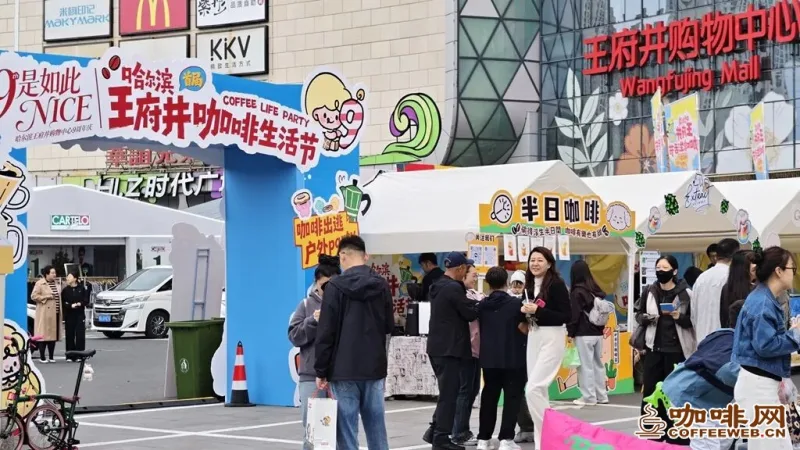
When the scent of osmanthus intertwines with the toasty aroma of coffee in the autumn wind, and 28 Harbin local coffee brands gather during the Mid-Autumn holiday at the Harbin Wangfujing Shopping Center plaza, the 2026 Harbin Wangfujing inaugural Coffee Life Festival becomes more than a feast for the palate. It is a collective debut of Harbin’s coffee culture, and even more a vivid slice of a city’s 30-year leap in coffee consumption from “novelty” to “lifestyle.”
The festival’s chief planner, Sun Jing, founder of Harbin Sifei Coffee Academy, has been immersed in the coffee industry for over a decade. Starting from a “small-scale” event with just a few booths, she built the “Erbin” coffee festival up to its sixth edition with over a hundred booths. In her view, the festival’s meaning lies not only in popularity but in revitalizing the local coffee market—“letting coffee lovers from across the country see the true face of Harbin’s coffee culture.”
From “Couldn’t Get It” to “Totally Clear”: the Collective Upgrade of Local Coffee Culture
“When I first organized the coffee festival, I realized people’s understanding of coffee was actually limited,” Sun Jing recalled to reporters at the 2026 Harbin Wangfujing inaugural Coffee Life Festival. A few years back, Harbin people’s understanding of coffee mostly stayed at “those fixed few products”—a latte, an Americano, or a pot of pour-over, and that was all. Now, as Harbin’s coffee culture has developed, by the time she did this Wangfujing festival she saw a completely different scene: “This time there were many diversified products; you can see Harbin’s local owners pay great attention to R&D in this area; and many of our customers have clear choices, understand coffee deeply, and know which category they prefer or the traits of a certain product.”
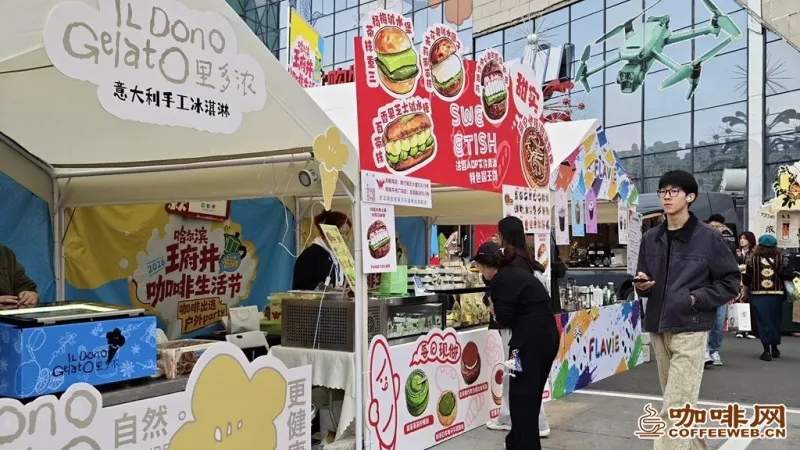
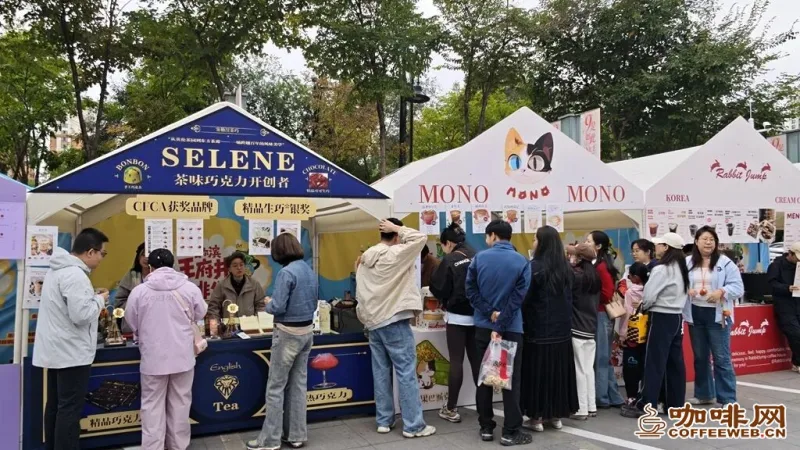
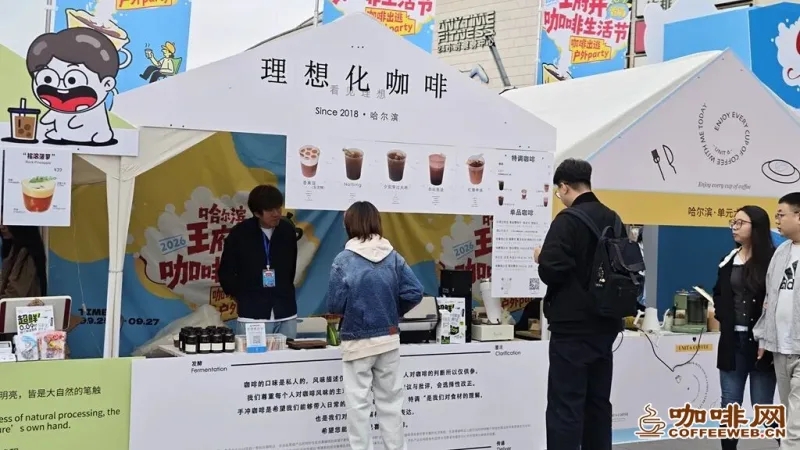
Consumers, with “connoisseur” palates, forced brand owners to bring out their “signature skills.” Thus, at this Coffee Life Festival, people saw MONOCAFE’s creative specialty “One Bowl” made with cold-noodle soup, saw “Damen Bar” combine gin, cold-brew coffee, and popping candy into “Berry Fluffy,” saw “Jiri Coffee” blend Laoshan green tea, salty cheese, and cold brew into a cup of “Laoshan Double Extract”… These seemingly “wildly imaginative” works are precisely proof of Harbin’s coffee culture leveling up: coffee is no longer a standard product on an assembly line, but a creative carrier that can bear city memory and personal expression.
Behind this “double upgrade” is the cultural nourishment brought by Harbin’s explosive tourism growth. In recent years, “Erbin” became a nationwide buzzword; as tourists from across the country flock to Harbin’s famous check-in spots, they also bring their pursuit of quality living into the city. Local coffee brands, colliding with out-of-town tourists and diverse cultures, keep absorbing nourishment; the consumption and supply ends promote each other, jointly raising the ceiling of Harbin’s coffee culture. Sun Jing’s biggest takeaway: “The local coffee culture is upgrading rapidly; this is a collective leap.”
A 100% Local “Family Gathering”: Highlights Beyond Coffee, and “Confidence in City Life”
Unlike many domestic coffee festivals chasing “internationalization” and “full lineups,” this Wangfujing Coffee Life Festival set a nearly “stubborn” principle from the start: all brands are from Harbin locally.
“When we were negotiating, we wanted to make a coffee festival that is entirely local brands,” said Sun Jing. “All the dozens of brands this time are local; they will have more local character in product R&D, and I still want to revitalize the local coffee market.”
This confidence stems from the accumulation and exploration of Harbin’s coffee people over many years. Prologue Coffee’s cocoa beans from Tanzania’s Koko Kamili estate were personally selected by the owner on a trip to origin; the competition-grade beans brought by Cike Coffee have shone in domestic and international professional competitions; Selene English Afternoon Tea blends tea flavors with handmade chocolate, presenting a refinement that rivals first-tier cities. These brands may lack the backing of large chains, but with real product strength they uphold the quality foundation of Harbin’s coffee.
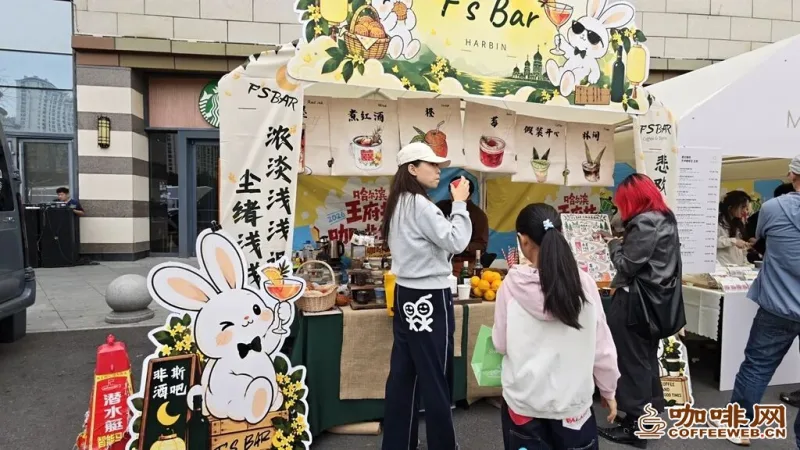
In Sun Jing’s view, the Coffee Life Festival is not only a window for brand display, but also an expression of the city’s living confidence and cultural confidence. “Many of our merchants are interspersed; similar brands are spread out, with desserts, chocolate, and coffee each scattered,” Sun Jing explained. This market layout makes it interesting for visitors to wander and immersively feel different states of coffee life. “It is not homogenized—this row all coffee, that row all bread… It presents, through coffee culture and coffee language, the real coffee lifestyle of Harbin’s young people.”
This carefully arranged “sense of staggered placement” is exactly like the character of Harbin itself: a blend of Chinese and Western, fusion of old and new, rich in layers. When 28 local brands appear in the same space in an “ikebana-style” layout, the coffee story they tell together is Harbin people’s own—with inheritance, innovation, perseverance, and breakthroughs. “I hope our efforts let our local young people feel we keep progressing, can offer more diverse scenes and culture, and that more people join in, so we can make this environment better and better.”
Coffee Warmth and City Heat: A Gentle Footnote for the Ice City’s Autumn Tourism
Unlike many markets chasing “packed crowds,” Sun Jing cares more about the quality of “connection.” “Although we borrowed the popularity of the Mid-Autumn holiday, what we observed is that these two days the visitors were precise customer groups, actually generating more connections,” she told reporters. Mainly younger customer groups with clear consumption needs and purposes, the results so far are generally good.
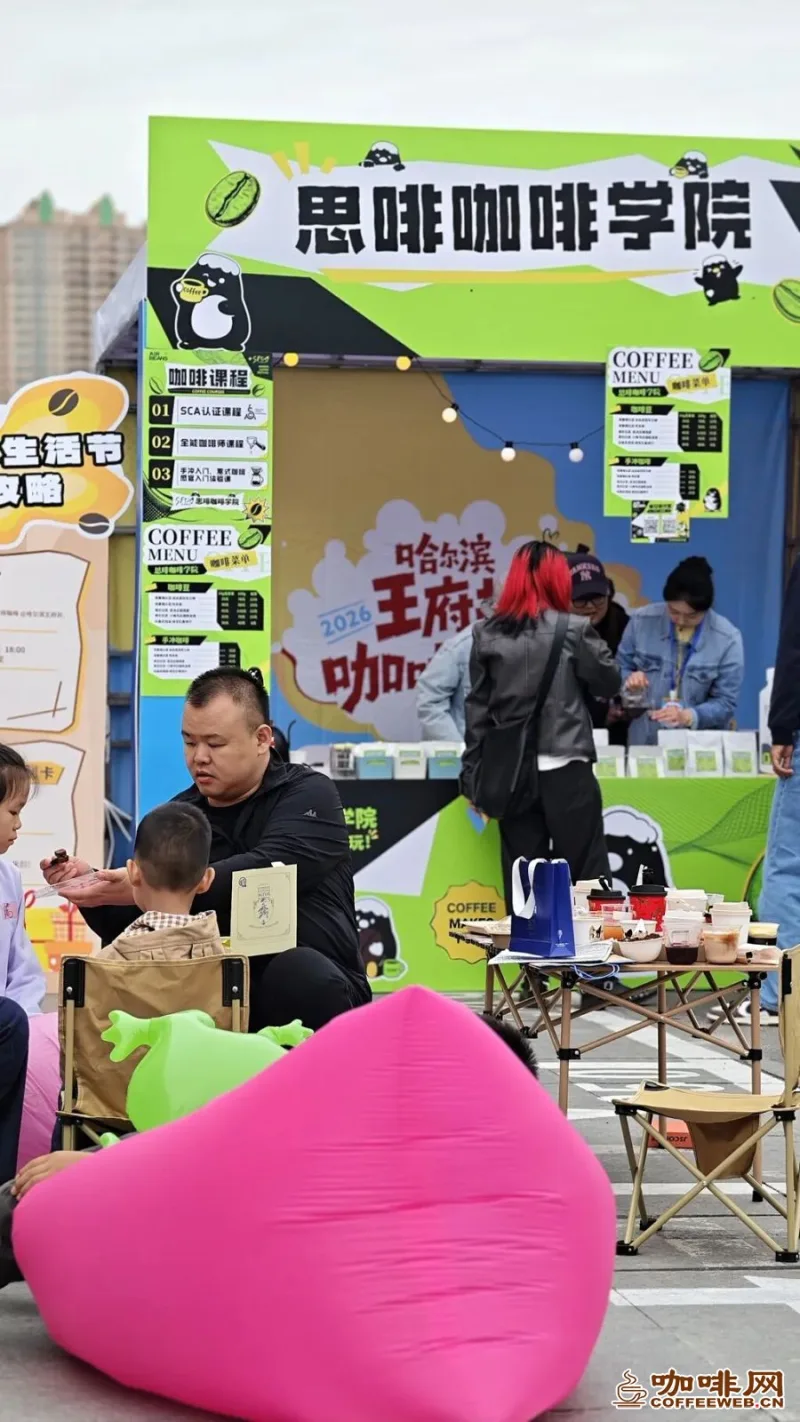
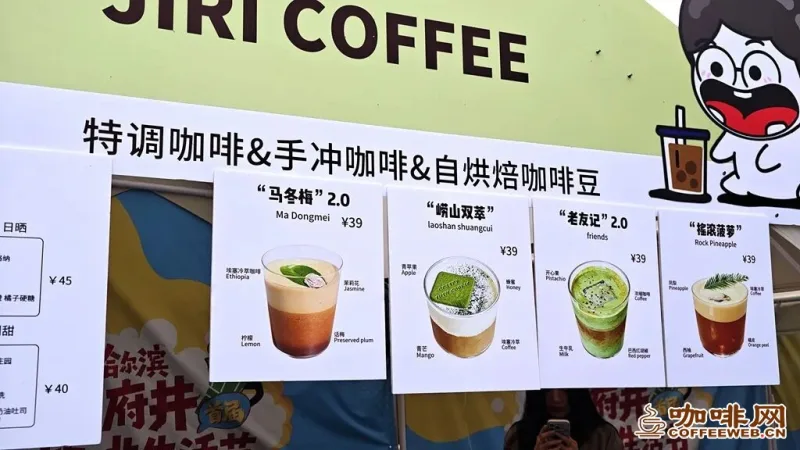
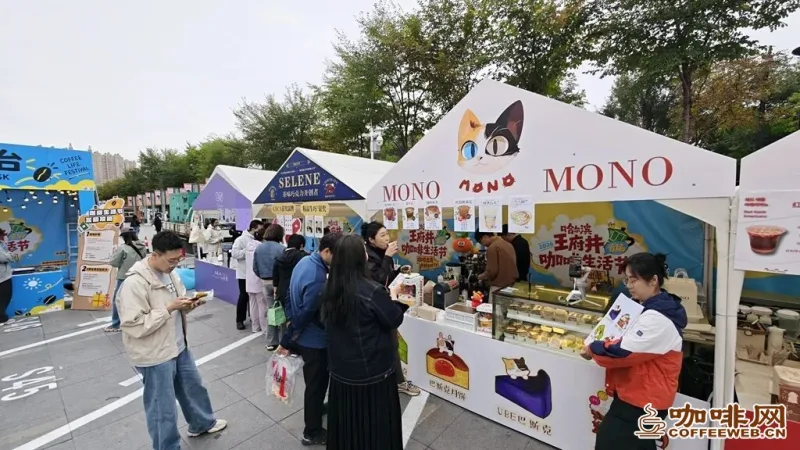
To this end, the team carefully designed interactive sessions such as a “coffee passport” stamp-for-gifts, hourly lucky draws, and a 9th-anniversary limited scratch card. In Sun Jing’s view, these seemingly “lively” designs have at their core the building of “relationships”: “What we do is really the interaction among the venue, coffee lovers, and all the merchants. That is what makes the life festival interesting—we are doing something long-termist.”
Reprint Notice & Disclaimer
- This article has been edited and compiled by China Coffee Network. The information and images therein come from public sources and the copyright belongs to the original author. This reprint is intended solely for information sharing within the coffee industry and does not represent the views of this website; all data and opinions are subject to the original article. Our thanks to the original author for creating and sharing it.
- For matters concerning content licensing, attribution, copyright or otherwise, please contact us promptly and we will verify and cooperate in handling them as soon as possible. We also welcome coffee origins, brands and industry media to exchange ideas and contribute articles.
- Contact China Coffee Network: Tel 400-0000-641 (+86-18288016826) | Email 405854472@qq.com | Address: Jinghong, Xishuangbanna, Yunnan Province / Tieling, Liaoning Province
Related Reading
 How ‘Sea-Flavored’ Coffee Blooms Across Dongtou
- Health Guide: How to Enjoy Your Coffee the Healthy Way
 Study: Regular Coffee and Tea May Lower Dementia Risk, but More Is Not Better
 Frontline Story: A ‘Mobile City Coffee Bar’ Arrives by the Grand Canal
 Yantai’s Wind Tastes of Coffee
 In Zhenyuan, a Cup of Coffee and a Waiting Train




 Liaoning ICP Security No. 21122402000217