


At a Glance (China Coffee Network): Nantong people’s coffee dream has finally come true. Early on the morning of July 31, Manner Coffee quietly opened its first Nantong store.
Nantong people’s coffee dream has finally come true. Early on the morning of July 31, Manner Coffee quietly opened its first Nantong store. Unsurprisingly, posts about queuing and checking in flooded social media. As a brand created by a native-born Nantong entrepreneur, siting its first store in the time-honored Xi’nanying was a deliberate choice, letting century-old architecture and aromatic coffee spark a wonderful chemistry.
At the just-concluded Chongchuan District Party Congress, “highlighting a culturally strong district and striving to enhance the city’s development soft power” was explicitly set as the goal for the next five years. As the birthplace of Nantong’s urban civilization, Xi’nanying and Si Jie have been renewed by Chongchuan not through large-scale demolition and reconstruction but with “embroidery-level” micro-updates that preserve the fabric of lanes and the look of historic buildings, then precisely inject youthful business formats such as coffee, cultural-creative shops, and reading clubs, bringing dormant heritage to life in the present. Manner’s arrival is precisely a two-way rendezvous between local sentiment and the revitalization of cultural heritage, confirming the old-city renewal philosophy of “keeping roots, keeping people, and keeping everyday life.”
This summer’s hit CCTV drama “Tides of the River and Sea” brought Zhang Jian’s magnificent life of saving the nation through industry to audiences nationwide, sparking a nationwide craze for tracing the footsteps of this pioneer. Visitor numbers keep climbing at Zhang Jian-related sites such as the Nantong Museum, the Tangzha Industrial Heritage, and the Se Garden; local students and out-of-town tourists follow the on-screen story into the real settings, reading the profound heritage of “China’s First Modern City” amid old factory buildings and old gardens. These sites are likewise cultural symbols of Chongchuan’s local character. How to carry forward the Jianghai cultural lineage and make regional cultural symbols visible, tangible, and widely shared is exactly the direction of Chongchuan’s culturally strong district development over the next five years.
Not long ago, more than twenty members of Qatar’s ALMana family made a special trip to Chongchuan, beginning a three-day, two-night in-depth customized tour at the Chongchuan Sendi Tourist Resort with immersive wildlife interactions. Today, over 30,000 visitors each year choose to stay two nights or more at the resort, and annual visits by foreign tourists have surpassed 20,000, making long-stay, in-depth travel the norm. Strengthening the integrated cultural-tourism industry opens a new track for distinctive Yangtze River Delta vacations. According to the Party Congress plan, Chongchuan is deeply cultivating three major cultural-tourism IPs, the thousand-year-old Hao River, the Tangzha Industrial Heritage, and urban pastoral landscapes, launching diverse routes for youth study tours and wellness leisure, thoroughly rewriting the old stereotype of the “one-day short trip.”
Around the same time last year, the heartwarming story of the Nantong Forest Safari Park emptying its wishing well to help a young girl with leukemia touched the whole internet. Behind it lies the spiritual foundation of Chongchuan’s cultivation of a kind and civilized ethos. The Party Congress emphasized the need to broadly practice core socialist values, advance the “One Circle, Two Belts” framework for civilization practice in the new era, carry forward the “Mo Wensui” spirit and the charitable deeds of “charity duo” Hu Hansheng and Wu Jinquan, and amplify the volunteer brand effect of “Granny Zhixin.”
The aroma of coffee in ancient lanes, the craze for tracing a hit drama’s locations, and three-day in-depth tours, these vivid scenes string together the solid steps of Chongchuan’s culturally strong district development. Next, Chongchuan District will continue to align with the Party Congress’s arrangements, on one hand guarding the Jianghai cultural lineage and revitalizing historical relics, and on the other growing the integrated cultural-tourism industry and deepening spiritual-civilization development, accumulating momentum for high-quality development with profound cultural soft power and striving to build a humanistic city with distinctive Jianghai identity.
Yangtze Evening Post / Zi Niu News reporter Zhu Yayun
Proofreading by Pan Zheng
Proofreading by Pan Zheng
Reprint Notice & Disclaimer
- This article has been edited and compiled by China Coffee Network. The information and images therein come from public sources and the copyright belongs to the original author. This reprint is intended solely for information sharing within the coffee industry and does not represent the views of this website; all data and opinions are subject to the original article. Our thanks to the original author for creating and sharing it.
- For matters concerning content licensing, attribution, copyright or otherwise, please contact us promptly and we will verify and cooperate in handling them as soon as possible. We also welcome coffee origins, brands and industry media to exchange ideas and contribute articles.
- Contact China Coffee Network: Tel 400-0000-641 (+86-18288016826) | Email 478203668@qq.com
Related Reading
 Jiangxi Wuyuan: Rural Coffee Unlocks New Cultural Tourism Formats
 Jiangxi Wuyuan: Rural Cafes Unlock New Cultural Tourism Formats
 Global quality goods gather at Hongqiao Import Commodity Exhibition Center, setting "Chinese standards" for coffee
- Global premium products gather to set China's coffee standards as Hongqiao Import Commodity Exhibition Center keeps the CIIE spirit alive
- Global quality goods gather as Hongqiao Import Commodity Exhibition Center and CIIE forge lasting partnership to set China's coffee standards.
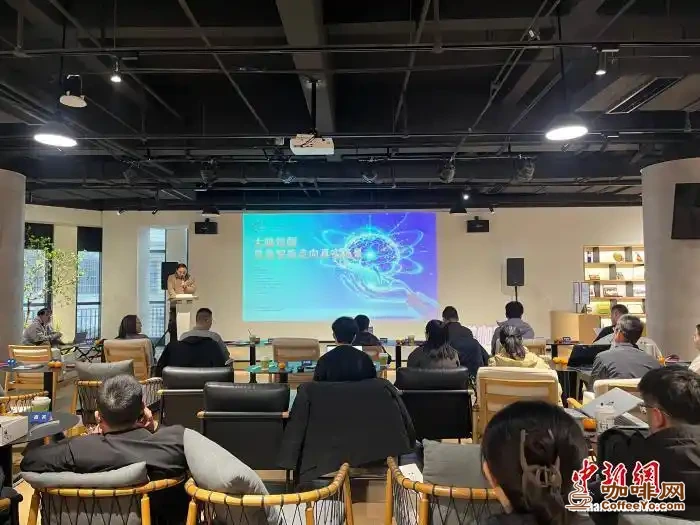 Zhejiang "Science Cafe" Promotes Embodied Intelligence in Real-World Scenarios


 Liaoning ICP Security No. 21122402000217