
At a Glance (China Coffee Network): To understand what changed in China's coffee industry in 2025, you first have to go back to 2023. That February, Cotti Coffee was first to launch a storewide 9.9-yuan promotion. L…
To understand what changed in China’s coffee industry in 2025, you first have to go back to 2023.
That February, Cotti Coffee was first to launch a storewide 9.9-yuan promotion. Lu Zhengyao set out again with Luckin’s old team, and the playbook was almost a copy of early Luckin — subsidies for scale, scale for financing, financing for more subsidies. Cotti opened franchising nationwide in less than a month and passed 1,000 stores within five months, setting the record for the fastest expansion by a Chinese coffee brand.
Luckin was forced to follow. The 9.9-yuan coupon covered most products, and between them the two brands turned the 9.9-to-15-yuan range into the industry’s default price band.
On paper the subsidy war worked miracles. In 2025 China added a net 40,000-plus coffee shops, reaching 215,000, up 25 percent. From 2023 to 2025 the average ticket at chained coffee shops slid all the way from 32–42 yuan to 25–27 yuan.
But the flip side of a miracle is a ledger.
Take a latte selling for 9.9 yuan. After 3 to 4 yuan of raw materials — beans, milk, syrup, packaging — gross profit is only about 6 yuan. Out of that 6 yuan must come rent, labour, equipment depreciation, utilities and platform commissions. At high volumes above 500 cups a day the model just about works; once cup volume falls below break-even, 9.9 yuan turns from a customer-acquisition weapon into a bleeding wound.
The Q4 2025 numbers already exposed the problem. Luckin’s quarterly net profit was 520 million yuan, down 39 percent year on year, and same-store sales growth at self-operated stores in the fourth quarter fell back to 1.2 percent. Full-year delivery expenses reached 6.88 billion yuan, up 143.8 percent, accounting for more than 13.9 percent of total net revenue.
On February 1, 2026, Cotti formally ended its “unlimited 9.9 yuan across the store” campaign, which had run for nearly three years, keeping only a few low-priced items in a special-value zone; some core products rose 30 to 60 percent. The price conflagration Cotti ignited, which burned through the industry’s profit floor, had finally burned itself out.
But the legacy of a price war does not dissipate easily. A long stretch of low-price combat has profoundly reshaped consumer expectations, and the resulting “low-price inertia” will keep constraining pricing strategy across the whole industry. Spend two years teaching people to drink coffee for 9.9 yuan and it is very hard to persuade them with 15 yuan again.
Subsidies can stop; the consumption habits subsidies rewired cannot.
Two kinds of expansion, two kinds of trouble
Once the price war ebbed, the leading brands faced quite different troubles.
Luckin’s trouble is “revenue without profit.”
For full-year 2025 Luckin’s total net revenue reached 49.288 billion yuan, up 43 percent, with 4.1 billion freshly made drinks sold and cumulative transacting customers passing 450 million. By scale it is a handsome report card. Luckin took the top spot with more than 32 percent market share and a store network exceeding 31,000.
The margin trend tells another story. In Q3 2025 total operating expenses rose 57 percent year on year to 88.4 percent of total net revenue. Material costs rose 40.6 percent and delivery expenses 211.4 percent. The scale that earns money is swelling, while the efficiency with which it earns is shrinking.
Lao Zhou comes from equity investment, and his reaction to numbers like these is blunt: “Revenue up 43 percent, profit up only 21 percent — where did the difference go? All of it eaten by subsidies and delivery costs. You are using growth to mask a deteriorating margin.”
Cotti’s trouble runs deeper.
By the end of 2025 Cotti’s nationwide store count had passed 18,000, covering in three years the expansion path that took Luckin six. But more than 90 percent of Cotti stores operate under a joint-operation model, with franchisees carrying the rent, labour and operating risk.
The situation of several franchisees reflects the strain in that model. One invested over 300,000 yuan in a standard store and sold more than 300 cups a day at opening, but two more Cotti stores soon appeared within three kilometres and daily volume dropped straight to fewer than 200 cups. Another franchisee left after losing 150,000 yuan; some lost 2 million yuan in half a year.
Over-dense store networks directly divert traffic and profit from existing shops. And on social media, multiple franchisees reported shortages of everything from basic ingredients like milk and coconut milk to consumables such as sealing stickers and till paper.
Scale is a moat for the brand, but a meat grinder for the franchisee.
In March 2026 Cotti announced it would no longer accept franchising or joint operation in key cities, shifting instead to directly operated flagship image stores. The signal was clear: the road of leaning on franchisees to drive scale had reached its end.
From an investment standpoint, Cotti’s model essentially shifts the cost of expansion onto franchisees. The brand earns the supply-chain spread — equipment, ingredients and packaging all flow through headquarters. Franchisees earn the profit from running a store, but 9.9-yuan pricing squeezes that margin to wafer thin. When the brand still needs franchisees to keep “transfusing” it to hit scale targets, the fragility of the model shows.
Starbucks’ turn is more thorough than imagined
Another consequence of the price war is that it redefined the “middle ground” of China’s coffee market.
In April 2026 the joint-venture deal between Starbucks and Boyu Capital formally closed, and Starbucks China went from a wholly foreign-owned operator to a joint venture in which Boyu Capital holds 60 percent. At its peak in the Chinese market Starbucks held nearly 42 percent share, and a 30-yuan coffee was the social currency of urban consumers. By 2025 that figure had contracted to about 14 percent.
Starbucks’ new strategy is called “a thousand stores, a thousand faces.” Store formats will move from a uniform large-store model to a diverse spectrum including 10-square-metre small shops and large themed stores, with the core aim of raising sales per square metre and adapting to the cost structures of different trade areas and lower-tier markets. The target is to expand to 20,000 stores in future.
That is no small pivot. Starbucks used to conjure a space with sofas, music and someone sitting all afternoon with a laptop. Now you may find, on the ground floor of an office building, a ten-square-metre takeaway window with exactly the same green mermaid logo, containing only one coffee machine and two staff.
Dilution of brand character is a real risk. The “third place” is a brand asset Starbucks built over thirty years; as its stores come to look more like Luckin and Cotti, can its pricing power hold?
Manner is another sample worth watching.
Manner entered the market at 8–20 yuan a cup, using an “affordable specialty” position to find its own place between Luckin and Starbucks. As of November 2025 it had 2,234 directly operated stores nationwide, one-third of them in Shanghai and 87 percent in new first-tier and first-tier cities. The brand has clearly not opened franchising rights.
But even Manner cannot escape cost pressure entirely. Stores in Shanghai and elsewhere saw reports of baristas clashing with customers under high work intensity, with the “one person, one store” staffing model keeping service pressure high. A “free cup with delivery orders” promotion for its seventh anniversary triggered a surge in orders that forced some stores to suspend service, exposing weak supply-chain responsiveness.
China’s coffee market is shifting from a “date-stone” shape to a “dumbbell” shape. At one end are the ten-thousand-store brands — Luckin, Cotti, Lucky Cup and NOWWA — occupying the mass market through scale and extreme cost control. At the other end are genuinely specialty cafés serving a specific clientele with distinctive flavors and experiences. The brands in the middle, with neither scale advantage nor unique value, feel the chill first.
Two tickets into the ten-thousand-store club
In 2025 the “ten-thousand-store club” grew from two members to four.
In November 2025 Lucky Cup announced that its global store count had passed 10,000, covering more than 300 cities nationwide. The brand under Mixue took less than a year to push its network from 4,600 stores to 10,000.
NOWWA Coffee’s growth is even more startling. At the end of 2024 it had only 1,200-plus stores; by the end of 2025 it had passed 10,000. Of those, 91.9 percent are “parasite stores” — a store-within-a-store model embedded in convenience stores, internet cafés and petrol stations, where the partner outlet provides the space and the staff and NOWWA provides materials and equipment.
The store-within-a-store model has equally obvious advantages and problems. The advantages are low build cost and fast expansion. In July 2025 NOWWA had only 3,258 stores; by November it had risen to 7,875, a net gain of 4,617 in four months. Full-year revenue was 700–800 million yuan with profit of about 60 million yuan.
The problem is quality control. Under the store-within-a-store model NOWWA does not hire dedicated staff but reuses convenience-store employees after training. NOWWA has more SKUs than a convenience store’s own coffee brand, so staff must remember more recipes, and the brand cannot manage those employees directly — making quality control and shelf-life risk greater.
Cotti tried the same path in 2024 too, but stopped it quickly. The reason was sloppy stores and careless site selection, which stirred plenty of controversy over brand image. The difference between NOWWA and Cotti lies in their DNA: the store-within-a-store model is what NOWWA has attempted since birth, whereas Cotti needs to complete a brand upgrade, for which such stores are a form of attrition.
There is an investment logic here worth unpacking.
The expansion paths of Lucky Cup and NOWWA are not the same road Luckin and Cotti took. Luckin and Cotti used brand momentum to lever franchisees, relying on the drawing power of the two names “Luckin” and “Cotti” themselves. Lucky Cup relies on the supply chain and channel network Mixue built up in lower-tier markets; its ten thousand stores “grew” out of the Mixue system. NOWWA relies on the existing physical sites and manpower of convenience stores — essentially the reuse of stock assets.
The capital efficiency of the three paths is completely different. The Luckin model is heaviest — open stores, build a brand, buy advertising. The Lucky Cup model is medium — borrowing the parent company’s supply-chain base saves a great deal of infrastructure. The NOWWA model is lightest — it barely builds new stores, supplying only equipment and ingredients.
But lightness has its price. NOWWA’s quality-control risk is the highest of the three, because store operations sit in the hands of convenience stores and the brand’s control is inherently limited. Whether this model can sustain a durable coffee brand over the long run, or is merely a distribution business in “white-label caffeine,” will take time to verify.
Upstream prices rise, downstream suffers
Another force pushing the price war out came from upstream.
In February 2025 US ICE Arabica coffee futures broke 430 US cents per pound, a 47-year high, with a one-year gain of 118.57 percent — more than gold over the same period.
Passed through to China, Brazilian Arabica beans rose from over 40 yuan a kilogram to around 70. Founders of specialty coffee brands reported roughly a 40 percent cost increase for corresponding products at small roasters or stores. Some roasters said current green bean prices are 80 to 100 percent above their mid-2024 purchasing levels.
The impact varies greatly by type of brand. Large chains with centralized purchasing enjoy relatively stable prices, while small and mid-sized specialty coffee brands and roasters lacking capital and stockpiling capacity are hit hardest.
In November 2024 Luckin signed a memorandum of cooperation with the Brazilian Trade and Investment Promotion Agency, committing to purchase 240,000 tonnes of coffee beans from Brazil over the five years 2025–2029. Cotti, for its part, built a global supply-chain base in Anhui with more than 400,000 square metres of floor space; its already-operating largest single roasting plant in Asia has annual green bean capacity of 75,000 tonnes, enough to support 10 million cups a day.
Lao Zhou has a judgment I find interesting. He said: “Rising bean prices look like pressure on the whole industry, but in fact they are accelerating consolidation. Big brands have futures price locks, long-term contracts and stockpiling capacity; small brands have none of that. One wobble upstream and the small players are out first. Concentration rises passively.”
Another variable worth watching is the structural upgrading of Yunnan coffee. In 2025 Yunnan’s specialty rate passed 30 percent, with planting area for specialty varietals such as Geisha, Typica and Bourbon rising sharply. In 2025 China’s coffee bean imports reached 12.03 billion yuan, up 73.9 percent, a five-year high — showing that the demand gap from growing domestic consumption still has to be filled by imports.
Franchisees: the quietest people in this game
An industry’s headlong rush ultimately lands on individual people.
The plight of Cotti franchisees is the most typical sample. One invested over 300,000 yuan in a standard store and sold over 300 cups a day at first, but within a few short months two more Cotti outlets opened nearby — one of them a “coffee convenience store” with a lower investment threshold — and daily volume fell below 200 cups. Another franchisee saw traffic diverted by a new Cotti less than 300 metres away in a straight line.
Brand headquarters fight a “high-profile, heavy-spend” campaign up in the clouds while franchisees struggle in the mud. In 2025 Cotti sponsored a string of events including the WTT World Table Tennis championships, the Wuhan Open, the League of Legends World Championship and the Golden Rooster and Hundred Flowers Film Festival. Some franchisees reported that display boards for new products were reimbursable at first, but later had to be paid for themselves, adding a few hundred yuan a month in cost.
The gap between investment and return is shaking the foundations of the franchise model.
A shop owner who has been in coffee roasting for over a decade mentioned that green bean purchasing prices have nearly doubled while downstream brands are still squeezing prices: “Now I lose one or two yuan on every kilogram.”
When upstream prices rise, downstream pushes prices down, and the middle still has to carry the brand’s marketing costs, the franchisee’s position becomes very passive. They cannot dilute costs through scale the way Luckin can, nor charge a differentiated premium the way a specialty café can; they are trapped in a structural sandwich.
The consumer’s ledger is changing too
From my own observation, what is happening on the consumer side is equally worth noting.
One data point: from 2023 to 2025, per-capita annual coffee consumption in China rose from 16.74 cups to 28.57 cups, up 70 percent in three years. Shanghai reached 45.2 cups a year, Guangzhou 38.6 and Shenzhen 36.8. That is still far from Japan’s 180 cups or America’s 400, but the growth rate is rare globally.
Another change is the divergence of consumption scenarios. When I travel I notice that in the same city, at 7:30 a.m. a queue forms at the Luckin pickup locker below an office tower; at noon white-collar workers drinking standing up crowd the small counter at a Manner in a shopping district; at 3 p.m. people sit chatting in an independent café, slowly refilling their cups.
Are those three groups drinking the same thing? Not entirely. The office-tower crowd wants the efficiency of caffeine and a 9.9-yuan price; the Manner crowd wants a “pretty good” cup for fifteen yuan; the independent-café crowd wants a reason to sit down and catch their breath.
Online data confirm this too. In 2025, coffee bean transaction value grew 140.38 percent to become the biggest growth engine, while drip-bag coffee transaction value fell 85.10 percent and coffee gift boxes fell 93.64 percent. Consumers have shifted from “buying convenience” toward “buying quality,” yet at the same time the average ticket for freshly ground coffee is declining.
That looks contradictory, but it points to one trend: what consumers are willing to spend on quality is rising, while what they will pay for brand premium and scenario premium is falling. They would rather grind beans and brew at home than spend thirty yuan on a delivered coffee.
What the second half is really about
At the 2025 earnings call, Luckin CEO Guo Jinyi said something to the effect that the dimensions of industry competition are changing: a brand can no longer win on price, a single hit product, or one marketing campaign; the competitive logic is shifting to a composite of brand mindshare, customer experience, emotional value, product R&D systems and store network coverage.
That judgment matches the logic I see in the primary market. Coffee as a track has moved past the stage where “whoever opens stores fastest wins.”
First, supply-chain capability sets the floor on cost. Whoever gets a better price on green beans and controls higher efficiency in roasting keeps more profit at the same price point. Luckin’s five-year 240,000-tonne Brazil purchasing agreement, Cotti’s Anhui supply-chain base and NOWWA’s 20,000-tonne roasting plant in Ningbo are all, in essence, a scramble for that floor.
Second, brand mindshare sets the ceiling on pricing. Starbucks’ “third place” was once the best brand mindshare there was, but once Luckin dismantled it with 9.9 yuan, Starbucks had to rebuild its brand narrative. Whether “a thousand stores, a thousand faces” succeeds hinges on whether it can keep the weight of the three words “Starbucks” while expanding.
Third, the franchisee ecosystem determines whether expansion is sustainable. If franchisees cannot make money, a brand’s scale is a tower built on sand. Cotti has already stepped into that trap, and Lucky Cup also slowed its store opening pace in 2026, putting 500 million yuan into supporting franchisees.
The relationship among these three capabilities is not addition but multiplication. Let any one of them go to zero and the whole model goes to zero.
Lao Zhou’s three judgments
Lao Zhou has worked in equity investment for over a decade, and coffee is a track he watches on the side while drinking for pleasure. After finishing that 9.9-yuan Americano in Chengdu last time, he sent me three voice messages.
The first: “The price war is over, but consumers’ memory of the price won’t disappear. You spent two years dragging the psychological price of a cup of coffee from thirty yuan down to 9.9; two more years may not be enough to pull it back.”
The second: “The fight between Luckin and Cotti is finished; the fight between Starbucks and Manner is only beginning. One is moving down, the other up, and they will collide in the middle.”
The third: “What I find most worth watching is the supply chain. Whoever grips the chain from green bean to cup most tightly is safest in the next round. Brand is intangible; the supply chain is real.”
I broadly agree with those three. But I would add one more: consumers are changing too. They know more and more clearly what they want, and are less and less willing to pay for things they do not need. The question a brand has to answer is not “how do I get you to buy,” but “what makes me worth choosing.”
My own feeling
Having drunk coffee for over twenty years, I have watched what is in the cup change several times over: from instant to fresh milk, from whole milk to oat milk, from drip bags to pour-over.
But this round is different. Before, the product was changing; this time the underlying structure of the whole industry is changing.
You used to go to a café, sit down, look at the menu, wait for your coffee. Now you open your phone, tap once, 9.9 yuan, and take it from a pickup locker. Efficiency has improved enormously, but the anticipation and ritual generated in the process of sitting down, reading the menu and waiting have been compressed away too.
I do not think either is better. I only think that when an industry goes from zero to thirty thousand stores in three years, it must be satisfying some very strong, very real demand. It is just that this demand may not have much to do with “coffee” itself.
It may have something to do with needing to wake yourself up before 8:30 in the morning.
The husky at home, named Latte, comes over for a sniff every time I brew coffee. It knows nothing about supply chains, price wars or ten-thousand-store clubs. It only knows that every morning that smell appears on time.
That is probably the most essential thing about coffee.
Summary card
☑️ The ebbing of the price war does not mean competition has ended. Although 9.9-yuan subsidies have contracted, the “low-price inertia” rewired into consumers will keep constraining pricing strategy across the industry.
☑️ Scale is a moat for the brand but may be a meat grinder for the franchisee. Behind Cotti’s 18,000 stores, some franchisees saw daily cup volume fall from 300 to fewer than 200.
☑️ After Starbucks’ share shrank from 42 percent to about 14 percent, it handed over controlling ownership; whether “a thousand stores, a thousand faces” can preserve its brand premium is the biggest question mark.
☑️ There is more than one ticket into the ten-thousand-store club. Luckin rides brand momentum, Lucky Cup rides the Mixue supply chain, and NOWWA rides the stock sites of convenience stores — with very different capital efficiency and quality-control risk.
☑️ After coffee futures hit a 47-year high, rising upstream prices are accelerating consolidation — big brands have futures price locks and stockpiling capacity, while small brands have nothing.
Reprint Notice and Disclaimer
- This article is compiled and edited by China Coffee Network (coffeeyo.com). The materials and images herein are sourced from public channels, and copyright belongs to the original authors. This site reprints it solely for coffee-industry information sharing and does not represent this site’s position; all data and viewpoints are subject to the original. We thank the original authors for their creation and sharing.
- If content authorization, attribution, copyright, or other matters are involved, please contact this site promptly; we will verify and cooperate in handling them as soon as possible. We also welcome coffee-producing regions, brands, and industry media to exchange and contribute articles with us.
- China Coffee Network contact: Tel 400-0000-641 (+86-18288016826) | Email 405854472@qq.com | Address: Jinghong City, Xishuangbanna, Yunnan Province / Tieling City, Liaoning Province
Reprint Notice & Disclaimer
- This article has been edited and compiled by China Coffee Network. The information and images therein come from public sources and the copyright belongs to the original author. This reprint is intended solely for information sharing within the coffee industry and does not represent the views of this website; all data and opinions are subject to the original article. Our thanks to the original author for creating and sharing it.
- For matters concerning content licensing, attribution, copyright or otherwise, please contact us promptly and we will verify and cooperate in handling them as soon as possible. We also welcome coffee origins, brands and industry media to exchange ideas and contribute articles.
- Contact China Coffee Network: Tel 400-0000-641 (+86-18288016826) | Email 405854472@qq.com | Address: Jinghong, Xishuangbanna, Yunnan Province / Tieling, Liaoning Province
Related Reading
 ‘All-Ice’ Coffee Goes Viral! Will the Next Hit Be Your Personal Favorite?
- Hong Kong’s Dyee Coffee Lands in Qianhai, Building a Specialty Pour-Over Outpost
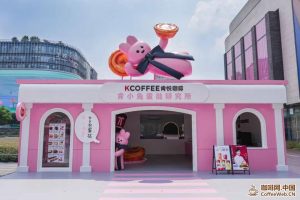
 Ken Yue Coffee Opens Egg-Tart Pop-Up in Hangzhou: Sweet Craft, Reinvented Classics
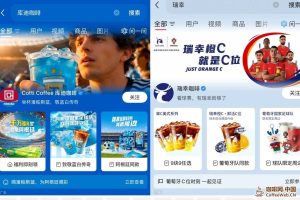
 World Cup Enters the Breakfast Slot: Can Coffee-Tea Brands Turn Traffic into Orders?
- ICE Agricultural Futures Mostly Rise at Close; Coffee Futures Up 3.28%
- ‘Sleep Cafés’ Become a New Favorite Among Seoul Office Workers



 Liaoning ICP Security No. 21122402000217