
At a Glance (Coffee Network coffeeyo.com): Boyan Village in Wu’an, Hebei, once the cradle of the Wu’an merchant guild, keeps more than 150 late-Qing and early-Republican courtyard houses. A coffee-themed tourism block open…
Shijiazhuang, Oct. 11 (Xinhua) — In the golden days of autumn the morning mist over the eastern foothills of the Taihang Mountains had just lifted, and the sun slanted across the old courtyard houses of Boyan Village in Boyan Town, Wu’an, Hebei Province. Deep along the winding bluestone lane, the aroma of freshly smoked Boyan pork still lingered at the alley’s end, while from a latticed wooden window around the corner drifted the scent of freshly ground coffee.
Old and new, rustic and cosmopolitan, collide head-on here. Boyan was founded during the Yuanyou era of the Northern Song Dynasty and was listed among the first batch of China’s traditional villages in 2012. During the Qianlong reign of the Qing Dynasty its people travelled far and wide, building their fortunes on traditional Chinese medicine and silk, and creating the legend of “silk from the south, medicine from the north, goods reaching all under heaven” — Boyan became the cradle of the Wu’an merchant guild. As time passed, more than 150 courtyard houses from the late Qing and early Republican eras survived intact, yet the village also faced the growing pains of a hollowed-out community and sleeping old houses.
Just before this year’s National Day holiday, a coffee-themed cultural tourism block — “Meet Boyan · Coffee Town” — opened inside the village’s old lanes, and the once-silent courtyard houses welcomed a new protagonist: coffee.
“A coffee factory needs an offline, youth-oriented experience space, and the ancient village needs new business formats — the two were a perfect match,” said Hao Mengjie, head of local brand OONE Coffee, as she deftly pulled an espresso shot. In her hands, Taihang specialities such as forsythia, millet and thin-shelled walnuts are turned into signature flavours. “We fold the herbal character of Wu’an’s mountains into the coffee. Many visitors from out of town come specially to taste this signature brew,” she said.
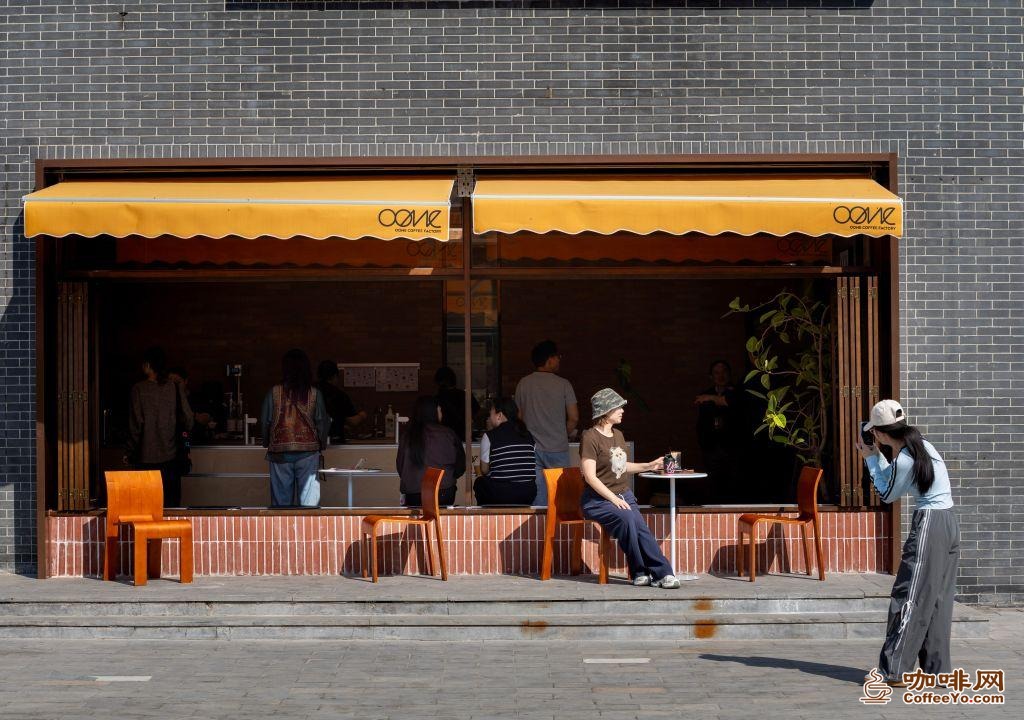
Coffee in this ancient village goes beyond a mere taste on the tongue. During the National Day holiday, the brewing, cupping and latte-art competitions of the 2026 China Coffee League (Handan division) were held here. Around the corner of an old lane, coffee-roasting workshops and creative latte-art classes drew queues of visitors, and a rich aroma filled the whole street.
“Welcome, guests!” Just as Guo Wenjuan, a visitor from Handan, was strolling with the signature coffee she had exchanged for a voucher, a ringing call rang out; drums struck up in the old lane and red silk flew. There was no fixed stage and no separated seating — the live performance “The Merchant Guild Returns” unfolded all around. Visitors moved through the deep courtyards; some were pressed a handful of wedding sweets, others were pulled into the accounting house to play the role of a “shopkeeper.” “Drinking coffee while following the story from place to place, it felt as if I had walked into history alongside the characters,” Guo said.
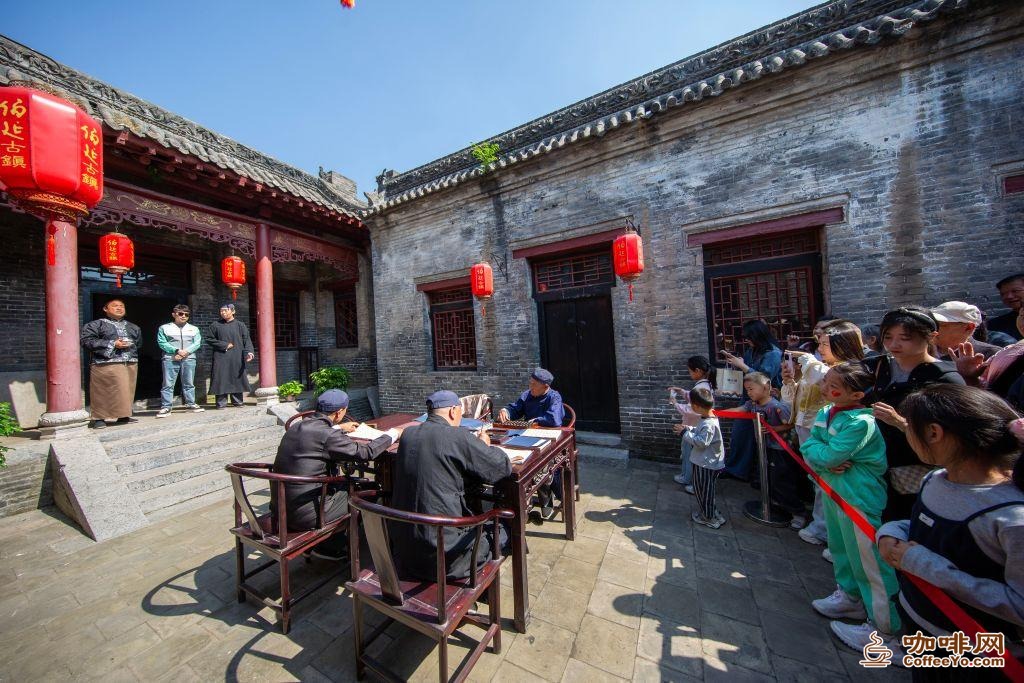
With coffee drawing the crowds, the dormant cultural lifeblood of the ancient village has been reawakened. Visitors stream through the Wu’an Merchant Guild Culture Museum; in “Deqin Hall” the fragrance of genuine Taihang medicinal herbs and wellness tea lingers; on the south side, Hanfu cut from Suzhou and Hangzhou silk flutter. According to Wei Junfang, Party secretary of the Wu’an Municipal Bureau of Culture, Radio, Television and Tourism, dozens of specialty shops and creative workshops have now settled in, and the village received close to 20,000 visitors a day on average during the National Day holiday.
“Next, Boyan Village will use professional competitions and hands-on workshops as a fulcrum, extending upstream and downstream into green coffee storage, roasting R&D, study programmes and training, so as to build a virtuous circle of ‘tourism drawing visitors, industry taking root,’” said Zhang Yaosheng, Party secretary of Boyan Town. “Tourism traffic is being converted into industrial growth — local specialities such as Wu’an millet and Boyan smoked pork are reaching visitors, opening sales channels for distinctive farm products and letting villagers earn a living from tourism right at their doorstep.”
As night falls, strings of red lanterns under the old eaves light up one by one. Warm yellow lamplight falls on the mottled brick walls as visitors sip their coffee at leisure. This ancient home of the merchant guild is writing a new chapter of transformation.
Reprint Notice & Disclaimer
- This article has been edited and compiled by Coffee Network CoffeeYo.com and reprinted from Xinhua News Agency, “Ancient Village, New Coffee Aroma: Hebei’s Boyan Revives Its Merchant-Town Heritage with Coffee.” The copyright of the original text belongs to Xinhua News Agency and the original author. This reprint is intended solely for information sharing within the coffee industry and does not represent the views of this website; all data and opinions are subject to the original article. Our thanks to the original author for creating and sharing it.
- Read the original: Xinhua News Agency, “Ancient Village, New Coffee Aroma: Hebei’s Boyan Revives Its Merchant-Town Heritage with Coffee”
- For matters concerning content licensing, attribution, copyright or otherwise, please contact us promptly and we will verify and cooperate in handling them as soon as possible. We also welcome coffee origins, brands and industry media to exchange ideas and contribute articles.
- Contact Coffee Network: Tel 400-0000-641 (+86-18941000313) | Email 405854472@qq.com | Address: Jinghong, Xishuangbanna, Yunnan Province / Tieling, Liaoning Province
 Liaoning ICP Security No. 21122402000217