


At a Glance (China Coffee Network): AI Editor’s Note: Coffee was originally the “life-saving water” of office workers, but now it has been transformed by milk tea brands into “liquid desserts.” When the calories of flavored lattes approach those of a double burger, this hidden “ingredient involution” is subverting coffee’s healthy image—what consumers want is low-burden
AIEditor’s Note (Coffee Network coffeeyo.com):
Coffee was originally the “life-saving water” of office workers, but now it has been transformed by milk tea brands into “liquid desserts.” When the calories of flavored lattes approach those of a double burger, this hidden “ingredient involution” is subverting coffee’s healthy image—what consumers want is low-burden refreshment, yet what brands give them is the traffic code of high sugar and high fat. Business history tells us: hit products created by piling on ingredients will eventually ebb, and only by returning to the essence of “daily repurchase” can one win the real coffee market.
(The author of this article is Huashang Taolue, published by TMTPost with authorization)
Text | Huashang Taolue
Coffee was originally the “life-saving water” for office workers to resist fatigue. Under the national trend of quitting sugar, the public naturally equates drinking coffee with self-discipline and health.
However, when such a mindset is converted into market dividends, the freshly made beverage track is undergoing a hidden “ingredient involution.” More and more milk tea brands are entering the coffee business, adding cheese foam and thickened milk to lattes, turning originally low-calorie coffee into “liquid desserts.” Measurement data shows that a flavored latte from Guming labeled “no additional sugar” has as many as 400 kilocalories, equivalent to eating a double burger.
Behind the collective crossover of milk tea brands lies a game of two sets of logic: on one side, consumers want coffee products that are “daily, low-burden, and life-saving”; on the other side, brands reuse old supply chains and thinking to find traffic and earn more revenue. When the “addition inertia” of hit-product thinking collides with the “health subtraction” of the great era, the freshly made beverage track is ushering in a thorough consumption shift.
I don’t know since when, more and more viscous flavored lattes with cheese foam and thickened milk have entered the market. Tea brands such as Chabaidao, Shanghai Auntie, and Guming have joined the coffee war one after another—reusing the milk tea supply chain at low cost, directly transferring the original cheese foam, syrup, and thickened milk to the coffee product line; adding one coffee machine to the store, products can go online quickly.
But when the ingredient-piling logic of hit milk teas is forced into the coffee cup, the most direct impact is that coffee, which seems to have healthy attributes, hides milk-tea-level calories.
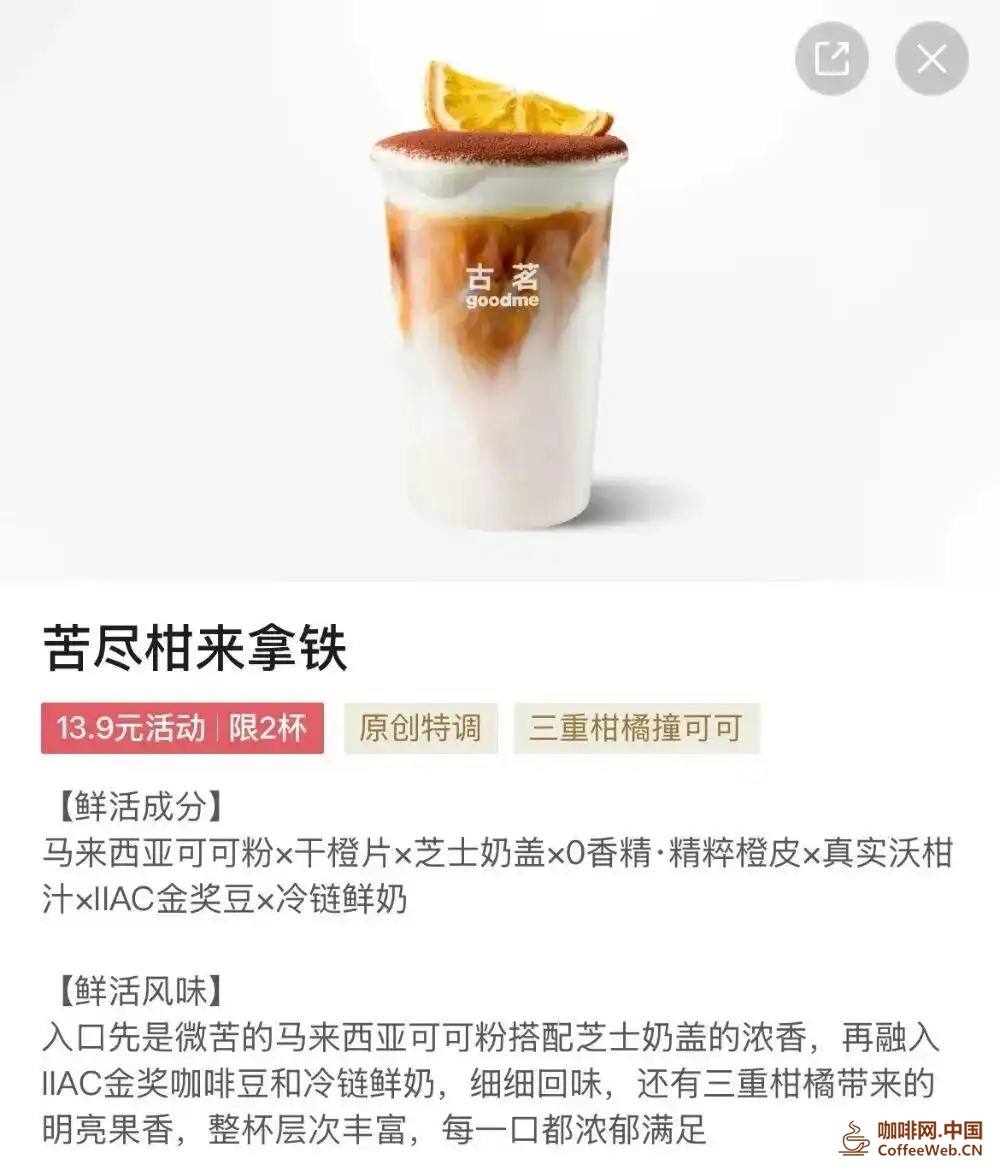
This is not alarmist talk. Most consumers choose to buy coffee at tea drink brands, defaulting to the belief that it is “healthier than milk tea.” But the truth behind it is that a cup of sugar-free flavored latte can surpass dessert milk tea in calories. The most representative example is Guming’s “Bitter-Ends-Tangerine-Comes Latte” launched this January, whose regular version already has nearly 400 kilocalories.
“Phoenix Family Lab” tested 6 major brands and 9 best-selling flavored lattes in a professional food laboratory using national standard methods; the top 3 in calorie ranking were all taken by milk tea brands, and these flavored lattes generally have higher calories than regular coffee. Behind the good taste lies invisible calories and sugar.
In the past few years, the entire freshly made beverage industry has fallen into the strange cycle of “ingredient involution.” The paradox of business is that when the habitual “ingredient-piling thinking” of hit milk teas is habitually forced into the coffee cup, the mismatch between supply and demand begins to appear.
According to the “Dietary Guidelines for Chinese Residents (2022)” recommendation that “daily added sugar intake should not exceed 50 grams,” many flavored lattes already approach the critical line in sugar content per cup; plus the fat brought by thickened milk and cheese foam, they essentially become an invisible source of obesity.
A more hidden problem is that even if consumers actively choose “no additional sugar,” the finished product often still has a very strong sweetness. The so-called “natural sweetness of milk” cannot explain this taste at all; in fact, it is more the hidden sugar already blended into the base milk and flavored syrup. Consumers thought they were buying a low-burden workplace life-saving water, but when the straw goes in, what they get is a high-calorie drink.
From a business perspective, “ingredient-piling dessertification” is a short-term path that has been validated. It sacrifices the core mindset of the category to exchange for short-term traffic, and the dividend period may not last long.
Cheese foam is the most apt precedent. In 2017, a Fonterra supplier sold 200 million servings of raw materials for cheese-foam tea, and the industry cried “whoever gets cheese foam gets the world.” Yet in less than three years, Nayuki’s sugar-free pure tea sales surpassed cheese-foam tea, and Heytea itself later switched its main products back to pure tea and fruit tea. Today, judging from the WeChat index, the popularity of cheese-foam milk tea is only one-tenth that of fruit tea.
The cycle of “dirty tea” was even shorter. In 2018, the “dirty tea” that rode the popularity of “dirty bread” was essentially brown-sugar pearl milk tea that changed the “skin” of cup coating. At its peak, a cup was scalped from 20 yuan to 50 yuan. But because it had no real product barrier, its life cycle was less than a year before being replaced by the next internet-famous concept.
This curve is almost identical to the trajectory of today’s dessertified coffee: using heavy cream fat and high syrup to pile up taste differences, relying on visuals and marketing for short-term sales, but in the long run it will inevitably be overtaken by clean formulas. After all, no one drinks dessert as water every day.
Ingredient piling may bring traffic models and visual models, but it is never a health model or a long-term model. The fate of cheese foam and dirty tea has already planted a lesson: ingredient piling relies on the marketing cycle, not product strength, and the speed of ebb is often faster than imagined.

It must be acknowledged that pan-tea-drink brands adding coffee machines in stores, driving revenue by reusing existing supply chains and filling the morning customer-flow gap, is itself blameless from a business logic perspective.
In fact, in recent years, the boundary of freshly made beverages itself is disappearing. Milk tea and coffee have together evolved into high-frequency fast-moving consumer goods for the public, market competition continues to intensify, and the competitive battlefield has even sunk to county-level markets. The birth of more and more ten-thousand-store chain brands also reflects the degree of industry involution from the side; those lacking efficiency will fall behind.
But when the ingredient-piling thinking of hit milk teas is habitually forced into the coffee cup, balancing “addictive flavor” with “long-term health needs” becomes a common proposition facing all crossover players and native coffee brands.
Essentially, crossover milk tea is “strong revenue thinking,” while professional coffee is “strong product thinking.” Their starting points differ, which also determines the fundamental difference in product paths.
Tea-drink brands lean toward “taste-oriented” flavor development. Many crossover brands lack deep accumulation in the coffee industry chain and find it hard to have obvious cost advantages in raw materials.
To balance cost and ensure the universality of taste, they usually adopt blended beans or lower-cost Robusta beans, which have heavy off-flavors and strong bitter roast notes. To mask the possible burnt bitterness and off-flavors of the coffee beans, the products often rely on “flavor masking”—using coffee liquid as the base, overlaying cheese foam, ice cream, and flavored syrup, also minimizing ingredient costs.
However, there is no shortcut in the business world. Accumulating ingredients works as cost-performance in milk tea, but in coffee it not only easily falls into price wars but also deviates from coffee’s core user mindset of “daily, low-burden.” Under the trend of nationwide low-calorie consumption, after trying something new, consumers find it hard to form long-term, high-frequency repurchase.
The cultivation of China’s coffee market lags more behind that of milk tea. The early coffee brands faced a milk-tea-ified market, with aesthetics and taste habits leaning more toward milk tea. In the early days, Luckin Coffee also opened the mass market with sweet-flavored lattes such as those with thickened milk. It is no exaggeration to say that this was the coffee consumption enlightenment of a batch of Chinese consumers.
But after these years of market competition, the logic of coffee has become “drinking well”—pursuing the flavor of coffee itself, which is a subtraction logic, with the core competition being the hard power of the supply chain.
The competition core of professional coffee brands no longer competes on the cost-performance brought by piling ingredients, but on heavy-asset layouts such as direct sourcing from core producing regions and deep roasting craftsmanship, and on the supply capacity of high-quality SOE single-origin beans, occupying user mindshare by relying on the native unique flavor of coffee beans. Manner can stand firm in the market with an affordable per-customer price precisely by making affordable specialty coffee that is delicious yet not expensive.
The development history of global coffee chain giants has already proven this. In earlier years, many giants also relied on high-sugar, high-fat flavored products to drive sales. But under the impact of the health trend, the market quickly shifted to cold brew and plant-based. This is even more the case today: in a large number of milk-coffee orders at stores, users actively switch to low-burden bases such as oat milk.
More and more coffee brands choose to make “no added sugar, optional plant milk, transparent ingredient lists” standard, and many brands even allow customers to select the number of espresso shots and the type of milk—essentially returning the health choice to users.
Even facing the lower-tier involution market, the final trump card is still the rigid-demand attribute rather than infinite ingredient piling. Using 9.9-yuan basic Americano and latte, coffee has been made into a low-burden daily drink for county users.
So, whether global leaders, local chains, specialty shops, or lower-tier markets, professional coffee brands generally do subtraction—low-calorie, plant-based, clean ingredients—otherwise they cannot meet consumers’ need for “daily drinking, low burden.”
In the past, beverage brands triggered widespread public discussion because of the “0 sucrose” and “0 sugar” debate. The lesson business history gives us is: consumers can accept that “happy water” is unhealthy, such as cola and milk tea; but for coffee, which seems healthy and refreshing, if it ultimately becomes a calorie bomb due to ingredient piling, once the “emperor’s new clothes” is punctured, the entire industry will be damaged.

Looking back at global consumption history, the endgame of freshly made beverages inevitably moves toward “light burden, daily use, high-frequency repurchase,” and the coffee track is especially so. Coffee’s core scenarios are commute life-saving and office refreshment, requiring high-frequency drinking, which determines that “dessertified ingredient piling” can never become mainstream.
In the 1990s, Starbucks once made money from the high-sugar, high-fat Frappuccino. But in 2018, during the global health wave, Frappuccino sales plummeted and the brand’s growth fell into crisis. Starbucks internally launched a hidden sugar-reduction campaign, shifting its product focus to cold brew and plant-based. Up to now, data shows that in Starbucks stores in first- and second-tier cities, nearly 40% of milk-coffee orders are actively switched by consumers to plant-based bases such as oat milk.
In the Chinese market, this trend is equally clearly visible. After breaking through the mass market, Luckin has done subtraction on the product side. From standardizing the sugar-control choice of “half sugar / less sugar / no additional sugar” when ordering, to now launching the Light plant-based series, essentially all are complying with consumers’ low-burden demands.
Even affordable chains such as Cotti Coffee and Lucky Cup, which focus on lower-tier markets, do not rely on dessertified ingredient piling for their long-term repurchase moat, but return to coffee’s professional attributes, taking a high-cost-performance daily route.
On Xiaohongshu (Little Red Book), there are a large number of coffee brand calorie reviews; a clear detail is that the flavored latte calories of most professional coffee brands are only around 200 calories. To some extent, this is also a proactive choice by coffee brands after market competition.
The data from the “2026 China Freshly Made Beverage Health Trend Analysis Report” released by Xinhua Net is quite telling: when purchasing freshly made beverages today, more than 30% of consumers prioritize whether the ingredient list is clean and additive-free, and another more than 30% value low-calorie and low-sugar attributes; over half of consumers actively request less sugar, no cheese foam, or plant-milk substitution when purchasing, and among high-frequency consumers this proportion approaches 60%. People do not dislike flavored lattes; they want ones that are “delicious without burden,” not ones that are “delicious but leave you feeling guilty for half a day.”
The market’s demand for clean formulas and light-burden drinks is also forcing a healthier coffee supply chain. B-end raw material manufacturers have also begun to compete on technology and R&D in a healthier direction, launching “light milk,” “zero-trans-fat thickened milk,” and “low-sugar plant milk,” doing subtraction for freshly made beverages from the source.
At the same time, constraints from the external objective environment are also accelerating industry transformation. Multiple domestic cities have taken the lead in piloting nutrition grading labels for freshly made beverages, directly marking calorie, sugar, and fat content on the menu so consumers can understand at a glance when ordering. For example, Shanghai took the lead in piloting the “Nutrition Choice” ABCD grading label, directly returning the health choice to consumers.
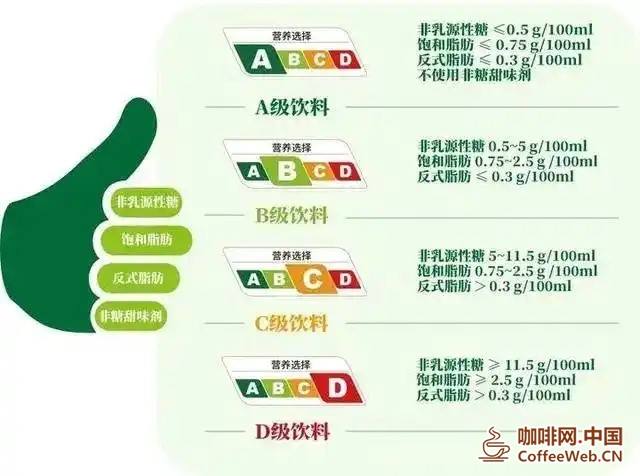
When the “hidden health ledger” is thoroughly exposed to the sun, so that consumers can understand it at a glance when ordering, the trial-and-error cost and churn speed of those products that wear a coffee disguise and rely on ingredient piling to maintain a high-sweet taste will rise exponentially.
The great consumption shift has already occurred. Supply-chain giants that sell sugar are developing sugar substitutes, and dairy giants are pondering “zero trans fat” and “light milk.” For freshly made beverage brands, true long-termism is not binding consumers’ taste buds with the sugar-coated cannonball of “delicious,” but responding to real health demands with the sincerity of “drinking well.” Only by exposing the ingredient list to the sun and handing the choice to consumers can one gain future competitiveness.
As a daily rigid demand, coffee’s underlying logic is low burden, repurchase-able, and able to withstand daily drinking. This gene-level mismatch determines that the dessertified ingredient-piling approach is not sustainable from its birth.
And players who make dessertified coffee by piling ingredients can gain traffic through marketing dividends in the short term. But once consumers calculate this health ledger clearly, once nutrition grading labels are gradually rolled out, once everyone realizes “spending coffee money to buy a sweet drink with milk-tea calories,” the speed of ebb may be faster than the cheese foam and dirty tea of those years.
After all, drinking coffee must ultimately return to its daily, healthy original form.
For more exciting content, follow TMTPost’s WeChat account (ID: taimeiti), or download the TMTPost APP
AI Introduction
The content is intelligently generated by AI
useful
Chinese Business Strategy
▲ “Bitter-Ends-Tangerine-Comes Latte” Product Information
Image source: Guming Mini Program
▲ Image source: Shanghai CDC
Reprint Notice & Disclaimer
- This article has been edited and compiled by China Coffee Network. The information and images therein come from public sources and the copyright belongs to the original author. This reprint is intended solely for information sharing within the coffee industry and does not represent the views of this website; all data and opinions are subject to the original article. Our thanks to the original author for creating and sharing it.
- For matters concerning content licensing, attribution, copyright or otherwise, please contact us promptly and we will verify and cooperate in handling them as soon as possible. We also welcome coffee origins, brands and industry media to exchange ideas and contribute articles.
- Contact China Coffee Network: Tel 400-0000-641 (+86-18288016826) | Email 478203668@qq.com
Related Reading
 Asia Pacific Connection in a Cup of Coffee
- A Cup of Coffee Connecting Asia-Pacific
 ICE agricultural futures main contracts mostly closed higher, while coffee futures rose 1.84%
 The coffee market is experiencing two extremes! Arabica inventory drops to 27 year low, but Robusta plummets to two-week low
 Financial Observation: Why is Generation Z from the United States flocking to coffee and tea shops in China
 ‘All-Ice’ Coffee Goes Viral! Will the Next Hit Be Your Personal Favorite?


 Liaoning ICP Security No. 21122402000217