
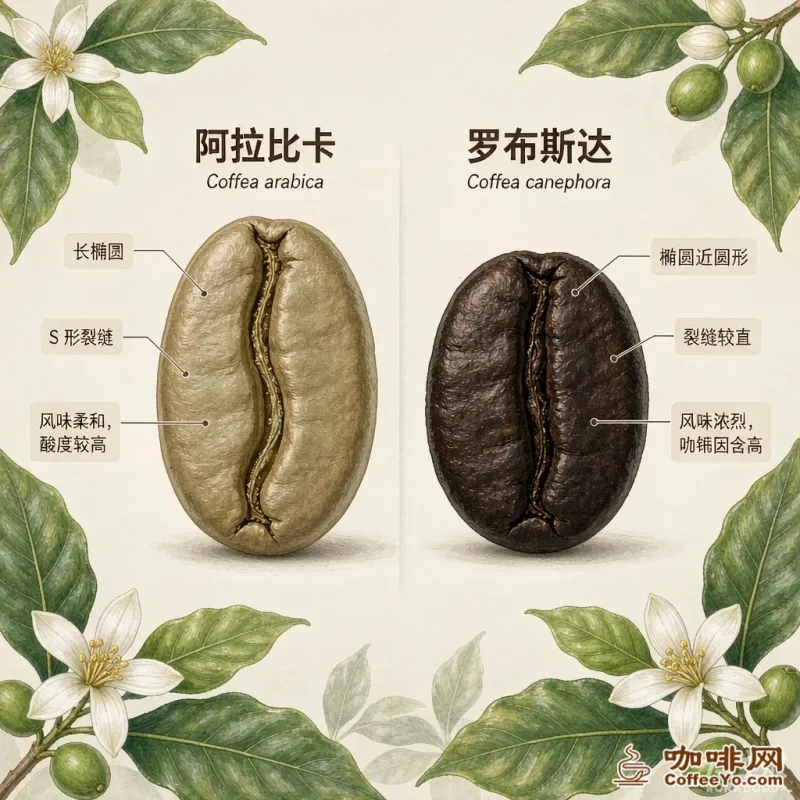
I. Arabica (Coffea arabica)
Arabica accounts for about 60–70% of global coffee output and is the absolute protagonist of specialty coffee. It likes mountain slopes at 600–2,000 meters with large day-night temperature differences; its flavor is delicate, often with floral-fruity notes and bright acidity, and lower caffeine (about 1%–1.5%). However, it is relatively “delicate,” susceptible to diseases such as leaf rust, and has higher planting and processing costs.
II. Robusta (Coffea canephora)
Robusta accounts for about 30–40% of global output, mostly grows in low-elevation, hot-humid areas, stands out in disease resistance and high yield, has higher caffeine (about 2%–2.5%), and a fuller, more bitter body. It is widely used in espresso blends (providing crema and body), instant coffee and canned coffee, representing “cost-performance and stability.”
III. How to choose and drink
If you prefer clean fruit acidity and aroma, choose high-elevation washed Arabica; if you pursue rich body and a milk-coffee base, blends containing Robusta “hold up” better against milk and sugar. In recent years, finely processed “specialty-grade Robusta” has also emerged, whose flavor is long past the old instant-coffee synonym.
In one sentence: Arabica wins on flavor layers, Robusta on stability and cost-performance; the two are not superior or inferior, but differ in use.
Original-content statement and disclaimer
- This article is an original popular-science piece by the coffeeyo.com editorial department, with data based on coffee botany and industry common knowledge, for study and exchange.
- Specific variety ratios and flavors vary greatly by origin and processing method; please rely on actual cupping.
- The title image is an AI-generated illustration, not a real photo. For copyright or attribution matters, contact this site: Email 405854472@qq.com.
Related Reading
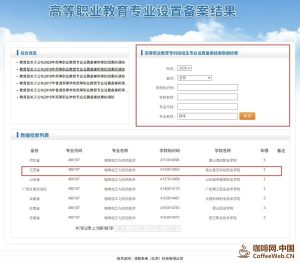
 Jiangsu Only Coffee College: Kunshan Coffee Industry Institute Approved
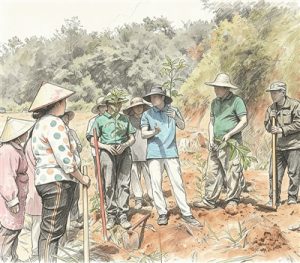
 Coffee School Comes to the Fields
- A Coffee Bean ‘Ferments’ at the CIIE: Three Decades of Shanghai-Yunnan Collaboration
 Three Decades of Shanghai-Yunnan Collaboration: A Coffee Bean ‘Ferments’ at the Import Expo
 Cross-Border Arrival | A Coffee Bean: World Flavors Flowing Through the Trade Chain
 Why Yongde’s Coffee Beans Won Gold in Shanghai – A Taste of ‘Life in Yunnan: 365 Days’


 Liaoning ICP Security No. 21122402000217