
At a Glance (China Coffee Network): At the Yunding Zhuchao Manor in Lincang, Yunnan, every coffee bean is 'raised' with a specialty-focused approach, advancing across planting, picking and processing to shift the lo…
The autumn wind by the Lancang River gently lifts the mist shrouding the mountains and fields. At the Yunding Zhuchao Manor in Shuangjiang Lahu, Wa, Blang and Dai Autonomous County, Lincang City, Yunnan Province, 1,500 mu of coffee forest stand lush and verdant at an altitude of 1,600 metres. Plump, round red cherries vie to peek out from the leaf tips, and the coffee fruit — nourished by more than 300 days of rain and dew — is about to be harvested. Yet Yao Dexian, the manor’s manager, says: “We must wait a little longer; the flavour only comes when the cherries are fully red.”
This “wait a little longer” is like a vivid footnote to Lincang coffee’s transformation: rather than blindly expanding acreage as in the past, the effort is now put into quality and flavour.
Yunding Zhuchao Manor is a window onto Lincang’s coffee specialization, but not the whole picture. It grows selected varieties such as Geisha, Yellow Bourbon and Selena; among them, Selena placed in the top twenty at the 2nd Yunnan Treasure Coffee Green-Bean Competition (Yunnan CoE Pilot Cup) with a score of 87.94. Under CoE rules, only beans ranked in the top thirty with a score above 87 are internationally recognised as specialty coffee.
For the manor itself, this result was no surprise, because from the very start it has “raised” every coffee bean with a specialty-focused mindset.
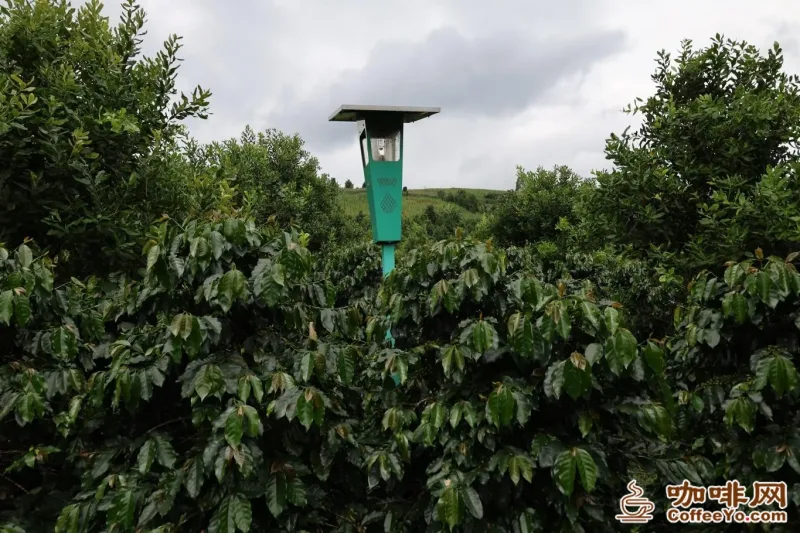
On the planting side, Lincang’s “refinement” shows in giving the coffee plenty of room —
Every morning, more than 600 mu of Selena wake up on the mist-clad hillside and can sway freely, because whereas ordinary coffee is planted at 280 to 330 plants per mu, Yunding Zhuchao Manor has lowered the density of fine varieties like Selena to around 200 plants. “The aim is to let every plant get better light and absorb more nutrients,” says Yao Dexian.
Coffee trees fear the sun, so shade trees become key: nut trees, cinnamon, jacaranda and camphor are interplanted alongside the coffee, and Brazilian beans are grown on the slopes as well. They do more than shade — they also improve soil nutrients and boost microbial diversity. With mist lingering over the manor year-round, biodiversity softens the bite of winter frosts, giving the “slow growth” a more stable ecological footing.
“Refinement” also rests in human hands —
“Keep one shoot per fork, prune two of three…” During weeding season, more than a hundred caretakers move through the groves. Without mechanical weeding, they insist on manual care; Li Jinyu, a supervisor, prunes while teaching everyone the rhyme. She was once a beginner herself; later, guided hands-on by experts and having planted ten mu of Selena of her own, she gradually mastered the knack and became something of an “expert.”
The manor is also equipped with an integrated water-and-fertilizer system, so each seedling drinks its fill and takes in enough nutrients in its early stage; top dressing is applied twice a year, 10 kg of organic fertilizer per plant, and an organic fertilizer plant was built when the manor was planned in 2021. For pest and disease control it has abandoned conventional pesticides, promoting green technologies such as purple-light insect traps, yellow-and-blue sticky boards and insecticidal lamps, safeguarding the pure quality of the beans right from the source.
Picking and processing test patience even more —
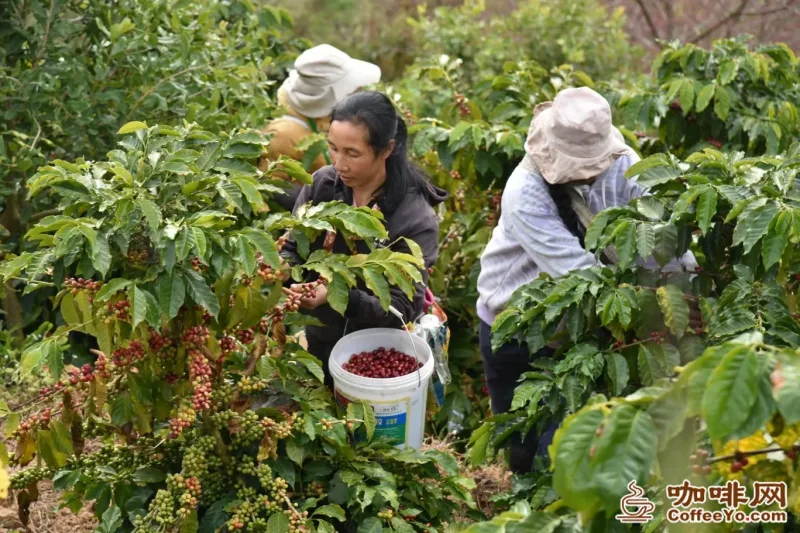
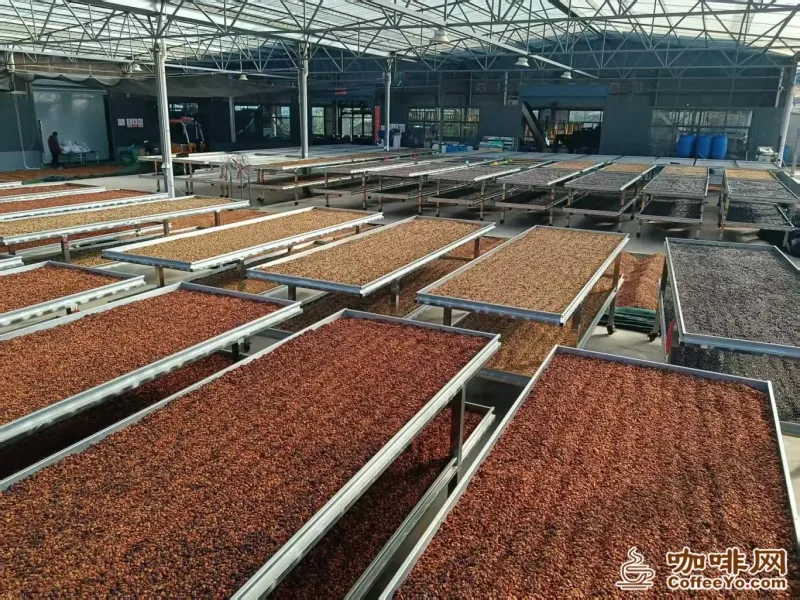
There is no mechanical roar here; every coffee cherry is picked by hand, only fully red cherries, in separate batches and by variety. After the red cherries are picked they are sorted once more; the green beans rest quietly in the processing house for one to two months, with humidity and temperature tuned by hand, and processing does not begin until the following April. Slowness and refinement have brought tangible rewards: since 2024, the manor’s own green-bean specialty rate has exceeded 90%.
Selena’s breakthrough is no isolated case. Lincang Gengxia Manor’s washed Geisha took the 2026 Yunnan CoE championship with 91.78 points and was rated a “Presidential Bean”; the Songfeng cooperative’s Geisha followed closely with 90.28. Ninety points is the threshold of CoE’s “excellent” tier — a mark Lincang had never reached before. From Selena’s 87 to Geisha’s 90-plus, Lincang’s specialty coffee matrix has already taken shape — not the accidental brilliance of one or two beans, but a systemic breakthrough from variety to manor, from planting to processing.
In the past, Lincang coffee was mostly exported as bulk commodity beans; today, anchoring itself to the goal of building a “China Specialty Coffee Core Producing Area and a Yunnan Demonstration Zone for Specialty Coffee Beans,” Lincang is pushing across the whole chain, shifting the industry from “chasing volume” to “prizing quality.” Policy is no longer just a word in a document, but concrete support that lands on a single tree, a single lamp, a single processing machine.
From the source, Lincang works with research institutes to keep introducing, trialling and screening diverse, high-quality coffee varieties; city- and county-level agro-technical service teams go deep into fields as a matter of routine, bringing skills such as pruning, fertilizing and green pest control to the growers’ hands and cultivating local care talent; it grants fiscal subsidies for fine-variety bases, green and organic certification, standardized fresh-fruit processing centres and deep-processing projects, with dedicated credit products to lower the threshold for manors and cooperatives to upgrade toward specialty; at the same time it encourages the “coffee+” multi-storey ecological intercropping model, balancing ecological and economic benefits.
Perhaps more worth looking forward to than a single fruit is that this land no longer relies on a single variety to hold the stage, nor on bulk commodity beans to chase scale, but uses quality and flavour to make every cup of coffee more satisfying.
By Wang Chaoyu and Yan Xingyong
Reprint Notice & Disclaimer
- This article has been edited and compiled by China Coffee Network and reprinted from China Agriculture Network, “Approaching Selena: How Lincang's Specialty Coffee Is "Raised".” The copyright of the original text belongs to China Agriculture Network and the original author. This reprint is intended solely for information sharing within the coffee industry and does not represent the views of this website; all data and opinions are subject to the original article. Our thanks to the original author for creating and sharing it.
- Read the original: China Agriculture Network, “Approaching Selena: How Lincang's Specialty Coffee Is "Raised"”
- For matters concerning content licensing, attribution, copyright or otherwise, please contact us promptly and we will verify and cooperate in handling them as soon as possible. We also welcome coffee origins, brands and industry media to exchange ideas and contribute articles.
- Contact China Coffee Network: Tel 400-0000-641 (+86-18288016826) | Email 405854472@qq.com | Address: Jinghong, Xishuangbanna, Yunnan Province / Tieling, Liaoning Province
Related Reading
 Three Decades of Shanghai-Yunnan Collaboration: A Coffee Bean ‘Ferments’ at the Import Expo
 Why Yongde’s Coffee Beans Won Gold in Shanghai – A Taste of ‘Life in Yunnan: 365 Days’
- Yunling Commentary: Yunnan Coffee Turnaround Hinges on Autonomous Pricing
 A ‘Travel Pack’ Reveals Another Possibility for Pu’er Baristas
- Bean in Short Supply: A Taiwan Youth on Yunnan Coffee as a Shared Cross-Strait Stage
- Five Years, Eight Championships: Lincang Coffee Joins the World Stage


 Liaoning ICP Security No. 21122402000217