


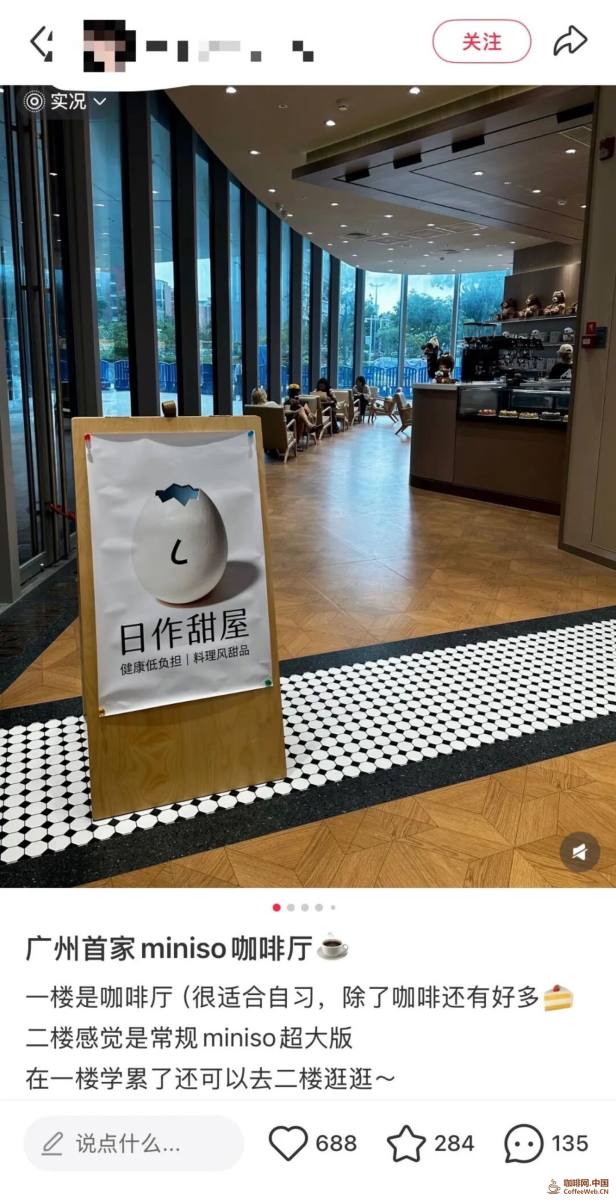
At a Glance (China Coffee Network): Text | Entertainment Capital Forum, Author | Doufu. Recently, MINISO was reported to have started selling coffee. The trigger was that Guangzhou’s first ‘SUPER MINISO’ flagship store launched drinks and desserts, and the prices were not low, with per-customer spending between 19 and 39 yuan. The cheapest was an Americano priced at 19 yuan, cakes generally around 30 yuan, and a double scoop of the Gelato Perfume Coconut series (ice cream) priced at 39 yuan.
Text | Entertainment Capital Forum, Author | Doufu
Recently, MINISO was reported to have started selling coffee.
The trigger was that Guangzhou’s first ‘SUPER MINISO’ flagship store launched drinks and desserts, and the prices were not low, with per-customer spending between 19 and 39 yuan. The cheapest was an Americano priced at 19 yuan, cakes generally around 30 yuan, and a double scoop of the Gelato Perfume Coconut series (ice cream) priced at 39 yuan. The relatively high pricing and the hint of ‘entering the food-and-beverage business’ quickly drew attention from consumers and the industry.
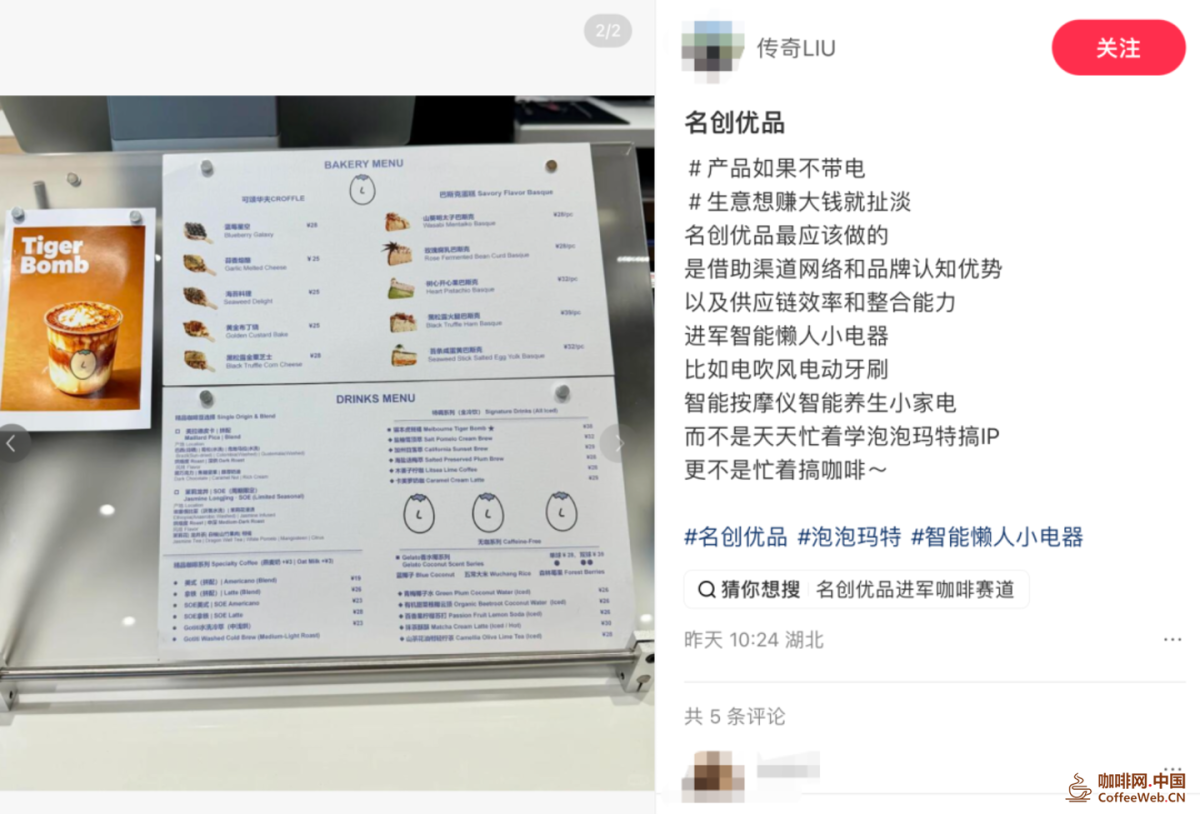
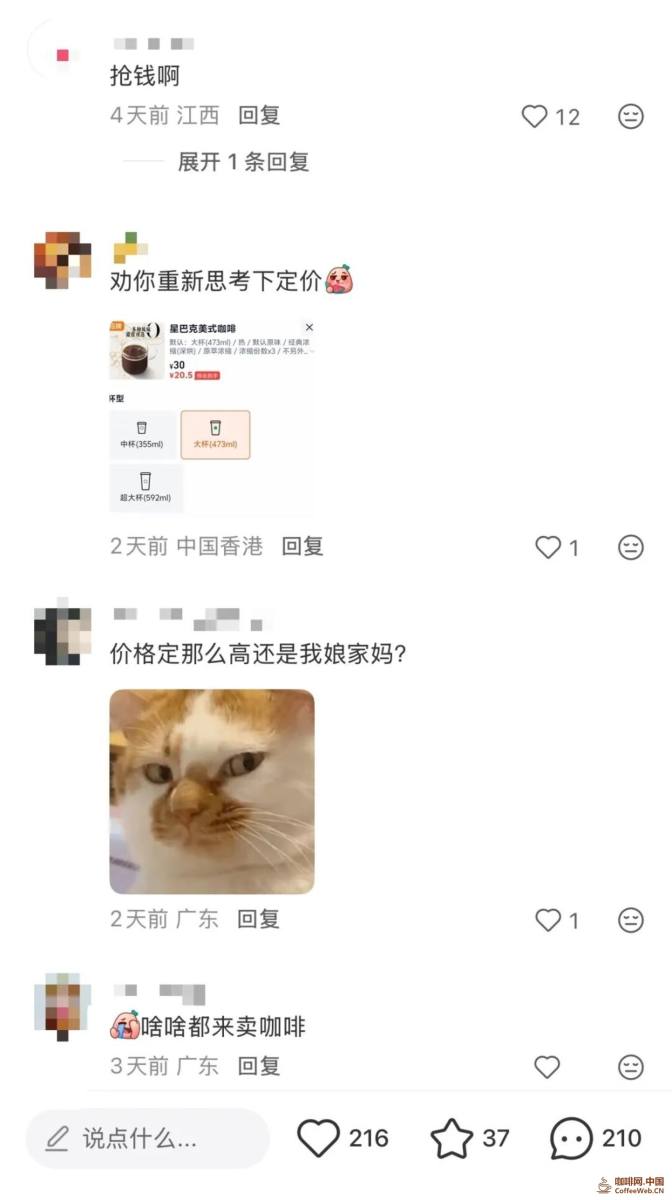
‘Too expensive’, ‘Is Miniso turning into Muji?’, ‘Not Miniso at all’ … Although it had not been confirmed as a new MINISO business, the news had already triggered plenty of consumer complaints.
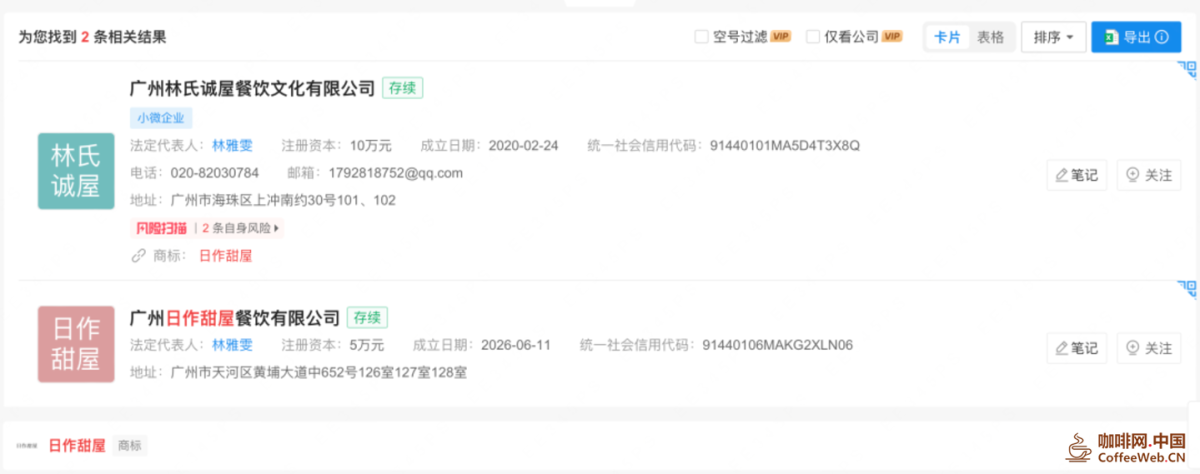
In response, the company quickly issued an official statement saying it ‘is not a brand self-operated business’ — that is, the sale of the relevant food and drinks is a venue cooperation between individual SUPER MINISO flagship stores and a third-party dessert shop, ‘Rizuo Tianwu’.
According to Qichacha, the trademark applicant for ‘Rizuo Tianwu’ is Guangzhou Linshi Chengwu Catering Culture Co., Ltd., which also has multiple convenience-food and alcohol trademarks under registration application. The legal representative of Guangzhou Linshi Chengwu Catering Culture Co., Ltd. is Lin Yawen, who also owns a company established on June 11, 2026 called ‘Guangzhou Rizuo Tianwu Catering Co., Ltd.’. At present, no connection between this company and MINISO has been found.
Although it was a mix-up, the reason the news that ‘MINISO is selling coffee’ drew such great attention lies largely in the fact that more and more trendy-toy companies are now entering the food-and-beverage business.
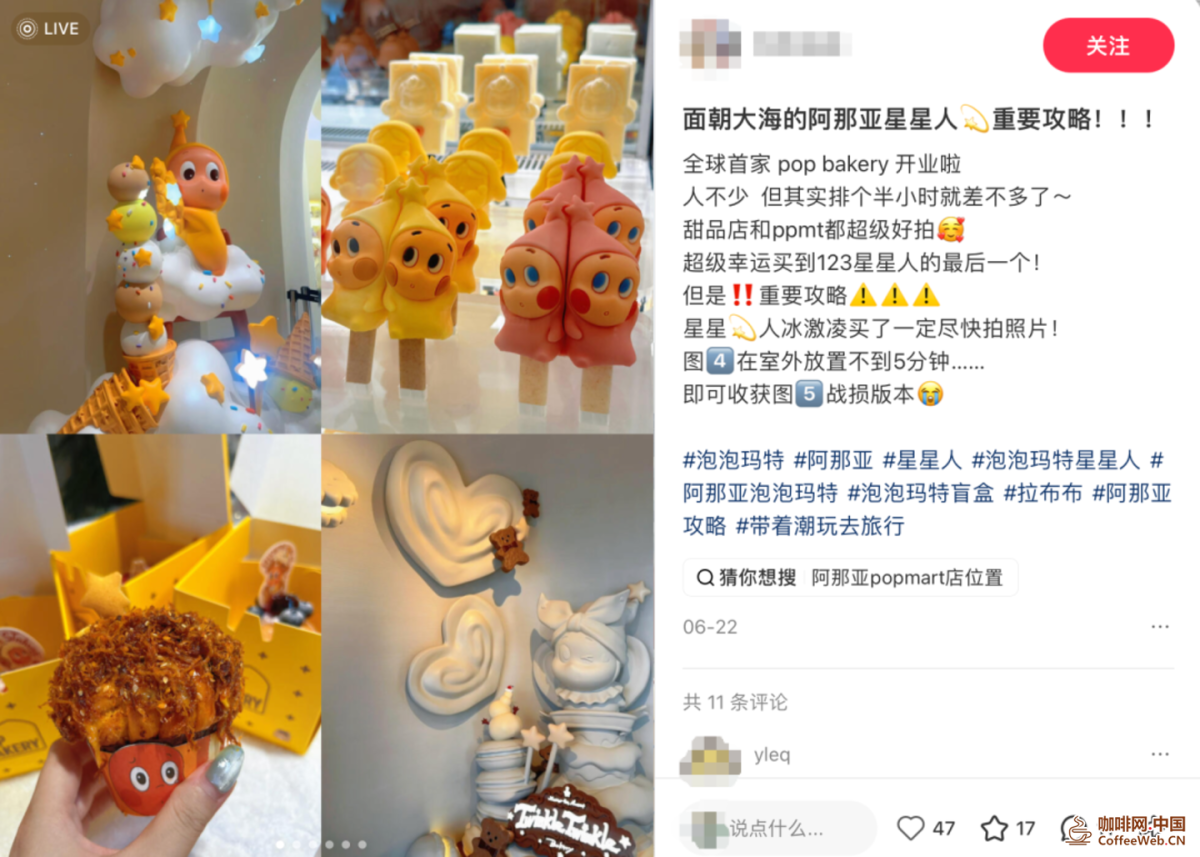
Previously Pop Mart launched an independent dessert brand, POP BAKERY, with its first store nationwide landing in Aranya, blending IP creativity into desserts and drinks. Besides Pop Mart, chain goods stores such as GOODSLOVE have also piled into the food-and-beverage track, trying to find new growth paths beyond retail; previously Dujiao Spicy dissectedthe IP-themed restaurant boom and its business model, a track with a very pronounced consumer pain point — paying 198 yuan for a mouthful of food-colored rice. If MINISO’s entry could put IP dining on a path of good value for money, consumers would surely welcome it.
Not only trendy-toy companies; dining seems to have become an accessory to many offline formats. MUJI has built restaurants into some stores, ‘moving the canteen into the shop’; IKEA has already made dining a distinctive feature, to the point that for many consumers the ultimate purpose of visiting IKEA is to show off a meal; luxury brands such as Ralph Lauren, Tiffany and Prada have also launched ‘ladies’ afternoon tea’.
Seen this way, for MINISO — which holds a large number of IPs and also has offline space — entering dining is a natural progression, and given MINISO’s current scale, selling coffee and desserts seems a low-threshold, high-return business format. So why has MINISO been reluctant to enter? What special difficulty does selling coffee hold for MINISO? Is this venue cooperation a probe by MINISO into the dining track?
As mentioned, making food and drink is already a very common ‘side business’ for trendy-toy companies and luxury brands, yet MINISO has made no move. A close breakdown by Dujiao Spicy finds that transplanting this format into MINISO’s business model is, in fact, not such a good business.
In terms of IP, although MINISO does not lack IPs, it is hard to directly copy the ‘IP plus dining’ model.
On one hand, MINISO lacks the pull of strong self-owned IPs. Looking across all IP dining formats, they basically rely on an IP’s powerful influence to sell related products. Pop Mart’s core advantage lies in owning several high-heat IPs — such as LABUBU and the Star People, which come with their own traffic and can attract large numbers of consumers. Currently one of the most-discussed POP BAKERY products on social media is precisely the Star People ice cream; besides perfectly reproducing its cute look, staff interact with fans during sales with lines like ‘who is the Star People’s good friend’, delivering full emotional value.
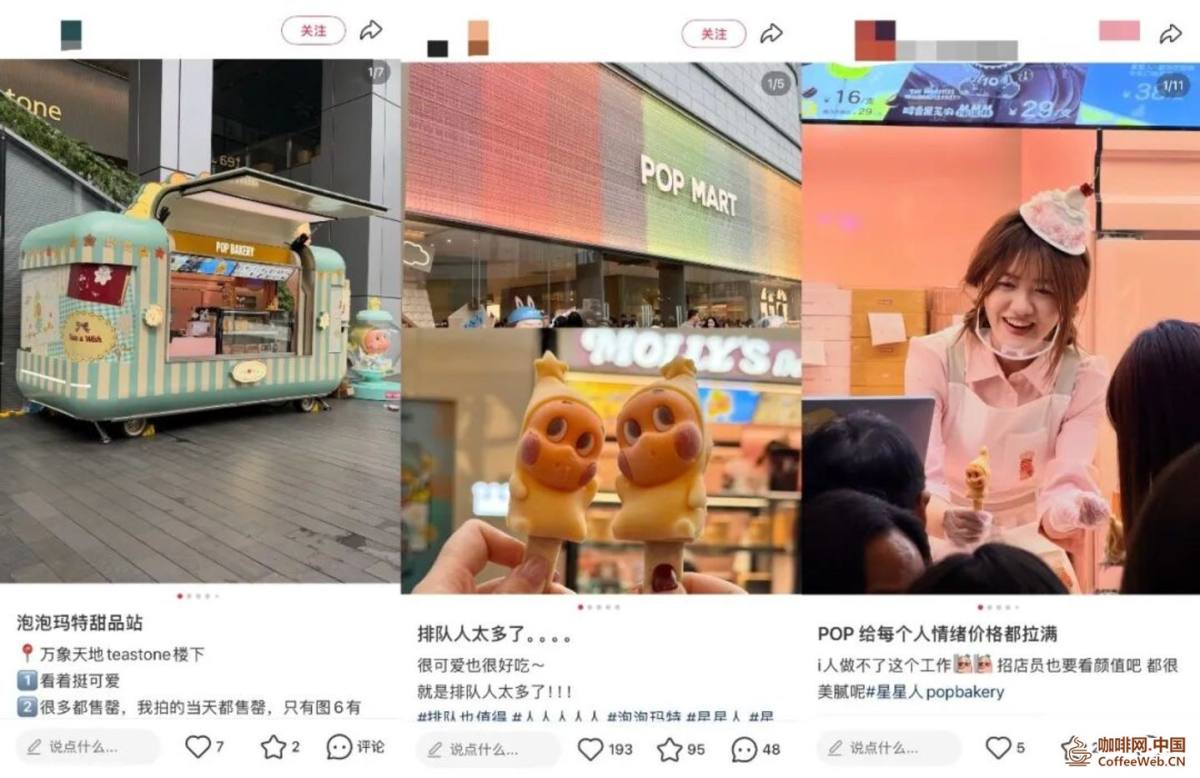
Likewise, the IP-themed restaurants previously favored by anime consumers essentially sell ‘IP influence plus immersive experience plus unique merchandise’; even though the taste of products at many IP-themed restaurants is widely criticized, plenty of fans are still willing to pay for them.
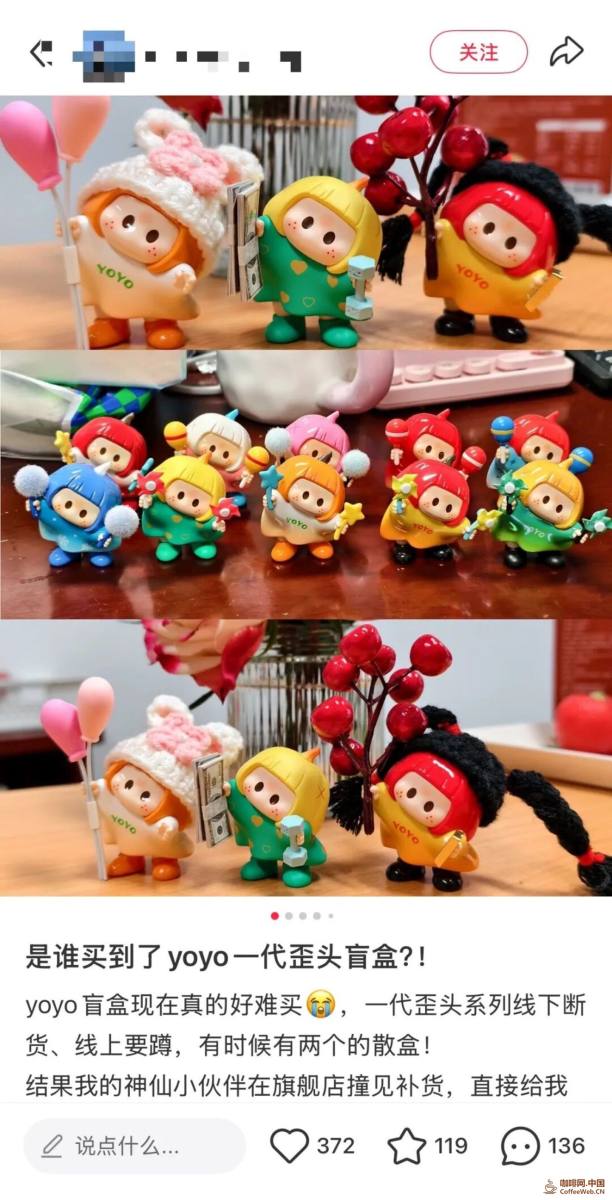
Looking back at MINISO, although it has launched some high-heat self-owned IPs — for example, YOYO ‘born’ in 2025 received impressive consumer feedback, and in June this year the full YOYO product line’s single-month sales in the China market exceeded 100 million yuan — objectively, YOYO’s current heat is still not enough to prop up sales of new formats such as dining.
On the other hand, although MINISO holds many globally popular well-known IPs as well as niche hot IP licenses, with sustained deep cooperation with top IPs such as Sanrio, Disney, Harry Potter, Pokemon and Chiikawa, combining licensed IPs with dining is again a new path.
‘Many IP licenses are strictly split; licenses for different categories do not interoperate. If MINISO wants to do licensed-IP dining, it needs to negotiate licenses separately. Not to mention the licensing fees — in particular, many Japanese IPs are very strict about dining-category licensing, with long review chains and cycles, so even if you go negotiate, you may not necessarily secure it,’ Feifei (a pseudonym), a veteran industry practitioner, told us.
‘If it’s dining it’s probably quite hard; a themed cafe might be somewhat easier, but it depends on the company’s qualifications — Japanese IP review is very strict,’ said a practitioner engaged in Japanese IP licensing.
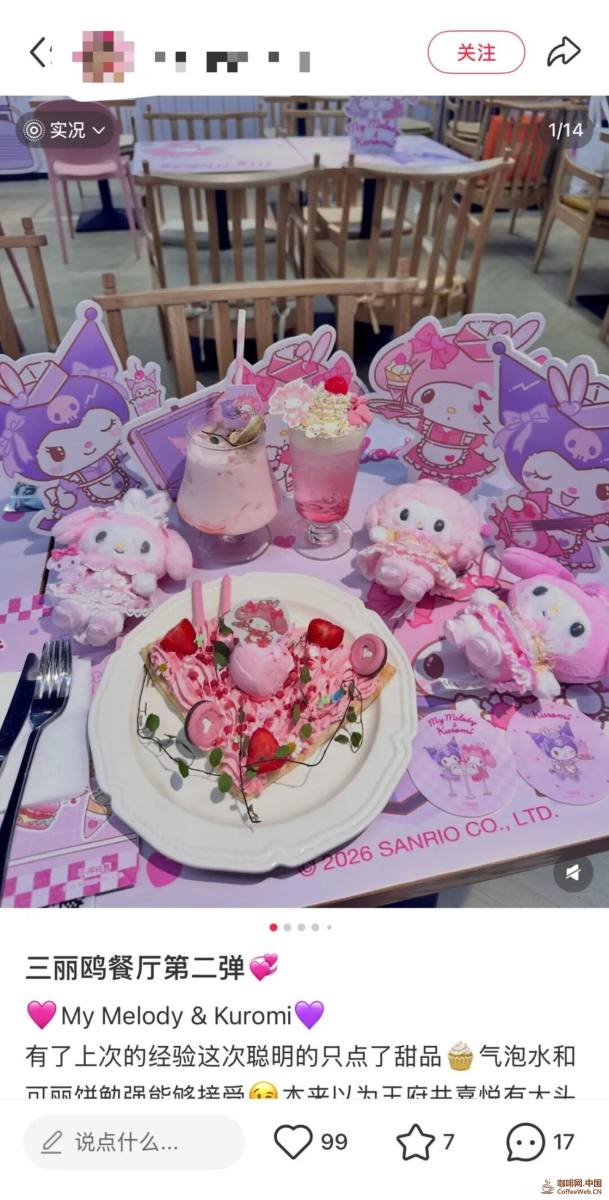
Observing Japanese IP dining collaborations, there are mainly two types: one is officially licensed immersive themed restaurants — for example, Sanrio has launched one family-themed restaurant each in Beijing and Shanghai, and the Pokemon themed restaurant currently exists only in Japan; such restaurants are usually few in number and require advance booking. The other is cooperation with chain restaurant brands, such as KFC and Luckin, brands with ‘strong qualifications and high sales’; MINISO currently has no mature dining system.
Of course, given MINISO’s present scale and capital strength, securing licenses is not hard, but building a scaled dining system and maintaining sound operations is a difficult calculation.
In terms of scene fit and consumer experience, it is also hard for MINISO to smoothly integrate freshly made dining into its existing system.
At present, MINISO’s standard flagship stores are located in core business districts, usually following a layout principle of maximizing product display, with narrow aisles, dense shelving and short customer dwell time — a high-frequency, high-efficiency consumption scene.
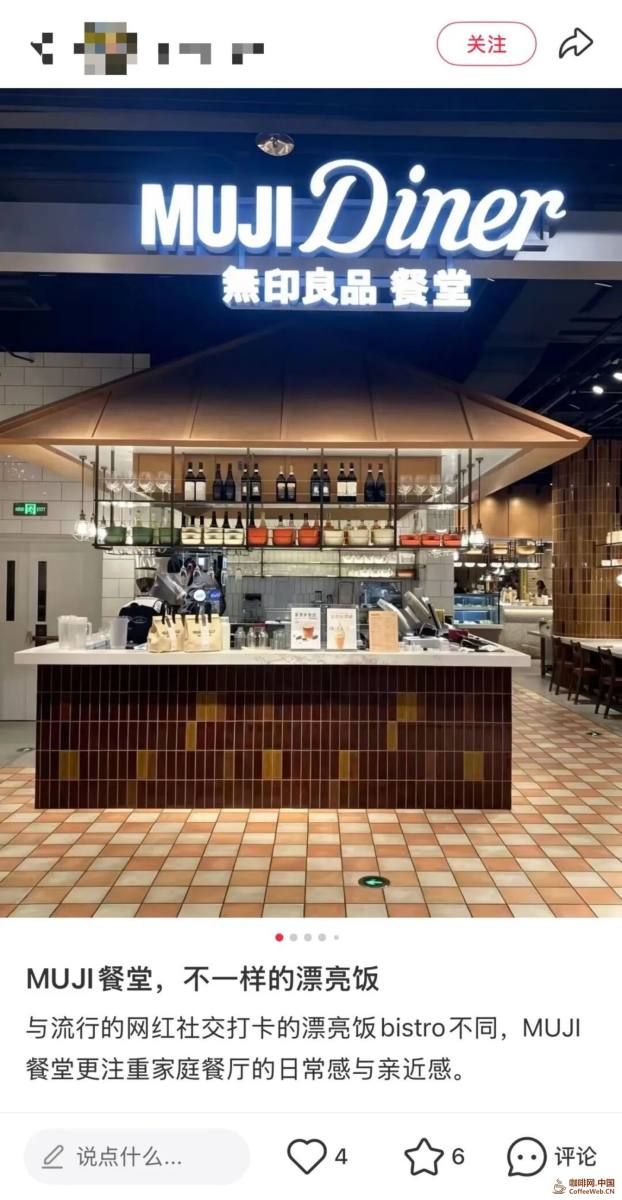
Such a scene is, first, unsuited to expanding a dining area. By contrast, offline retailers like MUJI are mainly spaces for long-duration selection and consumption, naturally holding a place in customers’ minds, and MUJI has many furniture products, so the dining area is essentially also an invisible product-display space. Second, without the pull of IP influence, MINISO’s dining would struggle to attract consumers through natural foot traffic.
‘Suppose MINISO did dining — if it weren’t an IP I were especially willing to pay for, and there’s usually no shortage of coffee, milk-tea and dessert shops around MINISO, I’d probably choose another brand,’ said Xiaoyuan (a pseudonym), a consumer who likes anime and has paid for IP-themed restaurants many times.
Of course MINISO also has large store formats; this reported move into dining is in fact a venue cooperation between SUPER MINISO and a third-party dessert shop. This means MINISO does not actually possess the objective conditions to roll out dining projects at scale. At present Pop Mart likewise mainly uses a ‘pop-up test plus a small number of independent store formats’ layout, rather than embedding directly into stores.
In addition, for MINISO, doing dining also faces a problem of price perception.
This time, mere venue cooperation was already criticized by consumers as ‘too expensive’, which precisely reveals MINISO’s brand-perception paradox. For a long time MINISO’s advantage lay in ‘value for money’; although later, leveraging IP value-add, MINISO’s per-customer spending rose, it is still the ‘king of value for money’ in the IP field, with a core perception of ‘collecting goods without burden’. But IP dining is, for consumers, a ‘premium business’: because a licensing fee exists, product per-customer spending is generally higher, and MINISO’s core user group is highly price-sensitive and ill-able to bear the IP dining premium — ‘not MINISO at all’ precisely captures consumers’ mindset.
And doing only value-for-money dining coffee without relying on IP would, for MINISO, be unable to compete with mature players such as Luckin, and would also depart from MINISO’s current core positioning and strategy as an ‘IP company’.
Seen this way, the dining business looks tempting but is riddled with contradictions against MINISO’s core business and strategy; actually doing it would be a thankless task. Perhaps this is the reason MINISO has been slow to enter.
All these thresholds, while placing considerable limits on MINISO doing scaled, self-operated ‘freshly made IP dining’, do not mean MINISO has no fate with the dining track.
In fact, the supply-chain capabilities MINISO has accumulated are very friendly to laying out packaged food and beverages; in particular, heavily betting on ‘IP plus packaged coffee’ may be a shortcut.
Compared with freshly made dining, packaged food and drink processes are more standardized and rely more on retail channels, and can completely transplant MINISO’s existing core capabilities, with lower labor costs and lower dining-safety risks, an operating model entirely different from freshly made dining. Moreover, in licensing difficulty, most IPs’ packaged-food categories are more open than freshly made, dine-in formats. At the same time, packaged food and drink can also be distributed to overseas markets in parallel.
Whether in back-end supply-chain advantages, front-end IP count, terminal channels, or even strategic-positioning fit, packaged food sits entirely within MINISO’s comfort zone.
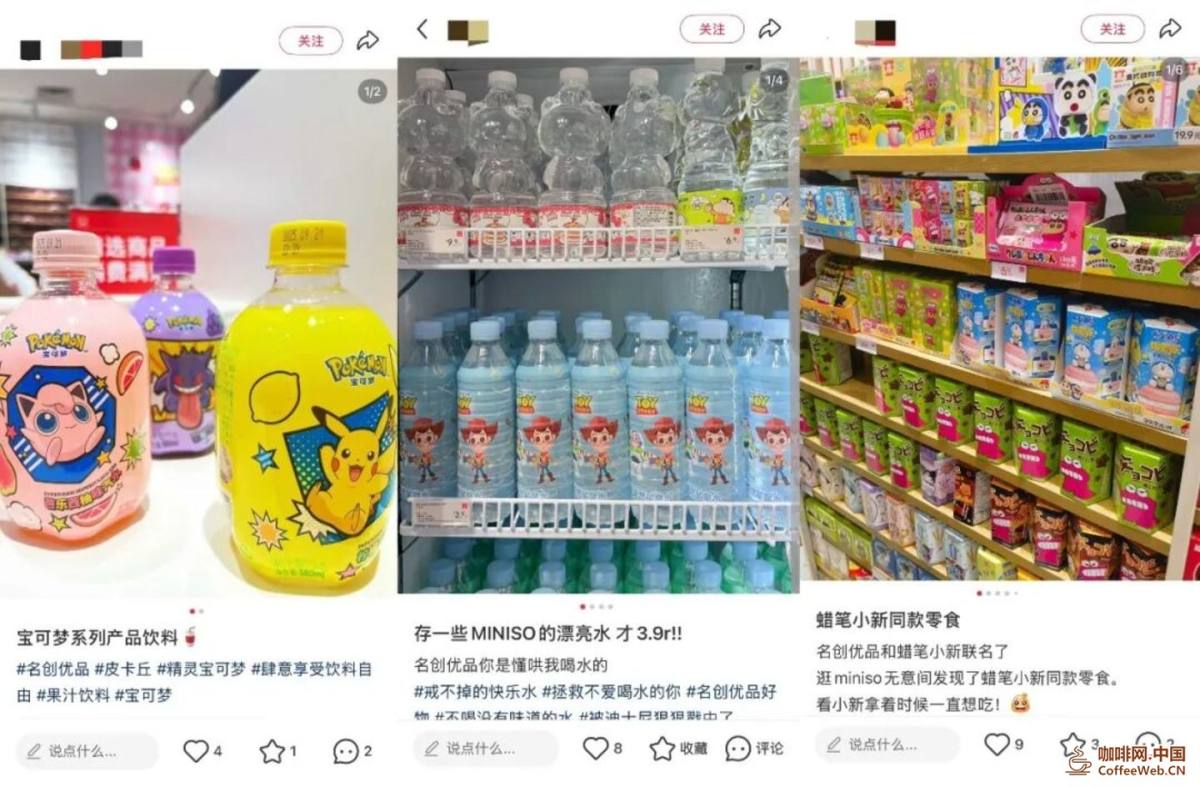
In fact MINISO already has related IP co-branded packaged products, having previously launched Pokemon-series co-branded soda, Disney co-branded mineral water and Crayon Shin-chan co-branded snacks: ‘just looking makes me want it, I want to take the whole row home’, ‘MINISO, you sure know how to coax me into drinking water’ … many consumers gave such feedback. However, the packaged food-and-drink business is currently not a very core business for MINISO, and no related data is disclosed in its financial reports.
Worth noting is that, for the coffee category, the market for freshly made coffee is currently extremely competitive, while the packaged coffee track — bottled coffee drinks and the like — still has some room. Although some brands have launched related products, there is as yet no absolute leading player, and the approaches are fairly traditional: for example, Starbucks’ packaged drinks have a relatively high per-customer price, with a single bottle generally around 8 yuan; Luckin’s ready-to-drink line, though lower-priced, has its bottled coconut latte ready-to-drink at 6 yuan a bottle, but Luckin’s IP advantage is not as strong as MINISO’s, so ready-to-drink has not seen large-scale co-branding. Perhaps MINISO can leverage its strong supply chain and IP matrix advantages to create a hit high-value ‘IP plus packaged coffee’ product.
Secondly, the freshly made dining business could, in MINISO’s large store formats, also be used to boost footfall for big stores, lengthen consumers’ in-store time and stir up social topics.
Although scaled rollout is not a good business for MINISO, the advantage of freshly made dining lies in lengthening consumer dwell time and being able to link with IPs to create check-in scenes. MINISO is currently also continuously expanding large store formats, such as MINISO LAND and SUPER MINISO; such big stores need more immersive, long-duration ‘browse-and-buy’ experiences. This time SUPER MINISO opening venue cooperation with a third-party dining shop may also stem from this consideration.
As mentioned earlier, many luxury brands are doing coffee and afternoon tea; obviously these brands are not aiming to ‘increase revenue’ but to attract in-store footfall, create check-in conditions and generate social buzz, turning luxury stores into life scenes. On social platforms, large numbers of consumers deliberately check in at stores and spontaneously post photos, adding captions like ‘princess, please have afternoon tea’, and brands thereby achieve an invisible boost in voice.
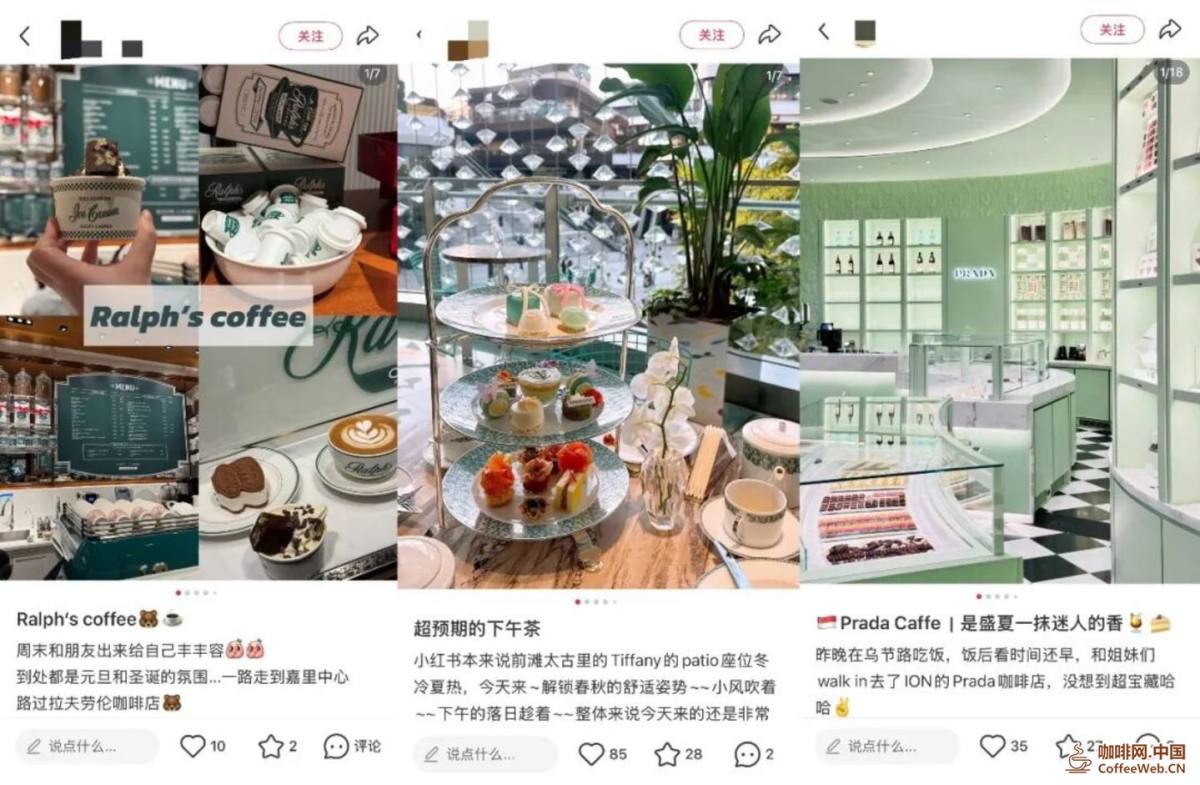
Pop Mart’s core purpose in doing dining is likewise to raise the share of secondary consumption in its theme parks — that is, getting people to spend inside the park. ‘We don’t do hotels, so the project that lets users stay half a day in the park should be supporting dining, and dining can also raise per-customer spending,’ Hu Jian, head of Pop Mart’s park, mentioned in Li Xiang’s book Because It Is Unique.
However, under the current venue cooperation with a third party, although it can reduce MINISO’s risk and lighten its burden, brand integration is relatively limited. If one wants both to lengthen dwell time and to create check-in scenes, perhaps self-operation at a small number of large-store locations works better. Of course, this model is a completely different approach from the scaled rollout mentioned above, with brand-promotion rather than profit as its purpose.
Worth noting is that Pop Mart’s dining is a purely self-operated model. ‘We are not making a traditional restaurant; the park’s dining must first combine with IP, must look good, and only then ensure taste and texture — the logic is different from ordinary dining,’ Hu Jian also mentioned.
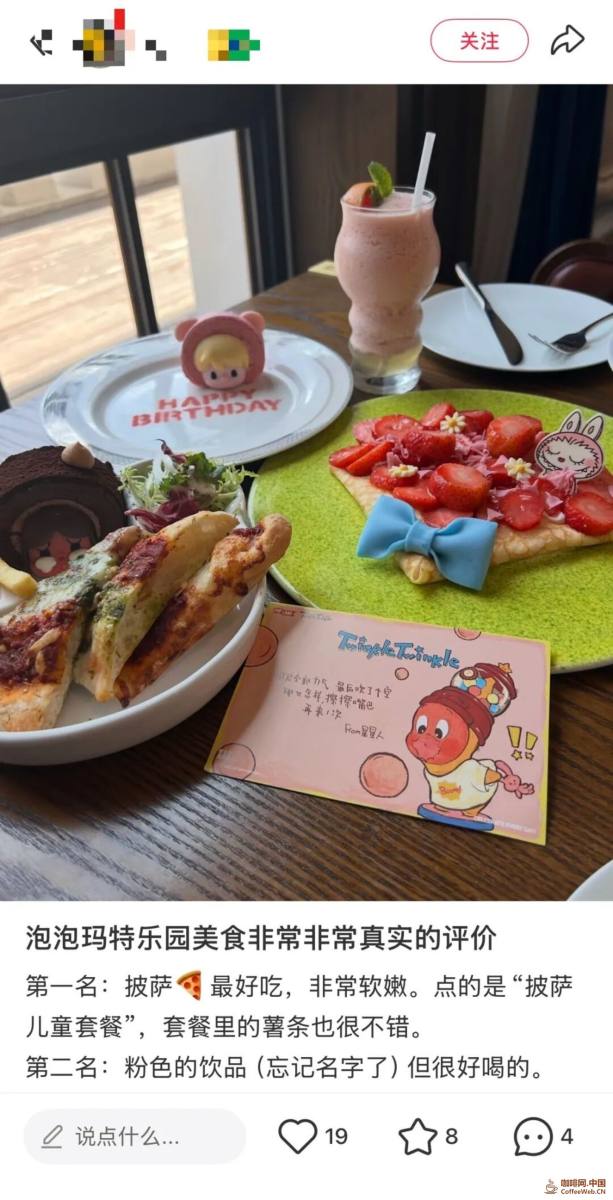
‘I think if MINISO does IP dining, it is more about enriching the business format, which can boost fan and consumer stickiness. The IP dining format can bring some growth, but I don’t think it will be a sharp surge, and it’s hard to make it a pillar business; moreover, if done without distinctive features it could even become a drain-type industry. It still depends on the specific way of combining,’ Momo (a pseudonym), a veteran IP industry practitioner, told us. In Momo’s view, for MINISO, doing IP dining is better suited to brand-promotion purposes: ‘it can stir up some activity, create topic heat and attract investors.’
Whether IP packaged food and drink, or serving as a draw for big stores, both are easier paths for MINISO to do restaurants at its current stage. In the long run, perhaps as the influence of MINISO’s self-owned IPs breaks out, it could also do a self-operated ‘MINISO BAKERY’, but for now that is not easy. The precondition, of course, is that POP BAKERY validates the long-term feasibility of trendy-toy companies entering dining at scale.
Although selling coffee was a mix-up, SUPER MINISO opening venue cooperation with a third party perhaps also reveals MINISO’s cautious probe into the freshly made dining field; it is just that at this stage, for MINISO to turn ‘selling coffee and desserts into a pillar business’, the math does not add up.
Article | Entertainment Capital, Author | Tofu
Reprint Notice and Disclaimer
- This article was edited and compiled by Coffeeyo coffeeyo.com; materials and images in the article come from public channels, and copyright belongs to the original authors. This reprint is solely for sharing information in the coffee industry and does not represent this site’s position; all data and views in the article are subject to the original text. We thank the original authors for their creation and sharing.
- If matters such as content licensing, attribution, copyright or others are involved, please contact this site in time; we will verify and cooperate at the earliest opportunity. We also welcome coffee-producing regions, brands and industry media to exchange contributions with us.
- Coffeeyo contact: Tel 400-0000-641 (+86-18288016826) | Email 478203668@qq.com | Address: Jinghong City, Xishuangbanna, Yunnan Province / Tieling City, Liaoning Province
Related Reading
 Asia Pacific Connection in a Cup of Coffee
- A Cup of Coffee Connecting Asia-Pacific
 ICE agricultural futures main contracts mostly closed higher, while coffee futures rose 1.84%
 The coffee market is experiencing two extremes! Arabica inventory drops to 27 year low, but Robusta plummets to two-week low
 Financial Observation: Why is Generation Z from the United States flocking to coffee and tea shops in China
 ‘All-Ice’ Coffee Goes Viral! Will the Next Hit Be Your Personal Favorite?


 Liaoning ICP Security No. 21122402000217