
At a Glance (China Coffee Network): Set out from downtown Chongqing and head south along the Lanhai Expressway for a little over two hours, and you drop from the clamor of bubbling hotpot into another kind of "boili…
Set out from downtown Chongqing and head south along the Lanhai Expressway for a little over two hours, and you drop from the clamor of bubbling hotpot into another kind of “boiling”: a hundred-metre waterfall pours down from the cliff top, its mist striking your face with the sweet freshness of grass and trees; at hand is a cup of sauce-aroma coffee, in which the mellow depth of baijiu surfaces slowly after coffee bitterness, and somehow does not clash.
Behind you is a bookhouse converted from an entire cliff face, sunlight falling from high windows onto the stone walls and open pages. Go further in and there is a rural market full of local specialties, with a music-festival stage beside it.
This is an ordinary evening at the “Meeting Xishan” camp in Maoshi Town, Huichuan District, Zunyi City.
Once a stretch of wilderness, the place has become a new benchmark for Zunyi’s cultural tourism through an all-scenario combination of “waterfall cliff café + rural market + starlit camping + valley electronic music.”
What gives it such “coffee status”? Set it within the larger chessboard of Guizhou building a world-class tourism destination and Zunyi creating a new “bridgehead” sojourn experience for the Chengdu-Chongqing region, and the story of this cup of coffee becomes far more than a cup of coffee.
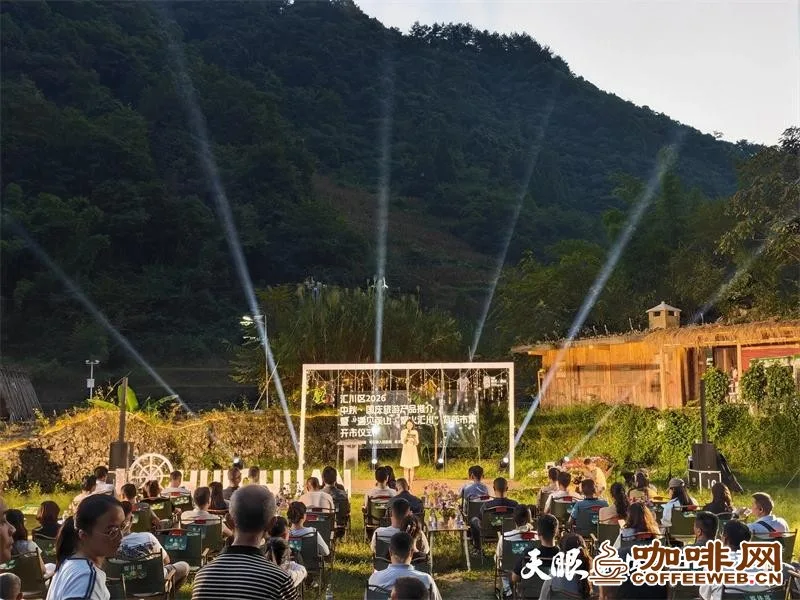
The opening ceremony of the “Meeting Xishan · Beidou Market.”
Guizhou’s cultural tourism is undergoing a profound transformation. Implementing “four major actions” around the three elements of resources, visitor sources and services, and accelerating the building of a world-class tourism destination, is the central proposition of Guizhou’s opening year of the 15th Five-Year Plan.
One of the keywords of this transformation is “integration” — cultural tourism, sports tourism, bridge tourism, baijiu tourism, all manner of cross-border combinations are reshaping the face of Guizhou tourism.
Zunyi is the front line of this integration experiment. As a deep implementation at the township level of the “Be a Guizhou Guest · Enjoy Huichuan” cultural-tourism IP, “Meeting Xishan” pours Zunyi’s proudest sauce-aroma baijiu culture into a cup of coffee.
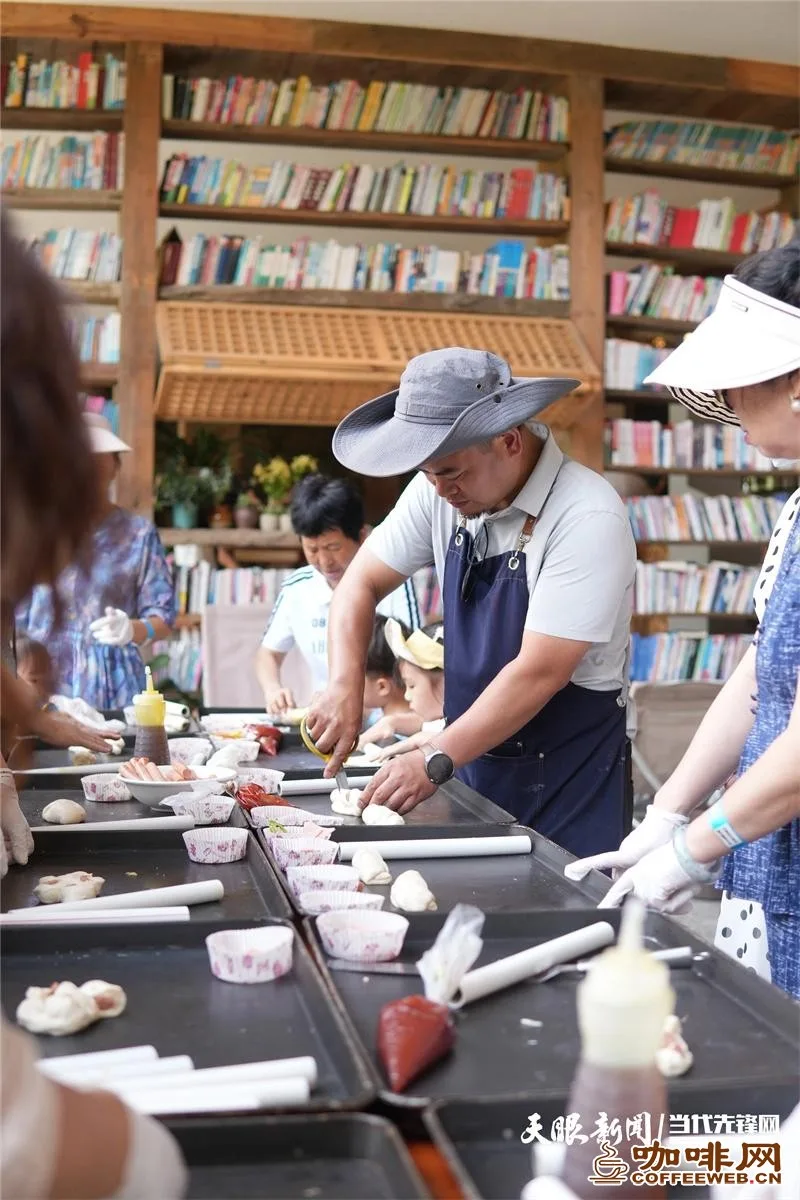
Visitors hold an event at the “Meeting Xishan” camp.
At the launch event for Sauce-Aroma Coffee 3.0, a barista behind the counter mixes liquor with coffee, shakes it and pours it into a cup — not simply “baijiu plus coffee,” but a flavor formula adjusted repeatedly. The base’s head, Lu Junzhou, put it plainly: “It’s a bit over an hour’s drive from downtown Zunyi, and many people come just to sit by the waterfall with a cup of coffee.”
This cup’s “coffee status” comes from the irreplaceability of the setting. Zunyi is building the “Drunkenly Beautiful Zunyi · 27° Deep Breathing” sojourn brand, focusing on Chengdu-Chongqing visitors’ demand for long summer stays, and advancing the upgrade of its sojourn industry around three core products: “community, scenic area, countryside.” Huichuan District has gone further, making sauce-aroma coffee its distinctive cultural-tourism IP, holding sauce-coffee culture weeks in successive years, linking landmarks such as Loushanguan and Hailongtun, with related events going viral across the internet.
What “Meeting Xishan” has done is move this IP from an urban creative park to the foot of a hundred-metre waterfall cliff. The cliff café sells more than 200 cups a day on weekends — not a staggering number, but behind each cup is “time spent sitting down.” Visitors do not merely “take a look” at the waterfall; they can sit and read for a while, drink a coffee, take a set of photos. For Maoshi Town this is a precise filling of a gap in rural tourism formats. It does not rely on city neon, but keeps guests in the township with the sound of the hundred-metre waterfall, the quiet of a cliff bookhouse and the aftertaste of sauce-aroma coffee.
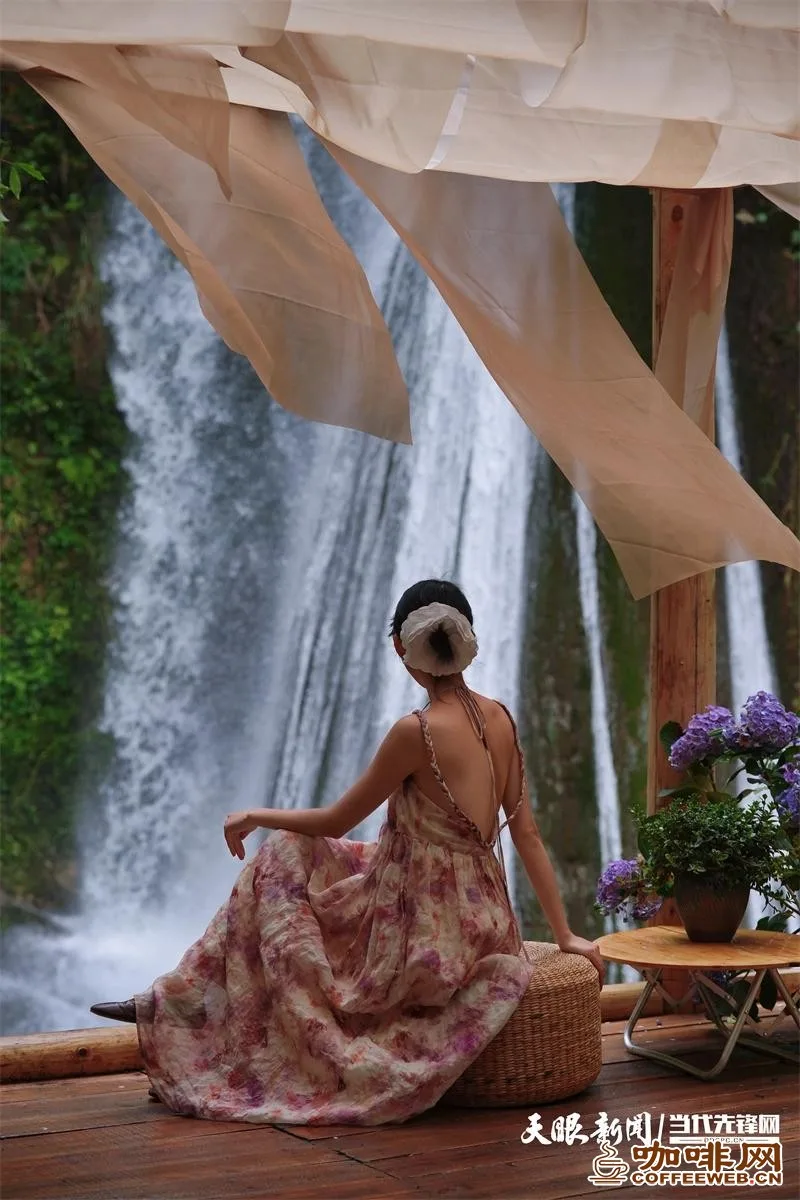
Visitors check in in front of the waterfall at the camping base.
September 23, Chinese Farmers’ Harvest Festival. By evening more than a hundred people were seated on the lawn; the stage backed onto green hills, and the sound of the waterfall came from afar, interweaving with guitar singing.
That day was also the opening of the “Meeting Xishan · Beidou Market” in Maoshi Town.
The beidou, a bamboo carrying basket, is the most common work tool in villages of northern Guizhou. Building a market IP around it as the core symbol is itself a victory for “locality.”
Unlike the usual “big and comprehensive” markets, the Beidou Market strictly controls the number of stalls and the categories allowed in: stalls are limited to local villagers, farming households and village collective cooperatives of Maoshi Town, and permitted categories are limited to primary agricultural products and handicrafts produced by the farmers themselves — free-range eggs, free-range chickens and ducks, deep-mountain mushrooms, chestnuts, walnuts, sweet potatoes, potatoes, wild honey, dried vegetables, pickled peppers, seasonal wild greens, handmade dried goods, local cured meats, farmhouse pickles, deer antler and its derivatives, and other local specialties.
“We don’t chase a large number of stalls; we hold the line on quality and rule out low-price competition and inferior goods.” That remark from a staff member points to the underlying logic distinguishing this market from an ordinary rural one — quality control is not about restriction but about building recognizability. When visitors know that behind every stall is a real farming household and every item is home-produced, “trust” itself becomes the best reason to buy.
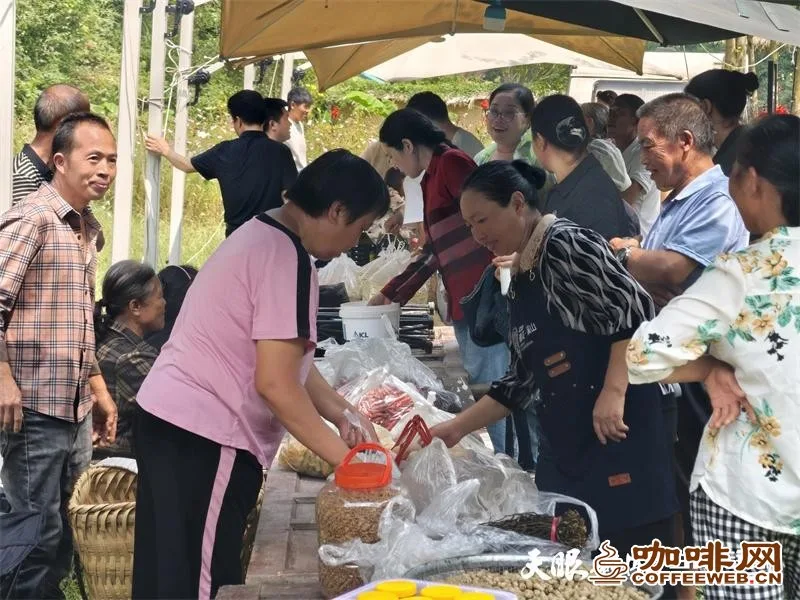
Visitors buy local agricultural specialties at the Beidou Market.
The cleverness of this farmer-support logic is that it does not rely on “pity marketing” or on “charitable” consumption, but lets agricultural products realize their value naturally through quality and setting.
Visitors arrive at the camp by day, browse the market and buy produce first, then go to the waterfall cliff café for coffee and to the bookhouse to read, and the consumption chain extends naturally.
For farming households, the market is more than a place to set up a stall; for the village collective, it is a tangible entry point for broadening income channels. In the township-level implementation of Huichuan District’s “Be a Guizhou Guest · Enjoy Huichuan” cultural-tourism IP in recent years, the Beidou Market is the most down-to-earth expression.
It is worth noting that Tuanze Town in Huichuan District previously attracted 12 companies to reach investment intentions through a paddy-field concert, with total planned investment exceeding 40 million yuan, landing new formats such as cave coffee and helmet coffee. The opening of the “Meeting Xishan” Beidou Market means this model of “using scenes to draw traffic, using traffic to grow industry” is being replicated in more townships across Huichuan.
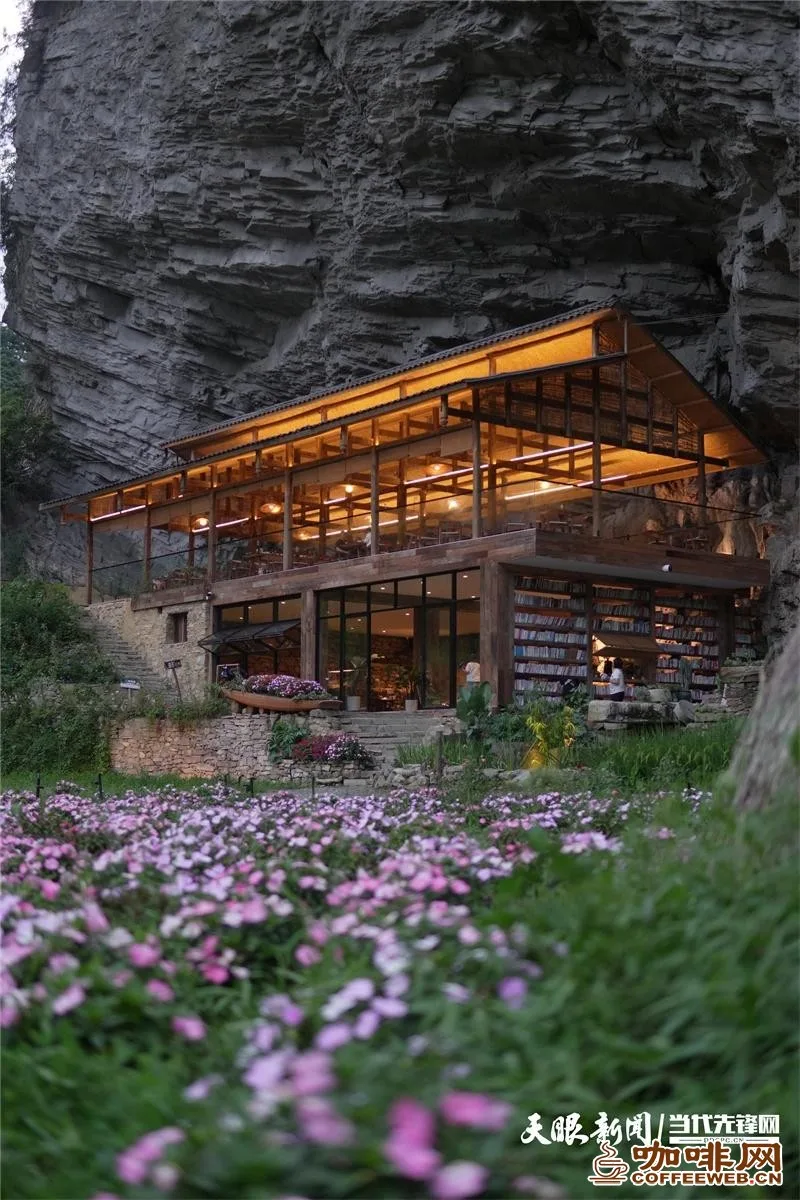
A corner of the “Meeting Xishan” camping base.
What aches about township tourism? Lu Junzhou named it in one sentence: “Township tourism used to be about looking at mountains, looking at water and eating one meal — short stays and few consumption scenarios.”
The solution “Meeting Xishan” offers is a “day plus night” all-scenario route that stretches a “one-day trip” into an “overnight stay” and turns “sightseeing” into “spending.”
By day, the Beidou Market, the waterfall cliff café and the cliff bookhouse unfold in sequence. An entire wall of books in the cliff bookhouse runs along the rock face, sunlight entering through high windows and falling on the stone and the pages; some people read in cave-like reading nooks, others lean at the window watching the waterfall, and parents bringing children to read on weekends “stay seated all afternoon.” Large stretches of hydrangeas are planted around the waterfall; from May to July each year at peak bloom, a sea of blue, purple and pink flowers spreads along the valley, with paths, terraces and viewing spots all inviting a pause.
At night the valley switches to another temperament. Healing light electronic music and folk singing alternate, followed by a cold buffet, sauce-coffee tastings, a bonfire and a fireworks display. Starry light strings, themed check-in signs and rustic atmosphere installations are arranged throughout, with the lawn left open for performances and interaction. Core experience benefits were announced in advance: the dual-festival camping package includes market vouchers, free coffee, entry to the electronic music set, bonfire and fireworks, and security and logistics support.
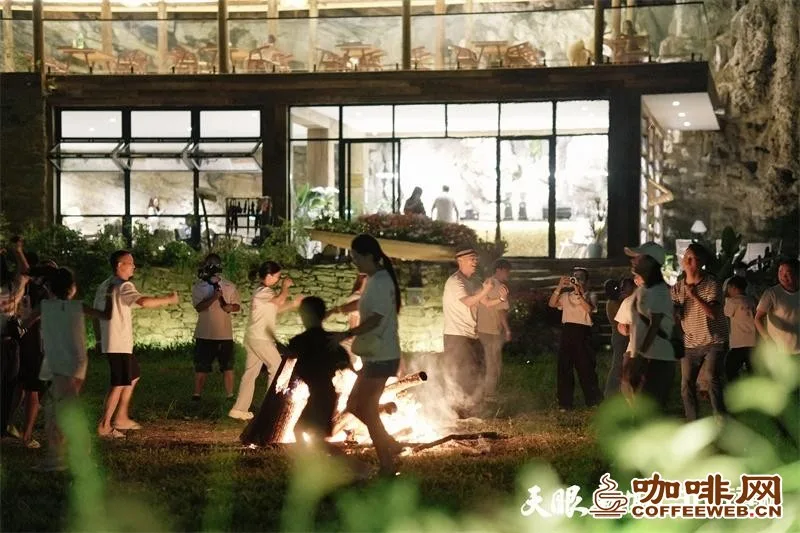
The base uses valley lighting, tent light strips, bonfires and performances to keep township night-time spending local.
The design logic of these night-time formats is clear: the camping base offers an immersive mountain-wilderness camping experience, the front lawn and flower borders suit family study trips and group gatherings, and forest trails, creekside viewing areas and starlit camping platforms complement one another. Once the night lights come on, the camp does not depend on city neon but keeps township night-time consumption local through valley lighting, tent light strips, bonfires and performances.
From an industry perspective, many places in Guizhou are building new “scene-as-product” cultural-tourism consumption formats around distinctive landforms such as sinkholes, karst caves, cliffs and waterfalls, turning natural landscapes into consumption gateways with high emotional value and strong social attributes.
The cliff café in Qingzhen, Guiyang has become an internet-famous landmark that young people flock to on the strength of “Guizhou’s highest coffee status,” while the cave coffee of Anshun has brought new life to quiet mountain country. The differentiation of “Meeting Xishan” lies in this: it is not a single-scene consumption, but places “waterfall cliff café + rural market + starlit camping + valley electronic music” in one space to form a complete consumption loop.
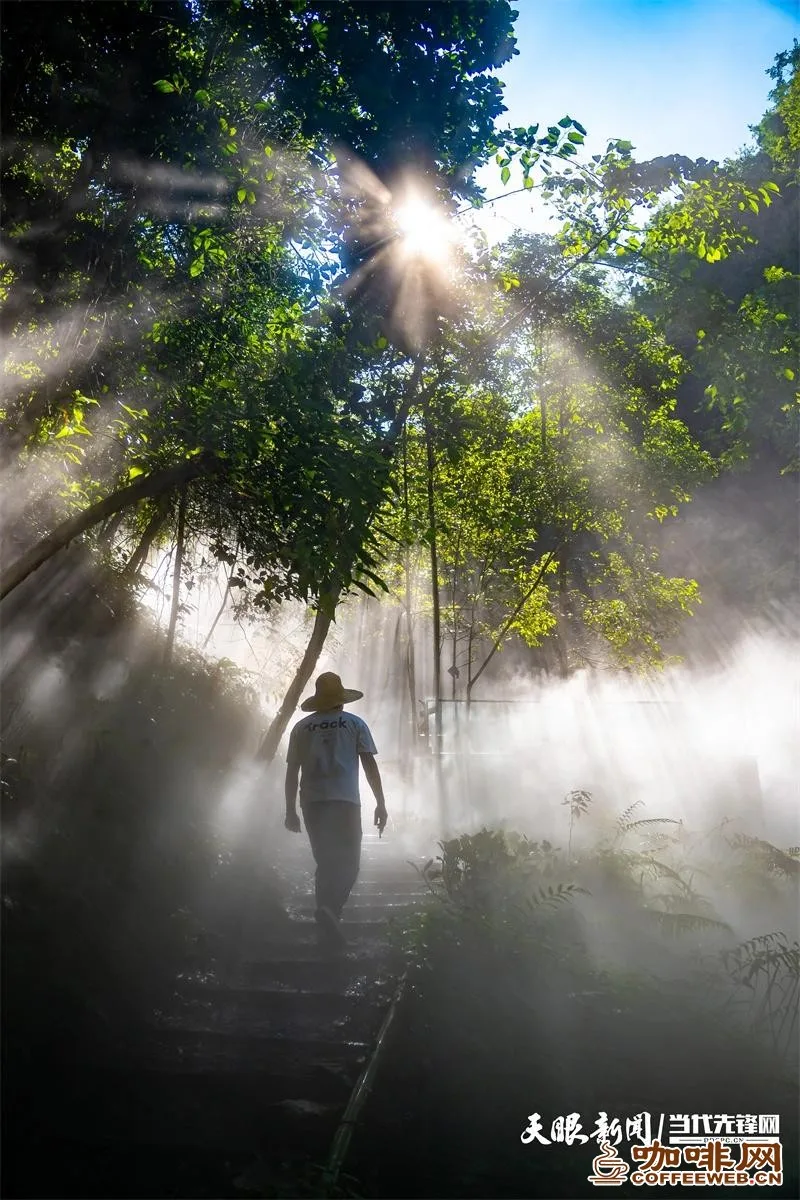
Visitors stroll leisurely at the “Meeting Xishan” camping base.
One fact that cannot be overlooked: Zunyi is becoming a “second living space” for visitors from Sichuan and Chongqing.
The data say it best. In 2025, Zunyi received 13.66 million visits from Sichuan and Chongqing, and over 600,000 visitors stayed more than 90 days a year on average. Jiuba Town in Tongzi County receives 120,000 summer-sojourn visitors a year against a permanent population of only just over 20,000, with more than 120,000 visitors in the summer season; more than 13,000 Sichuan and Chongqing families have settled there. The average length of stay for out-of-town visitors in Guiyang and Gui’an has stretched from under three days to more than 15 days, and the Sichuan-Chongqing visitor flow keeps pouring in.
Behind these figures is Zunyi’s strategic leap from a “summer back garden” to a “wellness sojourn destination.” Focusing on the summer-relief, wellness and micro-vacation needs of Chengdu-Chongqing residents, Huichuan District keeps upgrading its sojourn products, cultivating new formats such as boutique homestays and starlit camps, and launching 15 dedicated summer products alongside customized services such as “monthly summer stays” and “half-year vacations.”
The place of “Meeting Xishan” on this map is that of a “micro-vacation destination” sample. It does not pursue a big, all-encompassing scenic-area model, but uses coffee as the lure, the market as the medium and camping as the body, meeting Sichuan and Chongqing visitors’ demand for “weekend micro-vacations” and “in-depth short-holiday experiences” with a lightweight combination of formats. For those visitors, a little over two hours from Chongqing or about four hours from Chengdu brings them to a valley camp combining waterfall scenery, sauce-coffee tasting, a rustic market and starlit camping — a “reachable elsewhere” that is precisely the weekend solution urban families need most right now.
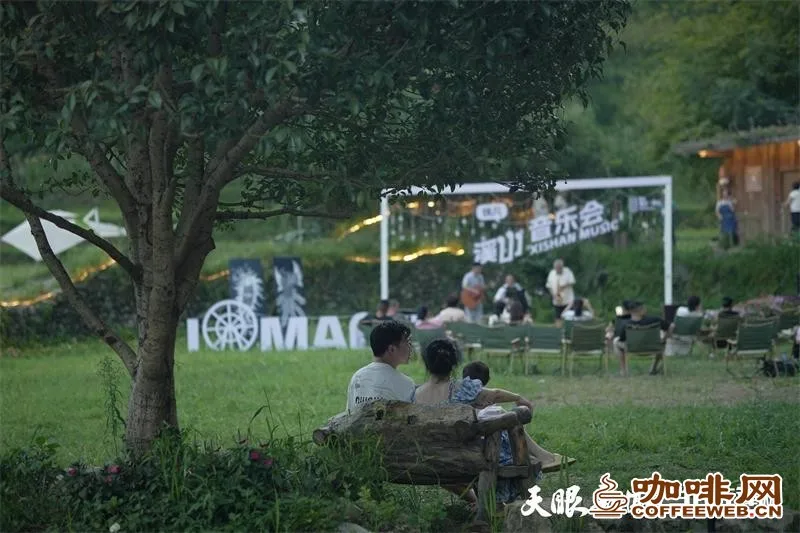
Visitors vacation at “Meeting Xishan.”
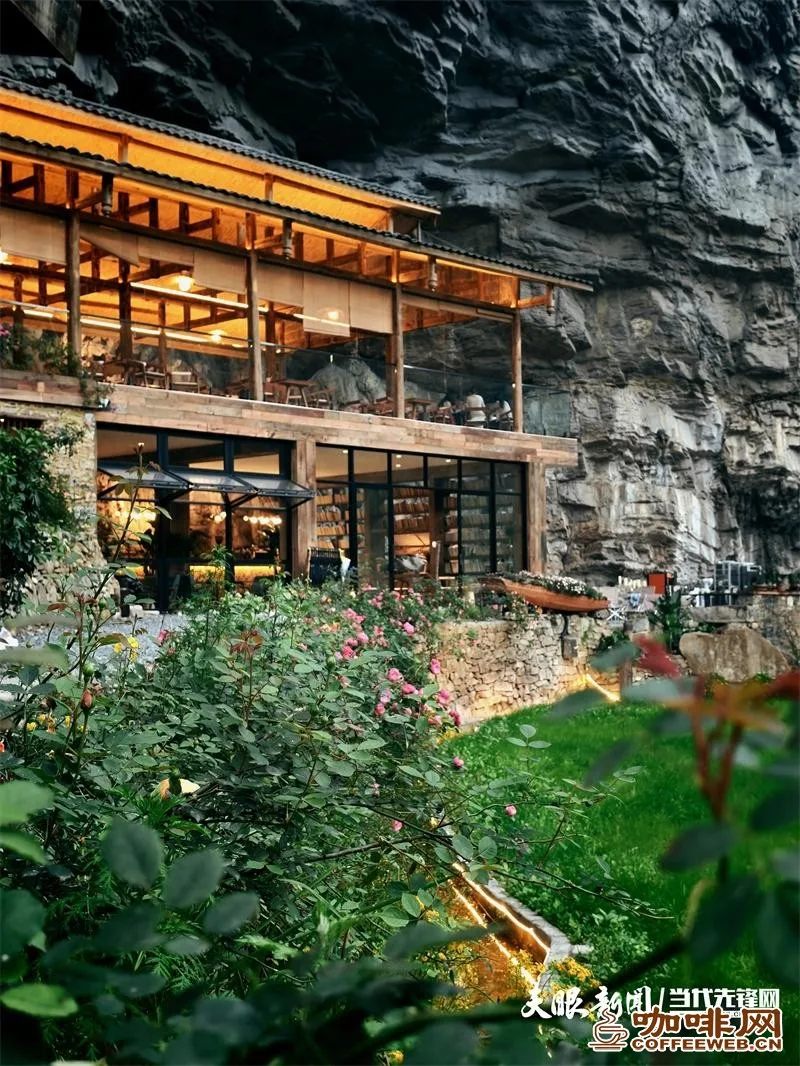
A corner of the “Meeting Xishan” camping base.

Visitors read in a corner of the library at the “Meeting Xishan” camping base.
Looking a layer deeper, the “Meeting Xishan” model also echoes the shift in Guangdong-Guizhou east-west cooperation from “blood-transfusion” assistance toward “industrial collaboration.” Zhuhai and Zunyi have used the “Hundred Miles of Tea Fragrance” rural revitalization belt in places such as Meitan and Fenggang to systematically advance full-chain upgrading of the tea industry and the integration of agriculture, culture and tourism.
Although “Meeting Xishan” is led by a local company, its operating logic of “turning scenes into products, products into consumption, and keeping consumption in the township” aligns closely with the direction of east-west cooperation moving “from single-point assistance to cluster breakthroughs.” Once this path proves workable, more townships in Zunyi can learn from it.
Guizhou’s “Village Super League” and “Village BA” have already shown that once rural DNA finds a contemporary way to express itself, it can ignite attention nationwide and even worldwide. “Meeting Xishan” may still be far from the scale of the “Village Super League,” but it represents an equally important direction: not every township can host a sporting-event IP, but every township can find its own “cup of coffee” — the reason that makes city dwellers willing to drive out specially, sit down, stay a whole day and then spend the night.
The “coffee status” of this cup in Zunyi lies not in the size of the cup, but in the fact that what it serves up is an entirely new set of possibilities for township cultural tourism.
Reprint Notice & Disclaimer
- This article has been edited and compiled by China Coffee Network. The information and images therein come from public sources and the copyright belongs to the original author. This reprint is intended solely for information sharing within the coffee industry and does not represent the views of this website; all data and opinions are subject to the original article. Our thanks to the original author for creating and sharing it.
- For matters concerning content licensing, attribution, copyright or otherwise, please contact us promptly and we will verify and cooperate in handling them as soon as possible. We also welcome coffee origins, brands and industry media to exchange ideas and contribute articles.
- Contact China Coffee Network: Tel 400-0000-641 (+86-18288016826) | Email 405854472@qq.com | Address: Jinghong, Xishuangbanna, Yunnan Province / Tieling, Liaoning Province
Related Reading
 How ‘Sea-Flavored’ Coffee Blooms Across Dongtou
- Health Guide: How to Enjoy Your Coffee the Healthy Way
 Study: Regular Coffee and Tea May Lower Dementia Risk, but More Is Not Better
 Frontline Story: A ‘Mobile City Coffee Bar’ Arrives by the Grand Canal
 Yantai’s Wind Tastes of Coffee
 In Zhenyuan, a Cup of Coffee and a Waiting Train







 Liaoning ICP Security No. 21122402000217