
China’s ready-to-drink coffee market in 2026 is undergoing a profound structural transformation. Looking at the current state of the 2026 coffee market, this segment is both crowded and full of vitality: Luckin launched its bottled coffee “Luckin Instant” at the end of April, with first-day sales exceeding one million bottles; Dongpeng Daka is closing in on Starbucks with sales growth of more than 70% year on year, and domestic brands are rewriting the industry rankings; and Robcock Coffee, a domestic brand that has worked in RTD coffee for over a decade, has secured a place in the industry’s top five with annual sales of 100 million bottles and a repurchase rate above 70%. Competition is intensifying, but the market ceiling keeps rising — this is the truest picture of the state of RTD coffee in 2026.
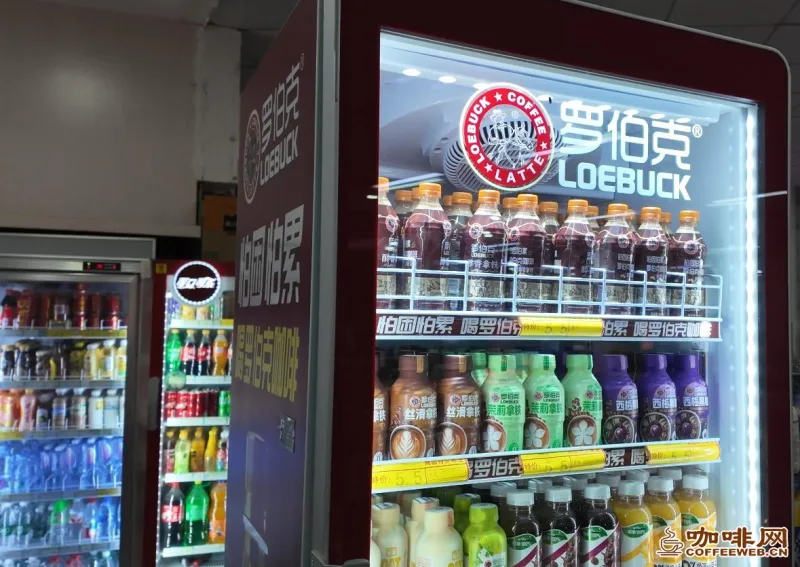
The 2026 coffee market: white-hot competition, yet ample room for growth
The data show that China’s coffee market is still in a period of rapid expansion. In 2025, the market reached 218.1 billion yuan, with compound annual growth in consumption of 10% over the past decade. RTD coffee, a steadily growing sub-segment, had a retail scale of 7.78 billion yuan in 2025. Although it accounts for only about 1.5% of the beverage category, both sales and shipment volume have turned positive year on year over the past year, putting the category back on a growth track. More notably, in the first quarter of 2026 RTD coffee grew 7.22%, outpacing traditionally popular categories such as RTD tea and energy drinks to become the front-runner in year-on-year beverage growth.
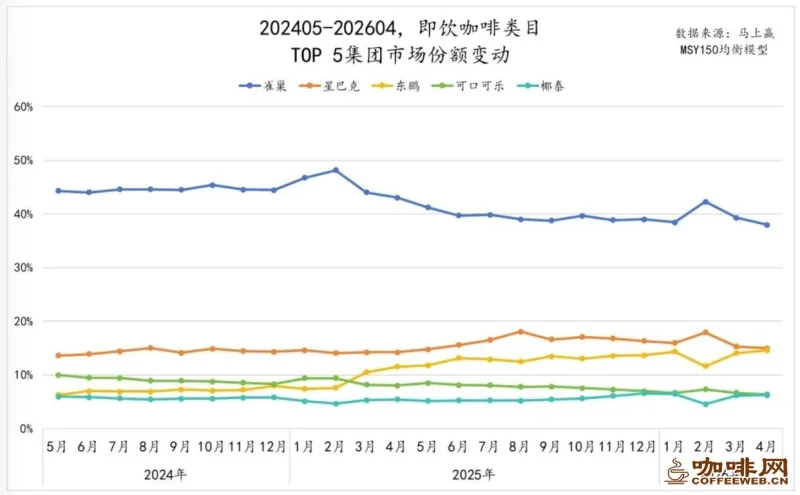
The competitive landscape is indeed becoming fiercer. Nestlé still holds the top spot with nearly 40% share, though its share is shrinking year on year; Starbucks ranks second with about 14%, but its growth is nowhere near the surge of Dongpeng Daka. This pattern of “the leader defending, the upstarts attacking” shows precisely that RTD coffee consumers have yet to form fixed brand loyalty and that the market is still being reallocated. For brands with strong products and channels, this is exactly the stage with the biggest window of opportunity.
From South China to the whole country: how Robcock secured a place in the first tier
In a landscape surrounded by giants, Robcock’s position stands out. According to April 2026 data from Mashaungying, Robcock ranks in the top five of China’s RTD coffee market, sharing the first tier with Nestlé, Starbucks, Dongpeng Daka and COSTA. Annual sales of 100 million bottles and a 70% repurchase rate are solid results in any fast-moving consumer goods category.
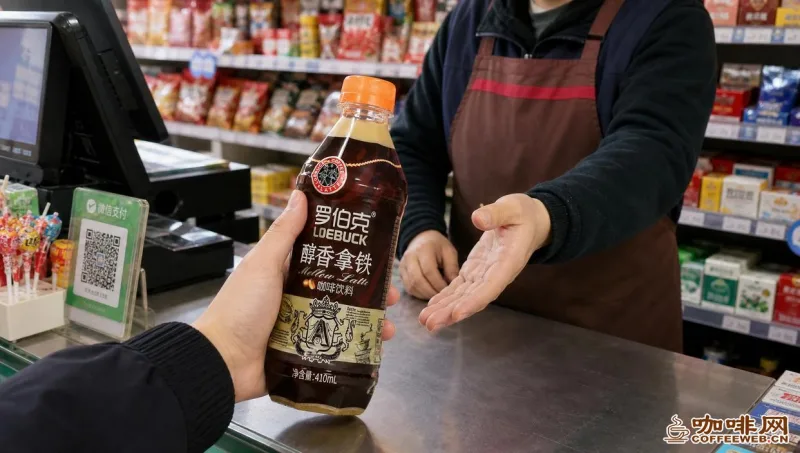
Robcock’s core competitiveness stems first from long-termism on the product side. The brand insists on Arabica coffee and uses deep roasting to reduce acidity and astringency, creating a differentiated taste reputation of “mellow, silky, tasty without astringency”, and its high palatability has made Robcock a “must-try for beginners” for many. When consumers choose in the 6–7 yuan price band, the certainty of “I’ve had it, it’s good, I want more” is more persuasive than any marketing gimmick.
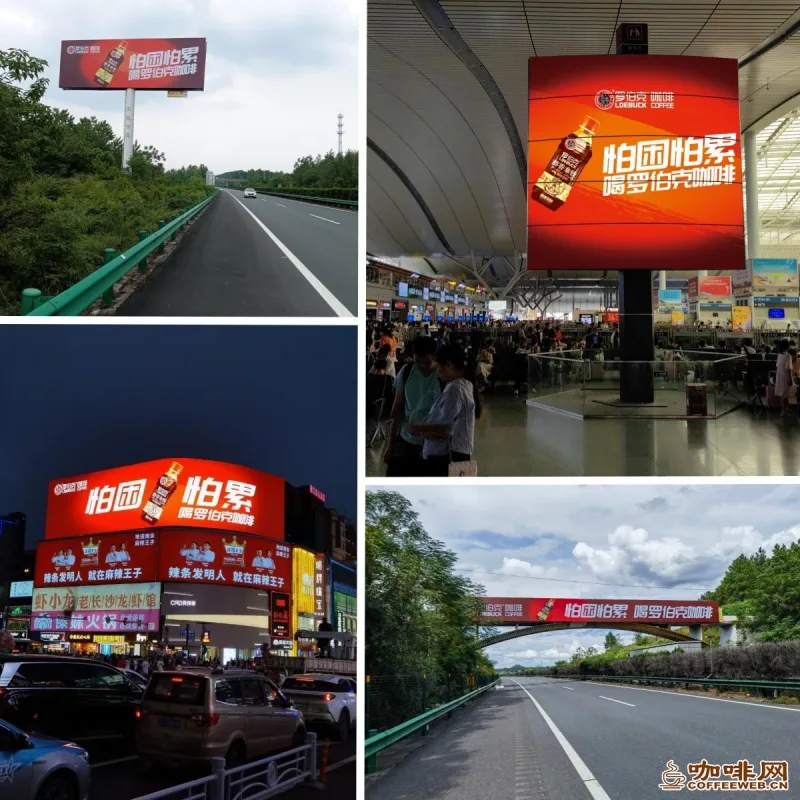
On the channel side, Robcock has completed its layout from regional to national. Leveraging the supply chain strengths of the Yetai Group, the brand continues to deepen its presence in convenience stores, small supermarkets, gas stations and other retail settings.Over the past two years, Robcock has run advertising on buses, in elevators and along several major national expressways, targeting high-frequency refreshment needs such as long-distance driving where people “fear drowsiness and fatigue”.At the same time, it invited actress Liu Tao to serve as product ambassador for its Mellow Latte and Silky Latte,taking the lead in sales on Douyin, and brand awareness is spreading rapidly from South China to the national market.
The production capacity layout likewise confirms the brand’s national ambitions. The Yuanzhou No. 3 plant, scheduled to start production in 2027, will add 18 fully automated aseptic production lines with expected annual capacity of more than 600,000 tonnes. Once fully operational, the Yetai Group’s three plants will have combined annual capacity exceeding 1.2 million tonnes. Capacity planning on this scale serves growth expectations for a national market rather than a regional holding strategy.
A 70% repurchase rate, 100 million bottles sold a year, and 600,000 tonnes of capacity about to come online. In the second half of the RTD coffee race, what matters is not who is loudest but who goes furthest — and Robcock is confident, with good reason.
Reprint Notice & Disclaimer
- This article has been edited and compiled by China Coffee Network. The information and images therein come from public sources and the copyright belongs to the original author. This reprint is intended solely for information sharing within the coffee industry and does not represent the views of this website; all data and opinions are subject to the original article. Our thanks to the original author for creating and sharing it.
- For matters concerning content licensing, attribution, copyright or otherwise, please contact us promptly and we will verify and cooperate in handling them as soon as possible. We also welcome coffee origins, brands and industry media to exchange ideas and contribute articles.
- Contact China Coffee Network: Tel 400-0000-641 (+86-18288016826) | Email 405854472@qq.com | Address: Jinghong, Xishuangbanna, Yunnan Province / Tieling, Liaoning Province
Related Reading
 ‘All-Ice’ Coffee Goes Viral! Will the Next Hit Be Your Personal Favorite?
- Hong Kong’s Dyee Coffee Lands in Qianhai, Building a Specialty Pour-Over Outpost
 Ken Yue Coffee Opens Egg-Tart Pop-Up in Hangzhou: Sweet Craft, Reinvented Classics
 World Cup Enters the Breakfast Slot: Can Coffee-Tea Brands Turn Traffic into Orders?
- ICE Agricultural Futures Mostly Rise at Close; Coffee Futures Up 3.28%
- ‘Sleep Cafés’ Become a New Favorite Among Seoul Office Workers



 Liaoning ICP Security No. 21122402000217