
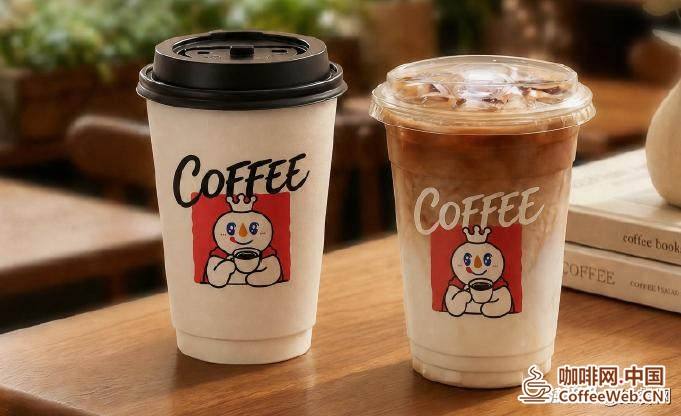
After tea and coffee are not divided, the winner or loser is in the last 3 kilometers.
Tea and coffee essentially compete for the 'last 3 kilometers'.
The products of the two types of stores become more and more similar, the prices are closer and closer, the category labels are gradually becoming invalid, and consumers are no longer confined to which store to enter or what to buy.
In the end, competition is no longer about tea drinks for tea drinks, coffee for coffee, or tea drinks for coffee, but about all beverage formats competing for the limited spending of the same consumer within 3 kilometers.
The customer group overlap rate reaches 80%, and coffee and milk tea are not separated
In November 2020, Nayuki Tea's first PRO store opened, with six more coffee options added to the menu. At that time, Nayuki publicly stated that "tea and coffee are not opposing, but coexisting needs." According to the New Beijing News, Nayuki's consumers had an 80% overlap in their demand for tea and coffee.
This is a common phenomenon in the entire industry, where the high overlap of customer groups allows tea drinks and coffee to penetrate deeper and deeper into each other.
A group of tea beverage brands are continuously increasing their investment in the coffee business, especially for players with a certain scale. Making coffee has become the second growth curve that must be won, and no one wants to fall behind.
In May of this year, Guming announced that it would invest another 400 million yuan in the coffee category, planning to increase the revenue share of coffee from the current 10% -15% to 20% -25%. By the end of 2025, over 12000 stores of Guming nationwide have been equipped with coffee machines, with a coverage rate of nearly 90%.
The number of coffee shops in Chabaidao has expanded from about 200 at the beginning of the year to over 2700, with coffee beverages accounting for about 30% of the total SKUs in the menu; Meixue Ice City has generously invested 1 billion yuan to subsidize franchisees to introduce fully automatic coffee machines, upgrading from drip machines to freshly ground ones; As of the end of last year, more than 6000 stores of Shanghai Auntie have completed coffee equipment upgrades.
△ Image source: Official Little Red Book of Meixue Ice City
Faced with the fierce attack of tea drinks, coffee brands are not to be outdone and have increased their investment in tea drinks.
In 2024, Luckin Coffee's new tea drink "Gentle Jasmine" was launched and immediately became popular, with a cup volume exceeding 44 million in the first month. Subsequently, new fruit tea, matcha, yogurt smoothie, fruit and vegetable juice and other products were successively introduced. As of May this year, Luckin Coffee's non coffee products have accumulated sales of over 20 billion yuan, which is no longer a scale that can be summarized by the words "side business".
In June last year, Starbucks announced its efforts in the non coffee beverage market and adjusted prices for its three flagship categories, including Starbucks Frappuccino, Iced Shake Tea, and Tea Latte, with an average reduction of 5 yuan; When introducing new coffee products, Kudi will also pair them with non coffee products. For example, recently, with a focus on peach elements, Kudi has launched three products simultaneously: Peach American, milkshake, and sparkling water, while meeting consumers' needs for coffee and tea drinks.
The two-way cross-border competition of back and forth has made the overlap between tea drinks and coffee increasingly high. The two industries, which were originally distinct, have now completely become competitors on the same stage.
Why did the final battle of tea cafes fall on the "last 3 kilometers"?
After the disappearance of category boundaries, consumers have a wider range of choices. When they want to have a cup of coffee or milk tea, both types of stores can meet their needs. The competition between tea drinks and coffee has fallen to the "last 3 kilometers".
The "3-kilometer living circle" is the concept of the retail circle – centered around consumers, within a radius of 3 kilometers, equipped with various formats that can meet high-frequency needs such as daily shopping, dining, and leisure. Nowadays, most people's consumption behavior mainly occurs within this range, even when ordering takeout, the platform will prioritize pushing stores within 3 kilometers.
On the other hand, this also determines the upper limit of store coverage. Catering mainly engages in peripheral business, whether it is stores opened in shopping malls or small shops in community stores. Everyone is guarding the same territory and competing for the same group of people.
Especially for high-frequency ready to drink categories such as tea and coffee, consumers' decision-making radius is already short. Few people would cross half a city area specifically for a cup of milk tea or American style tea, and more often solve problems along the way or nearby.
In the current era where tea and coffee are not separated, consumers who want to drink coffee can be satisfied in tea shops; If you want to drink milk tea, you can also buy it in coffee shops. The two types of stores are becoming more and more like "all-in-one beverage stores", like convenience stores, ultimately competing over who can attract consumers within 3 kilometers.
This means that competition in the tea and coffee categories will become even more intense. Taking Poly Plaza in Pazhou, Guangzhou as an example, there are a large number of office buildings gathered around the area, and the demand for beverages among office workers in the area is strong, making it a must win place for major brands. According to incomplete statistics, there are a total of 19 tea and coffee shops in this shopping mall, many of which have menus covering products from another category.
These stores are competing for every choice made by the same group of consumers within a 3-kilometer radius. At the same time, consumers' stomach capacity and budget are limited, and they only choose between tea and coffee. In the same scenario, there may be people drinking milk tea or coffee, but basically no one will have a cup of coffee and a cup of milk tea in their right hand.
Just by adding categories, we can't win the 3-kilometer race
In this "3-kilometer war", in addition to adding more coffee or milk tea to the menu, tea drinks and coffee shops are also trying their best to increase the chances of being selected and cover more consumption scenarios.
In a limited area, the number of stores directly determines the probability of a brand being seen, and brands with a scale of ten thousand stores have the upper hand in this competition. These players themselves have a dense layout of locations, whether it's communities, schools, office buildings, or transportation hubs. Their presence can be seen in almost any place with foot traffic, and their ability to reach consumers is far beyond that of small and medium-sized brands.
For example, still centered around Pazhou Poly Plaza, searching on Dianping, there are over 10 Meixue Ice Cities within 3 kilometers nearby. This means that no matter which direction consumers go or open food delivery apps, "Snow King" will appear frequently.