
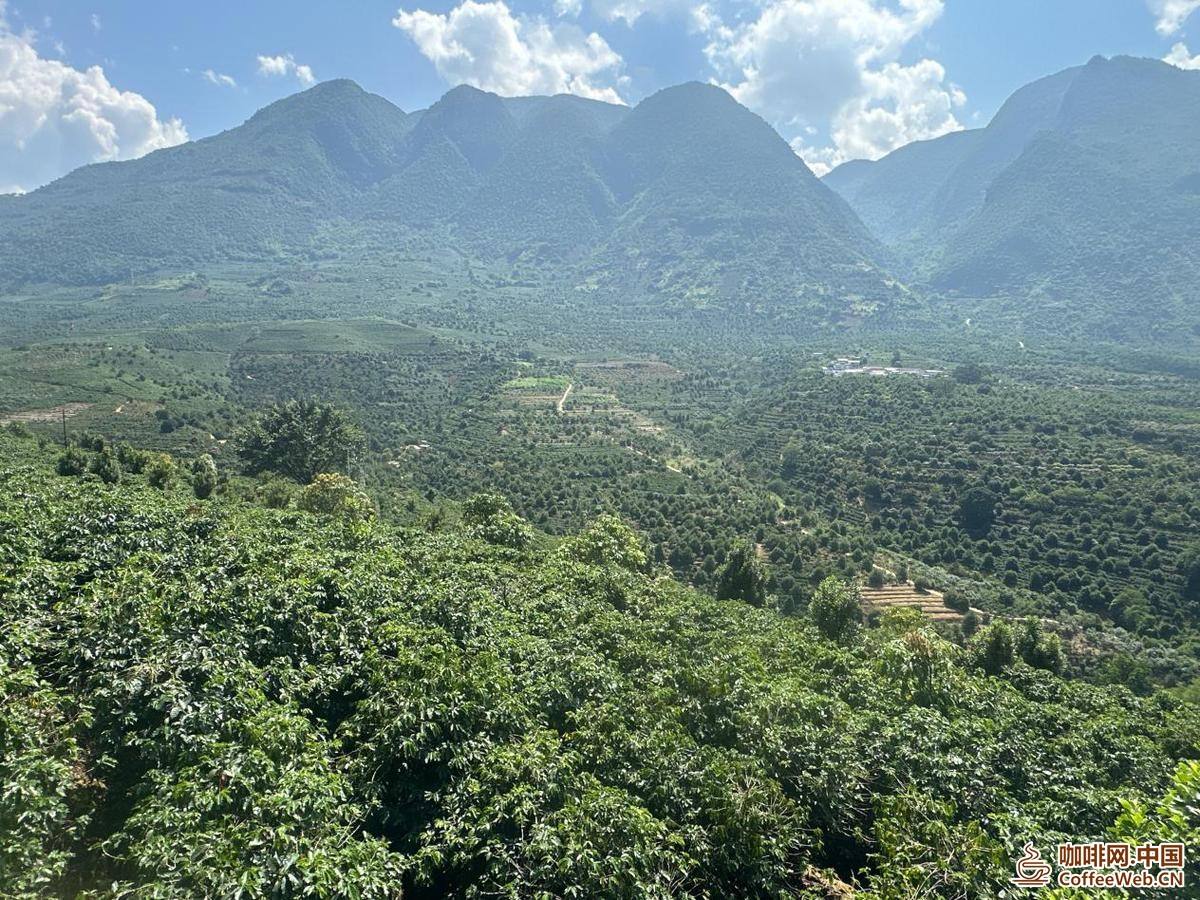
On the eve of the opening of the 10th China South Asia Expo, Baoshan City in Yunnan Province conducted supporting interviews and research activities around the coffee industry. Through the development of coffee beans from the field to the cup, Baoshan showcased its path from being a raw material base for small grain coffee to becoming boutique, branded, and integrated.
Baoshan is one of the main coffee producing areas in Yunnan. In recent years, relying on the unique natural conditions such as the dry hot valley of the Nujiang River, the ecological barrier of Gaoligong Mountain, and the significant temperature difference between day and night, the local area has continued to promote the improvement and efficiency of the coffee industry. Baoshan small grain caffeine has a rich aroma, mellow taste, and fruity flavor, which has gained increasing popularity among consumers.
Xinzhai Village Coffee Forest
In Lujiang Town, Longyang District, Baoshan City, contiguous coffee forests spread along the valley. This is one of the core production areas of Baoshan small grain coffee, and has also given birth to Xinzhai Village, known as the "Number One Coffee Village in China".
Data shows that by 2025, the coffee production area in Longyang District will reach 118700 mu, with a green bean output of 23100 tons, achieving an agricultural output value of 2.56 billion yuan, a processing output value of 7.68 billion yuan, a tertiary output value of 9.752 billion yuan, and a comprehensive output value of the entire industry chain of 19.992 billion yuan. The local coffee has a premium rate of 80% and a deep processing rate of 90%, and is transitioning from traditional cultivation to the development of the entire industry chain.
Industrial upgrading first occurs in the fields. In the past, the picking and initial processing methods of coffee fresh fruits were relatively extensive, which affected the quality of backend products. In recent years, coffee villages such as Xinzhai Village have started from picking, grading, and processing to promote the picking, grading, and standardized processing of all red fruits, guiding coffee farmers to shift from "selling raw materials" to "selling quality".
The changes brought about by refinement are also reflected in the income of farmers. The market value of fresh coffee and green beans continues to increase through high-quality and cost-effective products, order acquisition, and refined processing. Coffee is no longer just a mountain agricultural crop, but has also become an important support for increasing people's income and promoting rural industrial upgrading.
At the other end of the industry chain, Baoshan Coffee is extending from single life bean sales to deep processing, branding, and consumer experience. Local coffee companies continue to enrich their product matrix around premium coffee beans, hanging ear coffee, freeze-dried coffee, ready to drink coffee, and other products, promoting the extension of the coffee industry chain to the processing, consumption, and brand ends.
A cup of coffee is also becoming a new entrance for rural tourism in Baoshan.
On the banks of Shuanghong Bridge above the Nu River in Lujiang Dam, a coffee vendor known as "Uncle Coffee" by netizens attracts tourists with his unique way of making siphon coffee by burning it with a spray gun. The flames rose and the fragrance of coffee filled the air, attracting many tourists to come and check in. A roadside coffee stall has become a window for tourists to learn about Baoshan small grain coffee, and has also driven the sales of local coffee products and the expansion of rural consumption scenes.
In Xinzhai Village, coffee estates, coffee themed courtyards, handmade brewing experiences, coffee banquets, and cultural and creative spaces continuously enrich the tourist experience. Tourists can see coffee growing in the coffee forest, learn about the processes of fruit removal, drying, and roasting in the processing area, and also complete a cup of hand brewed coffee under the guidance of a barista. Coffee has transformed from an agricultural product into an experiential, communicable, and consumable rural lifestyle scene.
At present, there are 20 coffee estates and over 100 coffee shops in Longyang District. The development of estate economy and the integration of coffee and tourism has connected the coffee industry with agricultural production, processing and manufacturing, consumer experience, and rural tourism, and has also enabled more young people to return home to participate in coffee planting, processing, operation, and cultural tourism services.
The South China International Fair also provides an important window for Baoshan Coffee to showcase its brand image and connect with market resources. Relying on the exhibition platform, Baoshan Small Grain Coffee is continuously improving the visibility and market recognition of its production area, allowing more consumers to learn about coffee from the Yunnan Plateau.
From a coffee red fruit to a cup of premium coffee, from a coffee plantation village to a booth at the South China International Fair, Baoshan Small Grain Coffee is embarking on a development path driven by quality improvement and industrial upgrading. Nowadays, the coffee industry has become an important business card of Baoshan Plateau's characteristic agriculture, as well as an important support for driving people's income increase, promoting the integration of agriculture, culture and tourism, and expanding domestic and foreign markets.
(China Daily Yunnan Reporter Station Editor: Li Yingqing Correspondent: Jin Zhaoxiang)