

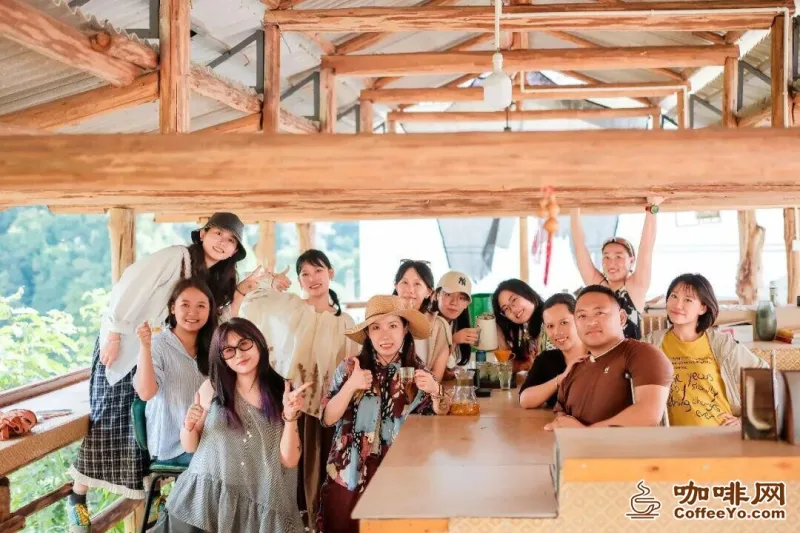
At ten in the morning, the mist over Pu’er’s Menglian has fully lifted. On the hillside of Mangzhang Village, Nayun Town, a faint roasted aroma drifts through the air — the smell of a fresh batch of coffee beans just out of the roaster. By the infinity pool, someone has already set up a laptop; group messages flicker on the screen as the clatter of keyboards rises and falls. A few steps away, another person is slowly pouring with a hand-drip kettle; the coffee grounds swell with heat, doming into a small cap. This is Mangmang Village Coffee Community, China’s first coffee-themed digital-nomad community; about 50 km from the China–Myanmar border, it is also the digital-nomad community closest to the national boundary in the country.
Mangmang Village is not a mature commercial attraction but more like a growing experiment — on one side a coffee plantation, a Dai village and the land that nourishes all things; on the other laptops and young people from cities across the country. In the Dai language, “Mangmang” means “a village within a village” — a name that fits the community perfectly. They rented land, built houses, gained villagers; two utterly different rhythms of life collide and intertwine here, slowly brewing the unique air of this “village within a village.”
From bean hunter to “new villager”
Rewind to before 2023: Mangmang Village was still an old coffee estate, and the Menglian county government was planning to redevelop it into a hotel. Called “China’s No.1 premium-coffee county,” Menglian sits on vast coffee forests and Dai culture, so tourism seemed a natural path. But Chen Danqi, founder of the Mangmang Village Coffee Community — a Jiangsu native who has spent over a decade in Menglian — saw another direction.
In 2012, Chen came to Menglian as a green-bean buyer for Seesaw. Before arriving, his expectations were high: a place that had grown coffee for over a century should be well developed. Yet once there, only one question lingered in his mind: why, in what might be the same coffee-growing land, could foreign coffee estates be built so beautifully, while in Yunnan, in the same coffee-producing region, planting was messy and facilities crude? Locals grew coffee much like rice, corn or sugarcane — harvesting the cherries, sending them to a washing station, simply processing and selling — nowhere near the refined management and processing of Brazil, Colombia or Costa Rica.
Back in Shanghai, Chen kept feeling “something’s not right” — so wrong he had to do something, to bring correct information and knowledge in. Good coffee takes at least four years to grow; from production to quality beans, another three or four; plus two more years of processing improvements… Soon the plan “Seesaw’s Ten-Year Yunnan” was complete. From then on, Chen shuttled between Shanghai and Yunnan. They organized coffee knowledge into handbooks, trained farmers in villages, teaching bit by bit, watching skills slowly improve. But not every effort bore fruit; more often, after training, farmers reverted to the old rough methods, leaving Chen deeply unsure.
Once, he trained in an unfamiliar village. It was the busy farming season; people only gathered after 9 p.m., and dialect barriers made the session feel futile. Unexpectedly, the next morning just after 6, someone knocked on his door — Zhang Hua, a farmer who had attended the night before, excitedly described never having heard such processing knowledge, and pulled Chen to his fields to see his picking method. Later, Zhang kept asking for improvements and trying them out. Because of him, Chen sometimes felt what he did might truly matter, might really reach some people.
At the end of 2020, Seesaw internally shifted the “Ten-Year Yunnan” from an origin project to a marketing one, meaning investment would tilt from origin to marketing. Yet at that juncture an accident happened: Zhang Hua passed away. The night he got the news, Chen lay awake for a long time, his mind in turmoil. Part of him thought: the person who gave him his original drive was gone, the company no longer supported it — should the project be abandoned at this point? Another part thought: having told so many “Zhang Huas” about the “Ten-Year Yunnan Plan,” he had to genuinely do the full ten years. Later, Chen resigned from his Shanghai job. No longer just the periodically visiting “bean hunter,” he truly became a “new villager” of this land — everyone calls him “Aqi.”
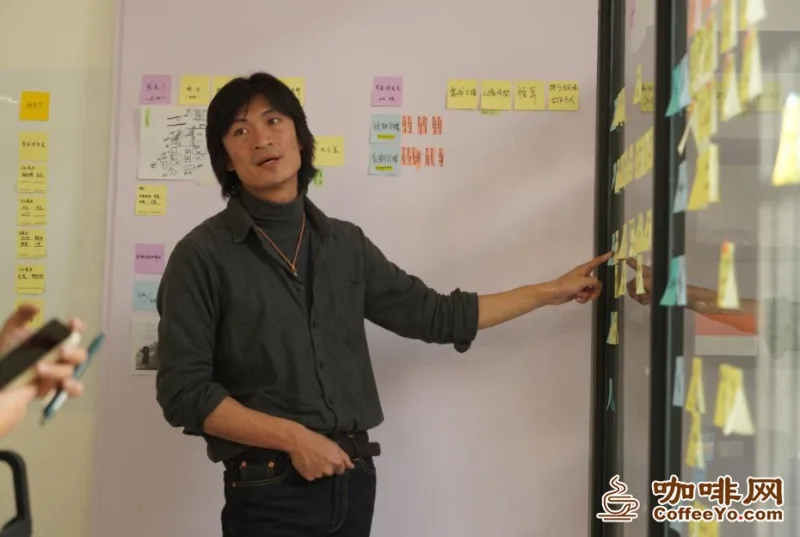
After coming to Menglian, Aqi founded a non-profit — the Yunnan Specialty Coffee Community (YSCC). At the time, local farmers and even estate owners rarely consumed the coffee they produced, and knew little of market changes; they struggled to understand how their cherries were used and consumed in the cities. YSCC was created to use free field training, origin roadshows and standardization to help scattered, vulnerable local farmers access the premium-coffee track and break the information barrier between origin and end market.
Later, Aqi led the founding of Yunnan’s first coffee-estate alliance. Organized by YSCC, it existed as a farmers’ cooperative with several estate owners operating jointly. Those two years were YSCC’s heyday: estates once at the bottom of the chain gained some ability to face the market directly. Product types and output advanced considerably, while unified purchasing, testing standards and related pricing and packaging made the alliance’s products more stable and durable, better meeting the needs of traders and large roasters. The alliance covered 1,700-plus coffee-farming households and built a “farmer + cooperative + market” industry-chain loop with a “65% to farmers, 35% back to public welfare” benefit-link mechanism. Many specialty cafés and roasters across the country gathered in the community; the industry widely believed this bottom-up origin self-rescue could drive Yunnan coffee’s fundamental upgrade.
But just two or three years later, YSCC quietly cooled and faded from view. The once-promising estate alliance eventually fell apart over interests. Initially, large and small estates banded together for fame, competitions and unified standards, riding collective traffic to break out. After becoming known, top-quality estates secured stable high-end clients and could sell premium beans independently, no longer needing the alliance for traffic or YSCC as intermediary. An idealistic origin public-welfare experiment hit practical-rule obstacles; sustained operation became untenable.
The old estate’s “unconventional” renovation
After YSCC cooled, the Menglian government planned to renovate the old coffee estate. If what YSCC did before was more about forming a window for the outside to see the coffee origin and its growers, then Aqi’s proposal — building a coffee community — was a space people could walk into, letting more people have the chance to enter, understand, blend in and recreate. This “Yunnan native,” dark-skinned, thin and tall, with wrinkles at the corners of his eyes like the furrows of the land when he smiles, prepared to try once more.
“Menglian’s current supporting facilities can’t sustain traditional high-traffic tourist resorts; it needs time to accumulate,” Aqi suggested. “And like industry development, cultural-tourism development needs talent and creativity. Cities are full of young people eager to escape high rents and cubicles, to escape being ‘trained into competition machines,’ yet unwilling to give up their careers. Menglian’s spring-like climate year-round and its quiet, low-traffic environment suit a coffee-themed ‘digital nomad’ community very well.”
The idea was somewhat ahead of its time; “digital nomad” was still an emerging concept in China. The Chinese context of “digital nomad” differs entirely from the Western traditional definition of “remote worker.” The latter usually refers to those who rely on the internet and complete professional tasks free of geographic limits — typical representatives being programmers, Web3 workers, freelance designers — centered on “work” and “efficiency.” Chinese digital nomads are not a simple translation of profession and life; they are willing to tie their work to the local place, and the work itself can carry a local-rebuilding quality. For example: a designer extracts visual language from Dai temple totems; a cross-border e-commerce worker turns local handicrafts into internationally circulating products; a brewer moves into a village, challenging industrial manufacturing with the most traditional ancient methods; a former race-car driver plans a rally route stringing together all local industries… Their arrival does not crowd out locals’ jobs, but may create a “guests-become-hosts” co-creation model.
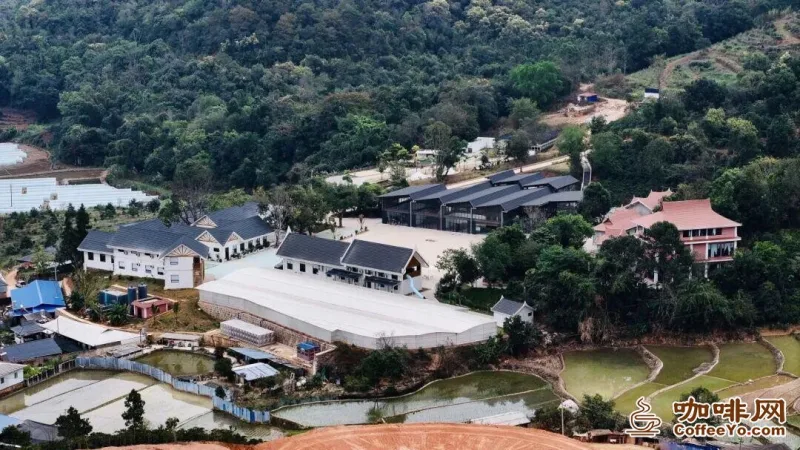
In 2024, the experiment of renovating the old coffee estate into a digital-nomad community officially launched. Nayun Town brought in coffee-industry special funds, Shanghai–Yunnan paired-assistance resources and social capital to build coffee factories, homestays, a community café, a pool, shared spaces and greenery, investing 34.39 million yuan, and Aqi named it “Mangmang Village.”
One of the core executors was Hu Pengcheng, 31, a spatial designer and Aqi’s longtime friend. Himself a digital nomad, he came to Menglian at Aqi’s introduction; versed in both spatial-design logic and the real needs of remote workers for work-and-life scenarios, he led the entire spatial planning and renovation design of the Mangmang Village Coffee Community. “Comfortable, natural, livable” was his consistent design core: letting the architecture recede into the surrounding coffee forest and Dai village.
Coffee in one hand, laptop in the other
In 2025, the Mangmang Village Coffee Community was basically built, and Aqi launched a 100-day internal test. Aqi said they are not “rural sub-landlords” or “new-concept homestays”; he hoped the arriving nomads would use their skills, curiosity, vibrant vitality and abundant goodwill to create new stories with Mangmang Village, with them, with this place. After the call went out, 194 digital nomads from 25 provinces and 56 cities poured in. They practiced 63 different professions — designers, programmers, self-media workers, financial analysts, independent directors. Each brought a laptop, a suitcase and a question: in this border village, can I work? Can I live?
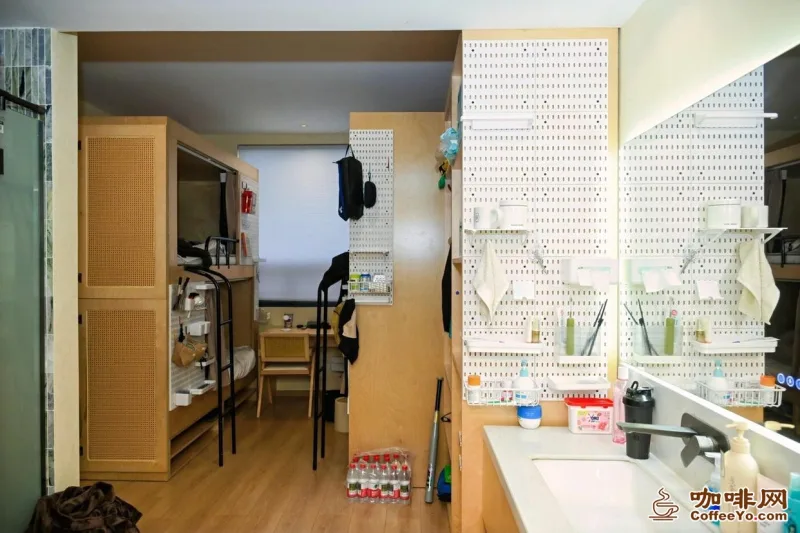
In the 100-day test, the community’s answer was: a four-bed dorm at 35 yuan/day, a double room at 45 yuan; high-speed network covering the whole area, with shared office, meeting rooms and an open-air pool all in place… Li Zhe, a programmer from Guangzhou who stayed three weeks, reflected: “Work efficiency here is no worse than Guangzhou, and outside the window is a coffee plantation; my monthly rent is less than a few days’ rent in Guangzhou.” For him, Mangmang Village offered not just a cheap stopover, but a high-quality life closely tied to nature at low cost. After work, the window no longer framed a cubicle but a thriving banyan tree, with insects chirping and birds singing — an unhurried, relaxed immersion impossible in a city office tower.
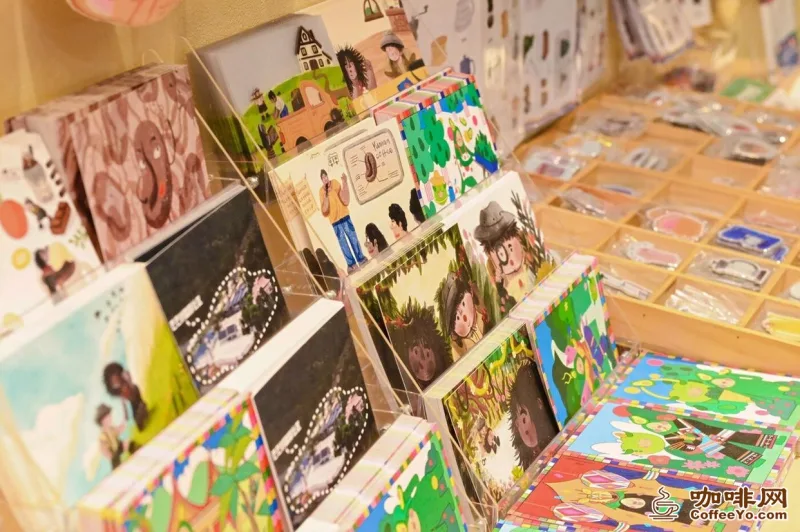
The community also bound “digital work” with “local industry.” After finishing work, nomads could walk into the fresh-fruit processing plant opposite to help shell coffee, and in the evening learn from Lahu villagers to judge cherry ripeness. Tang Tang, a designer from Shaanxi, said: “Designing to the coffee aroma at dawn, learning Dai pottery from an intangible-cultural-heritage bearer in the afternoon, sitting around a fire pit with villagers for tea and chat at dusk — this ‘work + life’ balance was unimaginable before.” After the test, she decisively stayed on as a “new villager” of Mangzhang Village. Yao Zhenqi from Shanghai had planned only two weeks, but didn’t leave. “First time cupping coffee, first time with intangible-heritage gold-water leak-printing — so many ‘firsts’ broadened my horizons. In this quiet little village, the surrounding beauty enchants me, the simple folkways move me,” he said. He formed a small team developing a series of coffee-themed cultural products — fridge magnets, tote bags, pour-over accessories. “We are not tourists; we are co-builders.” The coffee-themed fridge magnets he designed have become “mobile ads” nomads carry everywhere.
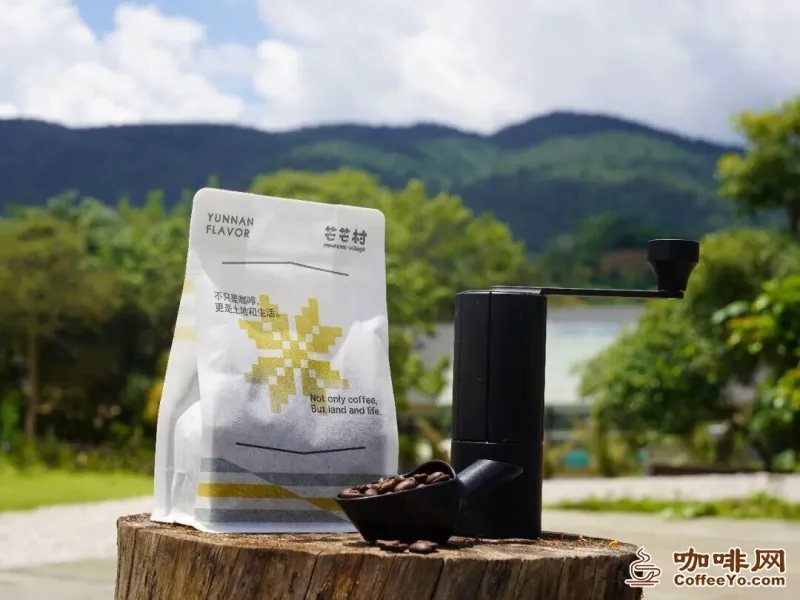
Of course, what truly turned “digital nomads” into “new villagers” was a carefully designed integration mechanism. Newcomers receive a “community experience card”: touring the coffee estate with villagers, learning Dai cooking and dining with locals — the first step of “breaking the ice.” Then “immersive experience”: experiencing intangible heritage amid coffee aroma and Dai flavor, making local friends, following weekly themed events across Menglian, digging out business opportunities and heritage stories in the industries. Local staff working in the community day by day also quietly watch this strange group of youth turn from “passers-by” into “new villagers.” Xiang Man, a Dai auntie in charge of community cleaning, usually just greets the young people briefly when they meet, casually asking if they’ve settled in. But over time she formed her own understanding of these “laptop-earning” youth: she never thought they were rich kids purely there to play, having seen them focus on work; only in her eyes the job was easy — many finished the day’s work in half a day, the fastest in two hours, with the rest of the time free to arrange, whether joining community activities or wandering the village paths.
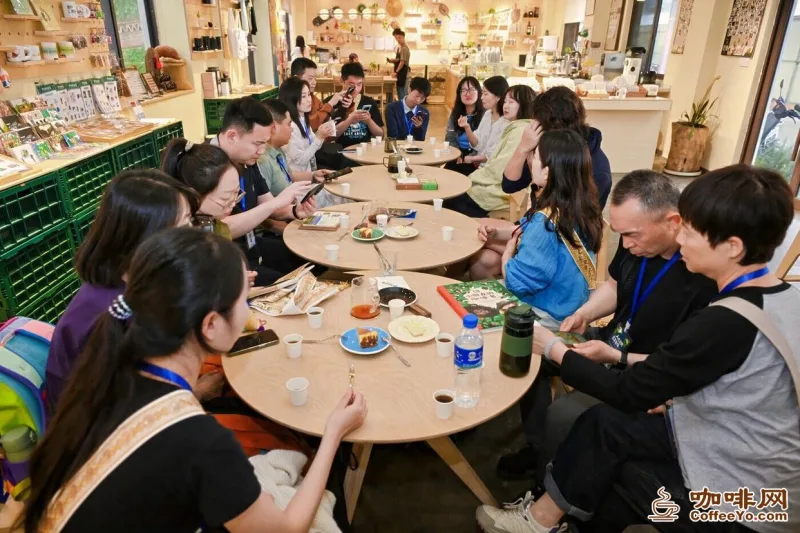
“Not a whirlwind tour, but an immersive life experience” — this is nomads’ common verdict of Mangmang Village. The community built a “weak-tie social + strong-experience scenario” model. Read frontier stories in the lodging library, join ethnic song-and-dance interactions at the camp bar, learn Dai brocade in the heritage workshop, experience the bean-to-cup process in the coffee estate. These scenarios precisely meet modern young people’s deep craving for community belonging — no longer needing utilitarian “connections,” but a relaxed, pressure-free “resonance of the same frequency” naturally formed from shared interest and present state. For them, belonging is not a long-term tether to a place or person, but in a short stay quickly finding “those who get me,” harvesting a grounded warmth of “you are not an island” in moments of daily company, spiritual resonance and joint creation.
On Xiaohongshu, this experience turns into personal “life slices”: “From Tsutaya Books to a coffee community on the China–Myanmar border,” “Mangmang Village 144 hours” — these shares avoid cookie-cutter check-ins, highlighting the unique feel of “niche,” “real” and “handmade.” Precisely because this real, infectious content spread widely on Xiaohongshu and other social platforms, more and more people were drawn in, even though Menglian’s transport is not convenient.
Not just a community, but an exploration of possibilities
In August 2025, the Mangmang Village digital-nomad entrepreneurship community was rated a city-level entrepreneurship community; in January 2026 it was upgraded to provincial level. For a community renovated from an old coffee estate, that speed is not slow. But Aqi seems to want more. “What we are building is not just a community, but a possibility.”
What possibility? For urban youth, a possibility of career development yet escape from the cubicle; of rejecting meaningless workplace socializing yet having community belonging — designing in a coffee plantation, holding a cross-border meeting in a border village… A Yao, an illustrator from Suzhou, Jiangsu, learned of Mangmang Village on Xiaohongshu and gave up popular stays like Xishuangbanna, Dali and Lijiang to come specifically to Menglian. Art-major by training and formerly a professional illustrator, she found Xishuangbanna too hot, Dali and Lijiang too cold in winter, while Menglian’s mild, comfortable climate suits long stays; the community’s shared office, open-air pool and gym balance work and leisure, fitting her ideal relaxed nomad state. More importantly, compared with saturated popular tourist cities, Menglian is niche and quiet, letting her draw illustration inspiration from local ethnic culture and pastoral surroundings, exchange ideas with youth from everywhere, and find new employment and entrepreneurship opportunities — suiting her to settle down and create.
Some come for inspiration, others to root and start businesses. Liu Yi from Hubei had done new-media operations in traditional industries like autos and real estate. Early last year, hearing of the Mangmang Village Coffee Community from a friend, he doubted a border village’s startup environment, until April, when he visited on a Yunnan trip and saw the eco-friendly environment and inclusive young entrepreneurial atmosphere, fully letting go of his doubts. At the end of December he formally settled in as an entrepreneurship partner of the coffee community, digging into the quality, categories and distinctive advantages of Menglian’s local coffee, and will later fully handle Mangmang Village Coffee’s whole-domain online operations across Taobao, Douyin and other major e-commerce and short-video platforms. Now Mangmang Village is also planning a nomad entrepreneurship-support program, intending to use the local ten-thousand-mu coffee plantation resources to support more creators wanting to root there. Meanwhile, they joined with Pu’er Vocational Technical College and others to build a “Digital Nomad Service Academy,” offering digital-skills and coffee-craft training.
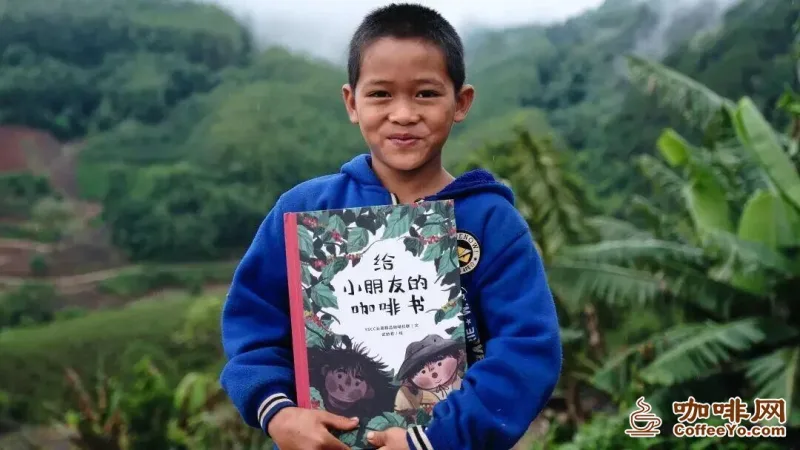
For local villagers, it is a possibility of employment at their doorstep without leaving home — Mangmang Village’s local staff ratio exceeds 60%, with fixed and flexible roles like housekeeper and cleaner, having driven over 200 villagers to “doorstep” employment. Xiang Man is one such “doorstep employment” beneficiary. She had done many odd jobs before, long doing cleaning at hotels far from home; now at Mangmang Village her workload and hours float with the number of residents, fairly flexible.
For Menglian’s coffee industry, it is a possibility of leaping from planting to brand, from raw material to value — through Mangmang Village’s window, this border-hidden coffee origin breaks geographic boundaries and is truly seen by the wider world. To let more young people stay and co-build at low cost, Mangmang Village launched a distinctive “work-for-stay” mechanism: outside youth can earn free accommodation and meals by participating in community building, taking small service projects and contributing professional skills — “skills for housing, co-building for sharing.” A fitness coach there about a month has not only organized group exercise daily but also provides regular fitness guidance for all resident youth; a new-media design youth there over two months independently completed the landscape design and implementation of the community’s entrance garden, personally raising the entrance’s look and feel — they turned from “onlookers” into “co-builders.” To date, the Mangmang Village digital-nomad community has received over 400 digital nomads from across the country, covering more than 20 cities, with the most from Shanghai, Hubei and Jiangsu.
In the evening, Mangmang Village comes alive again. Someone closes the laptop and puts down the phone, strolling to watch the sunset; in the shared kitchen a few just-met youth are cooking dinner. Though in Aqi’s eyes the community is still “unfinished”: the third-phase infrastructure still awaits construction funds; Mangmang Village’s nomad traffic is nowhere near the scale of Zhejiang, Jiangsu or Chengdu; each year it still needs the coffee-origin revenue projects to cover the community’s operating deficit; check-in and service-scope processes are imperfect; staff turnover is high; and a rainstorm in the wet season can still cut water and power… Yet it is precisely this imperfection that keeps its tensile force of growth. At the end of the interview, Aqi joked: “Let’s keep going on passion for now. Hope to slowly polish it into the ideal shape.”
The shadow of the coffee tree stretches long; an uncle at the village entrance rides his e-bike, leisurely greeting acquaintances. Tents in Mangmang Village stand like “new houses”; behind the café bar, a barista skillfully works the equipment; beyond the usual pour-over and espresso, the menu offers creative specialty drinks made with local avocado. In this small village on the southwest border, a group of just-met youth eat together, chat about the past and their traveling lives, re-seeking new ways of “work” and “life.” One cup of coffee, one community — an experiment about possibility has just begun.
Jointly produced by Yunji Youth × Menglian County Culture and Tourism Bureau × Yunnan Coffee Culture Center
Yunnan Daily – Yun News reporters: Dai Jiaoyang, Wu Peizhao
Menglian County Culture and Tourism Bureau: Mo Hailian, Duan Yinjiao
Editor: Zhang Yaolong
Reviewer: Li Xingwen
Reprint note and disclaimer
This article is reprinted by coffeeyo.com from Yunji Youth, jointly produced with Menglian County Culture and Tourism Bureau and Yunnan Coffee Culture Center. The copyright of the original belongs to the original producers and authors. This article is edited and organized by coffeeyo.com. Our reprint is solely for coffee-industry information sharing and does not represent this site’s stance; all data and views follow the original.
For content authorization, attribution, copyright or other matters, please contact this site promptly; we will verify and cooperate at the earliest convenience.
Contact coffeeyo.com: Tel 400-0000-641 (+86-18288016826) | Email 405854472@qq.com | Address: Jinghong City, Xishuangbanna, Yunnan / Tieling City, Liaoning
Reprint Notice & Disclaimer
- This article has been edited and compiled by China Coffee Network. The information and images therein come from public sources and the copyright belongs to the original author. This reprint is intended solely for information sharing within the coffee industry and does not represent the views of this website; all data and opinions are subject to the original article. Our thanks to the original author for creating and sharing it.
- For matters concerning content licensing, attribution, copyright or otherwise, please contact us promptly and we will verify and cooperate in handling them as soon as possible. We also welcome coffee origins, brands and industry media to exchange ideas and contribute articles.
- Contact China Coffee Network: Tel 400-0000-641 (+86-18288016826) | Email 405854472@qq.com | Address: Jinghong, Xishuangbanna, Yunnan Province / Tieling, Liaoning Province
Related Reading
 How ‘Sea-Flavored’ Coffee Blooms Across Dongtou
- Health Guide: How to Enjoy Your Coffee the Healthy Way
 Study: Regular Coffee and Tea May Lower Dementia Risk, but More Is Not Better
 Frontline Story: A ‘Mobile City Coffee Bar’ Arrives by the Grand Canal
 Yantai’s Wind Tastes of Coffee
 In Zhenyuan, a Cup of Coffee and a Waiting Train






 Liaoning ICP Security No. 21122402000217