
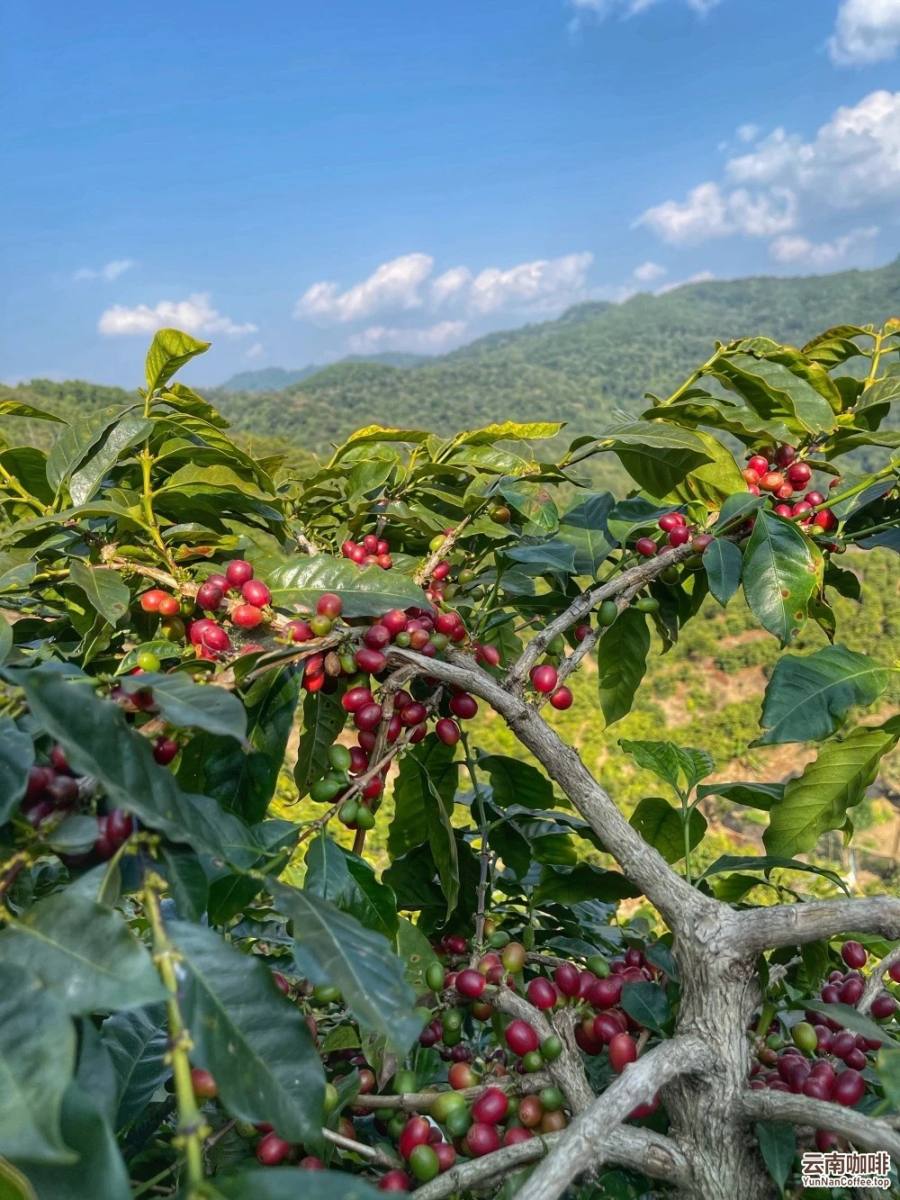
In the early morning, at the Junmashan Coffee Plantation in Mangshi, Dehong Prefecture, Yunnan Province, the aroma of coffee is strong. Although it is not the main season for coffee beans, the estate is still bustling with workers busy packing the processed coffee products into trucks. After completing the customs clearance procedures, a batch of products will be sent to overseas markets.
Yunnan Province is the main coffee producing area in China. In recent years, the local coffee industry has achieved a transformation from "raw material supply" to "brand output" through policy empowerment, quality upgrading, and international layout, while consolidating the local market and accelerating the pace of "going global". According to Kunming Customs statistics, in the first half of this year, Yunnan Province exported coffee and its products with a value of 650 million yuan, a year-on-year increase of 8.4%, ranking first in the country in terms of export scale. The export market covers 34 countries and regions including the Netherlands, Germany, and Vietnam.
Dehong Prefecture has a natural advantage in developing coffee cultivation due to its high altitude and long sunshine hours. Mangshi Customs, a subsidiary of Kunming Customs, is problem oriented and relies on the "Customs Enterprise Direct Train" service mechanism to provide one-on-one technical guidance for enterprises on soil environment monitoring, scientific fertilization, and other aspects of planting. Regular pest and disease monitoring is carried out to guide green prevention and control, ensuring stable coffee bean quality from the source. At the same time, we will guide enterprises to implement international standardized management systems such as GAP and HACCP, establish a full process quality traceability mechanism from the field to the market, and assist in the standardized and regulated development of Yunnan's coffee export industry, transforming "hard standards" into "soft power" to promote the transformation of Yunnan's coffee industry from "quantity" to "quality". Data shows that in the first half of this year, the export value of coffee and its products inspected by Mangshi Customs reached 150 million yuan, a year-on-year increase of 48%.
Behind the impressive export performance, enterprises also faced difficulties and challenges at one point.
The international market has high quality requirements for coffee and its products. Although the company has the strength to participate in international competition, it has also experienced delivery delays due to insufficient quality control capabilities, "said Lin Lingling, the head of Dehong Yun Tea House Coffee Co., Ltd.
To ensure the smooth export of coffee and promote the expansion of the international market of "Yunpin", Mangshi Customs has continuously strengthened the construction of laboratory testing capabilities and established a "coffee quality and safety testing system" that includes more than 100 parameters such as pesticide and heavy metal residues, microbial contamination, etc. It continues to promote the improvement and efficiency of testing work, and maximizes the compression of testing time while ensuring that coffee beans meet international standards.
We are continuously optimizing the customs clearance process, implementing the 'instant reporting, instant review, and instant certificate issuance' work mode, promoting the use of 'cloud issuance' and self-service printing functions for certificates of origin, efficiently processing certificates of origin, plant quarantine certificates, and other documents, and pressing the 'acceleration button' for coffee exports, "said the person in charge of the Comprehensive Business Department of Mangshi Customs. In the first half of this year, the customs issued a total of 39 certificates of origin for coffee export enterprises, which is expected to help related enterprises obtain tariff reductions of over 1.2 million yuan from importing countries (regions).
Not only Dehong, in recent years, more and more coffee from Yunnan is taking big strides into the global market. These "mountain small grains" grown in Yunnan, crossing mountains and seas, and gathering craftsmanship, are attracting consumers around the world with their excellent quality and unique flavor. (Xu Yumeng, Correspondent of China Guomen Times)
 Liaoning ICP Security No. 21122402000217