
At a Glance (China Coffee Network): Gejiu, Yunnan — The first phase of a 10,000-tonne-per-year instant-coffee deep-processing project by Xingfei (Yunnan) Coffee Co., Ltd. has recently been completed and opened in th…
Gejiu, Yunnan — The first phase of a 10,000-tonne-per-year instant-coffee deep-processing project by Xingfei (Yunnan) Coffee Co., Ltd. has recently been completed and opened in the Gejiu Light Industry Park. It marks a breakthrough “from zero to one” for Gejiu’s coffee industry and adds momentum to the Honghe Hani and Yi Autonomous Prefecture’s ambition of building a “coffee deep-processing centre”.
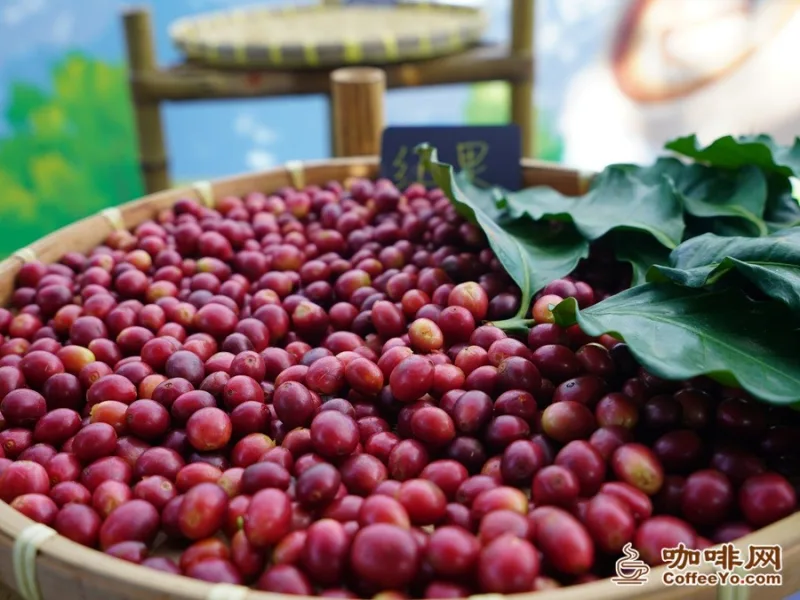
The project, located in the Gejiu Light Industry Park, represents a total investment of RMB 105 million. Phase one has built a 5,000-tonne-per-year spray-dried instant-coffee line, now in production; at full capacity it can generate annual sales of RMB 250 million. Phase two will add a premium freeze-dried coffee line, and once fully built the site will reach 10,000 tonnes of instant-coffee powder capacity with an annual output value of RMB 450 million.
Product mix and market orientation
The project mainly produces instant-coffee powder and coffee concentrate, supplying the domestic market with exports to Southeast Asia. On the product side, phase one centres on spray-dried instant coffee, while phase two is planned for premium freeze-dried coffee — matching the domestic instant market’s layered demand for “volume at the entry level, quality at the premium end”.
For a growing region, localising the processing step matters because it shortens the distance from cherry to shelf. Yunnan beans have traditionally been shipped out as dense native greens, with deep processing completed at coastal ports or by import traders. With a local deep-processing facility in place, commercialisation capability now forms on the production side itself, keeping more of the value added in the origin.
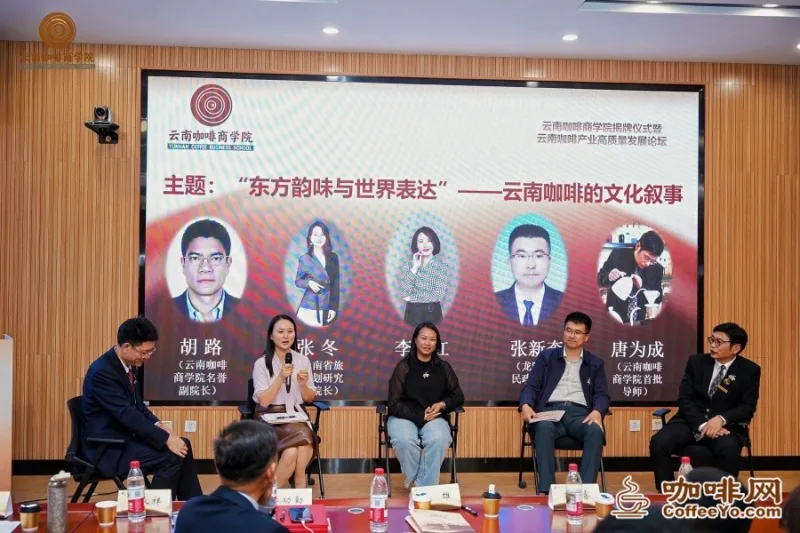
“Build the plant first, grow the beans later”: processing orders drive upstream planting
Unlike most projects that “plant first and find a market later”, this one pursues a “build the plant first, grow the beans later” model, using a “company + base + farmer” structure to develop coffee-growing bases with surrounding townships, so that processing orders pull upstream planting and the primary, secondary and tertiary sectors move together.
The logic is straightforward: fix processing capacity and market access first, then use confirmed order demand to organise planting scale and varietal structure in reverse, thereby reducing farmers’ market risk. For farmers, what to grow and how much now has a relatively clear counterparty; for the company, the stability and predictability of raw-material supply rise accordingly.
What it means for the industry
Gejiu’s practice offers a useful sample: against a backdrop of rapidly expanding consumption, competition among producing regions is shifting from “able to grow” to “able to process”. Instant-coffee deep processing is both an outlet for absorbing capacity and a channel for converting regional resources into standardised goods. With the phase-two freeze-dried line coming on stream, Honghe Prefecture’s role in Yunnan’s coffee landscape is expected to extend from raw-material supplier to processing node.
Reprint Notice & Disclaimer
- This article has been edited and compiled by China Coffee Network. The information and images therein come from public sources and the copyright belongs to the original author. This reprint is intended solely for information sharing within the coffee industry and does not represent the views of this website; all data and opinions are subject to the original article. Our thanks to the original author for creating and sharing it.
- For matters concerning content licensing, attribution, copyright or otherwise, please contact us promptly and we will verify and cooperate in handling them as soon as possible. We also welcome coffee origins, brands and industry media to exchange ideas and contribute articles.
- Contact China Coffee Network: Tel 400-0000-641 (+86-18288016826) | Email 405854472@qq.com | Address: Jinghong, Xishuangbanna, Yunnan Province / Tieling, Liaoning Province
Related Reading
 Nestlé Mainstream Ready-to-Drink Coffee Lineup
 Nongfu Spring Tan Bing (tàn bīng) Ready-to-Drink Coffee
 Luckin ‘Jixiang’ Ready-to-Drink Coffee Lineup (incl. Bottled RTD + Concentrate Launched Late April 2026)
 Taihu Lily Meets Coffee: the ‘Lily Latte’ Taking Yanglou Village by Storm
 Nayuki’s ‘Osmanthus Rice-Wine Milk Coffee’ Sells Out at Launch as It Doubles Down on ‘Coffee + Focaccia’
 Molly Tea Launches Floral Tea-Coffee Again: A Tea Brand’s Alternative Take on Coffee





 Liaoning ICP Security No. 21122402000217