
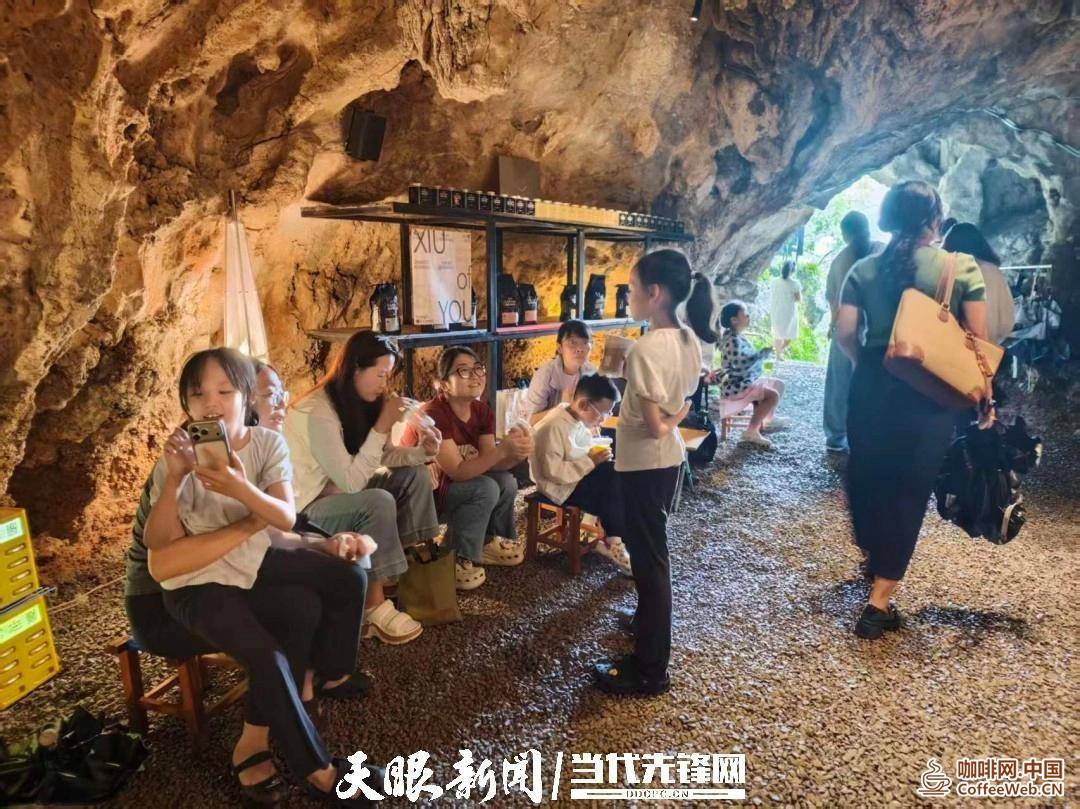
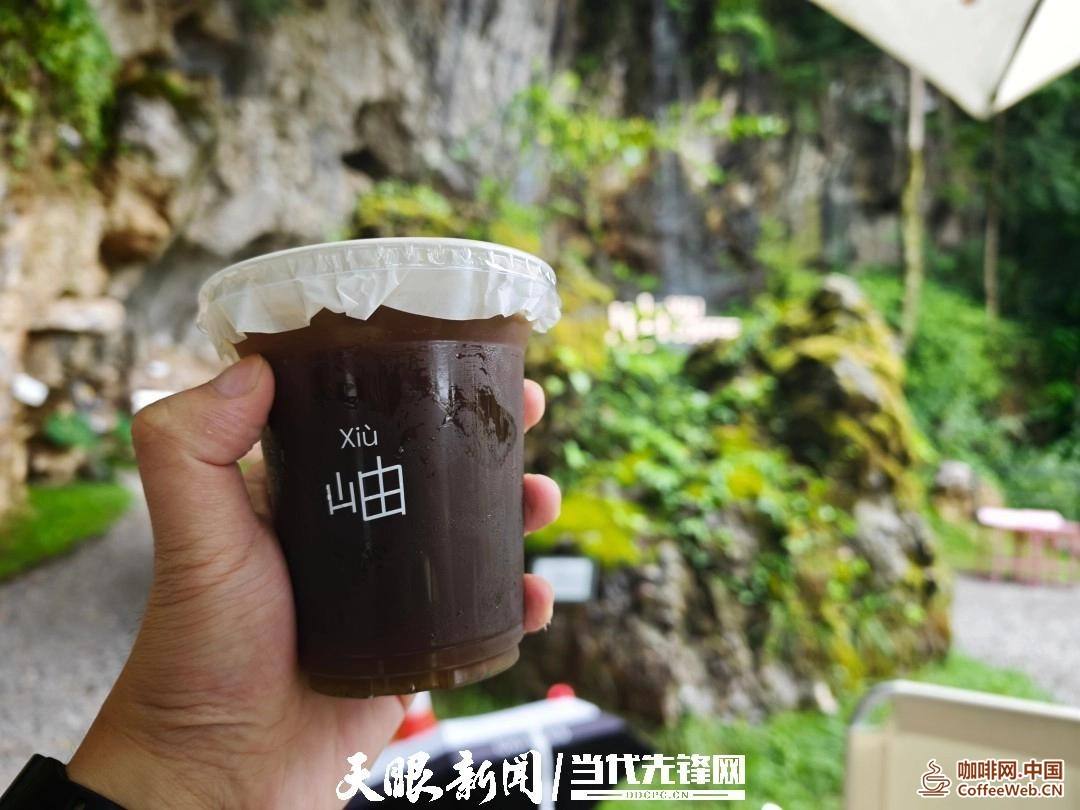
In a cave in Xiuwen County, Guiyang City, hundreds of tourists hold coffee every day and slowly enjoy the "cooling time" amidst candlelight, stone scenery, and the sound of water droplets.
Tourists queue up at the entrance of the cave to collect coffee.
This cave coffee shop called "Shan You XIU" has received a total of 60000 visitors and over 80 million online views since its trial operation in August last year. The internet famous cafes that have grown out of karst caves reflect the innovative path of Guizhou's transformation from "two mountains".
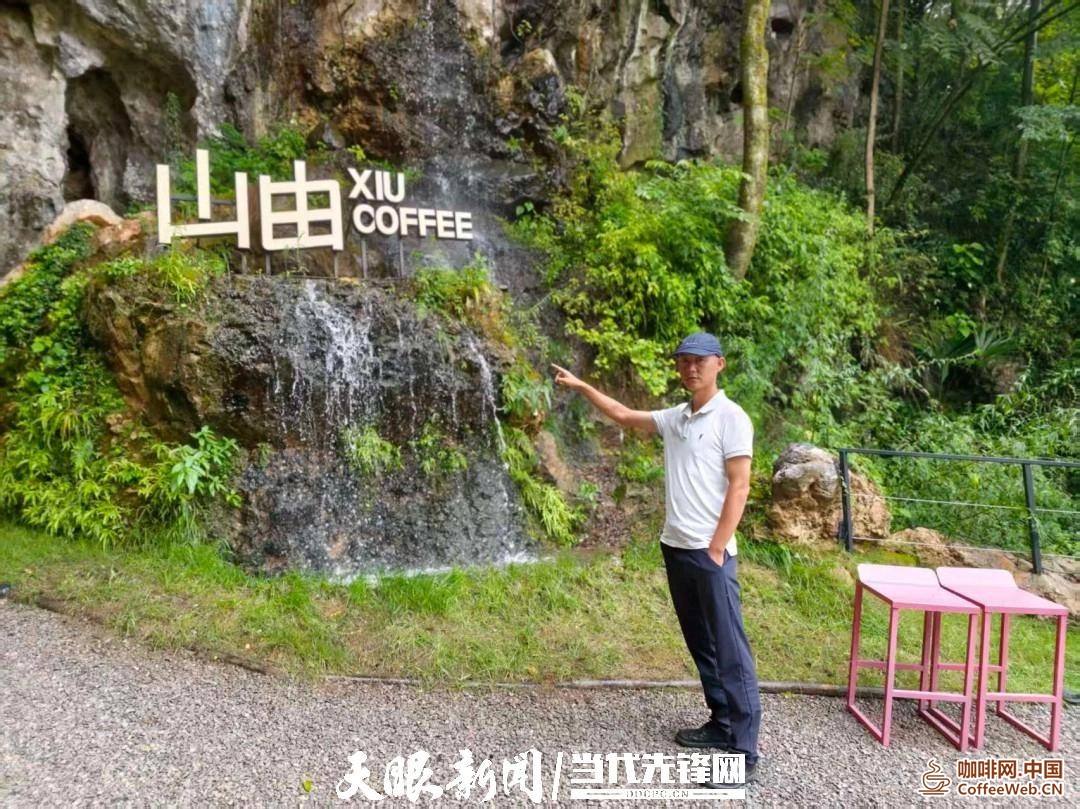
On August 3rd, the reporter drove about 50 minutes from downtown Guiyang to reach the cave coffee shop located in Xiangbahu Village, Xiuwen County. Despite it being a working day and heavy rain, there were still many vehicles from Zhejiang, Beijing, Guangdong, Sichuan and other places parked in the parking area in front of the cave.
Carrying an umbrella through a gravel road, a plaque reading "Mountain by XIU COFFEE" came into view. After entering the cave, the world suddenly quieted down, and only the sound of dripping water, wind, and coffee machine grinding could be heard in my ears.
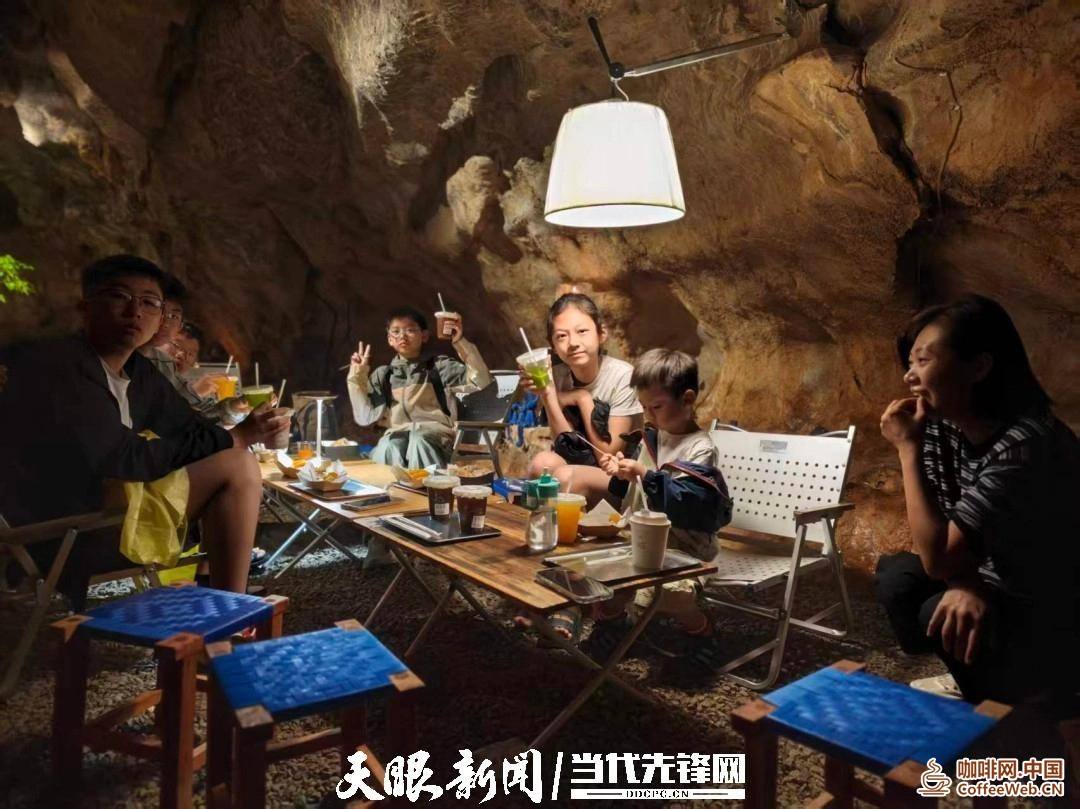
Ms. Huang (first from the right) and her group of tourists from Yiwu, Zhejiang.
Tourists lined up in front of the bar, and Ms. Huang from Yiwu, Zhejiang, held a cup of "Mujiangzi American style" and leaned in close to her companion's nose. "Do you smell it like the dipping flavor of sour beef soup you had yesterday?" She told reporters, "I came across this cave coffee shop on Xiaohongshu and will leave Guizhou tomorrow. Even if it rains today, I have to come and taste the 'cave coffee' here
The folds of the cave wall are warm and moist, and stalactites shine under the lamp. The geological patterns of billions of years have become a unique backdrop. No painting, no excessive finishing. Just added candles, starry sky lights, and dozens of detachable tables and chairs.
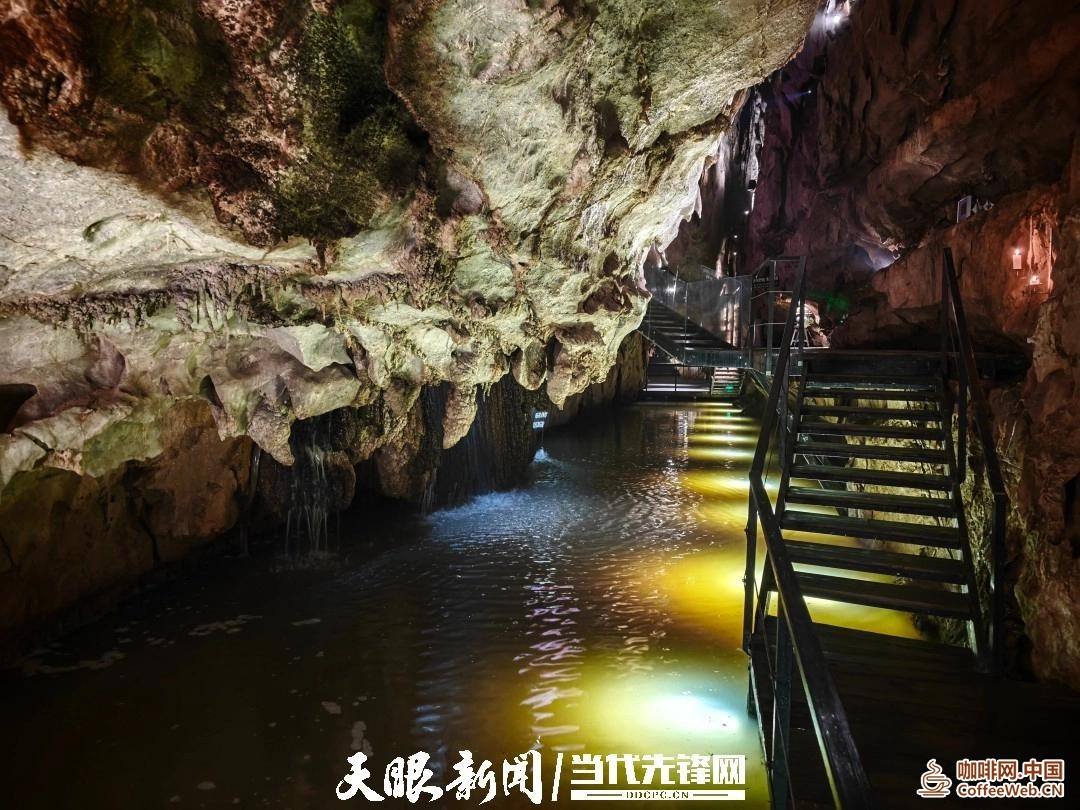
Cave coffee water cave area.
The cave was already beautiful. We didn't make any unauthorized modifications, "said Yuan Honglong, one of the partners of the cave coffee shop, who was busy at the bar.
He knocked on the cup and said, "The cup is new, the hole is old. Primitive objects remain unchanged, while new things can be disassembled, striving to minimize disturbance
A cup of coffee doesn't sell beans, it's an emotional experience.
Young people crawl into caves in the mountains, listening to water droplets, watching stalagmites, and flipping through two pages of books. The emotional experience of having a cold rock wall on the left and hot coffee on the right is difficult to find in a noisy city.
Yuan Honglong.
Two years ago, in this rarely visited cave, there were uneven paths underfoot, domestic sewage discharged from upstream above, and mud over 2 meters thick at the bottom of the cave. At one point, it made it difficult for Yuan Honglong and his partners who wanted to introduce the coffee shop format here.
At that time, when I walked in, I couldn't even pull out my shoes, "Yuan Honglong pointed to the now flat gravel road and said. After deciding to open a shop here, they did not engage in large-scale construction, but treated the cave like repairing porcelain: the mud was transported out in baskets, the sewage was filtered layer by layer, and even the tables and chairs could be moved away at any time.
The current cave is a different scene. The aroma of coffee mixed with water vapor, tourists cool off in water caves or hold a book in dry caves, accompanied by stalagmites that have existed for billions of years. This peculiar experience of "touching stalagmites with their left hand and holding a scroll with their right hand" made them willing to queue up in the rain and wait to enter the cave.
Coffee special kiwi American style.
This cave not only witnessed the growth of a coffee shop, but also highlighted the progress of ecological civilization in a region.
Xiuwen County has 402 karst caves, most of which used to be unclaimed "wild caves" with primitive landforms and idle for years. Some caves have even become "garbage caves" due to environmental degradation. In order to reverse this situation, the entire county has carried out surveys of karst cave resources, clarified territorial management, and gradually clarified the boundaries of village collective property rights and management responsibilities, transforming unclaimed idle mountains into ecological assets with clear property rights that can be invested and operated.
At the same time, the Comprehensive Administrative Law Enforcement Bureau of Xiuwen County has established a normalized management and protection mechanism, and conducts regular spot checks on registered karst caves. Relying on the integrated urban-rural environmental sanitation system of "village collection, town transportation, and county treatment", a total of 5 tons of accumulated garbage in karst caves have been cleared and transported to Hanlan Guiyang Garbage Incineration Power Plant for harmless disposal since the beginning of this year, cutting off the source of karst cave pollution from the source.
Various measures have provided opportunities for the emergence of cave coffee.
The previously unattended karst caves have now become all-weather managed and protected, which is equivalent to using commercial revenue to support ecological management and protection. "Yuan Honglong deeply understands that karst ecology cannot tolerate trial and error." Store revenue continues to invest in karst cave environmental monitoring, rock mass maintenance, and forest vegetation restoration, forming a closed loop of resource feedback and protection, so as to enable the sustainable development of the cave coffee industry
Moreover, due to its proximity to scenic spots such as Taoyuan River Drifting, Guizhou Forest Wildlife Park, and Qianshan Ranch, more than 500 beds of homestays and farmhouses around the coffee shop were fully booked as early as early July.
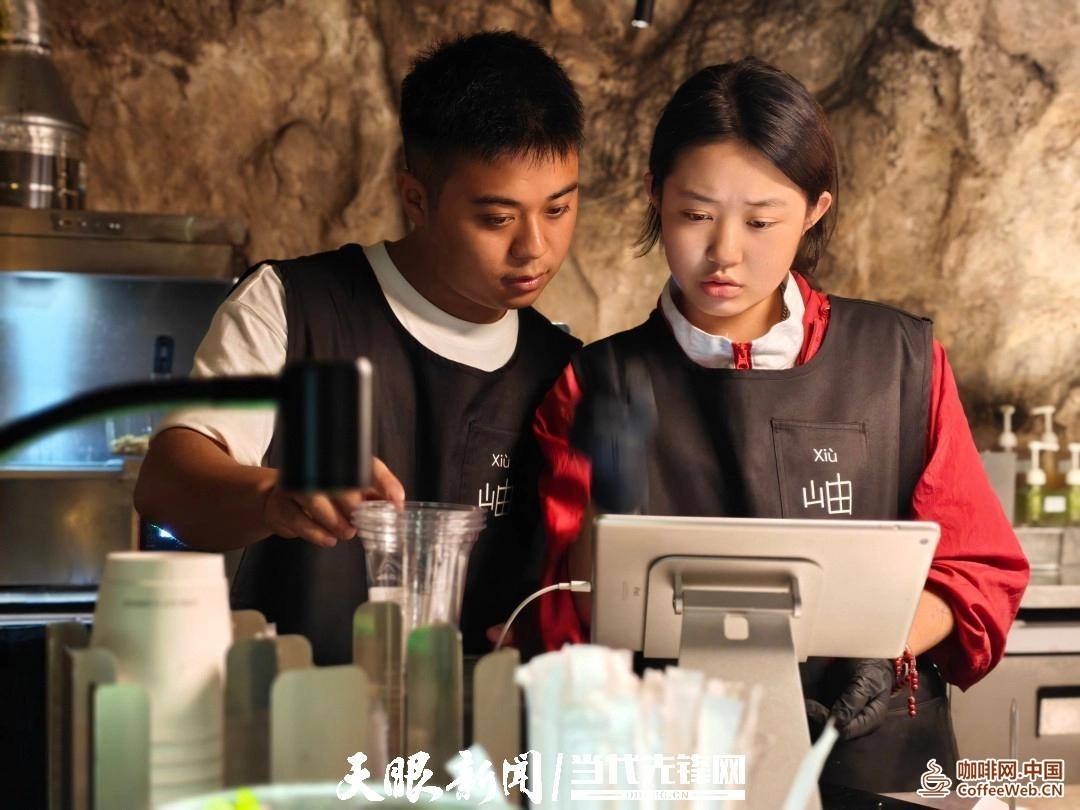
The popularity of coffee shops not only protects and revitalizes cave resources, but also retains people's hearts. 23 local faces have fulfilled their employment dreams at their doorstep. Su Fengfei, 22 years old this year, is a young man who has just graduated from a medical college. Due to his love for grinding coffee, he returned to his hometown and worked at a cave coffee shop.
Su Fengfei (left) and colleagues are checking coffee orders at the bar counter.
Wrist flipped, milk foam bloomed in the cup like a flower. Watching her hometown become famous for this cup of "dongka", Su Fengfei's tone was proud: "Grinding coffee is my hobby. I can make more than 60 cups of coffee every day now. When I interned at the school cafeteria coffee shop, I knew that I couldn't live without this rich aroma in my life
Currently, three cave coffee shops have taken root in Xiuwen County. The county will firmly grasp the "golden key" of resource ownership, string together the "red rope" of collective investment, build a "stage" of integration of the tertiary industry, awaken the dormant karst cave resources in the mountains, and truly turn them into ecological dividends visible and tangible to village collectives and the masses.
Tianyan News reporter Zhang Hongtao
Editor Peng Linyuan
Second instance Xie Wei'e
Third instance Gan Jiangdong
 Liaoning ICP Security No. 21122402000217