
I used to work in Ethiopia and fell in love with Ethiopian coffee from Africa there. I just had two cups this morning and it was very delicious. I believe that in the future, I can buy Ethiopian coffee directly from Chinese supermarkets and also from other African countries.
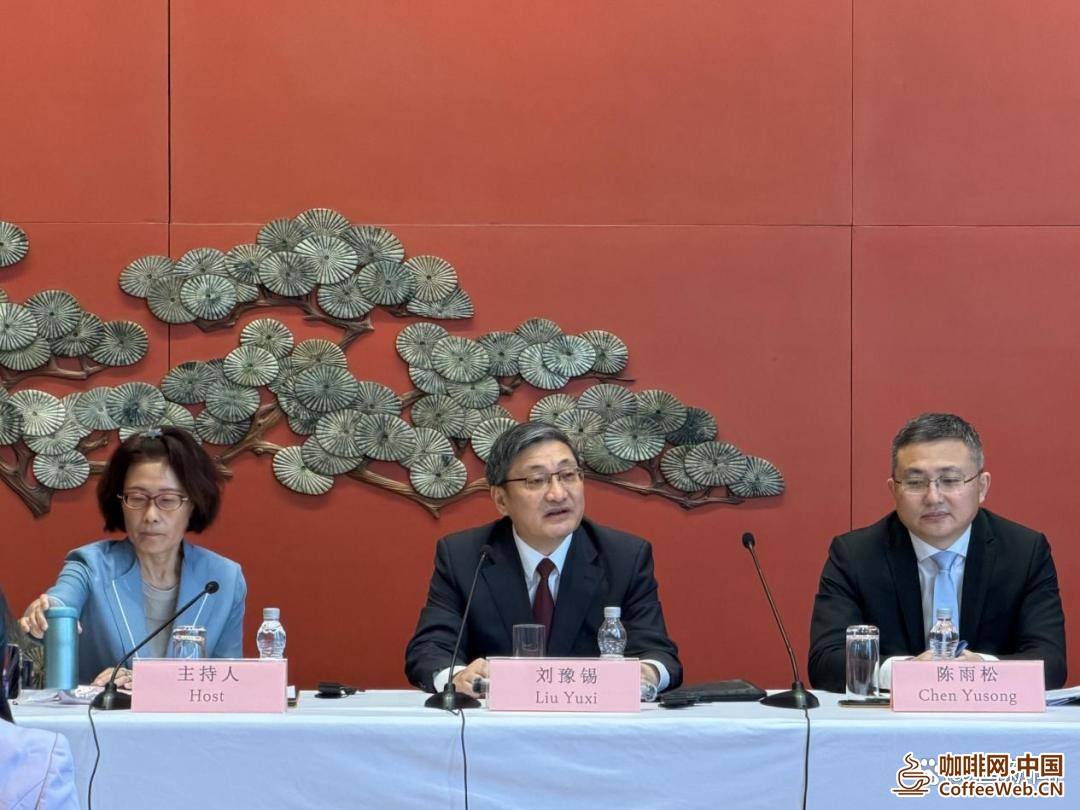
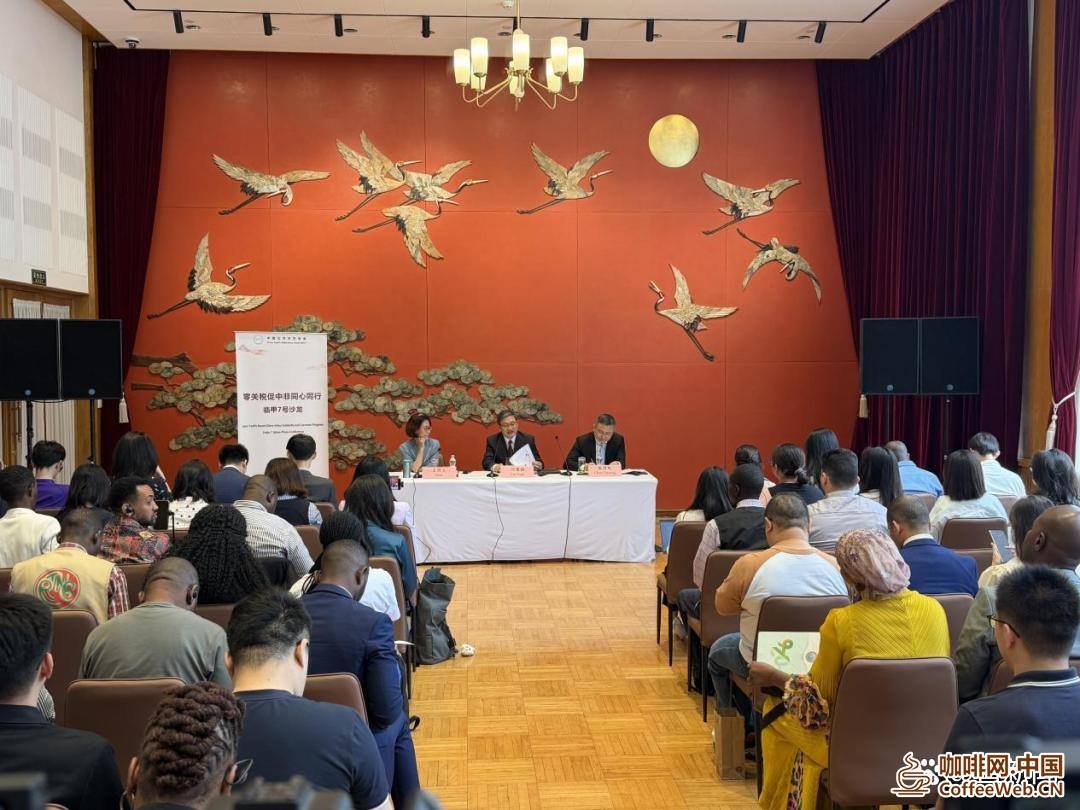
On May 19th, the China Public Diplomacy Association held a special press conference on the "Linjia No. 7 Salon" in Beijing, with the theme of "Zero Tariffs Promoting China and Africa to Walk Together". At the beginning of the press conference, Ambassador Liu Yuxi of the Forum on China Africa Cooperation first advertised for African coffee.
Starting from this month, China has fully implemented zero tariff measures for 53 African countries with diplomatic relations, becoming the world's first major economy to achieve unilateral and comprehensive zero tariff treatment for all African countries with diplomatic relations and all least developed countries with diplomatic relations.
What can zero tariffs bring to the people of Central Africa? This starts with a coffee bean.
Strong cooperation and long-lasting friendship between China and Africa
China has maintained its position as Africa's largest trading partner for 17 consecutive years. The trade volume between China and Africa has reached a historic high for five consecutive years, and in 2025, it exceeded 300 billion US dollars for the first time. In the first quarter of this year, China Africa trade remained active, with China's imports and exports to Africa increasing by 23.7%. Among them, imports from Africa increased by 14.6%.
Coffee beans are a major export product for many African countries. According to public reports, in the first nine months of 2025, China's total imports of coffee and related products from Africa exceeded 504 million US dollars, with imports from the famous coffee producing country of Ethiopia accounting for approximately 410 million US dollars.
The Ambassador of Ethiopia to China once said that coffee symbolizes strong cooperation and long-lasting friendship. China's zero tariff policy helps African countries improve their production and export capabilities, and increase export product revenue, "said Liu Yuxi.
Chen Yusong, Deputy Director of the World Trade Organization Department of the Ministry of Commerce, introduced that relevant industry reports show that in the past 10 years, China's coffee consumption has grown rapidly at an average annual rate of 15%, far exceeding the global average annual growth rate of 2%. The per capita coffee consumption in China is currently only 28 cups, while the average per capita coffee consumption worldwide is 70 to 75 cups. East Asian countries may have around 100 cups, while Europe may have 200 to 300 cups. Although the consumption of coffee in China is growing rapidly, it is still far below the global average.
This means that there is still great potential for the consumption of coffee in China in the future, and it is expected to soon become the world's largest importer of coffee, "said Chen Yusong.
After enjoying zero tariff imports, the cost of African coffee beans will be further reduced, and Chinese consumers can taste premium coffee at a lower price, which is also an important reason why zero tariff has been warmly welcomed by the Chinese people.
Now, African products such as Ethiopian coffee, Kenyan avocados, Gambian cashews, and Tanzanian sesame have formed stable demand in the Chinese market. The zero tariff measures will further facilitate the expansion of African products' exports to China, while also effectively enriching the supply in the Chinese market and providing consumers with more diverse new choices.
Helping 'Made in Africa' break away from the Western model
More importantly, zero tariffs can also promote cooperation between Chinese and African enterprises to extend the industrial chain. For example, coffee beans can be extended from simple cultivation to processing, roasting, and packaging, moving towards a more standardized, professional, and high-quality direction, and creating a large number of jobs.
At the press conference, facing African journalists, Chen Yusong emphasized that some African countries may face trade deficits with China, which is caused by multiple factors such as their own industrial structure, product structure, and international division of labor. China never deliberately pursues trade surplus, but focuses on pragmatic win-win cooperation and has always been a fellow traveler on the path of African development.
China not only imports a large amount of products from African countries, but also exports a large amount of intermediate products to Africa. In the past five years, China's average annual growth rate for intermediate goods such as non export textile fabrics, automotive parts, and photovoltaic products has been 9.3%. These intermediate products are the raw materials and parts used by African factories for production, coupled with technical services, Africa can form or enhance its own processing capabilities, retain value-added locally, form a local industrial chain, and accelerate its own industrialization process.
In 2025, Chinese enterprises will invest 3.6 billion US dollars directly in non industry sectors, a year-on-year increase of over 40%, involving various fields such as industry, agriculture, and infrastructure.
Liu Yuxi analyzed that zero tariff measures can provide strong policy momentum to support China's expansion of direct investment in Africa. Driven by the policy dividend of zero tariffs, it is expected that more and more capital, technology, equipment, and management experience from global trading partners such as China will seek to achieve more organic integration with Africa's resource endowment, help Africa leverage its comparative advantages, create an industry trade linkage mechanism of "zero tariff investment and processing in Africa, and zero tariff export of finished products to China", and help cultivate a group of "Made in Africa" to grow and develop. Breaking the traditional international division of labor pattern of exporting raw materials and importing finished products in Africa, and opening up a new path for the economic development of African countries to break away from the Western model.
"It is regrettable that Eswatini has been excluded"
Currently, among the 53 African countries that have established diplomatic relations, 33 countries have enjoyed zero tariffs granted by China to the least developed countries in the form of preferential tax rates. The zero tariff policy, which will be implemented from May 1st, is aimed at 20 African countries that do not belong to the least developed countries and have diplomatic relations. It will be implemented in the form of preferential tax rates for a period of 2 years.
On May 1st at midnight, 24 tons of South African fresh apples became China's first zero tariff imported goods to enjoy preferential treatment, and smoothly entered the Shenzhen Bay Port. On the same day, Kenyan avocados, Egyptian fresh oranges, Moroccan gypsum, and Nigerian beef bones also entered the country from Guangzhou, Shanghai, Jingmen, Dalian, and other places. From the coast of the South China Sea to the coast of the Bohai Sea, more high-quality African specialty products brought by zero tariffs are accelerating their entry into China.
However, the zero tariff measure is only applicable to African countries that have established diplomatic relations with China, and Eswatini, which has not established diplomatic relations with China, is not one of them.
Eswatini is a landlocked country in southeast Africa and one of the few countries in the world that still practices absolute monarchy. Some media people called on Eswatini to establish diplomatic relations with China as soon as possible and not to miss development opportunities again and again. The spokesperson of the Chinese Ministry of Foreign Affairs also stated that China's large market has opened its doors to Africa, and sincerely hopes that all African countries can become members of the "family portrait" of China Africa cooperation, ride the fast train of China's development, integrate into China Africa friendship, and achieve common modernization between China and Africa.
Will China take the opportunity of zero tariff to discuss relevant issues with Eswatini? This kind of interaction should be two-way, "Liu Yuxi emphasized to Shenzhen TV's direct news reporter.
Previously, Lai Qingde was forced to cancel his attempt to visit Eswatini by chartered plane because the countries concerned adhered to the one China principle, and then suddenly arrived in the private plane of the King of Eswatini. At the briefing, Liu Yuxi pointed out that the Eswatini authorities stubbornly insisted on linking with China's Taiwan region, which seriously violated the one China principle, the basic principle of international relations. It is regrettable that the people of Eswatini were excluded from the scope of zero tariff benefits because of the wrong choice of the authorities.
"The Chinese people have always held friendly feelings towards the people of Eswatini. The Eswatini authorities should face up to the international trend, conform to the public opinion, and return to the right path of the one China principle as soon as possible, so that the people of Eswatini can benefit from zero tariffs and share the development opportunities brought by China's big market," he said.
Reporter | Dong Xin
Camera | Yuan Zijian
Layout | Li Shuo
Editor | Lin Shuqi
Proofreading | Song Jingjing
Producer | Zhou Yuguo
 Liaoning ICP Security No. 21122402000217