
People's Daily reporter Yang Wenming
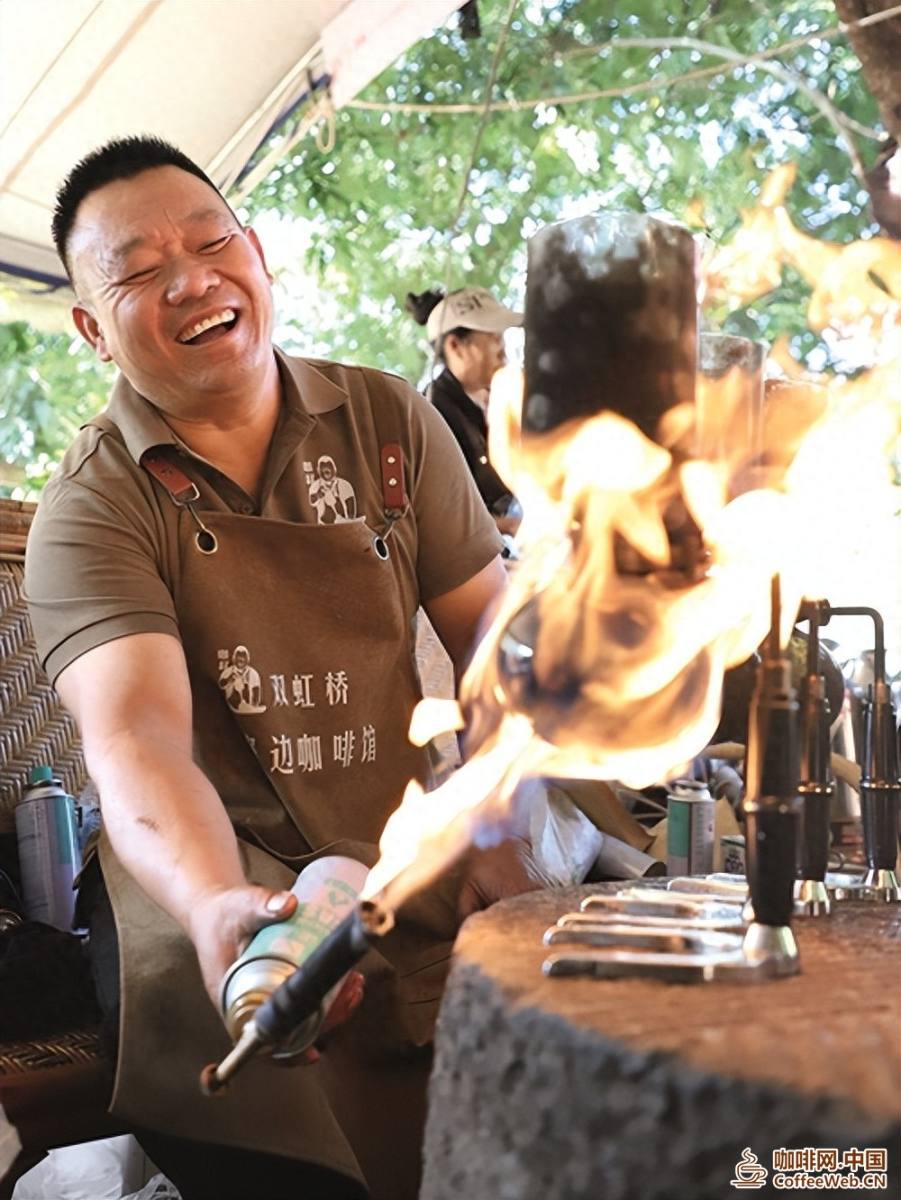
The disciple sounded a gong, and the master "Uncle Ka" Li Jinhe appeared.
One, two, three, fire! "The spray gun burned the siphon pot, and tourists took out their phones one after another, relying on the unique spray gun to brew coffee and a sense of ceremony. The" roadside caf é "located in Lujiangba, Longyang District, Baoshan City, Yunnan Province has become a popular check-in spot for internet celebrities.
Local people pass by and step on the brake to taste it, while tourists who drive in northwest Yunnan come specifically to experience it. The long silent Tea Horse Ancient Road Shuanghong Bridge has once again become lively because of this coffee stall. Since last year's National Day holiday, Uncle Ka has been popular and has not been idle. Barbecue, cold drinks, local specialties… Surrounding farmers have also set up stalls; In order to serve tourists, the government has specially built parking lots and public toilets.
By relying on unique spray guns to brew coffee, "roadside cafes" have become popular check-in spots for internet celebrities.
Uncle Ka, alone, ignited a street.
Setting up a pergola, Uncle Ka only spent 3000 yuan. A coffee plantation owner joked that investing 30 million yuan in building their own estate was not as good as Uncle Coffee spending 3000 yuan to bring in more people.
"If you need ice, you have to take it yourself. In terms of service, our roadside coffee stands are incomparable with coffee shops in the city and coffee plantations in the mountains!" After pouring coffee to the reporter, Uncle Coffee went on to analyze, "The coffee you grow is really delicious, but the more important thing is that you brew coffee with a spray gun, which has a strong visual impact and is suitable for the Internet." Uncle Coffee proudly told the reporter that he has grown 100 acres of coffee, but can sell more than 1000 acres of coffee.
A pot of coffee is only thirty or forty yuan, but now it's making a lot of money every day, "Uncle Ka introduced. He had fed pigs and raised bees, and had been working in the primary industry, but he didn't expect that it was the tertiary industry that really made him money.
Uncle Ka's "roadside caf é" is a microcosm of Baoshan's coffee industry's firm commitment to the path of boutique coffee. A coffee bean is now leveraging various service formats such as cultural tourism, logistics, training, finance, and health care in Baoshan.
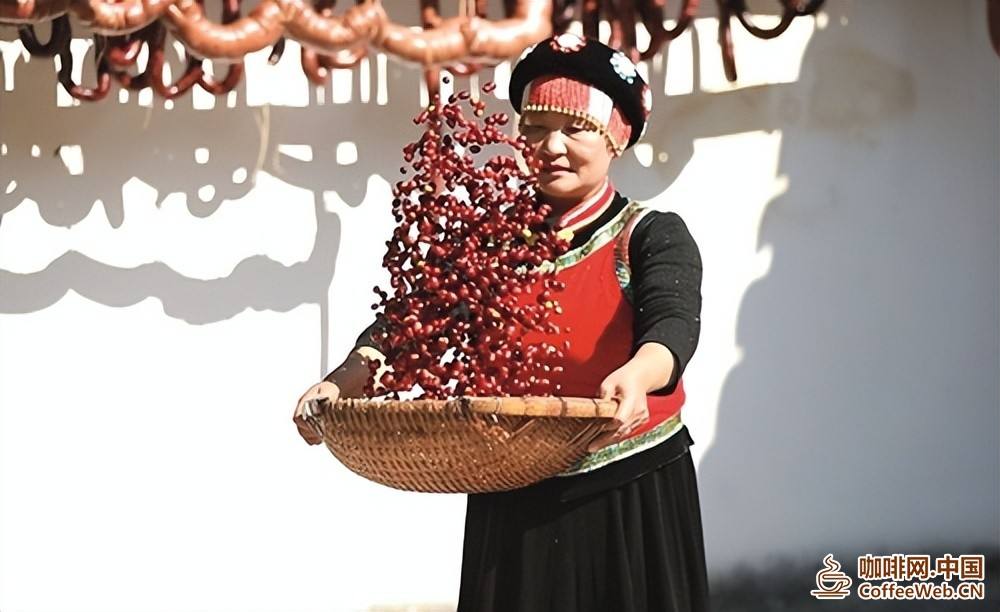
Villagers are drying fresh coffee fruits.
A single bean determines the quality of an industry
In the past, Baoshan coffee was mainly sold as commodity beans. Commodity beans follow futures prices. In the past few years, when prices were low, one kilogram of fresh fruit could only be sold for about two yuan, and many coffee farmers chose to abandon management or even cut down trees.
Is there any way to reduce the impact of futures prices? Li Tingjin, a member of the coffee specialty team in Baoshan City, gave a straightforward answer: "The price of coffee in coffee shops has little to do with the futures market. Only by producing fewer commodity beans and specializing in high-quality beans can we sell at a good price
From commodity beans to premium beans, changes must be made at the source of cultivation. Analogous to tea, commercial beans are like raw materials for tea bags and can be mechanically cut; Boutique beans, like Longjing Tea in West Lake and Mount Wuyi Rock Tea, need to be picked manually. In the past, many coffee farmers used to mix red, yellow, and green fruits together to save time and effort. But picking ripe fruits and vegetables together can affect the taste.
To produce high-quality beans, agricultural training services are indispensable. In order to guide farmers to change their habits, Zhao Qinxiang, the head of Bitun Coffee Farm, has been running to the fields. Some farmers say that the beans are all the same size, why not harvest them? "She patiently explained." Green beans are bitter, soybeans are astringent, and red beans are sweet. They are all oranges, sour when they are not fully ripe, sweet when they are fully ripe, and the same goes for coffee beans
Just verbal persuasion is not enough, farmers need to experience the difference firsthand. The government provides expert resources, the estate reimburses transportation expenses, and organizes systematic training for coffee farmers. The first lesson of the training is not about theoretical knowledge, but about letting everyone taste coffee beans of different maturity levels first. Through repeated training sessions, many coffee farmers have come to understand that the value of premium coffee lies not only in the fruits on the tree, but also in every detail of picking, sorting, and processing.
The low latitude plateau and dry hot valley provide innate natural advantages for Baoshan small grain coffee. But natural endowments cannot be directly transformed into high-quality products. The selection of varieties, cultivation of seedlings, management of water and fertilizer, and prevention of pests and diseases all determine the final quality of coffee beans.
At the Xinjiashan thousand acre premium coffee demonstration base, soil temperature and humidity sensors, small weather stations, and AI inspection drones are connected to the coffee garden to provide accurate water and fertilizer solutions based on the different growth stages of coffee trees. The "Silver Age Expert Team" went deep into the fields and moved the planting training classroom to under the coffee trees. As a provincial-level labor service brand, "Baoshan Coffee Master" has cultivated skilled talents throughout the entire chain from planting to sales.
At the same time, Baoshan continues to promote the breeding and promotion of high-quality varieties based on different altitudes, climates, and market demands. It independently develops "Yunka No.1" and "Yunka No.2" and deeply cultivates the breeding and planting technology of summer seedlings for roses. More varieties have landed and grown, giving Baoshan coffee a richer expression of flavor and moving towards a broad world of refinement.
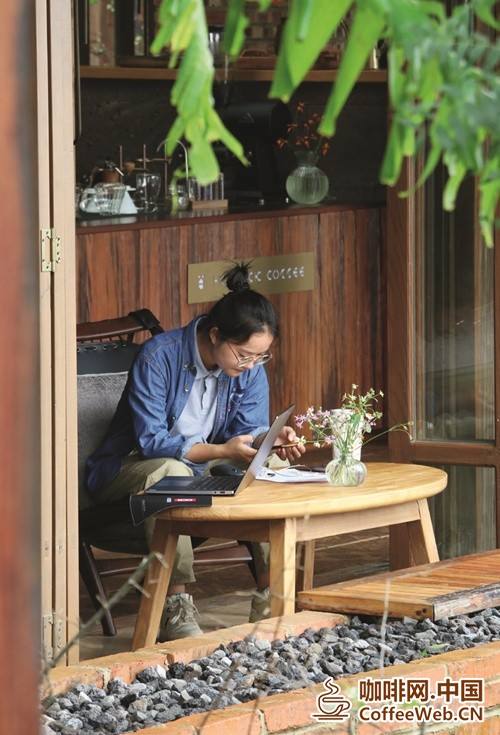
Tourists enjoy leisure time at the coffee plantation.
A cup of coffee brings new opportunities for cultural tourism
It's not just Uncle Coffee's stall that attracts tourists, but also the coffee plantation. For Baoshan, coffee beans not only flow between the fields and factories, but also begin to grow in a broader service industry space.
Gongjiang Coffee Plantation, located in Xinzhai Village, known as the "Number One Coffee Village in China", earned its first income before the coffee it planted reached its peak in the first two years. The owner, He Wenjun, took a stroll through Gaoligong Mountain, overlooking the Nujiang Grand Canyon, enjoying a cup of coffee under a tree, or planting a coffee tree himself, becoming a favorite experience for tourists at the plantation.
Coffee connects the primary, secondary, and tertiary industries. He Wenjun said, "In Baoshan, coffee is not only a product, but also a culture
In recent years, Baoshan City has guided the transformation of coffee plantations, estate scenic areas, and scenic areas into distinctive features, promoting the concept of "using coffee as a scenery, and using scenery to bring coffee", allowing a bean to move from the fields to the streets, estates, and living spaces.
Thousands of acres of coffee gardens are spread out layer by layer, with coffee estates, themed courtyards, and cafes scattered among them. Tourists can "live and play in coffee": participate in agricultural activities such as picking, drying, and baking during the day; Sitting around the campfire at night, tasting freshly brewed 'fire pit coffee'.
Some travel projects also incorporate coffee elements into architectural styles and wellness experiences. New scenes such as coffee museums, coffee therapy workshops, and coffee hot springs continue to emerge, becoming a way for tourists to perceive Baoshan.
Baking coffee beans with traditional earthenware, hand brewing coffee with bamboo weaving tools, purchasing a coffee souvenir printed with Dai brocade patterns, or admiring an old-fashioned huller in a coffee museum… These experiences make a cup of coffee not just a beverage, but also a touchable cultural journey.
Unlike urban cafes, in an immersive experience, visitors not only taste coffee, but also the land, climate, and cultural atmosphere behind it.
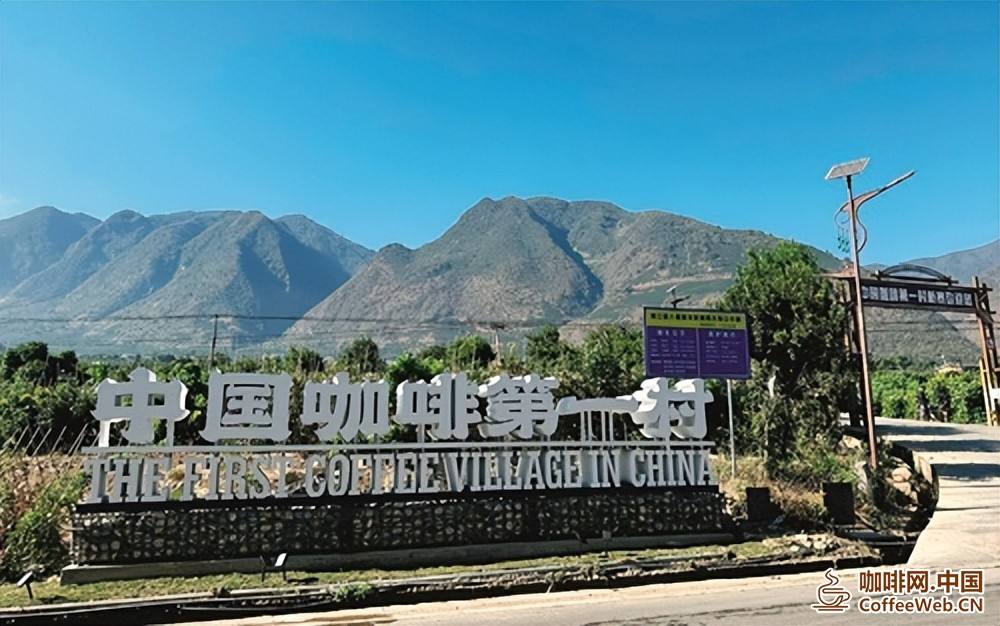
Xinzhai Village, known as the "First Coffee Village in China"
There are coffee enthusiasts who flew 3000 kilometers to Xinzhai Village. The attraction here lies precisely in the experientiality. At the estate, you can see coffee tree planting, fruit harvesting, and coffee bean processing, experiencing the entire process of a cup of coffee from seed to cup. The integration of coffee and tourism has lowered the cognitive threshold of coffee culture, effectively promoting the local coffee industry.
From travelers who want a warm winter to volunteers who want to open their own coffee shop, more and more people are coming to Baoshan because of coffee.
At present, Baoshan City has built 34 coffee estates and created multiple A-level coffee themed scenic spots.
A cup of coffee brings not only consumer products themselves, but also a convergence of business formats.
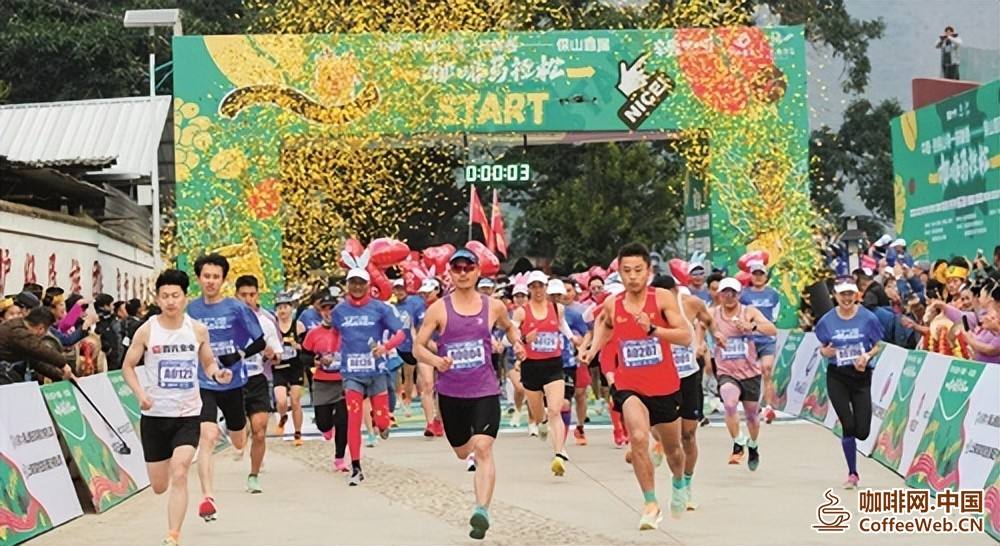
Baoshan leverages various service formats such as cultural tourism, logistics, training, and health preservation through the coffee industry. The picture shows Baoshan holding a coffee marathon event.
A service chain that supports the popularity of domestic coffee
Uncle Ka admitted that he had caught a good time. There were more people drinking coffee, which led to our coffee stall; without the internet, how did our small stall make a name for itself
If Nestle's three in one has made coffee known to Chinese people, Starbucks has made coffee a popular choice for white-collar workers in first tier cities, then local coffee chain brands such as Luckin Coffee and Kudi have brought coffee into the daily lives of Chinese people, especially those born in the 1990s and 2000s who have cultural confidence. They are more willing to pay for a cup of Chinese local specialty coffee, and China has become a net importer of coffee from a net exporter.
The market has opened up, how can good coffee go out of the deep mountains? Good beans lack being seen, priced, and recognized. Therefore, the construction of origin brands and corporate brands has become increasingly important.
The geographical indication of "Baoshan Small Grain Coffee" is precisely such an ID card. From planting to processing, from quality to promotion, enterprises approved for use must accept standardized management. It not only provides a unified endorsement for the quality of the production area, but also gives consumers a greater sense of certainty. Local enterprises such as Zhongka have deepened the coffee industry, extending it from raw beans to various product forms such as freeze-drying, hanging ear, and cold extraction, and also pushing small grain coffee to a larger market.
When people come, they need transportation, accommodation, and catering; when goods leave, they cannot do without express delivery, packaging, and warehousing. All of these can drive the local economy, "said Li Tingjin. From 2024 to 2025, the average household income of coffee farmers will exceed 100000 yuan; The delivery business has exceeded 10 million items, with sales of nearly 600 million yuan; Financial and insurance institutions have issued a total of 650 million yuan in products such as "coffee loans". Even some idle real estate and abandoned projects have been revitalized and transformed into coffee plantations and living spaces.
By the end of 2025, the comprehensive output value of the coffee industry in Baoshan City will exceed 22.3 billion yuan. From quantity to quality, from product output to cultural output, Baoshan Coffee has entered foreign affairs occasions and university campuses.
This constantly extending service chain is connecting Baoshan Coffee with more people, more scenarios, and more lifestyles.
(Interns Men Jingran and Song Qiyue participate in the manuscript collection and writing)
Original title: "Introduction: The coffee industry in Baoshan, Yunnan, from selling raw materials to selling products and culture (theme): The rise of domestic coffee in the circle"
The original article was published in the 10th issue of May 11, 2026 of the "Minsheng Weekly" magazine
 Liaoning ICP Security No. 21122402000217