
 @
@
 @
@
Article | Nicole, Product | Retail Krypton Planet (ID: LS-KXQ)
At Lujiang Dam in Baoshan, Yunnan, under the continuous ridges of Gaoligong, the noon sun shines brightly on a dirt cliff in Mang'ai Village. With the help of a telescope on a high platform in Luckin Coffee's fresh fruit processing plant, one can see many bowl sized caves on sandy cliffs hundreds of meters away.
Across from Baoshan Ruixing Coffee Fresh Fruit Processing Factory, on the dirt cliff @ Retail Krypton Planet
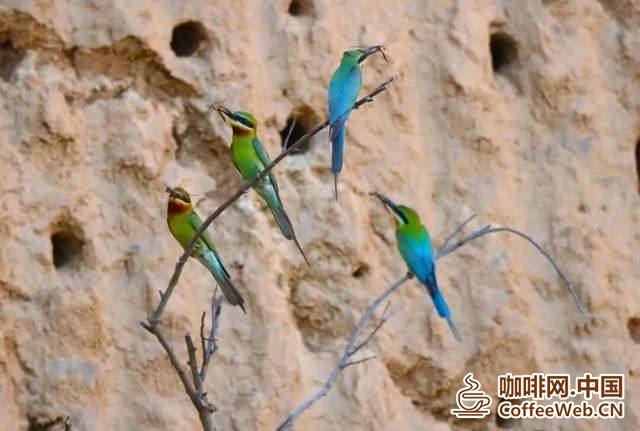
Li Jiahua, a local of Baoshan, said that this is the home of the chestnut throated bee tiger who returns home every April. As the Deputy Director of Longyang Branch of Gaoligong National Nature Reserve, he often refers to himself as a "forest ranger". He spent most of the year in the mountains and forests, and was very familiar with this small bird that feeds on bees.
This little bird, locally known as the "Sand Swallow", has stunning colorful feathers and is known as the "most beautiful bird in China". It is a nationally protected second-class wildlife and a favorite of birdwatchers around the world. However, they have also faced an survival threat in recent years, as "human economic activities often cause them to lose their habitat and have no home to return to
Chestnut throated Bee Tiger @ Li Jiahua
On a day in November 2025, less than a few hundred meters across from this dirt cliff, at Luckin Yunnan Baoshan Fresh Fruit Processing Plant, Zhang Bei, Senior Project Manager for Combating Illegal Trade of Endangered Flagship Species at the World Wildlife Fund (WWF), shared a number: "From 119 in our first survey in 2023, to 346 in June 2024, the number of chestnut throated bee tigers has increased to nearly 500 this year
This means that in just two years, from the establishment of this modern coffee processing plant to its opening, the chestnut throated bees have not lost their largest centralized nest in Lujiangba. On the contrary, the number of birds around this cliff has increased several times.
The return of more "China's most beautiful birds" is actually a signal: a healthy and balanced ecology can inject invisible natural energy into the quality improvement of this coffee producing area.
A coffee factory that makes way for birds
Gaoligong Mountain is the first barrier for ecological security in southwestern China. This narrow mountain range, stretching over 600 kilometers from north to south with an average width of only 9 kilometers, connects the world's three major biodiversity hotspots and is a living natural museum.
As early as the 1990s, Gaoligong Mountain National Nature Reserve was rated as a "world-class biodiversity hotspot" by WWF.
Starting from 2023, Luckin Coffee is the most active enterprise in WWF and the protected area's practical attempts to protect biodiversity in Lujiangba. Starting from habitat protection and food chain maintenance, Luckin Coffee actively collaborates with various parties to stabilize local bird and insect populations and restore habitats at its local factories.
At the beginning of 2023, when the factory was built, Luckin Coffee even changed the construction schedule and postponed the construction of the factory in order not to disturb the return home maternity leave of the chestnut throated bees on the opposite cliff.
Baoshan Ruixing Coffee Fresh Fruit Processing Factory
Later, in order to provide these birds with a more stable home, Luckin Coffee, together with WWF and One Earth Foundation, rebuilt the nest space for the chestnut throated bee tiger, introduced honey plants in the surrounding area, created small wetlands, and systematically worked to restore the ecological integrity of the area by planting honey plants, erecting dead trees, and other methods.
What we introduce and practice is the concept of 'One Health'. WWF's Zhang Bei explains the underlying philosophy behind these actions, "It emphasizes the inseparable relationship between human health, environmental health, and animal health
'One Health' is a comprehensive and unified approach that sustainably balances and optimizes the health of humans, animals, and ecosystems. The cognitive premise of this method recognized by multiple global nature conservation agencies is that the health of humans, livestock and wildlife, plants, and the wider environment (including ecosystems) are closely interconnected and interdependent.
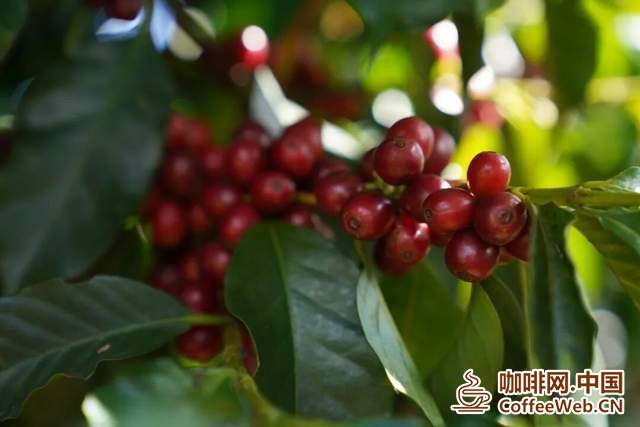
Objectively speaking, more birds who are willing to come back will affect insect populations, spread plant seeds, and maintain ecological balance, which is a prerequisite for the growth of high-quality coffee. The return of more chestnut throated bee tigers in the spring of these two years has become a clear indicator of the increasingly healthy ecosystem of Baoshan Lujiangba.
Zhang Bei said, "The population of birds has doubled, which means that the coffee beans grown on this land are of higher quality and healthier. When the birds come back, the coffee we drink is also of better quality
In November of this year, WWF officially awarded Luckin Baoshan Fresh Fruit Processing Plant the title of "Eco friendly Factory (Demonstration)". In the future, they will also replicate and promote this successful case of cooperation between the government, social organizations, and enterprises to more places.
For Luckin Coffee, this factory itself is also an effort to integrate into the surrounding ecology. The factory adopts a micro water fresh fruit treatment process, with zero emissions in the coffee washing process, protecting the surrounding soil and water, and fundamentally ensuring that the processing process does not burden the ecological environment that nurtures high-quality coffee, safeguarding the ecological achievements of the front-end.
Protecting Ecological Harmony: Starting from One Factory
Coffee is the "golden calling card" of Yunnan's characteristic agriculture, and in recent years, Luckin Coffee has become a local brand. We are accelerating our efforts to establish roots in this core local coffee producing area, and have made multidimensional efforts in procurement, ecological planting, and deep processing.
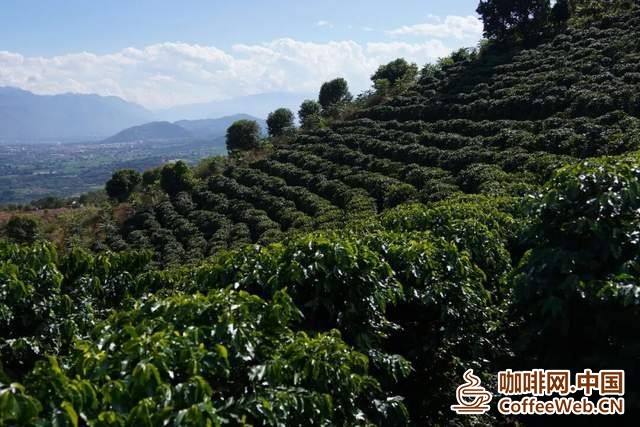
Baoshan, where Luckin Coffee Fresh Fruit Processing Plant is located, is a benchmark production area for premium coffee in Yunnan. It is famous for producing premium coffee and is located in the "golden zone" of coffee cultivation at 24-25 ° N. Baoshan's unique microclimate and weakly acidic volcanic ash soil can nurture high-quality coffee that is "strong but not bitter, fragrant but not strong, and slightly acidic".
Data shows that the premium rate of Baoshan coffee has reached 70%, and the deep processing rate is as high as 85%. This excellent 'quality ace' is helping Baoshan Coffee steadily integrate into the global premium coffee supply chain system with its unique terroir and outstanding quality.
This also means that the future of Baoshan Coffee lies in cultivating flavor and ecology, rather than simply pursuing yield. But currently, it is still in the stage of extensive planting, which constitutes the main bottleneck for quality improvement.
So, Luckin Coffee's efforts to protect ecological harmony in Baoshan start with the most practical assistance to farmers. Zhai Dun, a senior agronomist at Luckin Coffee, has been working on the front line of coffee producing areas in Yunnan. He is well aware of the current difficulties faced by coffee farmers on this land.
Some coffee farmers have reported that they do not know how to fertilize, and even mistakenly apply fertilizer directly near the roots, resulting in failure to decompose the following year, which is both wasteful and inefficient. With the expansion of the coffee industry, some mountainous areas with slopes greater than 25 degrees in Baoshan have also been developed, increasing the risk of soil erosion. Plastic waste such as plastic film and pesticide packaging is not uncommon in the fields.
Tailored to local conditions, the Luckin Coffee team will collaborate with research institutions to carry out soil testing and formula fertilization, achieving precise fertilization and reducing usage. In steep mountainous areas, Rui Xinghui suggests preserving native trees and maintaining biodiversity. Zhai Dun, a senior agronomist at Luckin Coffee, will also ask everyone to bring back plastic waste for centralized disposal when training coffee farmers to pick.
Lou Yuqiang, Associate Researcher at the Tropical and Subtropical Economic Crop Research Institute of Yunnan Academy of Agricultural Sciences, said, "Coffee is native to the primitive forests of Ethiopia, and the planting process should simulate its original growth environment as much as possible
So, in order to give coffee trees a home closer to the primeval forest, the research team is promoting "intercropping". By constructing a composite ecosystem, the high temperature environment in dry hot river valleys can be effectively regulated. "Lou Yuqiang analyzed that this not only provides habitat for birds and insects, but also directly serves coffee quality: the microclimate formed by diverse vegetation can effectively suppress the damage of high temperature to coffee photosynthesis, allowing flavor substances to accumulate more calmly and fully.
Enterprises collaborate with natural conservation and scientific research institutions to gradually promote a harmonious resonance between ecological and economic benefits in Baoshan.
Coffee farmers, due to coffee cultivation and more scientific intercropping, have stable income and are more willing to adopt eco-friendly planting methods. Coffee trees grow in better natural environments and produce higher quality beans; Biodiversity, effectively maintained in the coffee gardens of Man Shan, will form a positive cycle with the coffee industry.
In the view of Zhao Yanyan, the sustainable development manager of Luckin Coffee, 'Ecological friendliness is the key to creating better coffee.' Protecting the harmonious ecology of the place of origin is one of the three core scenarios focused on by Luckin Coffee's green action.
Meaningful growth is not just about expanding the scale, but also expanding the value. Together with the three scenarios of "ecological co construction", "building a digital green production system", and "creating a sustainable green store model", Luckin Coffee is promoting the deep integration of corporate social responsibility and sustainable development while providing a high-quality cup of coffee.
Deep rooting of local coffee in local production areas
Both Li Jiahua and Lou Yuqiang, who has been doing research in Yunnan since graduating from university, are very proud of Baoshan's three unique business cards: Gaoligong Mountain Stereoscopic Gene Bank, Nujiang Grand Canyon, and Baoshan Small Grain Coffee. They represent the integration of natural ecology, geological wonders, and characteristic agriculture.
This means that the better future of Baoshan and even Yunnan coffee actually depends on the harmonious coexistence of modern civilization and primitive natural ecology.
In recent years, Luckin Coffee has been deeply involved in the rapid development of the Chinese coffee market. Luckin Coffee is also exploring strategic "deep roots" and long-term ecological co construction in Yunnan, a core coffee producing area in China.
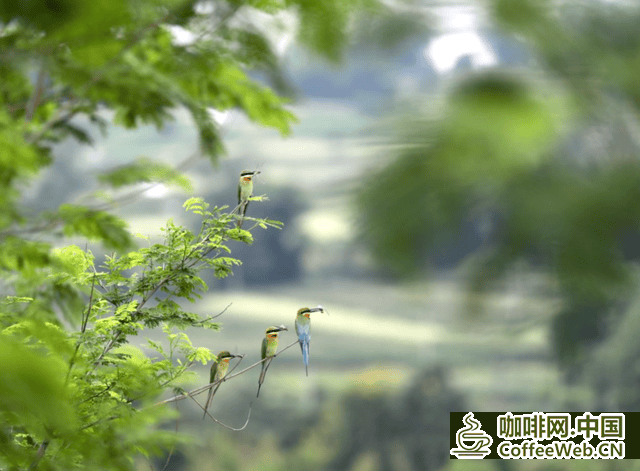
Chestnut throated Bee Tiger @ Li Jiahua
The return of a chestnut throated bee tiger is backed by an increasingly healthy ecosystem, nurturing a batch of high-quality coffee beans that provide a better life for a group of coffee farmers and make them cherish the nature that gives them a better life… All of these ultimately become a cup of coffee that reaches every consumer.
It is not grand, but very specific.
Li Jiahua said he is considering a new topic: "With the effectiveness of ecological restoration becoming apparent, wild animals may engage in more underground mountain activities. How to achieve a win-win situation with biodiversity conservation in coffee cultivation and production is an important topic that we need to study in the future
From protecting a bird to working hard to restore a piece of land, Luckin Coffee's exploration in Baoshan has pointed out a path: respecting the ecology will ultimately give back the quality of coffee, and behind it is a business wisdom – only healthy land can nurture truly touching flavors.
 Liaoning ICP Security No. 21122402000217