


Introduction (coffeeyo.com):In the 1990s, merchants from southern China poured into the foothills of the Changbai Mountains, and Meikou, with its convenient transportation, became a well-known hub for pine nut processing and distribution. Local people gradually figured out ways to optimize the storage and preservation of Korean pine nuts. Zhu Heng also hopped on the "express train" of instant retail—by partnering with Xiaoxiang Supermarket, he delivers his hometown's Korean pine nuts thousands of miles away, still "as fresh as ever." Zhu Heng came across a review from a Xiaoxiang Supermarket user: "When people from the Northeast taste new pine nuts, they know Chinese New Year is near—it's the taste of mountain goods from home.
Korean pine nuts, once hidden deep in the mountains and unknown to the outside world due to preservation and transportation difficulties, are now carried thousands of miles away on the "express train" of instant retail. Through high-standard quality management spanning kernel selection, cone harvesting, processing, preservation, and transportation, "fresh nuts" have become the norm. Behind a single Korean pine nut's journey through the "freshness" challenge lies the real demand of expanding and upgrading consumption—and more importantly, a path to prosperity built on the principle that "lucid waters and lush mountains are invaluable assets.
From "log trucks" to cold-chain vehicles
The Hongshi forest region, covered with Korean pine trees, is located in Huadian City, Jilin Province. Here, a Korean pine tree typically takes 50 years to produce seeds—the Changbai Mountains spend an immense amount of time nurturing this "deep-mountain freshness.
Before the "Minor Snow" solar term, Lao Cai, a forest ranger who has guarded the mountains for over 20 years, patrols fire-risk points. He pushes aside the fallen leaves to reveal dark brown pine cones buried beneath: "When these pine nuts grow into towering trees, they'll be green wealth. People in the forest farm have gone from calculating timber prices to calculating green development accounts—their mindset has undergone a fundamental shift.
When I was a kid, Korean pine nuts couldn't be shipped out—they could only be sold at the local farmers' market for about 2 yuan per jin," Zhu Heng recalled. At the time, timber was the most valuable product, and good things like Korean pine nuts went to waste. In winter, temperatures in the forest farm can drop to minus 40°C. The aroma of pine nuts "clumsily roasted" in a large iron wok in the cold wind is etched into memory, but that freshness was extremely hard to preserve.
Korean pine nuts take up to 2 years to mature. Winter low temperatures cause incomplete kernel development, easily forming "stone beans." After pine cones are harvested, stacking them too thickly or failing to dry wet pine nuts properly can lead to fermentation and the formation of "red grains." When pine nut kernels are stored too long, oil seeps from the inside, and the color turns from milky white to yellowish-brown—these are "oil grains"—all of which cause Korean pine nuts to taste bitter and develop a rancid flavor.
Zhu Heng said that in the era before cold storage for freshness-locking, whenever the weather warmed up, a musty, earthy smell could often be detected in the warehouse. "Grab a handful and the surface of the pine nut kernels would be sticky and moldy. As for shriveled seeds, inconsistent sizes, and unopened shells, it all depended on experienced workers to sort by eye and hand.
In the 1990s, merchants from southern China poured into the foothills of the Changbai Mountains, and Meikou, with its convenient transportation, became a well-known hub for pine nut processing and distribution. Local people gradually figured out ways to optimize the storage and preservation of Korean pine nuts. Zhu Heng had been pondering two things: first, preservation; second, sales channels.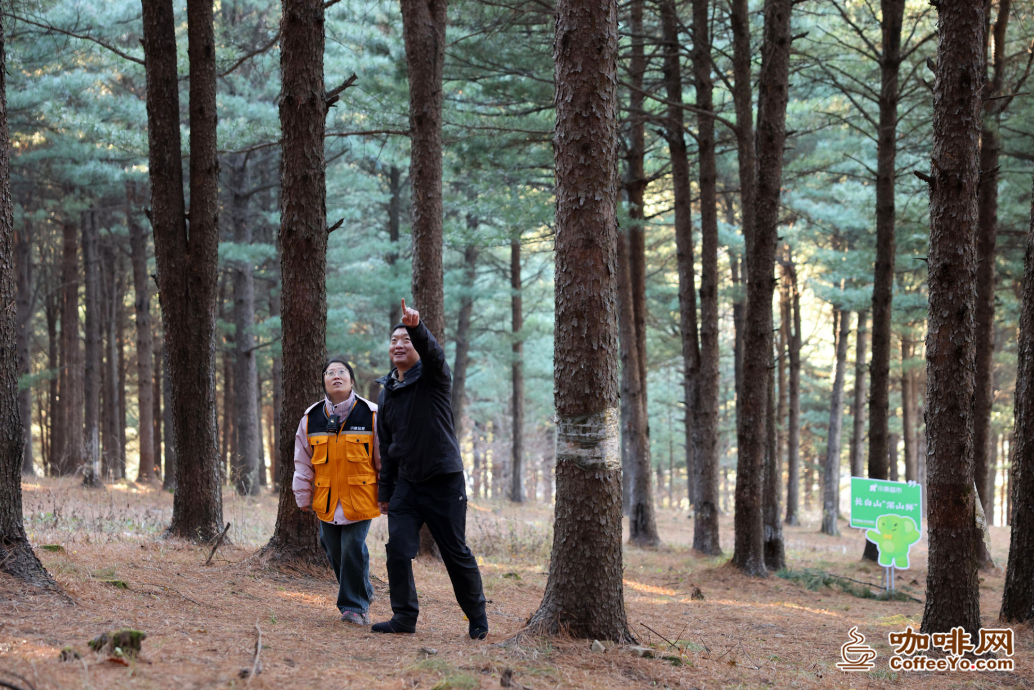
Pine nuts undergo a "health check"—an X-ray machine screens out empty shells, moldy nuts, and other defective products. (File photo) Before cone harvesting, a Xiaoxiang Supermarket quality inspector (first from left) verifies the Korean pine forest environment. (File photo)
As logging halted in the Hongshi forest region and the sound of axes and saws fell silent, loggers turned to forest protection and tree planting. The story of Korean pines and time has grown a new chapter from old stumps. The Hongshi forest region has established the 4A-rated Hongshi National Forest Park, attracting tourists from afar. Zhu Heng also hopped on the "express train" of instant retail—by partnering with Xiaoxiang Supermarket, he delivers his hometown's Korean pine nuts thousands of miles away, still "as fresh as ever." The Hongshi Bridge, built in 1960, still carries the same flow of traffic, but its "cargo manifest" has changed.
From "deep-mountain freshness" to "community refrigerator
How does "deep-mountain freshness" pass the "freshness" test? Yao Cunxiang, a quality inspector at Xiaoxiang Supermarket, has made many trips to the forest region, checking every step and working with partners to extract freshness from countless details.
Before the "cone harvesting season," Yao Cunxiang visited the forest region to verify forest land certificates, pine tree growing conditions, and yields. After harvesting, she closely monitors processing, warehousing, and transportation, tightly controlling every step of "freshness-locking." After harvest, pine cones are crushed, threshed, and spread to cool, then roughly screened by a gravity separator, sun-dried, and sent to a raw material cold storage at minus 8°C to firmly lock in the freshness.
She examines everything very carefully—even the ventilation openings and transport passages in the processing plant are checked with a flashlight," Zhu Heng said. Xiaoxiang Supermarket's strict quality management process has also helped his factory raise its standards. At first it was uncomfortable, but later they found it actually "saved trouble"—the return rate dropped significantly.
Before pine nuts leave the factory, they must pass the 'health check.'" According to Yao Cunxiang, the factory uses a "color sorter" to remove pine nuts with unacceptable surface colors, then a "nut X-ray machine" to screen out empty shells, moldy nuts, "stone beans," "red grains," and other substandard products. After a series of strict quality checks, the new pine nuts are sealed in packaging and loaded onto temperature-controlled refrigerated trucks heading far away.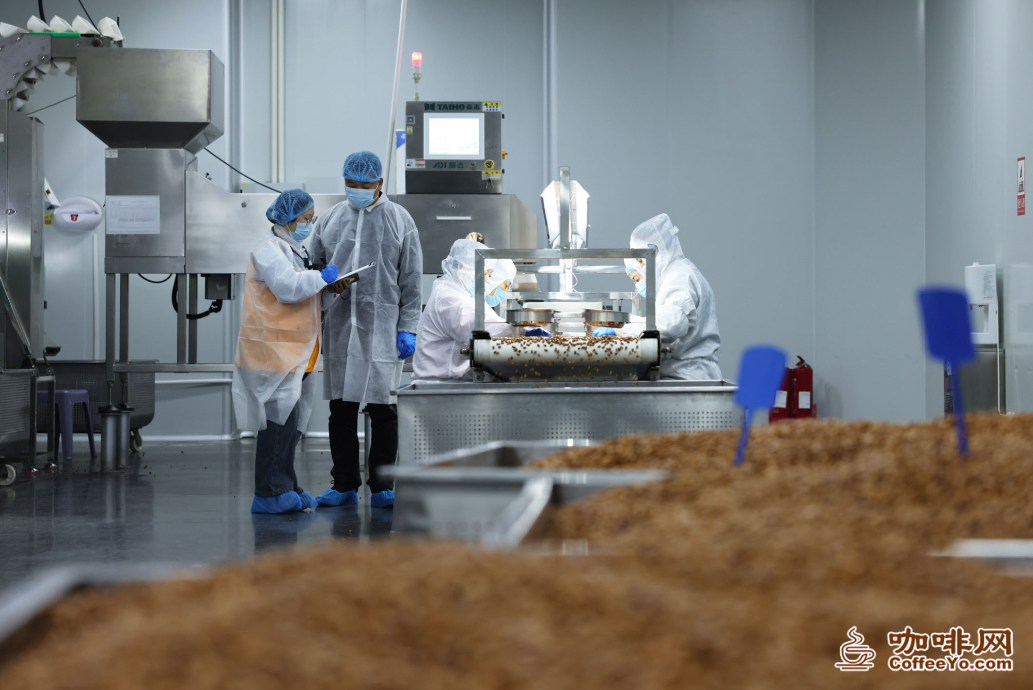
Winter in the Changbai Mountains brings not only ice and snow but also the fresh taste of a new season's nuts. In mid-November, the sky over the Hongshi forest region on the northwestern slope of the Changbai Mountains in Jilin Province threatened snow. Zhu Heng, a post-90s new-generation agricultural entrepreneur, was leading workers in loading Korean pine nuts onto refrigerated trucks.
Around the Start of Winter solar term, the peak season for nut consumption begins. Behind nuts—a category seemingly hard to associate with "freshness"—industry players across the entire supply chain have worked together to bring out the natural "fresh" taste of nuts. For example, Xiaoxiang Supermarket's hickory kernels are freshness-locked in a constant-temperature warehouse at 0°C to 5°C, then transported at controlled temperatures after processing. Domestic macadamia nuts are rapidly peeled within 24 hours of harvest, roasted, then stored in a low-temperature environment and delivered far away in temperature-controlled trucks. Every degree of temperature control and every link in the chain builds a freshness relay race, making "fresh nuts" the norm.
Once, "deep-mountain freshness" was too remote, too hard to preserve, and too far away. Now, the distance from a mountain to a dining table is no longer vast. Consumers place orders on Xiaoxiang Supermarket and can receive nuts from all over the country in as little as 30 minutes—as if there were a "community refrigerator" right at their doorstep. The story of "freshness" once locked away in producing regions by distance is now being peeled open, nut by nut.
Another snow season begins. Tourists from the south fly across half of China to visit the Changbai Mountains, while the new season's Korean pine nuts travel along the cold chain to ever more distant cities. These two opposite routes converge in winter. Zhu Heng came across a review from a Xiaoxiang Supermarket user: "When people from the Northeast taste new pine nuts, they know Chinese New Year is near—it's the taste of mountain goods from home.
Reprint Notice and Disclaimer
- This article was compiled and edited bycoffeeyo.com. The information and images in this article are sourced from public channels, and copyright belongs to the original authors. This reprint is solely for sharing coffee industry information and does not represent the views of this website. All data and opinions in the article are subject to the original text. We thank the original authors for their creation and sharing.
- Read the original article:Deep-Mountain Freshness" in the Changbai Mountains: How a Korean Pine Nut Passes the "Freshness" Test
- If you have any matters regarding content authorization, attribution, copyright, or other issues, please contact this website promptly, and we will verify and cooperate in handling the matter as soon as possible. We also welcome coffee-producing regions, brands, and industry media to exchange and contribute content with us.
- Contact information for coffeeyo.com: Tel 400-0000-641 (+86-18288016826) Email 478203668@qq.com
Related Reading
 New products unveiled to expand agricultural trade
- Luckin Coffee joins the fray? Are home appliance companies worried?
 Focus on APEC: Building a Better World Together – Shenzhen APEC Meeting Offers Profound Insights
 Wuhua District, Kunming City, Yunnan Province, established the Coffee Industry Youth League Working Committee to gather the power of "coffee" youth
 Observation of the Great Wall | From Duck Shed Coffee to Thousand Acres of Rice Waves: Zhejiang's Thousand Million Project, What Can Hebei Learn?
 People's Daily: Those betting against China's economy will ultimately fail.


 Liaoning ICP Security No. 21122402000217