


Introduction (coffeeyo.com):Baoshan is an important coffee-producing region in Yunnan and is also home to Luckin Coffee's fresh cherry processing plant and grower support center. Luckin Coffee chose to put down roots in this producing region, completing its Baoshan fresh cherry processing plant in 2024 and translating bean sourcing, fine processing, coffee farmer training and ecological protection into concrete steps. As the 2026 Yunnan fresh cherry harvest season arrives, Luckin Coffee's traceability team ventured deep into the Baoshan producing region of Yunnan, visiting coffee plantations to gain firsthand understanding of local cultivation and harvesting practices and to explore the origins of Yunnan coffee's quality.
Last week, I joined the Luckin team on a trip to Baoshan, Yunnan, taking part in a traceability journey through the flavors of Yunnan coffee. Now back in Beijing, Luckin's new dark roast series featuring Yunnan single-origin SOE coffee beans has also hit the market. Sipping the Yunnan dark roast Americano in my hand, with its elegant acidity and gentle sweet finish, I found myself recalling what I saw and heard on the producing-region trip. This journey from seed to cup also gave me a more concrete view of Luckin's investment in Yunnan.
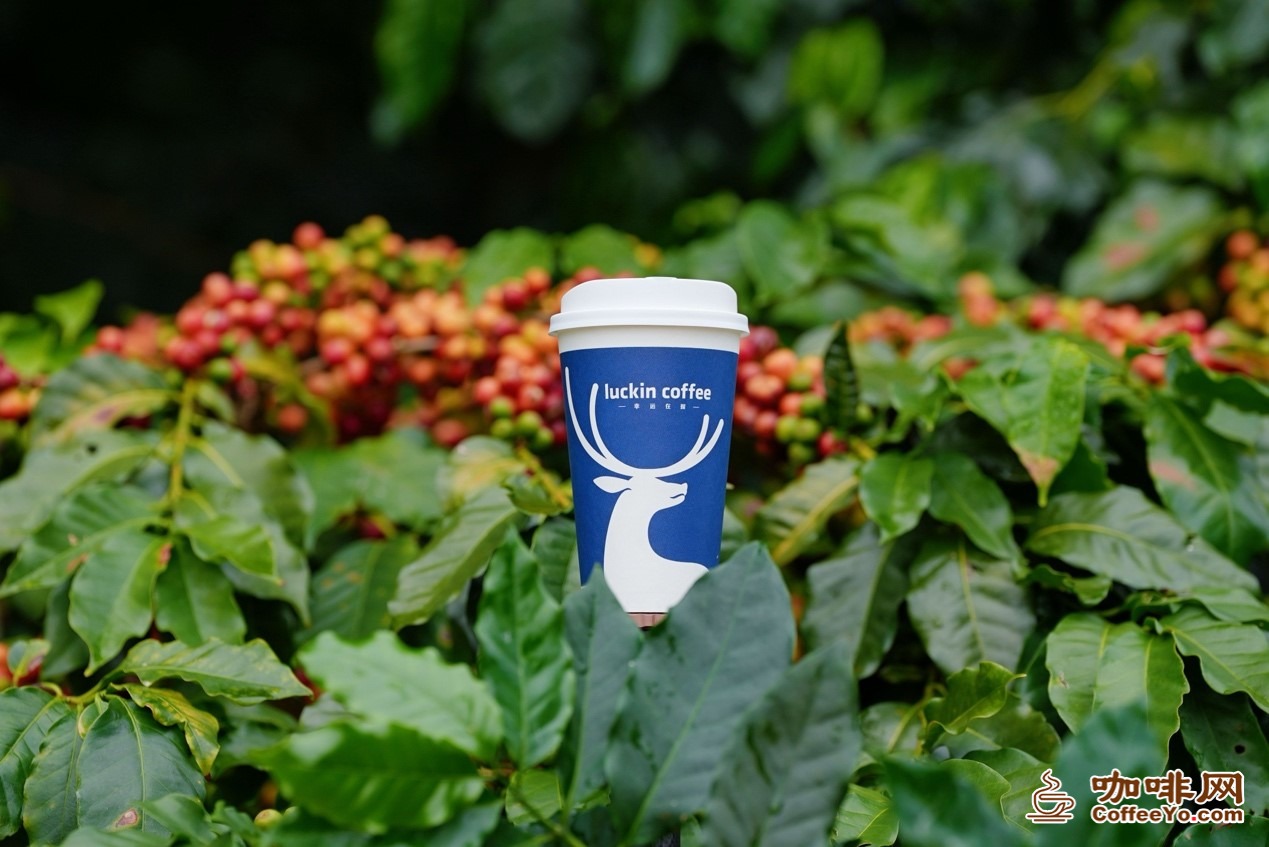
Recently, under the theme "Deep Craft, Yunnan Kung Fu, Chinese Coffee Yunnan Season," Luckin Coffee launched a traceability journey into Yunnan's high-quality coffee, led by Pan Zhimin, Luckin Coffee's Chief Coffee Master and China champion of the 2017 World Barista Championship.
The destination this time was Lujiangba in Baoshan. Baoshan is an important coffee-producing region in Yunnan and is also home to Luckin Coffee's fresh cherry processing plant and grower support center. Coffee cultivation in Lujiangba, Baoshan began in 1952 and has since undergone a transformation from low-priced raw materials to premiumization, standardization and cluster development. In 2025, Baoshan's coffee planting area reached 180,600 mu, with output of 26,800 tonnes, a premium coffee rate of over 75%, and a comprehensive coffee output value of 22.328 billion yuan. Luckin Coffee chose to put down roots in this producing region, completing its Baoshan fresh cherry processing plant in 2024 and translating bean sourcing, fine processing, coffee farmer training and ecological protection into concrete steps.
On this trip with Luckin's team to Baoshan, walking through coffee farms, the processing plant and the hills around the facility, I gained a more authentic sense of these links — the effort behind every cup of Yunnan coffee Luckin creates is, it turns out, hidden in the everyday life of the producing region.
Going Deep into Yunnan, Continually Exploring China's Best Producing Regions

Yunnan lies near the Tropic of Cancer and is a low-latitude, high-altitude region. Its noticeable day-night temperature difference, combined with a tropical and subtropical monsoon climate and plateau sunshine, allows coffee beans to mature slowly and accumulate flavor compounds. The red soil found throughout the area is rich in organic matter and trace elements, and its slightly acidic nature favors the synthesis of alkaloids and phenolic substances, providing natural conditions for coffee's body and aromatic complexity. Coffee cultivation is mainly distributed across Pu'er, Baoshan, Lincang, Dehong, Xishuangbanna and Nujiang, concentrated in the hot-zone river valleys of the Lancang, Nujiang and Red River basins. In 2025, the province's coffee planting area reached 1,518,800 mu, with output of 170,700 tonnes.
As China's coffee market flourishes, Yunnan coffee's quality has improved year by year and become increasingly competitive in the market. Since 2021, Luckin has successively launched coffee drinks such as SOE Yunnan Red Honey, SOE Yunnan Pu'er and SOE Yunnan Little Mandarin. In 2025, the champion lot of the first Yunnan CoE (Cup of Excellence) green coffee competition set a record price for Chinese coffee at an auction price of 13,150 yuan per kilogram; on February 9, 2026, the first day of business for Luckin's 30,000th store nationwide, the "Yunnan · CoE Champion Bean Pour-Over" made with that champion lot sold out immediately upon release.

As the 2026 Yunnan fresh cherry harvest season arrives, Luckin Coffee's traceability team ventured deep into the Baoshan producing region of Yunnan, visiting coffee plantations to gain firsthand understanding of local cultivation and harvesting practices and to explore the origins of Yunnan coffee's quality. The new dark roast series launched this time uses an original dual-roasting-curve differentiated process to deliver a flavor profile that is rich without being bitter, full-bodied with a sweet finish.
Yunnan is an important stop on Luckin's "Global Bean Sourcing Journey." Going deep to the source to find high-quality coffee beans and moving quality standards forward to the producing region is a consistent practice Luckin has adhered to across global producing regions. Previously, Luckin's bean-sourcing teams had ventured deep into Ethiopia, Brazil, Indonesia and other major coffee-producing regions around the world. Luckin applies the experience and standards of its global bean sourcing to the Yunnan producing region, providing industry-level support for Yunnan coffee to compete in the international market. In the 2025–2026 crop year, Luckin purchased 33,000 tonnes of Yunnan green coffee beans, with a procurement value of nearly 2 billion yuan. Several industry media reports have noted that Luckin has become the largest buyer of Yunnan green coffee beans.
From Building Standard Demonstrations to Grower Support, Practicing Sustainable Procurement

In Moka Village, Lujiang Town, Baoshan, I visited Luckin's Baoshan fresh cherry processing plant. It was peak season, and the plant was conducting initial flotation of fresh coffee cherries purchased from farmers — only cherries meeting quality standards could proceed to the next stage of processing. Subsequent processing further ensures quality through sorting, vibratory destoning and other steps. In the processing stage, Luckin not only maintains high quality requirements but also takes environmental protection and sustainable development into account.

Washed processing generates wastewater, and if discharged directly without proper treatment, it can cause environmental pollution. At the Baoshan fresh cherry processing plant, I saw for the first time micro-water fresh cherry processing lines from Brazil and Colombia, which can reduce water use during fresh cherry processing.

The wastewater generated by processing is recycled through self-heating recovery multi-effect MVR evaporative concentration water treatment technology. After treatment, qualified water returns to the production line for demucilaging and flotation, driving toward zero-discharge production.

In the coffee bean drying stage, the Baoshan fresh cherry processing plant uses air-source heat pumps to reduce exhaust emissions, embedding the concept of sustainable production throughout every stage of production.
This not only establishes for Luckin Coffee a standard for controlling quality from the source in the Yunnan producing region, but also sets an example of sustainable processing.

Coffee's sustainable development is reflected not only in the plant's green processing and quality standards but also in long-term investment at the cultivation end. On this trip, I met Luckin's agronomist Mr. Hou Jiazhi and toured Luckin's coffee seedling greenhouse and grower support center with him. The greenhouse contains more than 50 different coffee varieties, including specific varieties such as Purple Leaf Typica, Pacamara and Geisha. These small coffee seedlings are provided to local coffee farmers. At the same time, agronomists provide free cultivation and processing training to local coffee farmers, passing coffee tree cultivation techniques, fresh cherry harvesting standards and processing requirements back to the fields.

Mr. Hou said the most important thing for frontline agronomists is to "share the knowledge we have with them so they take fewer detours, and can start production earlier and earn income earlier." Farmers' criteria are simple: does following your method produce results, is yield stable, and is there income every year? Agronomic services must answer these three questions rather than starting with concepts.
Hou Jiazhi told us a case about lime. After receiving this suggestion, a local farmer felt uneasy. He had applied large amounts of fertilizer year after year without seeing coffee growth improve — could spreading lime really work? Only with the support and encouragement of relatives and friends who knew Mr. Hou did the farmer half-believingly spread lime, and that year the coffee grew very well. Hou said the reason was not complicated: the soil there was not poor, but the pH was too low, locking up nutrients so they could not be released. Lime unlocked this link, and only then did the fertility truly reach the trees. Hou Jiazhi called this "the power of science and technology," but for technology to become frontline productivity, it must advance step by step and let farmers see it to believe it.

Beyond the plant, Luckin agronomists like Mr. Hou are stationed in the fields year-round, working side by side with local coffee farmers and applying cultivation techniques plot by plot.
High-standard environmental plants and warm, down-to-earth agronomic services run in parallel, connecting cultivation, harvesting and processing, and laying a solid quality foundation for Luckin's continued procurement in Yunnan.
Of course, making good coffee also requires attention to the ecological environment of the entire producing region.
Restoring Migratory Bird Habitat, Ecology Gives Back to Good Coffee in the Producing Region
Luckin Coffee's Baoshan fresh cherry processing plant sits against the backdrop of Gaoligong Mountain. The Gaoligong Mountain National Nature Reserve is known as a "world species gene bank." Standing on the viewing platform of the Baoshan fresh cherry processing plant, we could see the habitat of the blue-throated bee-eater across from the plant.

On this red-earth cliff face, the blue-throated bee-eater, a national second-class protected animal, comes every year from April to July to spend the summer, nesting and breeding. Since 2023, Luckin has carried out deep cooperation with WWF, One Planet Foundation, the Longyang Branch of the Baoshan Management Bureau of Yunnan Gaoligong Mountain National Nature Reserve, and local governments and communities to restore this habitat. Through scientific clearing of the cliff face, restoration of small wetlands, planting of native vegetation and regular patrols, after three years of sustained effort, the number of adult blue-throated bee-eaters inhabiting the earthen cliff beside the plant increased from 119 in June 2023 to 519 in 2026. In 2025, WWF awarded Luckin Coffee's Baoshan fresh cherry processing plant the title of "Eco-Friendly Factory (Demonstration).
At the same time, Luckin also conducts sustainable cultivation and biodiversity protection training for farmers in the producing region, directly passing green development concepts and skills to producers. At the research cooperation level, Luckin engages in industry-academia-research exchanges with local Yunnan agricultural research institutions on topics such as sustainable cultivation and biodiversity protection. During the 2026 Yunnan Season, Luckin joined Yunnan agricultural research institutions, WWF and representatives from the wildlife protection field to hold an industry-academia-research roundtable, discussing how new quality productive forces in agriculture can drive the upgrading of Yunnan's coffee industry. Related cooperation extends ecological protection from the plant surroundings to field management, linking environmental sustainability measures with quality control of coffee raw materials.
Habitat restoration brings not only a rebound in bird numbers but also protection of the producing region's biodiversity and microclimate, laying a more solid foundation for the sustainability of coffee cultivation.

At the Baoshan fresh cherry processing plant, there is also an organic coffee ecological garden with intercropping and relay cropping — including bananas and macadamia trees that provide shade for coffee trees, as well as cash crops such as dragon fruit and passion fruit. This is, in a sense, an ideal miniature of a sustainable coffee estate.
Conclusion
Coffee is a calling card for Yunnan. "Making good Yunnan coffee" is a vision and goal Luckin has been striving to advance. From the first SOE Yunnan Red Honey to the CoE champion bean pour-over, and now to this year's Yunnan Season dark roast series, Luckin continues to enrich its Yunnan coffee product line, bringing consumers more flavor choices and responding to increasingly diverse taste preferences. A cup of coffee can also serve as an everyday entry point for getting to know Yunnan: starting from a flavor you enjoy, and learning about the land and people behind it.

Returning to the lingering finish of the Yunnan coffee in my hand, I seemed to see the busy scene at Luckin's Baoshan fresh cherry processing plant. From my first visit to a Yunnan producing region in 2019 to this traceability trip with Luckin, over the years the living standards of Yunnan coffee farmers have visibly improved, and every cup of Yunnan coffee I drink has clearer, more pleasant flavors. Behind these changes are also Luckin's concrete efforts, one by one, to enhance the comprehensive strength of the producing region.
This visit convinced me that the future of Yunnan coffee will be even better — just like the coffee seedling nursery at Luckin's Baoshan fresh cherry processing plant, full of hope.
Disclaimer: This content is corporate information reposted by this website and represents only the author's personal views; it is unrelated to this website. The content does not constitute investment or consumption advice and is for readers' reference only; please verify related content independently.
Reprint Notice and Disclaimer
- This article is provided bycoffeeyo.comEdited and compiled by our team. The materials and images in this article are sourced from public channels, and the copyright belongs to the original author. Our republication is solely for information sharing within the coffee industry and does not represent our stance. All data and views in the article are subject to the original text. We hereby thank the original author for their creation and sharing.
- Read the original article:72 hours tracing the source in Baoshan: Following Luckin, I found the origins of good Chinese coffee
- If any content authorization, attribution, copyright, or other matters are involved, please contact us promptly, and we will verify and cooperate in handling the matter as soon as possible. We also welcome coffee-producing regions, brands, and industry media to exchange ideas and contribute articles with us.
- Contact information for Coffee Network: Tel 400-0000-641 (+86-18288016826) Email 478203668@qq.com
Related Reading
 Lincang Advances Coffee Industry with Premium Development Strategy: Aroma of Coffee Fills the Path to Revitalization
- Lincang advances coffee industry with premium development approach: aroma of coffee fills the path to revitalization
 Yunnan Dehong Tropical Agriculture Research Institute promotes shift from conservation to utilization of coffee germplasm resources
 Yunnan Ruili: Technology boosts coffee industry quality and efficiency
 Coffee experts from multiple countries praise Yunnan Dehong: The coffee industry has enormous potential for development
 Red fruits adorned with green mountains, fragrant and ready to be baked! Yongde Coffee enters the concentrated harvesting season


 Liaoning ICP Security No. 21122402000217